
Greetings, relatives.
A lot of news out there. Thanks for stopping by ICT’s digital platform.
Each day we do our best to gather the latest news for you. Remember to scroll to the bottom to see what’s popping out to us on social media and what we’re reading.
Also, if you like our daily digest, sign up for The Weekly, our newsletter emailed to you on Thursdays. If you like what we do and want us to keep going, support and donate here.
Okay, here’s what you need to know today:
The remaining 16 teams in the men’s and women’s in each respective NCAA tournament resume play Thursday and Friday respectively, all looking to survive and advance to the Final Four.
Playing for the second-seeded Utah Utes, junior forward Alissa Pili, Inupiaq/Native Hawaiian, and company take on the third-seeded Louisiana State University Tigers Friday afternoon.
In the first round game versus Gardiner Webb, Pili had a season high 33 points as Utah cruised to a big victory. She followed up that with a game in round two versus Princeton with a double-double, scoring a game high 28 points and pulling in 10 rebounds.
Lacing them up for the perennial powerhouse University of Connecticut, Amari Deberry, Mohawk, and the second-seeded Huskies play Ohio State University on Saturday afternoon. Deberry played five minutes in a first round win over Vermont, scoring four points.
She did not see the floor in the team’s round two game. If both Utah and UCONN win-out this weekend, they will play each other in the Final Four.
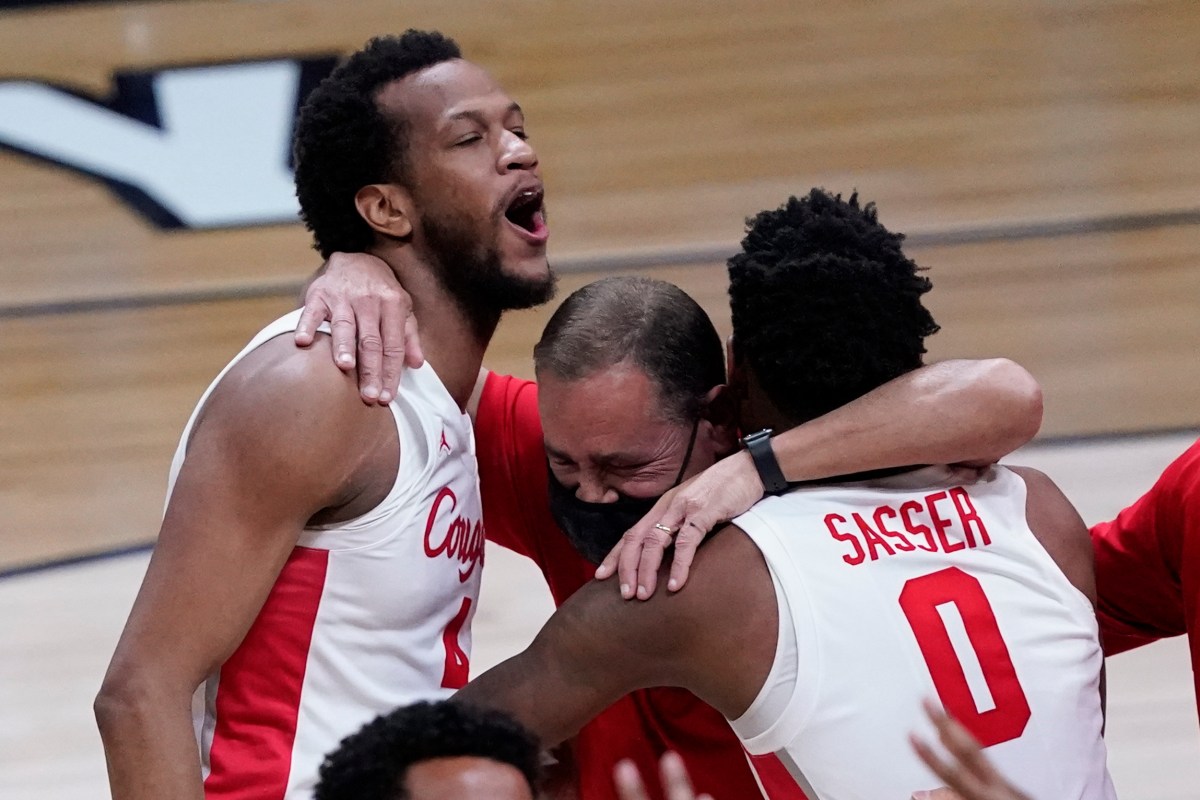
On the men’s side, University of Houston head coach Kelvin Sampson, Lumbee, is looking to guide his team back to the final weekend of the tournament. The Cougars are the number one seed in their region and won by double digits in their first two games.
They take on the University of Miami Hurricanes Friday evening.
Basketball fans are glued to their TVs this time of year. It’s March Madness, and already we’ve seen some brackets busted. Which Native players should we be watching for? Brent Cahwee, co-founder of NDN Sports has been following these developments all year long.
SUPPORT INDIGENOUS JOURNALISM. CONTRIBUTE TODAY
HELENA, Montana — Roberta Duckhead Kittson Nyomo said she and her brother were among the last Native American children adopted out of Thompson Falls before the Federal Indian Child Welfare Act was passed in 1978. The siblings were sent to live with a non-Native family, who Nyomo remembers lacked empathy.
Nyomo, Blackfeet, said she and her brother were abused and she lost her brother to suicide when he was 15.
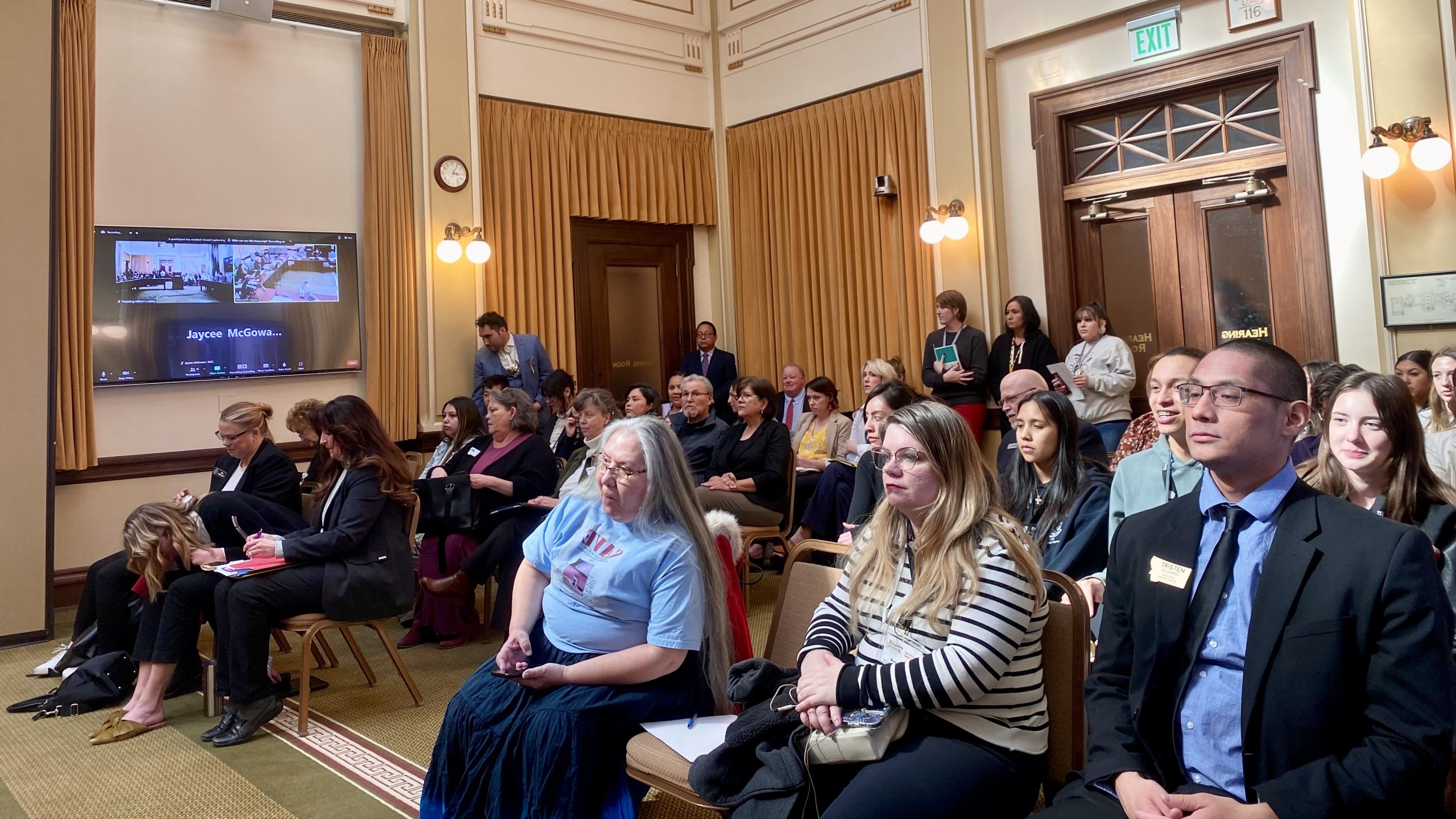
To this day, Nyomo says she believes their lives would be different, had they been placed in a Native American family. She told her story on Wednesday, following a meeting in which the Senate Public Health and Human Safety committee heard the Montana Indian Child Welfare Act, House Bill 317, which would further reinforce the protections for the state’s Native children by strengthening the tribal involvement in placement options for the state.
“ICWA needs to stay in place,” Nyomo said. “It’s a protection for the younger people of Indian Country and I would never want no Native American child ever to have to go through what I and my brother had to go through.” READ MORE — JoVonne Wagner, ICT and MTFP
The Blackfeet Tribal Business Council on Monday evening charged council member Timothy Davis with three counts of misconduct reflecting on the dignity of the Blackfeet Tribe or the tribal council.
The council announced it will hold an expulsion hearing for Davis on Monday, March 27 at 9 a.m. at the chambers. At the hearing, Davis will answer questions related to his charges with all council members present.
Attempts to reach Davis for comment were unsuccessful.
A resolution from the council referenced an event last spring when the body voted unanimously to remove Davis as chairman after nine people were arrested at his home on drug-related charges. The arrests came just days after the tribe had declared a state of emergency on fentanyl and drug overdoses. After he was removed as chair, Davis continued to serve as a council member, as is customary. He is not up for reelection until 2024. READ MORE — The Missoulian
Hollywood has opened the door to thinking about multiple universes where an action we take in our world causes an alternative future. Imagine a world where we are mitigating or adapting to a warmer climate.
Nah.
Perhaps it’s the blockbuster plot that makes more sense in a world where governments, companies, and people jump from one climate policy to a contradictory one in a flash. Logic be damned.
This week the United Nations released the Synthesis Report of The Intergovernmental Panel on Climate Change (or the IPCC) and its Sixth Assessment Report. A long title that sums up the best science available on climate change produced by the work of hundreds of scientists from around the world. The report breaks down three themes: What’s going on now; future risks and the long-term responses; and, responses in the near term. READ MORE — Mark Trahant, ICT
Sign up here to get ICT’s newsletter
A First Nations hockey team in Canada is shattering records and racism on the ice. APTN’s Angel Moore tells us how anti-Indigenous sentiments on the ice and in the stands helped form the team.
Jordan Harmon traveled from Oklahoma to Atlanta recently and met some folks working to stop the construction of a police training facility that some call Cop City. She ended up adding some Indigenous muscle to the effort. ICT’s Stewart Huntington introduces us to the Native lawyer.
Indigenous values are at the heart of a program started by a Comanche woman over 50 years ago. LaDonna Harris, now in her 90s, has developed Native leaders across the world. ICT’s Shirley Sneve spoke to her daughter, Laura Harris, who now leads this nonprofit organization.
The Indian Gaming Association is hosting its tradeshow and convention in San Diego, California, March 27-30. The tradeshow will host hundreds of speakers and exhibitors as well as educational workshops. ICT will be there to bring you daily coverage and insight on the gaming industry landscape.
For decades, Sam Kunaknana has caught grayling and hunted caribou along Fish Creek, a small river that meanders over the open Alaskan tundra near the Iñupiaq community of Nuiqsut. Kunaknana sets nets for broad whitefish, jigs for grayling, and waits for the caribou, which he remembers ambling in large herds across the muskeg years ago. Roughly three-quarters of the residents of Nuiqsut, which sits in the center of Alaska’s North Slope some 20 miles south of the Arctic Ocean, mostly eat foods harvested from the wild.
But in recent years, living off the land has gotten harder for Kunaknana, who’s 55 years old. Nuiqsut has slowly been encircled by oil wells and pipelines. “I could see development coming, as a kid, from the east,” Kunaknana said. Then the drill rigs crept north along Nuiqsut’s horizon. And now they are moving west.
When the Biden administration greenlit ConocoPhillips’s Willow project last week, it set in motion a long-awaited but fraught expansion of Arctic drilling. The project, set within 23 million acres of largely undeveloped public land called the National Petroleum Reserve, will extend Conoco’s oil fields around Nuiqsut by tens of miles and lead to the construction of roads, bridges, and a drilling site near Fish Creek. By the time it’s finished, Willow could produce 600 million barrels of oil over 30 years, which would translate into 239 million metric tons of carbon emissions if it’s all burned, according to an estimate by the federal government. READ MORE — Grist
FOLLOW ICT ON SOCIAL MEDIA: FACEBOOK, TWITTER, INSTAGRAM, TIKTOK
- Tourists hoping to see falls forced out by flooding: The official Havasupai Tribe Tourism Facebook page reported that flooding had washed away a bridge to the campground
- Native groups blast governor for agency appointment: A coalition of advocates dedicated to stemming the tide of violence and missing persons cases in Indian Country is demanding more transparency
- Tribes get bison as they seek to restore bond with animal: 82 tribes now have more than 20,000 bison, and the number of herds on tribal lands have grown in recent years
- NHL team won’t wear Pride jerseys, citing new Russian law
- Tribal leaders want to reclaim all of Upper Red Lake, a Minnesota walleye mecca
- ‘Freedom is not free’: 20 years later, Lori Piestewa’s son and mother reflect on her legacy
We want your tips, but we also want your feedback. What should we be covering that we’re not? What are we getting wrong? Please let us know. dalton@ictnews.org.


