
Greetings, relatives.
A lot of news out there. Thanks for stopping by ICT’s digital platform.
Each day we do our best to gather the latest news for you. Remember to scroll to the bottom to see what’s popping out to us on social media and what we’re reading.
Also, if you like our daily digest, sign up for The Weekly, our newsletter emailed to you on Thursdays. If you like what we do and want us to keep going, support and donate here.
Okay, here’s what you need to know today:
RAPID CITY, S.D. – Indigenous people account for roughly 60 percent of missing persons cases in South Dakota, which is still an undercount according to the Oglala Sioux Tribe Victim Services Department and Sisseton Wahpeton Oyate’s Domestic Violence & Sexual Assault Program. In response to the current crisis, the South Dakota Attorney General’s Office appointed a Missing and Murdered Indigenous Persons Coordinator to address the rising numbers of missing Indigenous people.
Over a year ago, the South Dakota Attorney General’s Office announced the creation of an MMIP advisory council, and in November 2022 announced the hiring of an MMIP Coordinator. The advisory council which is now called the stakeholders committee, was created by Attorney General Mark Vargoto to work in tandem with the MMIP Coordinator and provide guidance to the current Attorney General, Marty Jackley. Both initiatives aim to address the high number of missing Indigenous people across the state, according to a press release from the Attorney General’s Office.
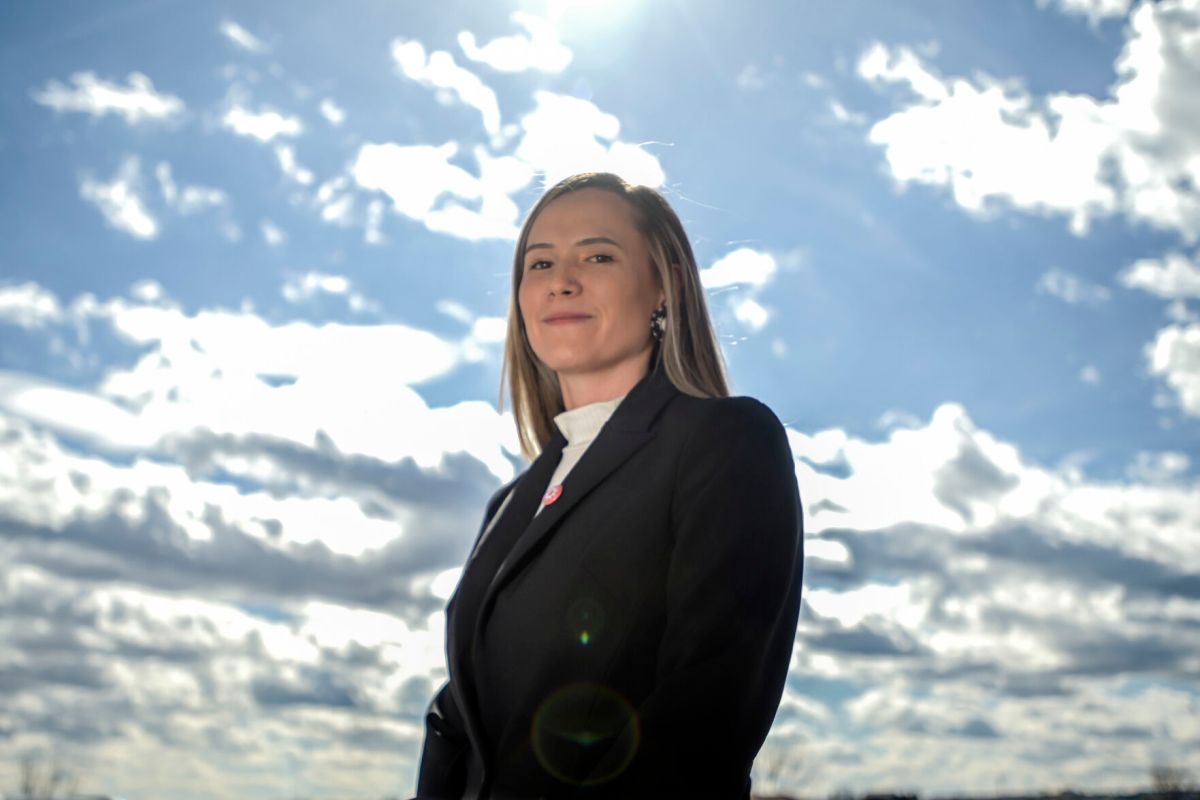
“We’ve been made aware of the issues here in South Dakota for years now,” said Allison Morrisette, Oglala Lakota and the South Dakota MMIP Coordinator. “These are things that can’t be fixed overnight. The purpose of the [stakeholder’s committee] is to work with the community leaders, grassroots organizations and law enforcement to develop ideas that can hopefully be implemented statewide and help long-term with MMIP and the existing victims who need to be brought home to their families.”
Morrisette assumed her role as the MMIP Coordinator on Nov. 28, 2022, before the formation of the stakeholders committee. As the MMIP Coordinator, Morrisette’s job is to connect victim’s families with resources and support. The stakeholder’s committee is made up of regional advocates who meet twice a year. So far the committee has met two times, with a third meeting in the works. READ MORE. — Amelia Schafer, ICT
SUPPORT INDIGENOUS JOURNALISM. CONTRIBUTE TODAY.
PHOENIX — The 21st Sunrise Service was held to honor the legacy of the U.S. Army Spc. Lori Piestewa, Hopi, at the footsteps of the mountain that is her namesake on March 23. Veterans groups and friends of the Piestewa family gathered to remember the 23-year-old mother who was the first Indigenous U.S. soldier killed in combat, three days after U.S. forces invaded Iraq in 2003.
The sunrise service is organized by a collective group of veterans under the charge of Jim Covarrubias, a U.S. Army veteran and chairman for Piestewa Fallen Heroes Memorial. “This is the 21st year and we’re having this very sacred ceremony in front of the sacred mountain, named after Lori Piestewa. So we’re honoring the sacrifice of military families who lost their sons and daughters in defense of our country in our freedom,” Covarrubias said.
In 2008 the U.S. Board on Geographic Names renamed the mountain in Piestewa’s honor as a fitting tribute to her life and service.
Members of the Piestewa family spoke about the outpouring of support to remember her service and sacrifice, including other members of the armed forces, who gave their lives during Operation Iraqi Freedom.
“Every year the amount of support we received, seeing everyone here to help us heal and seeing all the Goldstar Families present, just knowing what you all went through,” Whiterock said, who was four-years-old, and his sister, Carla, an infant, when their mother was killed in action.
Whiterock said the emotional scars of his mothers death have been challenging through the years, but with the support from various family members and friends has created a path to healing.
“They would tell me that it’s a good reason to come. You have to, when you come you have to have an open heart and open mind and take all these blessings in. When you do come here, that’s when the healing truly begins,” Whiterock said. READ MORE. — Christopher Lomahquahu, ICT
U.S. Rep. Raúl Grijalva, a Democrat in his 11th term representing Arizona, has cancer, he said in a statement Tuesday.
Grijalva, the longtime top Democrat on the U.S. House Natural Resources Committee, did not provide details of his future plans, but said his office remains open as he works “hard to get healthy and return to business as usual as soon as I am able.”
“My congressional office remains open and the many services we provide for our constituents continue uninterrupted,” the statement read. He represents the 7th Congressional District in Arizona.
“I am in regular communication with my staff and I continue to work as I undergo treatment. It is a privilege to serve as a Representative for the people of Arizona and I take this responsibility very seriously.”
Grijalva, 76, said he sought medical treatment “a few weeks ago” for a persistent cough that was initially diagnosed as pneumonia. Further imaging revealed he had cancer, he said. READ MORE. — Source New Mexico
Sign up here to get ICT’s newsletter
The total solar eclipse on Monday, April 8 will not only be a major event for U.S. citizens but a time for Indigenous communities like the Navajo, Cherokee and pueblo people to honor an event that’s rooted in tradition and stories passed down from time immemorial.
A total solar eclipse is when the moon will be positioned between the Earth and the sun, completely blocking sunlight and casting a shadow on the earth. For a few moments it will turn dark depending where on the Earth the shadow is being cast.
This year the eclipse’s path of totality, where a full eclipse is visible, and partial path will be covering the eastern half of the U.S. According to NASA, it will be the last total solar eclipse visible from the contiguous U.S. until August 2044.
Kevin Belin, director of the Diné Bizaad Institute at Navajo Preparatory School in New Mexico, said there are three different interpretations for eclipses for the Navajo people. One is “the sun is going to die,” “the moon and sun will mate” and the most common and neutral interpretation is “the sun and moon have come over each other.”
The sun and moon have significance in Navajo culture. The sun bearer carries the sun disc across the sky every day and oversees death that occurs during the day, specifically those who die traumatically or those who don’t cherish or value life. The Moon bearer is in charge of those who die during the night, those who die a compassionate death.
There’s also a difference between the meanings of lunar and solar eclipses for Navajo people. Lunar eclipses are thought of as a time of blessings and solar eclipses are thought of as a time of protection.
During eclipses Navajo people must stay indoors, with closed windows and doors, and not look outside, limit consumption of food by fasting, not drink water, not sleep, not bathe, brush hair or groom themselves, no intimacy with families or partners, exception between mothers and children. Arts and crafts during solar eclipses are not allowed. Lightly cleaning or remote work at home is allowed.
Belin, Navajo, said long ago those who didn’t have access to the internet or social media only knew about eclipses if they were part of some astrological society where they keep track of events like eclipses.
“However, because of technology we can accurately tell when the event is going to be at its highest. Generally, like our grandparents would have only observed the most visual part of the time. But for me, because I now know that it starts at, let’s say, it starts at 11:59 a.m. and it ends at 4:32 p.m., I’m going to highly observe during that time,” he said.
Technology also adds more awareness for other traditionalists if there’s a need to observe the eclipse even if it’s not happening over Navajo land and is occurring somewhere else in the world. Most believe it still counts and observe the eclipse. READ MORE. — Kalle Benallie, ICT
- Former tribal president convicted of stealing from tribe
- Cheyenne River Sioux Tribe representative Ronald Rosseau was removed following assault conviction
- Kristi Noem banned from Cheyenne River Reservation
- A growing number of tribes oppose offshore wind in California and Oregon
- Over 3,000 homes on the Navajo Nation Receive Accurate Addresses for the First Time
- Israel has brought ‘relentless death and destruction’ to Gaza: UN chief
We want your tips, but we also want your feedback. What should we be covering that we’re not? What are we getting wrong? Please let us know. dalton@ictnews.org.

Our stories are worth telling. Our stories are worth sharing. Our stories are worth your support. Contribute $5 or $10 today to help ICT carry out its critical mission. Sign up for ICT’s free newsletter.

