
Greetings, relatives.
A lot of news out there. Thanks for stopping by ICT’s digital platform.
Each day we do our best to gather the latest news for you. Remember to scroll to the bottom to see what’s popping out to us on social media and what we’re reading.
Also, if you like our daily digest, sign up for The Weekly, our newsletter emailed to you on Thursdays. If you like what we do and want us to keep going, support and donate here.
Okay, here’s what you need to know today:
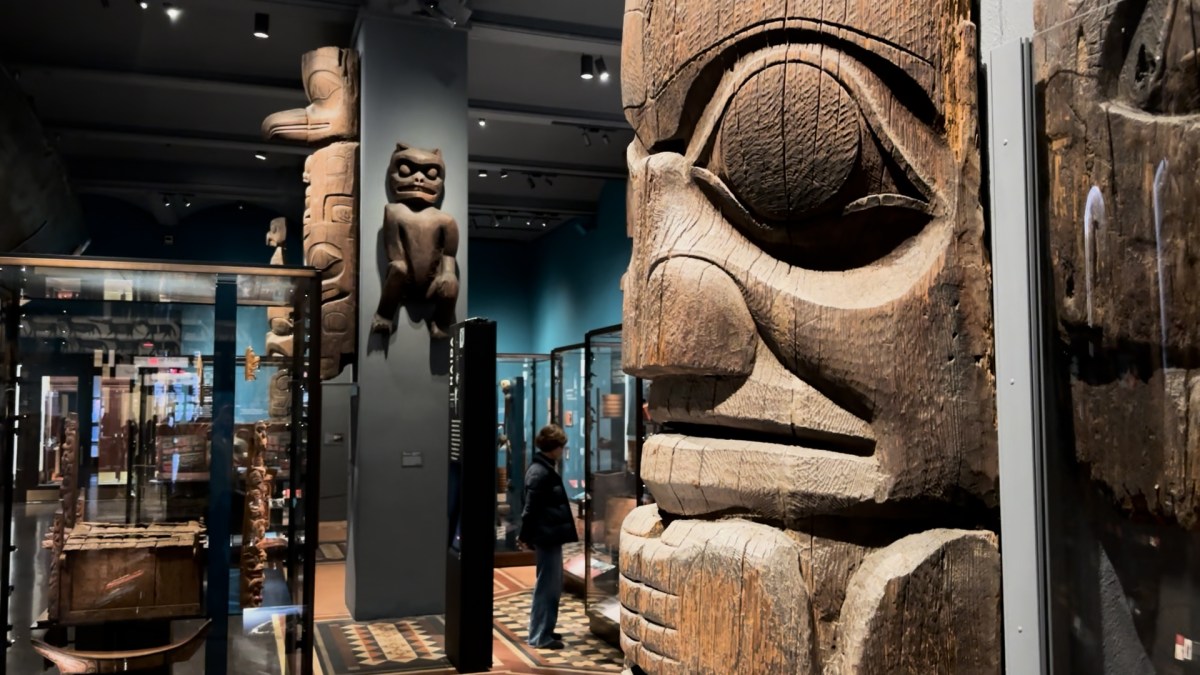
Wondering why your local museum closed exhibits about Native people? Why universities and other institutions are digging through their warehouses with fresh eyes?
A three-part series from ICT national correspondent Mary Annette Pember and broadcast producer Stewart Huntington takes a deep look at new rules that went into effect in January under the Native American Graves Protection and Repatriation Act, known as NAGPRA.
The new rules are the first get-tough regulations to address collections of human remains and cultural artifacts since NAGPRA was passed more than 30 years ago, and museums and universities are struggling to comply.
Tribal leaders say it’s about time.
Read the entire NAGPRA series from ICT and view the companion stories on the ICT Newscast.
NAGPRA Part 1: A sea change in federal regulationsIn the first installment of the three-part series, ICT examines new NAGPRA rules that have left museums across the country in turmoil. Some have shuttered exhibits completely while they figure out the new rules.
View the Day 1 broadcast story on the ICT Newscast
NAGPRA Part 2: ‘A state of Gozhoo’The repatriation of ancestral remains and sacred artifacts under the new NAGPRA rules will help tribal communities heal from generational trauma. It can also help the rest of the world heal as well, tribal leaders say.
View the Day 2 broadcast story on the ICT Newscast
NAGPRA Part 3: A model for future Indigenous exhibits
For the final installment of the series, ICT visited with museum leaders who have gotten ahead of the new NAGPRA rules by doing the right thing – involving tribes in the discussions years ago over the handling and return of remains and cultural items.
View the Day 3 broadcast story on the ICT Newscast
SUPPORT INDIGENOUS JOURNALISM. CONTRIBUTE TODAY.
RAPID CITY, S.D. – For nearly 30 years starting in 1883, Lakota performers traveled the globe and performed in over 3,000 different locations as part of Buffalo Bill’s Wild West Show. Many different historical documents and research initiatives highlight William “Buffalo Bill” Cody’s life and show, but few projects exist highlighting the Indigenous performers he employed.
A new collaborative project between Oglala Lakota College and Clemson University with funding from the National Archives aims to gather information about Lakota ancestors who participated in Buffalo Bill’s Wild West Show.
The project, Wičhóoyake kiη aglí—They Bring the Stories Back: Connecting Lakota Wild West Performers to Pine Ridge Community Histories, is a community collaborative effort to get Lakota people talking about their ancestors’ involvement.
“We have so much history and experiences that have impacted us as a nation, but I think so few of us know all of the history of our people,” said Cecelia Firethunder, Oglala Lakota and a community collaborator for Wičhóoyake kiη aglí. “It’s just so amazing, it’s a beautiful history. Nowadays I can get on an airplane and get to many places in two hours. Back then they were getting on boats and traveling across the ocean for shows.”
Nearing the end of the Indian Wars and westward expansion, performers such as Cody used growing nostalgia for the American Frontier to bring in viewers from across the globe. Originally, the show used Pawnee performers but later switched to mostly Lakota performers from the Pine Ridge Reservation.
“The Buffalo Bill Wild West Show was a very integral part of our culture here. So many of our people went on that,” Firethunder said. “Our ancestors in those days went on trains across America into unknown territory. They traveled across the Atlantic Ocean to Europe. I mean they had no idea where they were going. I’m sure there was a certain amount of anxiety and fear there.”
Despite a large presence of Lakota people, not much is known about exactly how many Lakota performed in the show nor what all of their names were. Those who performed often brought souvenirs or photos back to their families on the reservation. Some of those souvenirs remain today. READ MORE. — Amelia Schafer, ICT
Sign up here to get ICT’s newsletter
TULSA, Okla. – Last year’s National Book Award winner, Ned Blackhawk, is rewriting Native American History for high school and college history courses.
“Most public schools do not adequately teach Native history, and I wrote this book as an alternative,” Blackhawk told ICT and Tulsa World.
Blackhawk recognized the misinformation and harmful stereotyping of Native history in public school textbooks. In his book, “The Rediscovery of America: Native People and the Unmaking of U.S. History,” he takes a professional approach to studying history akin to the way historians look broadly at other subjects, with “existing scholarship assessments” and “through researching archival materials.”
His book tells the history of America from the perspective of Indigenous people, whereas most history courses in America are told from a European focus, starting with colonization. READ MORE. — Felix Clary, ICT
- Native Arts and Culture Foundation leader committed to elevating culture
- Lakota woman running for Sioux Falls City Council
- Rebuilding after 2009 Yukon flood
- Cannabis growing facility is now under construction on Mille Lacs Band of Ojibwe tribal lands
- Native Americans are hardest hit by syphilis surge
- MSU Billings women’s hoops’ Kola Bad Bear named first team WBCA D-II All-American
We want your tips, but we also want your feedback. What should we be covering that we’re not? What are we getting wrong? Please let us know. dalton@ictnews.org.

Our stories are worth telling. Our stories are worth sharing. Our stories are worth your support. Contribute $5 or $10 today to help ICT carry out its critical mission. Sign up for ICT’s free newsletter.
