
Greetings, relatives.
A lot of news out there. Thanks for stopping by ICT’s digital platform.
Each day we do our best to gather the latest news for you. Remember to scroll to the bottom to see what’s popping out to us on social media and what we’re reading.
Also, if you like our daily digest, sign up for The Weekly, our newsletter emailed to you on Thursdays. If you like what we do and want us to keep going, support and donate here.
Okay, here’s what you need to know today:
Content warning: This story contains graphic details about violence and death, as well as information about suicide and missing and murdered Indigenous people. Resources are available for trauma survivors at the Strong Hearts Native Helpline.
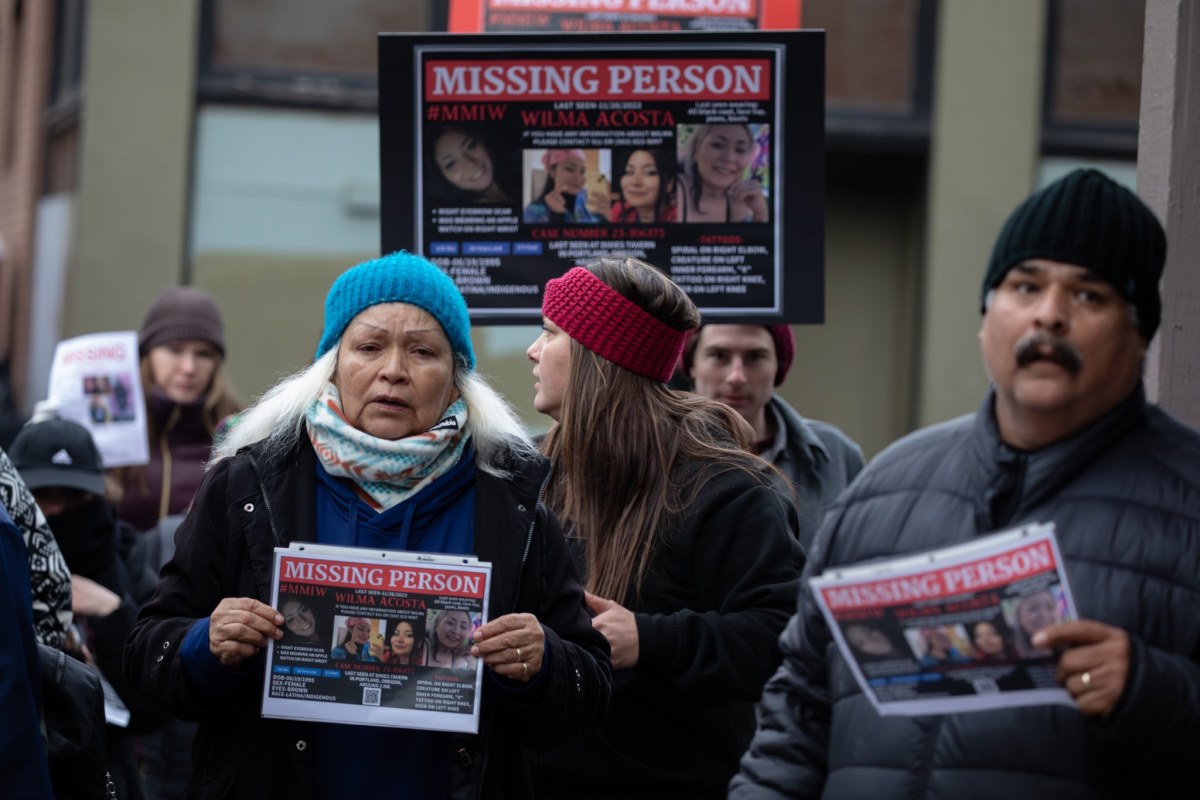
Last fall, things were going great for Wilma Acosta, an unenrolled Pascua Yaqui woman. She had recently landed the job of her dreams. She moved to Portland for the role and began to build her life there, including a new Dalmatian she lovingly named Nasferatu. She played the piano, loved to draw and had dreams of traveling to Paris. According to her family, she radiated joy and felt optimistic and accomplished.
Then she disappeared, and Portland police told a different story – one her family disputes.
On Nov. 25, Acosta and two friends from out of town went out dancing. Her friends left Acosta at the bar in the early hours of November 26, about 20 minutes before she left. She wasn’t seen alive by her family again. On Jan. 2, deputies assigned to the Multnomah County Sheriff’s Office River Patrol Unit located Acosta’s body in the Willamette River, near Cathedral Park. READ MORE — Luna Reyna, Underscore Native News + ICT
SUPPORT INDIGENOUS JOURNALISM. CONTRIBUTE TODAY
CHICAGO — Navajo Nation President Buu Nygren had just gotten done with a media interview in the buzzing hallway outside the Native American Caucus meeting. He was wearing his unmistakable flat brim hat, a feather tucked in the band on the right side, and a turquoise necklace.
“I think as a delegate, I have to endorse VP Harris, so it’s an honor to be a delegate,” Nygren said with a smile. “It’s an honor to see her as the next president of the United States.”
Several former, and present Indigenous elected officials — representing local, state, federal and tribal governments — endorsed Vice President Kamala Harris during the Democratic National Convention held in Chicago.
Mashantucket Pequot Tribal Nation Chairman Rodney Butler is a member of the Treasury Tribal Advisory Committee, as well as several other Native American organizations. Butler believes that another Trump presidency would negatively impact the progress made for Indigenous nations under the Biden administration. READ MORE — Pauly Denetclaw, ICT
WASHINGTON — This week, there were nine Indigenous political candidates running for elected office including U.S. Rep. Mary Peltola, Yup’ik, who is fighting to maintain her seat as Alaska’s sole representative for the state’s one at-large congressional district. Republicans in the state hope to take advantage of the state’s new ranked-choice voting system to consolidate power to defeat her.
Peltola, who is the first Alaska Native to be elected to the House, won 50.4 percent of the vote in the state’s primary election. She will advance to the Nov. 5 election, fighting to retain her seat against at least two Republican challengers.
Voters in Wyoming and Florida also went to the polls on Tuesday, Aug. 20, to cast their ballots in the state’s primary election. There was only one Indigenous candidate running for office in Wyoming.
Ivan Posey, Eastern Shoshone, is running as a Democrat against Republican incumbent Sarah Penn, hoping to overtake her to represent Wyoming’s district 33 in the state House of Representatives. He ran uncontested and will continue to the general election. READ MORE — Kadin Mills, ICT
SANTA FE, N.M. – In a time of conflict around the world, it’s fitting that the Best of Show winner at the Southwestern Association for Indian Arts’ 102nd Santa Fe Indian Market held Aug. 14-18 was a bow and arrow set called “Pueblo Revolt” by Dan Vallo, Acoma Pueblo.
In a statement, Vallo said his work is “dedicated to the 1680 warriors of the Pueblo Revolt with a depth of handcraft for protecting and honoring Pueblo communities of past, present, and future.”
The set incorporates an obsidian blade, turkey feathers, and yucca fiber cordage with knots to represent the knotted cord carried by Popé to mark the days when the Pueblos would rise up against the Spanish invaders.
The Best of Classification winner for jewelry was an unexpected horse headstall by Sarah Aragon, Navajo. Called Back in the Saddle, it is exquisitely done with Tufa cast silver and stone inlay work of Mediterranean coral, Castle Dome turquoise, Morenci turquoise, Kingman turquoise, Persian turquoise, and Carico Lake turquoise. READ MORE — Sandra Hale Schulman, Special to ICT
Around the World: From Batwa Indigenous community in Uganda to Stanford University, Peru’s isolated Indigenous peoples threatened by oil and gas expansion, Indigenous youth disproportionately represented in NSW crime data in Australia, and Canada allocates $5M for cultural center in Sault Ste. Marie.
UGANDA: From forest to Stanford
This is Joyce Orishaba’s remarkable journey.
In the heart of Uganda’s rolling hills and dense forests lives the Batwa tribe, an Indigenous community with a rich cultural heritage and a history marked by struggle and displacement. Traditionally hunter-gatherers, the Batwa faced eviction from their ancestral lands in the 1990s when the Bwindi Impenetrable Forest became a national park to protect endangered mountain gorillas. This displacement left the Batwa landless, impoverished and subjected to discrimination.
From this backdrop of hardship emerged the remarkable story of Joyce Orishaba, an 18-year-old Mutwa (singular for Batwa) who defied the odds to achieve a dream once thought impossible. READ MORE— Deusdedit Ruhangariyo, Special to ICT
Sign up here to get ICT’s newsletter
A leader in the national and regional tribal housing arena has passed away. Brook B. Kristovich died on July 13, 2024 at the age of 61. He was Nishga and Ingiluk Athabascan and was an enrolled member of the Native Village of Napaimute in Alaska.
Kristovich took on leadership roles in the National American Indian Housing Council as well as regional housing authorities in the Pacific Northwest and Southwest.
On his Linked In page, he said he had experience running programs on low rent, homeownership, low income housing tax credit units, and other financing. Kristovich said he was experienced in turning around troubled organizations and worked directly with tribal councils and housing boards of directors.
The National American Indian Housing Council’s obituary said, “Brook committed his career to serving the housing needs of Native Americans in Indian Country.” READ MORE— Joaqlin Estus, ICT
- COVID-19 cases rise across Indian Country: Communities across the country are seeing elevated numbers of COVID-19 hospitalizations. Experts stress the importance of getting vaccinated
- Diné author writes Navajo Code Talkers book: The book is geared toward giving fourth- and fifth-grade readers insight into Navajo Code Talkers as part of history and social studies classes
- Lindy Waters III Foundation hosts annual tournament: Lindy Waters, a Cherokee Nation and Kiowa citizen, has been in the NBA since 2022 and is currently on the Golden State Warriors
- Coeur d’Alene Tribe releases 150 Chinook salmon into Spokane River as part of ongoing reintroduction efforts
- Key mediator Egypt expresses skepticism about the Gaza cease-fire proposal as more details emerge
- Government: US economy added 818,000 fewer jobs than first reported in year that ended in March
We want your tips, but we also want your feedback. What should we be covering that we’re not? What are we getting wrong? Please let us know. dalton@ictnews.org.

Like this story? Support our work with a $5 or $10 contribution today. Contribute to the nonprofit ICT. Sign up for ICT’s free newsletter.
