
ICT is working to shape the future of journalism and stay connected with readers like you. A crucial part of that effort is understanding our audience. Share your perspective in a brief survey for a chance to win prizes
Greetings, relatives.
A lot of news out there. Thanks for stopping by ICT’s digital platform.
Each day we do our best to gather the latest news for you. Remember to scroll to the bottom to see what’s popping out to us on social media and what we’re reading.
Also, if you like our daily digest, sign up for The Weekly, our newsletter emailed to you on Thursdays. If you like what we do and want us to keep going, support and donate here.
Okay, here’s what you need to know today:
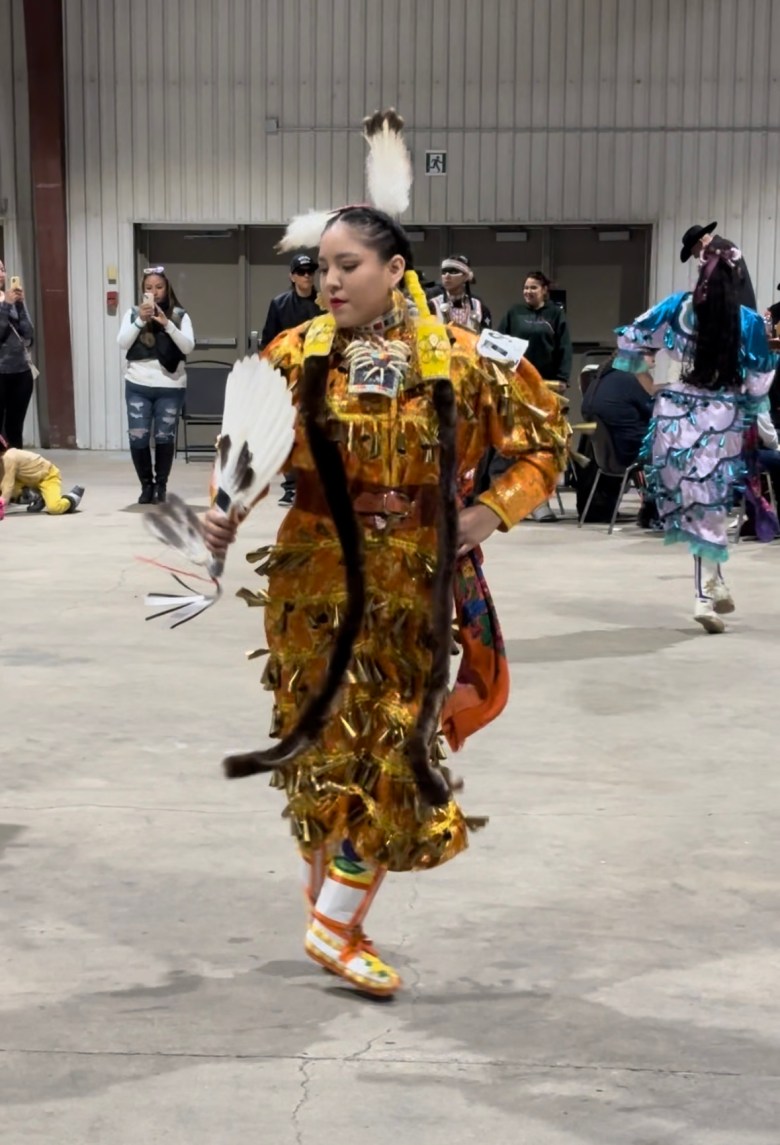
Nakeisha McDonald felt shame and bullying from growing up in a spiritual household in Cross Lake, Manitoba, in Canada that spoke Cree and practiced Cree culture. She said it was different from others in her community who primarily practiced Christianity.
But when she moved to Winnipeg at 17, people were stunned to learn that she spoke Cree and could dance. They excitedly asked McDonald, Swampy Cree, if she could teach them.
“I had so many people coming up to me all the time that I tried individual teaching but that wasn’t always possible so that’s when I started TikTok in 2020 when Covid hit and I was just a stay-at-home mom at the time. I had a newborn baby,” she said. “To have something to do, I kind of started to find my passion and start to share my passion with people.”
The 24-year-old teaches all various ages from early elementary, middle school to students at the University of Manitoba. She said a lot of them have never been to a powwow, don’t know how to dance, and always wanted to learn. READ MORE — Kalle Benallie, ICT
SUPPORT INDIGENOUS JOURNALISM. CONTRIBUTE TODAY.
Greetings, relatives:
Let’s take a moment to catch up on the news that made headlines in February.
We start with one of our most-read topics this month. The death of Nex Benedict, a 16-year-old transgender student from Oklahoma, brought a national audience to a small community near Tulsa. Felix Clary has more.
In the Pacific Northwest, The 50th anniversary of the Boldt Decision took place. A landmark lawsuit reaffirmed treaty fishing rights after decades of intertribal activism, inspired by the civil rights movement. Luna Reyna has more.
Elders and citizens of the Bay Mills Indian Community welcomed home the set of four scrolls — used by Ojibwe peoples to record historical and religious information – with ceremony and dignity, and at least a few tears. The scrolls had been set for auction at Cottone Auctions based in New York on behalf of a private collector. Mary Annette Pember has more. READ MORE — ICT
As syphilis cases continue to rise across the Great Plains Region, the Great Plains Tribal Leaders Health Board has urged U.S. Health and Human Services Secretary Xavier Bacerra to declare a public health emergency.
South Dakota currently has the highest rate of syphilis in the nation, with 84.3 per 100,000 people infected, according to the Centers for Disease Control and Prevention. The rate of syphilis in South Dakota is two times higher than in New Mexico, the state with the second-highest infection rate.
The Health Board stated that section 319 of the Public Health Service Act allows the Secretary of Health and Human Services to implement measures for preventing the introduction, transmission or spread of infectious diseases. The Health Board serves as the representative body for 17 tribal nations and one service unit across South Dakota, Nebraska, North Dakota and Iowa.
“The elected leaders from each of the Great Plains Area tribal nations implore you to issue a Public Health Emergency Declaration under Section 319 of the Public Health Service Act, acknowledging the significant outbreak of syphilis and congenital syphilis affecting American Indian and Alaska Native communities in our region,” said Jerilyn Church, CEO of the health board in a press release. READ MORE — Amelia Schafer, ICT + Rapid City Journal
Sign up here to get ICT’s newsletter
As the chairman of the Ak-Chin Indian Community, Robert Miguel said he has often met with congressional leaders in Washington, D.C., to advocate for issues impacting his southern Arizona tribe.
He said it is great to advocate and have conversations with leaders, but when federal leadership visits the Ak-Chin Indian Community, it is more meaningful because they witness firsthand what he advocates for.
And that’s precisely why Miguel was glad that the Ak-Chin Indian Community welcomed Assistant Secretary of Indian Affairs Bryan Newland, Bay Mills Indian Community, and White House Senior Advisor Tom Perez on Feb. 19. The Ak-Chin Indian Community’s tribal land is in southern Arizona and spans over 22,000 acres. It is located near Maricopa, in the Santa Cruz Valley.
The visit was part of the Biden administration’s tour to highlight its Investing in America agenda. A chief component of that is showcasing how it makes historic investments in Indigenous communities, including fulfilling settlements of Indian water rights claims and providing affordable, high-speed internet. READ MORE — AZ Mirror
- Osage song from ‘Killers’ to be performed at Oscars: Osage Tribal Singers to perform Oscar-nominated song from ‘Killers of the Flower Moon’ at March 10 Academy Awards
- Man to plead guilty in ‘killing spree’ of eagles and other birds: Federal prosecutors say Travis John Branson and others killed about 3,600 birds during a yearslong “killing spree” on the Flathead Indian Reservation and elsewhere
- Scam targets vulnerable communities: On the Wednesday edition of the ICT Newscast, IndigiPolitics with John Tahsuda looks at the South Carolina primary election and the 40 percent of Republicans who said no to another Trump presidency. Speaker for the Navajo Nation Council holds scammers accountable for targeting Navajo citizens seeking help through sober living homes. The Native Arts and Cultures Foundation sees changes
- In ‘Democrat country,’ Republicans recruit 2 tribal members for House seats: District 9 includes 2 reservations after tribes win in court
- Yurok Tribeinvestigator rescues woman from potential human trafficking
- ‘Guardians of the forest’: How art made from the ashes of Amazon Rainforestfires is helping Indigenous communities

We want your tips, but we also want your feedback. What should we be covering that we’re not? What are we getting wrong? Please let us know. dalton@ictnews.org.

