
Greetings, relatives.
A lot of news out there. Thanks for stopping by ICT’s digital platform.
Each day we do our best to gather the latest news for you. Remember to scroll to the bottom to see what’s popping out to us on social media and what we’re reading.
Also, if you like our daily digest, sign up for The Weekly, our newsletter emailed to you on Thursdays. If you like what we do and want us to keep going, support and donate here.
Okay, here’s what you need to know today:
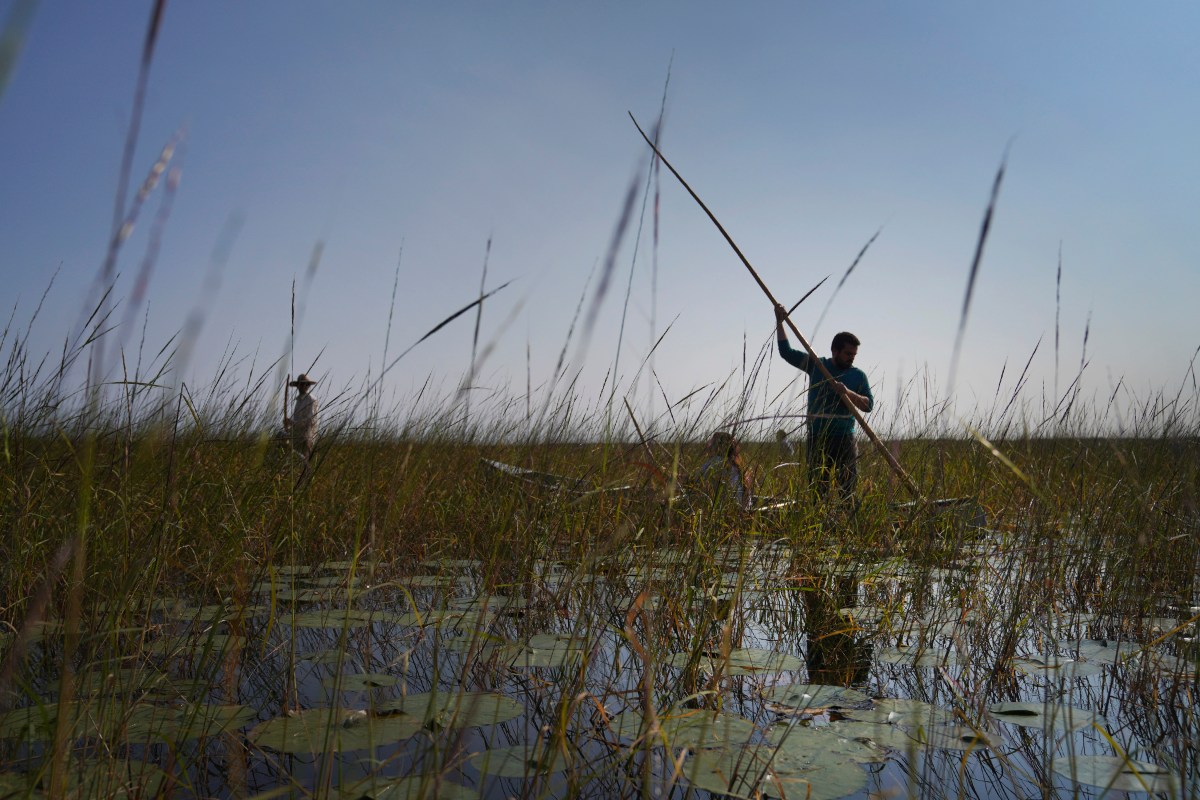
In the 1800s, the Fond du Lac Band of Lake Superior Chippewa joined other tribes in signing a pair of treaties with the federal government, giving up massive swaths of land in return for the creation of a reservation in eastern Minnesota. The treaties included a guarantee: Tribal members would be able to return in perpetuity to the lands they were signing away to gather wild rice, known as manoomin.
“There’s a recognition that [manoomin] is a relative that figures very prominently in the Ojibwe migration story,” said Nancy Schuldt, water projects coordinator with the environmental program for the Fond du Lac Band of Lake Superior Chippewa. “It is one of the hallmarks of the how and the why [that] the Ojibwe people found themselves migrating to the western Great Lakes.”
Retaining the right to harvest manoomin allowed tribal members to maintain a connection to their ancestral lands, even as they were forced to live within reservation boundaries. But wild rice is very sensitive to environmental conditions, and the tribe found that sulfate pollution from nearby mining threatened the waters on which their harvest depended. READ MORE.— Stateline
SUPPORT INDIGENOUS JOURNALISM. CONTRIBUTE TODAY.
ART: Tribe gambles on art, wins jackpot
The San Manuel Band of Mission Indians, based in Highland, California, is fast becoming known for its art collection, design, film production and entertainment.
The tribe’s new showstopper is The Palms Casino Resort in Las Vegas. The tribe is the first to own and operate a casino there – and stay true to its Indigenous values.
MUSIC: International collabs ‘Shine’ on
In a lush new collaboration, Sihasin, the Navajo brother sister duo from Arizona, were on tour in Armenia when they recorded a remix of the song “Shine” with local musicians there.
The video, filmed on location at UNESCO World Heritage site Zvartnots Cathedral and Meeting Point Studios, Yerevan, highlighted magical moments from the Armenian tour, including performances at Wine Days Festival and TUMO Gyumri, master classes at TUMO Yerevan, Emili Aregak Center, and AGBU with the Karin Folk Dance Group – and the band’s visit to stunning Geghard Monastery.
ART: AI dream art goes digital
Creative Time, New York’s public art organization, has unveiled its latest project by artists Kite and Alisha Wormsley. Cosmologyscape, is a multi-layered, interactive, ambitious public art project integrating AI that asks viewers to share dreams with color and action cues that create the image through AI.
Kite, Oglala Lakota, is a performance artist, visual artist, and composer raised in Southern California. Her practice investigates contemporary Lakota ontologies through research-creation, computational media, and performance. READ MORE. — Sandra Hale Schulman, ICT
Sign up here to get ICT’s newsletter
The story of Indian boarding schools – children stripped from their homes and forced into foreign lifeways – is a story of brutally disrupted lives, families and cultures that continues “to impact American Indian and Alaska Native individuals and Indian Country,” according to a report released this week by the U.S. Department of Interior.
It’s also a story that, like most every story in Indian Country, eventually comes back to the land.
“The purpose of the Indian boarding school policy was to assimilate American Indians and Alaska Natives and dispossess us of our lands,” said OJ Semans, executive director of the Coalition of Large Tribes, an advocacy group of more than 20 tribes controlling more than 50 million acres. READ MORE. — Stewart Huntington, ICT
Attorneys for Greenpeace have asked a North Dakota judge to dismiss a lawsuit brought by the developer of the Dakota Access Pipeline over the environmental activist group’s organized opposition to the pipeline.
Thousands of protesters came to south-central North Dakota in 2016 and 2017 to protest construction of the pipeline in solidarity with the Standing Rock Sioux Tribe, which opposed the project out of concerns the pipeline infringed on its sovereignty and threatened to pollute its water supply. Greenpeace was among the activist groups that backed the demonstrations.
Energy Transfer Partners’ lawsuit, filed in Morton County District Court in 2019, accuses Greenpeace of criminal behavior — including trespassing, vandalism, arson as well as the harassment and assault of construction workers — to stop the pipeline, often referred to as DAPL. The pipeline company also alleges that the environmental group solicited money to support unlawful activity against the pipeline and incited riotous behavior by protesters. READ MORE. — North Dakota Monitor
- Native Americans and the elusive American Dream
- Rising Native golfer finds new pathways
- Apologize! Report calls for US government to own up to abusive boarding school history
- Minneapolis’ Native Americans, feeling validated by findings of police bias, want a place at the table
- A New Streetwear Drop Highlights Unsung Native American Olympians
- Dozens gather at Spotted Lake to open annual ONA assembly: ‘This was like our hospital, this was like our church’
We want your tips, but we also want your feedback. What should we be covering that we’re not? What are we getting wrong? Please let us know. dalton@ictnews.org.

