
ICT is working to shape the future of journalism and stay connected with readers like you. A crucial part of that effort is understanding our audience. Share your perspective in a brief survey for a chance to win prizes
Greetings, relatives.
A lot of news out there. Thanks for stopping by ICT’s digital platform.
Each day we do our best to gather the latest news for you.
Okay, here’s what you need to know today:
The walls of the Oglala Sioux Tribe Victim Services building are lined with missing person posters. Dozens of faces and names of men and women, all from the Pine Ridge Reservation, who have gotten little to no justice.
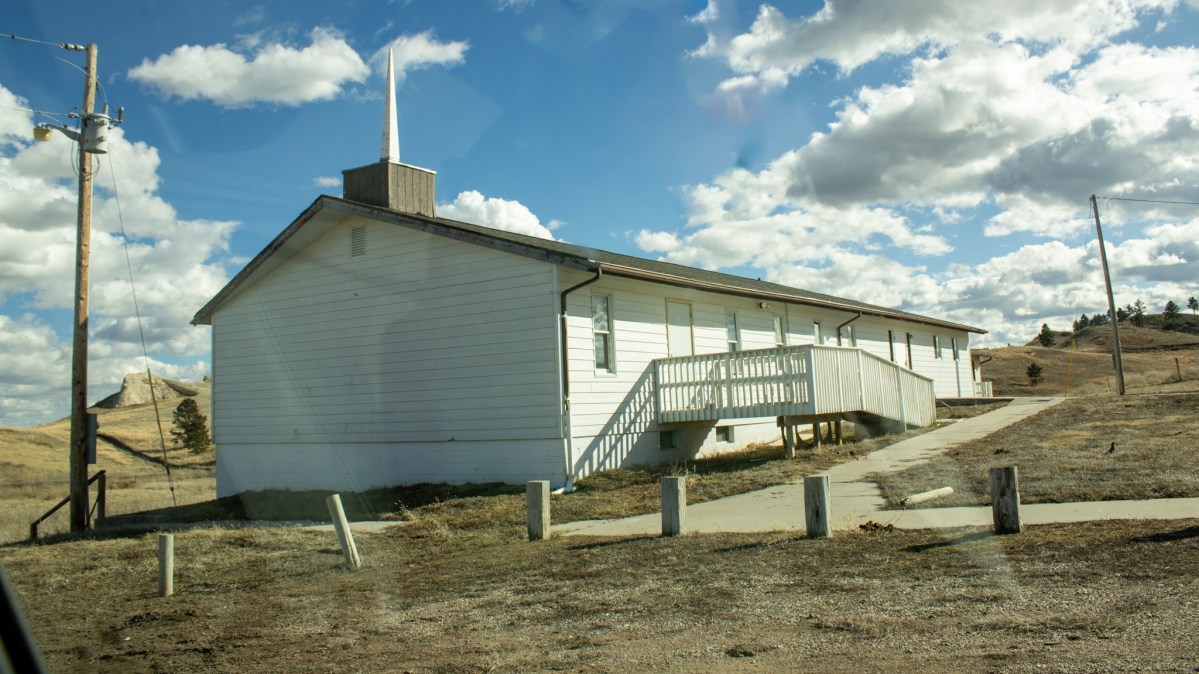
Fifty years ago in February 1974, Delema Sits Poor and her friend left their school at the Seventh Day Advent Church in the number four community (also called Wakpamni), about eight miles from the Pine Ridge community. The two set out to walk along an unpaved backroad towards Manderson, South Dakota. Despite below-zero temperatures, the two 12-year-old girls were determined to reach their destination.
High winds and heavy snow set in during their walk. At some point, Sits Poor’s friend began to develop frostbite so she opted to walk to the nearby Red Cloud Indian School, but Sits Poor kept walking, wearing only a white down-filled jacket with brown bell-bottom pants and sneakers. The Oglala/Mniconju Lakota girl was never seen again.
The next morning, once the snowstorm cleared, her family traveled to Pine Ridge to find a phone and call for help. Her father filed a police report, and her cousin called the National Guard. READ MORE. — Amelia Schafer, ICT + Rapid City Journal
SUPPORT INDIGENOUS JOURNALISM. CONTRIBUTE TODAY.
“Oppenheimer” continued to steamroll through Hollywood’s awards season on Saturday, winning the top prize, for outstanding cast, along with awards for Cillian Murphy and Robert Downey Jr., at the 30th Screen Actors Guild Awards.
The SAG Awards don’t always signify Oscar success. Two of the last five winners from the guild (“The Trial of the Chicago 7” and “Black Panther”) lost at the Academy Awards. But in the past two years, all five of the top SAG prizes — best ensemble and the four acting winners — have corresponded with the eventual Oscar winners, including the ensembles for “Everything Everywhere All at Once” and “CODA.”
That could mean the SAGs offered an Oscar preview in two of the closest contests: best actor and best actress.
The night’s most thrilling win went to Lily Gladstone for female actor in a leading role in Martin Scorsese’s “Killers of the Flower Moon.” No category has been more hotly contested, with analysts evenly split between Gladstone and Emma Stone for “Poor Things.” READ MORE. — Associated Press
Minnesota Lt. Gov. Peggy Flanagan criticized Oklahoma Gov. Kevin Stitt on Friday, saying he is “not doing enough” in response to the death of 16-year-old nonbinary student and Choctaw descendent Nex Benedict.
In an interview with ICT, Flanagan blamed Oklahoma lawmakers for enacting laws targeting 2SLGBT+ students, calling them “very intentional choices by decision makers.” She specifically cited a 2022 law, requiring students to use bathrooms that align with their gender at birth. The bullying against Benedict started shortly after that law was signed, according to Benedict’s family.
“I want to be really, really clear that there are consequences to policy,” the White Earth Band of Ojibwe citizen said. “I know there’s still an ongoing investigation, but I think one of the things we can be really clear about is that the system failed Nex Benedict.” READ MORE. — Aliyah Chavez, ICT
A federal judge in Anchorage has confirmed her decision to uphold the suspension of oil and gas survey work in the Arctic National Wildlife Refuge.
In a 19-page opinion, U.S. District Court Judge Sharon Gleason declined to reconsider a 2023 ruling against the Alaska Industrial Development and Export Authority, which won oil leases in the refuge during a January 2021 sale and sued the Biden administration after it suspended those leases.
The Biden administration subsequently canceled the leases altogether, and AIDEA is challenging that decision in a separate lawsuit.
“Today’s court decision in Alaska is a small part, not the conclusion, in defending the rights of Alaskans and AIDEA to our ANWR leases. We will continue to fight against the wrongful cancelation of our leases,” said Randy Ruaro, executive director of AIDEA, by email. READ MORE. — Alaska Beacon
Sign up here to get ICT’s newsletter
On the Monday edition of the ICT Newscast, a gallery in Minnesota is putting healing through cultural reconnection at the forefront. A Blackfeet actress talks about how education helped shape her career. A look at the groundbreaking journey of the first Anishinaabe women on a state gaming commission.
Watch:
Billy Frank Jr.’s father used to tell him, “When the tide is out, the table is set.” Frank Jr. grew up in a small house on the Nisqually River, where glacier water from Mount Rainier flows into the Puget Sound. Traditional fishing knowledge was passed down to Frank Jr. who caught his first fish at 11 years old. Just four years later, on a brisk winter morning in 1945, everything changed. In the first light of daybreak, dog salmon and steelhead with its glowing pink belly slapped their bodies against Frank Jr’s fifty-foot net as he pulled them ashore.
Soon after he heard, “You’re under arrest!” yelled by state game wardens.
“Leave me alone, goddamn it,” Frank Jr. a Nisqually Indian Tribe citizen, and one of the leaders of what is now known as the Fish Wars told them. “I fish here. I live here!”
The first time Frank Jr. was arrested for fishing in his traditional waters he was just 14. This arrest motivated young Frank Jr. to become the impactful activist needed to change the treatment of Native fishers and fight back for his fishing rights. Frank Jr. became a leader of what is now referred to as the “Fish Wars.” The activism of tribal members during the Fish Wars, inspired by the civil rights movement at the time, led to a lawsuit that affirmed the treaty rights of over a dozen Native nations in what is now Washington state. READ MORE. — Luna Reyna, ICT + Underscore News
Arizona’s gaming compact with Native American tribes in the state doesn’t allow for the use of so-called historic horse racing devices, Attorney General Kris Mayes concluded Thursday.
And if lawmakers at some point were to authorize the devices in state law, it would trigger a “poison pill” provision in the gaming compact that would release tribes from limits on how many gambling machines and what kinds are used in their casinos, and they would have to pay less of their gaming revenues to the state.
In a formal opinion published Feb. 22, Mayes wrote that, although amendments made to the gaming compact in 2021 create additional exceptions to gambling exclusivity for tribes, none of those changes permit historic horse racing machines.
Historic horse racing machines appear similar to video slot machines, but instead of the outcome being determined by a random-number generator, winners are determined based on old horse races that have been stripped of identifying information so gamblers can bet on them. READ MORE. — Arizona Mirror
- Man found guilty of murder in Alaska Native woman’s killing: Brian Steven Smith, a 52-year-old from South Africa, showed no reaction in court and stared ahead as the judge read the jury’s verdict.
- ‘Peter Pan’ flies again after some much needed changes: Playwright Larissa FastHorse says she found the characters complex, the pirates funny, the music enchanting but the depictions of Indigenous people and women appalling.
- ‘Sugarcane’ filmmakers discuss boarding schools: The film is by Julian Brave NoiseCat and Emily Kassie.
- The most eloquent prayer: How the Chippewa Cree are fighting suicide.
- Ethan Hawke, Sterlin Harjo to reunite: Sterlin Harjo, Ethan Hawke reuniting on pilot for FX that will be shot in Tulsa.
- Native American mascot ban proposed for K-12 schools in Illinois.
- Enbridge Wants Line 5 Shutdown Order Overturned on Tribal Land in Northern Wisconsin.
- Triston Harper: 5 Things to Know About the 15-Year-Old ‘American Idol’ Standout.
We want your tips, but we also want your feedback. What should we be covering that we’re not? What are we getting wrong? Please let us know. dalton@ictnews.org.


