
Hawey, relatives.
The weekend is here!
A lot of news out there. Thanks for stopping by Indian Country Today’s digital platform. Each day we do our best to gather the latest news for you.
Okay, here’s what you need to know today:
While baseball may be America’s pastime, football is king of the big four American sports and the National Football League celebrated a birthday Friday.
The NFL is 100-years-old.
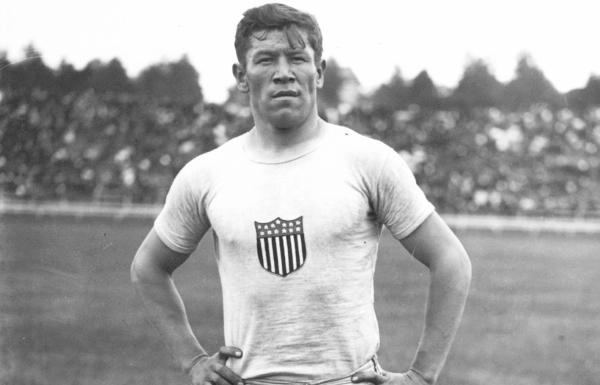
The league has had a number of great players in that span but there is one star Indian Country holds near and dear to its heart. Jim Thorpe, Sac and Fox and Potawatomi, played 12 seasons in the league and was elected as its first commissioner.
Considered by many to be the greatest athlete of all time, Thorpe was inducted into the NFL Hall of Fame in 1963, 10 years after his death.
On behalf of Thorpe, his former teammate and friend Pete Calac accepted his entrance into the Hall of Fame.
In accepting the Hall of Fame award, Calac too referred to Thorpe as “one of the greatest football players in both college and professional football in his day.”
“Today I know that he had that familiar grin on his face up in the happy hunting grounds and it’s surely a great honor for me to accept this award in his honor. I thank you very much,” he said according to the Hall of Fame website. — Kolby KickingWoman, Indian Country Today
—
SUPPORT INDIGENOUS JOURNALISM. CONTRIBUTE TODAY.
—
Indigenous leaders are largely being excluded from participation in the upcoming United Nations Climate Change Conference as the world grapples with escalating problems from floods, fires, heat, drought and other disasters.
Limited access to COVID-19 vaccines in certain regions, travel restrictions and quarantine in the United Kingdom for people from “red list” countries in Central and South America, Africa and Asia, and rising costs of travel and lodging are hindering Indigenous participation, Indian Country Today has found.

Even those who manage to get to Glasgow, Scotland, for what is shaping up to be one of the world’s most important meetings on addressing climate change may have little access to influence the discussion, despite the UN’s recognition that Indigenous knowledge is key to long-term success.
“Indigenous peoples need to create their own Indigenous Climate Change Convention,” said Graeme Reed, co-chair of the International Indigenous Peoples Forum on Climate Change. Reed is of Anishinaabe and European descent… READ more. — Mary Annette Pember, Indian Country Today
BILLINGS, Mont. — The Biden administration said this week that federal protections may need to be restored for gray wolves in the western U.S. after Republican-backed state laws made it much easier to kill the predators.
The U.S. Fish and Wildlife Service initial determination that the region’s wolves could again be in peril — after decades spent restoring them — will kick off a year-long biological review.
It marked an abrupt turnaround for the federal wildlife agency and brought a swift pushback from Montana’s Republican governor, who said officials in Washington shouldn’t be “second guessing” the state’s wildlife policies… READ more. — The Associated Press
Minnesota regulators have ordered Enbridge to pay more than $3 million for allegedly violating state environmental law by piercing a groundwater aquifer during construction of the Line 3 oil pipeline.

The state Department of Natural Resources said Enbridge, while working near Clearbrook in January, dug too deeply into the ground and pierced an artesian aquifer, which resulted in a 24 million gallon groundwater leak.
“Enbridge’s actions are a clear violation of state law, and also of the public trust,” said Barb Naramore, the department’s deputy commissioner. “That is why we are using all of the tools in our authority to address the situation.” READ more. — The Associated Press
—
Sign up here to get ICT’s newsletter
—
ST. LOUIS — A statue of a Native person that served as a landmark at an intersection of a St. Louis business district was removed Friday after officials determined it did not “appropriately honor” Indigenous communities.
The statue will be donated to the National Building Arts Center, a repository for area architectural artifacts, the St. Louis Post-Dispatch reported. Its sculptor, Bill Christman, endorsed the statue’s removal.
The Cherokee Street Community Improvement District said in a social media post the sculpture was removed early Friday, after a vote Thursday night at a meeting of the district.
The fiberglass statue, which stands 21 feet high, was commissioned in 1985 by the Cherokee Station Business Association to serve as a landmark for the street and its resurgent commercial district. — The Associated Press
In today’s world, everything should be taken with a grain of salt.
There’s so much information out there, you can prove both sides to an argument should you put the time in.
Which brings me to one of Indian Country’s favorite cousins, Kyrie Irving.
Little Mountain (the name given to Irving by the Standing Rock Sioux Tribe) put out an ambiguous tweet on Wednesday… READ more. — Kolby KickingWoman Indian Country Today
—
FOLLOW ICT ON SOCIAL MEDIA: FACEBOOK, TWITTER, INSTAGRAM, TIKTOK.
—
More on the impact the California gubernatorial recall has on tribes, plus, elders are honored in film, and we visit Oklahoma’s newest museum. Watch ICT’s weekend newscast below:
The first time Inupiaq elder Bobby Schaeffer was old enough to join the community hunt for ugruk, or bearded seal, his dad taught him a critical lesson: always be observant, and always look at the whole picture.
Schaeffer was only 14 then, but he never forgot this advice. He thought of it every spring when he ventured out on to the glacial waters of Alaska’s northwest coast, navigating ice fields and powerful currents, to reach the resting ugruk.
He also thought of it as he began to notice unusual changes in the sea, ones that threatened to interrupt the thousand-year-old Inupiaq tradition that he looked forward to each year.
Decades after his first hunt, Schaeffer’s observations have become a key part of a recently released research project about climate change’s impact on the regional ugruk. The study revealed an unignorable trend: Kotzebue’s seal hunting season has shrunk about one day per year over the last 17 years, primarily due to a decline in sea ice… READ more. — Meghan Sullivan, Indian Country Today
- Alaska hospitals are hard pressed with COVID surge: Native-run hospital has limited resources.
- North Dakota tribal leaders call for split House districts: The Legislature has previously had little appetite for subdistricts
- Man charged in 2012 death of Native student:Arrest made nine years after Haliwa-Saponi tribal citizen Faith Hedgepeth was brutally murdered at 19.
- Alert issued in possible abduction of 15-yr-old Montana girl:The Montana Department of Justice said Dana Lee Johnston was assaulted Wednesday night.
- Cave with ancient Indigenous artwork sold:The Osage Nation called the sale ‘truly heartbreaking.’
- ‘Dark Winds’ seeks Diné extras, crew support.
- McAlister marks 10th year as the Cherokee Nation vocal instructor.
- After nearly 25 years, water advisory in Shoal Lake 40 has been lifted.
We want your tips, but we also want your feedback. What should we be covering that we’re not? What are we getting wrong? Please let us know. Email dwalker@indiancountrytoday.com.


