
Greetings, relatives.
A lot of news out there. Thanks for stopping by ICT’s digital platform.
Each day we do our best to gather the latest news for you.
Okay, here’s what you need to know today:
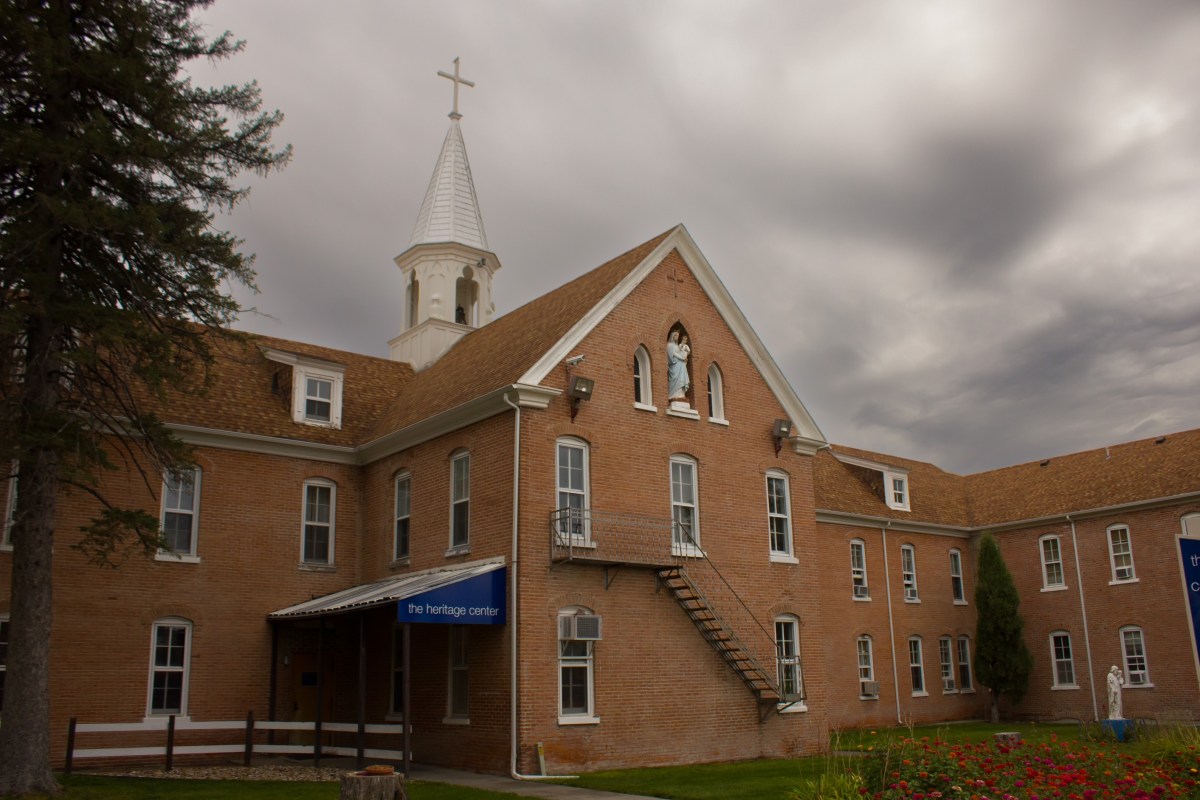
The new Maȟpíya Lúta, formerly Red Cloud Indian School, Heritage Center will mark the first stand-alone museum on the Pine Ridge Reservation and will feature one of the largest art collections in South Dakota.
“This was one of the institutions that suppressed our culture, but here it is evolving into a place where they’re actually incorporating culture and preserving languages,” said Jhon Goes In Center, Oglala Lakota and a member of the Maȟpíya Lúta Board of Directors.
On Sept. 14, community members and Maȟpíya Lúta staff held a ground blessing ceremony at the site of the future building. Tribal President Frank Star Comes Out and several descendants of Chief Red Cloud spoke before the ceremony about the importance of the building and of Maȟpíya Lúta.
After the ground blessing, Maȟpíya Lúta students drummed and sang in Lakota. READ MORE — Amelia Schafer, ICT + Rapid City Journal
SUPPORT INDIGENOUS JOURNALISM. CONTRIBUTE TODAY
A memoir which follows the childhood of a Cherokee and Creek boy growing up in Oklahoma in the 70s showcasing the modern Native experience, is set to publish on Sept. 19.
Author, Eddie Chuculate, grew up in Oklahoma where he graduated from Muskogee high school. He began his writing career as a sports journalist when he was a senior and has since gone on to write for numerous news publications.
Now, Chucluate shared his motivation behind his new book, “This Indian Kid: A Native American Memoir,” with ICT that follows a young Chuculate through his middle school and high school years, growing up, playing baseball, fishing with his grandfather, and finding his calling in storytelling.
“There’s probably some Americans (that) still think stuff like that, like all Indians are on the reservation, they all hunt or they all have peace pipes, they all have long hair, et cetera,” the author said. READ MORE — JoVonne Wagner, ICT
Around the world: China bans a book about the early Mongolian people, Māori researchers unite with global Indigenous experts on climate and food issues, First Nations people in Canada are increasingly unhappy with efforts to fix the broken healthcare system, and an Indigenous design agency wins top awards in Australia.
CHINA: Officials ban history book as ‘nihilism’
Chinese authorities have banned a book on the early Mongolian people, invoking “historical nihilism” to suppress divergent historical perspectives, Radio Free Asia reported on Sept. 3.
Orders have been issued to remove the book, “A General History of the Mongols,” by scholars from the Inner Mongolia Institute of Education’s Mongolian Studies department, as reported by the pro-Beijing Sing Tao Daily newspaper.
Inner Mongolia is a region in China whose border runs most of the length of China’s border with the independent country of Mongolia. READ MORE — Deusdedit Ruhangariyo, Special to ICT
The idea that Indigenous students would be allowed to wear traditional attire to their graduations these days is an emotional image for Mary Lee, a survivor of an Indian boarding school.
Lee, having survived Holy Childhood school in Harbor Springs, one of the last Indian schools used to assimilate to white culture and prey upon Native children to close in the U.S., told members of the House Higher Education Committee that it’s an honor for children of today to learn about and celebrate their culture, while recognizing what has been lost.
“It’s very hard to open up, being a survivor of a boarding school. … I want to speak up, not only for my kids, but for every Native [person],” Lee said. “I think it would be very good for our kids to carry on what we couldn’t have.”
Two legislative committees took up bills Wednesday aimed at preserving elements of Native American culture in the state. Legislation to ensure Indigenous students’ ability to wear traditional attire to school and at graduation, as well as to designate manoomin (wild rice) as the state’s first official native grain, received testimony from members of Michigan’s Native American community. READ MORE — Michigan Advance
Sign up here to get ICT’s newsletter
“This Indian Kid: A Native American Memoir” is out this week. Author Eddie Chuculate spoke with ICT’s Shirley Sneve about growing up in Oklahoma, and many other places. Take a look.
Traditionally, the Bannock people’s warriors were known for their strength, resilience, and horsemanship. The annual Bannock Warrior Challenge in Fort Hall, Idaho, is keeping those traditions alive. Roselynn Yazzie has the story.
Congress is days away from shutting down at least some of the government. Then, across the country, candidates and themes are starting to test their messages for the 2024 election. And if that’s not enough, a major rally last week in front of the White House sent a message to President Joe Biden, demanding the release of Leonard Peltier from federal prison. Here to talk about all of that is ICT regular contributor Holly Cook Macarro. She is a board member of IndiJ Public Media, ICT’s parent company.
WATCH
For centuries, Europeans carving up the prairie to suit their own idea of settlement dug up the graves of Native Americans as they conquered lands and pushed tribes to the West.
Now, Native Americans whose ancestors’ remains ended up held for study in sterile, nondescript boxes on shelves in educational facilities or displayed in cultural locales hope a new Illinois law will speed their recovery for proper reburial in their homeland.
“I always have a bit of unease because I know if I’m going to a university or to a museum … that chances are pretty high that we’ve got some ancestors sitting in a basement or in a closet somewhere,” said Raphael Wahwassuck, tribal preservation officer for the Prairie Band Potawatomi Nation in Mayetta, Kansas. “I hope that this (law) will help ease those concerns, knowing that we are working on correcting that and taking care of our ancestors to put them in a good resting place.”
Illinois Gov. J.B. Pritzker signed The Human Remains Protection Act last month, which updates a rudimentary 1989 state statute. It also complements a federal law adopted a year later, the Native American Graves Protection and Repatriation Act. It requires the return of human remains and funerary, sacred and cultural objects unearthed in the past 200 years by plows and bulldozers, by archeologists, or by profiteering marauders to the associated tribe. READ MORE — Associated Press
- After a century, oil and gas problems persist on Navajo lands: The legacy of fossil fuel development endures in leaks, spills and neglect
- Meet Blackfeet artist John Isaiah Pepion: Plains artist John Isaiah Pepion from the Blackfeet Nation is best known for his ledger art and has more on the history and significance behind the art form
- Handful of states keep universal free student meals: Options for reservation schools include USDA programs
- Black student suspended for hairstyle. The school says it wasn’t discrimination
- Minnesota hockey legend Henry Boucha dies at age 72
- House Republicans clash with Attorney General Garland, accusing him of favoring Hunter Biden
We want your tips, but we also want your feedback. What should we be covering that we’re not? What are we getting wrong? Please let us know. dalton@ictnews.org.


