
Greetings, relatives.
A lot of news out there. Thanks for stopping by ICT’s digital platform.
Each day we do our best to gather the latest news for you.
Okay, here’s what you need to know today:
Oglala Sioux Tribe awaits new chief of police
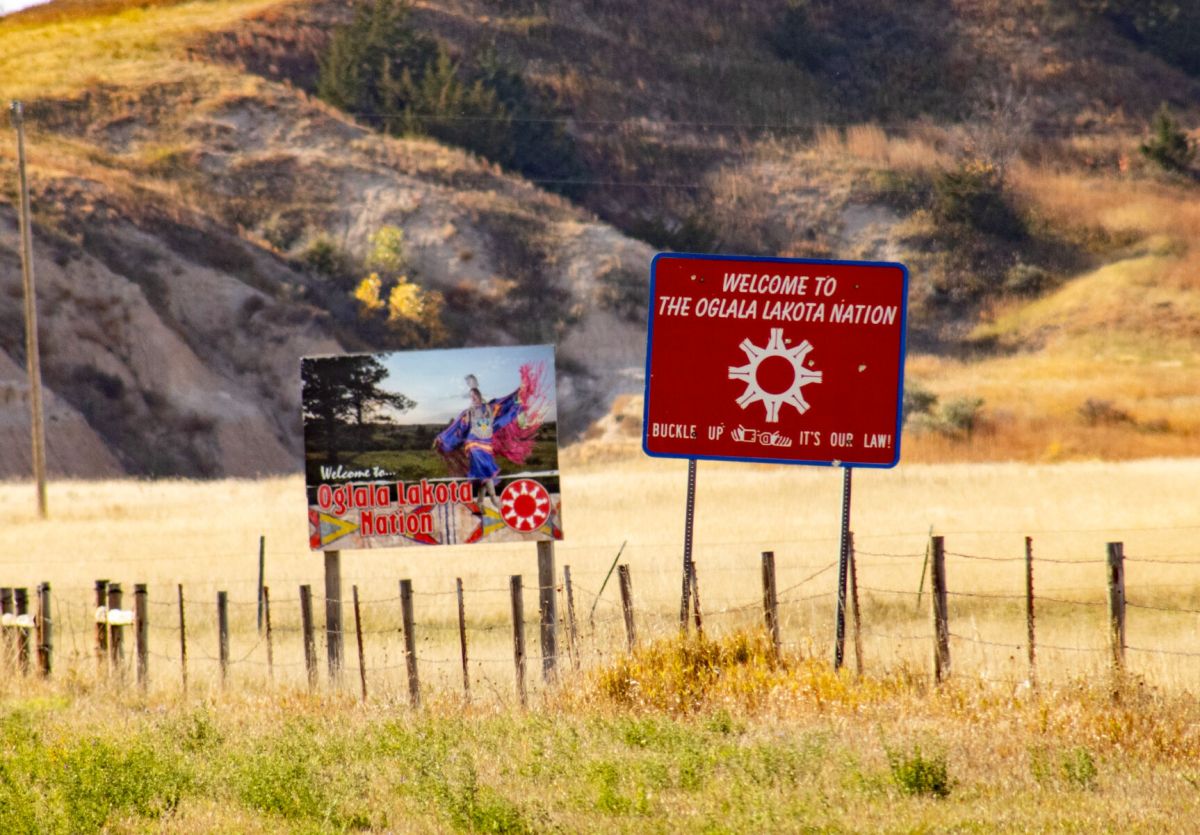
The Oglala Sioux Tribe Department of Safety is undergoing leadership changes. On April 20, Police Chief Algin Young’s existing contract expired triggering a new hiring process for the OST Chief of Police position.
For the time being, John Pettigrew will serve as the interim chief of police. Pettigrew previously served as the captain of the OST Criminal Investigations Unit.
Young served as the chief of police since May 5, 2021, replacing former Police Chief Bob Ecoffy. Young was a pivotal figure in the tribe’s fight for more public safety resources and testified several times in support of the tribe’s lawsuit against the United States.
In July 2022, the tribe launched a lawsuit against the United States arguing the government has failed to uphold its treaty obligation of protecting the tribe. The lawsuit references several historical documents that define the United States’ obligation.
In 2021 when Young took over as Chief of Police the tribe had 51 officers on staff, three years later only 32 officers were on staff. Young had said that one of his priorities as Chief of Police was to grow the team.
In February 2023, Young testified that his officers were exhausted fighting a crime wave fueled by guns, methamphetamine and fentanyl. Young said officers were burning out, with only eight officers working at a time to cover the 3.1 million acre reservation. Young did not respond to a request for comment.
Eight months later on November 21, the tribe declared a State of Emergency over high rates of murder, rape, suicide, drug offenses, robbery, aggravated assault and burglary.
On April 21 the chief of police position was listed as vacant, but the listing closed on April 26th. Currently, the tribe is now working to fill the position full-time, Pettigrew said. Pettigrew has worked for the OST Police Department his entire career. He has previously served as the Captain of the Criminal Investigations Unit. Pettigrew will continue working as the chief of police until the position is filled. — Amelia Schafer, ICT + Rapid City Journal
SUPPORT INDIGENOUS JOURNALISM. CONTRIBUTE TODAY.
The Inter-Tribal Council of the Five Civilized Tribes of Oklahoma is urging the Federal Communications Commission to approve proposed alert codes specifically for missing and endangered Indigenous people.
The federal agency has proposed establishing an event code that would use the Integrated Public Alert and Warning System to distribute alerts to people in certain areas about missing and endangered Indigenous people who are 17 years and older, and thus not covered by the Amber Alert system.
The five tribes passed their resolution supporting the proposed alert system at their April 19 meeting, arguing that the current missing persons event codes do not account for the epidemic of murdered and missing Indigenous men, women and Two-Spirit people.
According to the National Crime Information Center, Native people constitute 2.5 percent of all missing persons cases, even though Native people only make up 1.2 percent of the U.S. population. READ MORE. — Felix Clary, ICT + Tulsa World
Cyndy Mountain’s laughter fills the room, bouncing off walls with canvas paintings of eight-pointed stars and whiteboards half-erased with the remains of handwritten words — friendly, humanity, inclusion. She’s come for the weekly women’s group at Little Earth of United Tribes, an intertribal residents’ association in Minneapolis, Minnesota. She’s lived here for more than 10 years.
Mountain, Red Lake Ojibwe, spends her days working as an advocate at Hope Avenue Shelter. She has a “Star Wars” ringtone, a Love Your Melon beanie and a long, hard history.
She embodies one apartment door, one tribe and one story within a unified community of 212 housing units and 39 tribes.
Little Earth celebrated its 50th anniversary last year with a two-day powwow, where Mountain danced alongside members of various tribes. READ MORE. — Rachel Blood and Lydia Gessner, Special to ICT
As winter fades to spring and the bright purple blossoms of the redbud trees begin to bloom, Cherokee chef Bradley James Dry knows it’s time to forage for morels as well as a staple of Native American cuisine in Oklahoma: wild green onions.
Wild onions are among the first foods to grow at the tail end of winter in the South, and generations of Indigenous people there have placed the alliums at the center of an annual communal event. From February through May, there’s a wild onion dinner every Saturday somewhere in Oklahoma.
The bright green stalks of the onions reach a few inches above the dried leaves that crunch under Dry’s feet on a crisp morning in March as he hunts through parks and empty lots near downtown Tulsa. The land he forages straddles the Muscogee Nation and the Cherokee Nation, and he’s thinking of his elisi — grandmother in Cherokee — who taught him how to pick and cook wild onions. READ MORE. — Associated Press
Sign up here to get ICT’s newsletter
On Monday’s ICT Newscast, we begin a three part series on the Quinault Indian Nation facing climate change. We go to Peru to the Montaro Valley to learn about the potato—an important indigenous vegetable.
Watch:
Teen girls with dangerous fantasies of the glam side of crime cross the line in a beguiling murder mystery series. Premiered Thursday, April 17, on Hulu and running for eight episodes, “Under the Bridge” is a fictionalized adaptation of the true-crime book by Rebecca Godfrey.
Following a disturbing true story of a teen girl murdered by her classmates, the show features Indigenous characters in a cold, rainy Canadian town.
Set in 1997, Rebecca Godfrey – played by Riley Keough, who has Cherokee roots from her grandfather Elvis Presley whose great-great-great-grandmother Morning White Dove was full Cherokee – is home in Victoria, British Columbia, researching a book when she crosses paths with a group of teenage bad girls who obsess over crime. It seems like teen fantasy until 14-year-old Reena Virk, played by Vritika Gupta, whose family are immigrants from India, disappears after a party and later is found dead after a fight under a bridge. READ MORE. — Sandra Hale Schulman, Special to ICT
- Indigenous peoples march to demand land recognition in Brazil: Indigenous territories comprise about 13 percent of Brazil’s territory with most of these areas are in the Amazon rainforest.
- Prairie Island trying to reclaim item used in mass execution of Dakota: The Prairie Island Indian Community filed a claim through its Tribal Historic Preservation Office.
- A green energy transmission project will cut through Indigenous lands: After a federal court rejected their lawsuit, tribes are turning to the UN for help.
- Acre by acre, the Prairie Band Potawatomi bought back their land: After almost two centuries, the Indigenous nation is reestablishing the only reservation in Illinois.
- May 5 marks Missing and Murdered Indigenous Persons Awareness Day: As the U.S. spotlights those missing or dead in Native communities on May 5, prosecutors work to solve their cases.
- Native Hawaiians Seek Self Determination After 2023’s Lāhainā Inferno.
- Hopi Special Agent Returns Home to Seek Justice for Tribal Communities.
- Rule change allows tribes to access state housing funds, but it comes too late for grants.
We want your tips, but we also want your feedback. What should we be covering that we’re not? What are we getting wrong? Please let us know. dalton@ictnews.org.


