
Greetings, relatives.
A lot of news out there. Thanks for stopping by ICT’s digital platform.
Each day we do our best to gather the latest news for you. Remember to scroll to the bottom to see what’s popping out to us on social media and what we’re reading.
Also, if you like our daily digest, sign up for The Weekly, our newsletter emailed to you on Thursdays. If you like what we do and want us to keep going, support and donate here.
Okay, here’s what you need to know today:
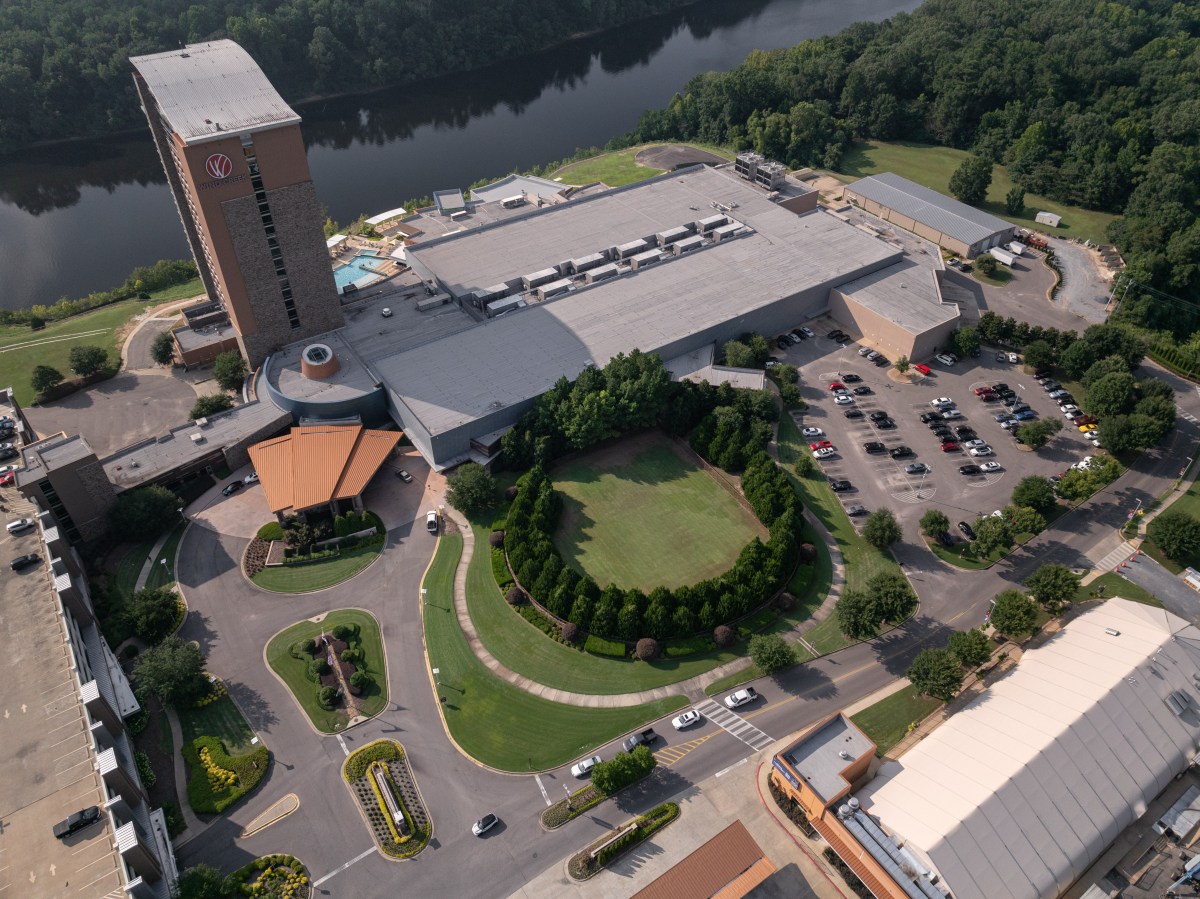
TULSA, Okla. – The Muscogee Nation has renewed a lawsuit first filed in 2012 against the Poarch Band of Creek Indians in Alabama for building a casino resort on the site of sacred historic burial grounds.
The Oklahoma tribe is challenging a federal judge’s decision in 2021 to dismiss the lawsuit based on “sovereign immunity” of the Poarch Band of Creek Indians. To build its casino near Wetumpka, Ala., the tribe exhumed 7,000 cultural items and 57 sets of human remains near the Hickory Ground burial site. The ceremonial ground was the Muscogee (Creek) Nation’s capital before the tribe’s forced move to Oklahoma in the 1830s.
Muscogee Nation attorney Mary Kathryn Nagle told ICT and the Tulsa World the Poarch Band of Creek Indians have shown a “callous disregard” for the Hickory Ground burial site.
“Poarch ignored warnings about damaging archaeological deposits and graves. … Today, they continue to illegally operate a multimillion-dollar casino resort that sits atop the sacred mound where Muscogee (Creek) ancestors and some of their most prominent leaders once lay in peace,” Nagle said. READ MORE — Felix Clary, ICT + Tulsa World
SUPPORT INDIGENOUS JOURNALISM. CONTRIBUTE TODAY
Around 100 people gathered at the Pearson Air Museum’s Historic Hangar for the annual Confluence Legacy Maker Gathering fundraiser on September 8, to honor Shoshone Bannock elder and traditional storyteller Ed Edmo and welcome the new executive director, Leah Altman, Oglala Lakota.
Confluence is a nonprofit, which connects the community to the “history, living cultures, and ecology of the Columbia River system through Indigenous voices” through education and art programs. Edmo has worked with Confluence’s educational programming for the last 22 years, teaching students about Indigenous cultures through stories.
The theme of this year’s gathering was “Keeping Our Words,” a theme that Edmo embodies quite well. Confluence honored the life and legacy of Edmo at the gathering, creating space for others to talk about his impact and inviting Edmo to share a few stories with the crowd.
Raised at his father’s ancestral home at Celilo Village near The Dalles along the Columbia River, Edmo is a traditional storyteller, poet, playwright, published author, actor, performer, instructor and tour guide. He is also a mentor to many and a beloved member of the Portland Native community. READ MORE — Nika Bartoo-Smith, Underscore Native News + ICT
The Department of Energy gave the Confederated Tribes and Bands of the Yakama Nation what seemed like very good news earlier this year: It had won a $32 million grant for a novel solar energy project in Washington state. Built over a series of old irrigation canals, the proposed solar panels would generate electricity for tribal members without removing farm acreage from cultivation. The location would preserve the kinds of culturally sensitive land that have prompted concerns about other renewables projects.
Months after announcing the grant, the same department is making it nearly impossible for the tribal nation to access the money.
“It is because literally the feds cannot get out of their own way,” said Ray Wiseman, general manager of Yakama Power, the tribally owned utility.
The bureaucratic whiplash stems from the fact that while one part of the Energy Department hands out money for clean energy projects, another part decides which projects get access to the Northwest electrical grid. The Bonneville Power Administration’s process for approving connections comes with such exorbitant costs and is mired in such long delays that the federal grant could well expire before the tribe can touch a dime. READ MORE— High Country News
The trial for the man recorded on video shooting a climate activist during a prayer ceremony and protest in Rio Arriba County is set to begin in October.
Ryan Martinez, carrying a concealed 9mm handgun, repeatedly tried to rush into an area where around 50 people were peacefully celebrating county officials’ decision to postpone resurrecting a statue of genocidal Spanish conquistador Juan de Oñate.
Martinez shot Jacob Johns, a Hopi, Akimel O’odham activist from Washington, in the chest. Martinez then allegedly turned the gun on Malaya Peixinho. The gun jammed, and he fled the scene.
Martinez is being prosecuted for trying to murder Johns and assaulting Peixinho. State prosecutors have also added a hate crime and a firearm enhancement to the charges against him. READ MORE— Source New Mexico
Sign up here to get ICT’s newsletter
PHOENIX — After family members of a slain Navajo woman described their grief in a federal courtroom, the judge on Monday sentenced her boyfriend to life imprisonment for first-degree murder in a case that became emblematic of what officials call an epidemic of missing and slain Indigenous women.
Five years after Jaime Yazzie was killed, her relatives and friends cheered as they streamed out of the downtown Phoenix courthouse after U.S. District Court Judge Douglas L. Rayas handed down the sentence for Tre C. James.
Yazzie was 32 and the mother of three sons when she went missing in the summer of 2019 from her community of Pinon on the Navajo Nation. Despite a high-profile search, her remains were not found until November 2021 on the neighboring Hopi reservation in northeastern Arizona.
James was convicted last fall in Yazzie’s fatal shooting. The jury also found James guilty of several acts of domestic violence committed against three former dating partners. READ MORE — Associated Press
PONCA CITY – Ponca City and Kay County are among the newest designations in the World War II Heritage City program that honors local contributions made to the war effort.
The National Park Service added new jurisdictions in eight states on Tuesday.
The designation recognizes the contributions of local towns, cities, counties and their citizens who entered the workforce and supported America’s war effort. Recipients are chosen by the secretary of the interior. Only one American World War II Heritage City can be designated in each state or territory.
“World War II not only impacted those who went to war, but also those who carried on the life and work of the home front,” said Chuck Sams, director of the National Parks Service, in a statement. READ MORE — Oklahoma Voice
- A night of fashion, pride … despite losses: Native nominees shut out of Emmys, but style and dignity win the night
- ICT Education Roundtable: Experts address complex problems facing Native students: A dedicated group of educators work year-round to problem-solve persistent, complex issues among Native students in the hopes of easing their education journey
- High Native suicide rates linked to insurance, income and internet service: ‘Holding onto those traditions and celebrating cultural traditions and being part of a community can actually help reduce suicide’
- US navy apologizes for razing of Native Alaska community in late 1800s
- Former uranium workers and advocates arrive in DC to push for RECA legislation
- Navajo Nation President Celebrates Netflix’s ‘Rez Ball’ for Showcasing Navajo Culture and Talent
We want your tips, but we also want your feedback. What should we be covering that we’re not? What are we getting wrong? Please let us know. dalton@ictnews.org.

Our stories are worth telling. Our stories are worth sharing. Our stories are worth your support. Contribute $5 or $10 today to help ICT carry out its critical mission. Sign up for ICT’s free newsletter.

