
Greetings, relatives.
A lot of news out there. Thanks for stopping by ICT’s digital platform.
Each day we do our best to gather the latest news for you. Remember to scroll to the bottom to see what’s popping out to us on social media and what we’re reading.
Also, if you like our daily digest, sign up for The Weekly, our newsletter emailed to you on Thursdays. If you like what we do and want us to keep going, support and donate here.
Okay, here’s what you need to know today:
Indigenous peoples have long argued that they have done little to contribute to climate change, but are most affected and expected to make steep sacrifices to fix it. Funding for green energy projects continues to skyrocket despite clear and growing threats to Indigenous peoples’ lands and rights, Indigenous leaders persistently express concern over global conservation programs that remove communities from their traditional territories, while record numbers of environmental, Indigenous and land defenders are killed.
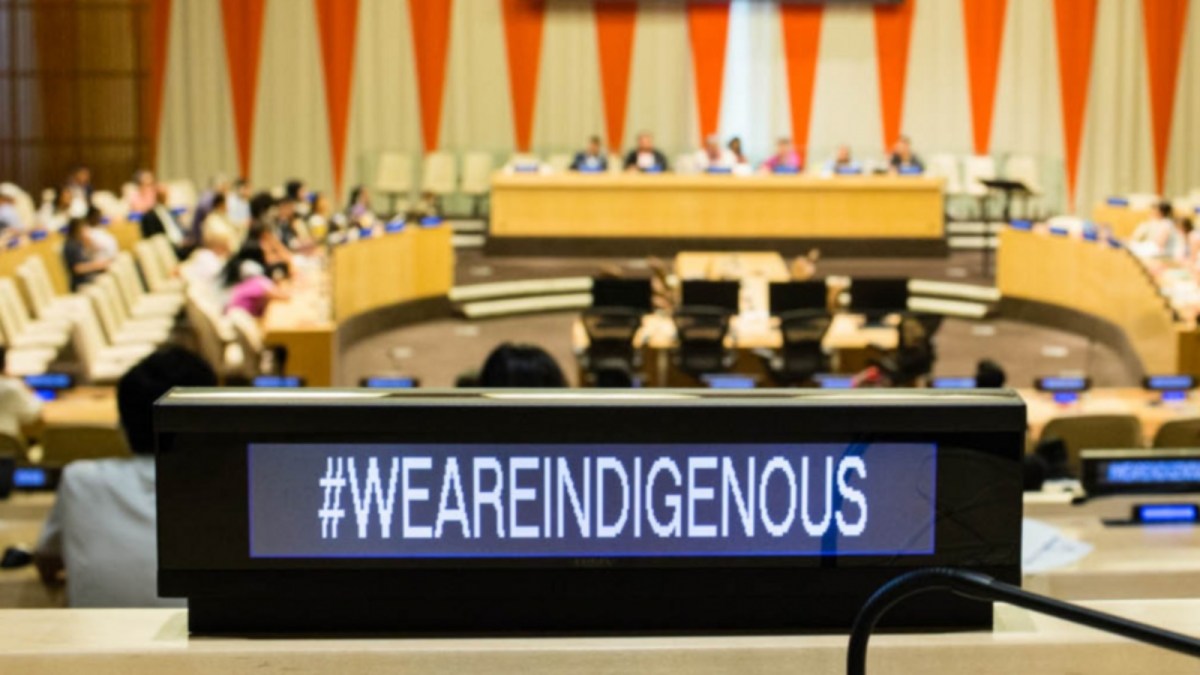
That context is sure to inform conversations at this year’s United Nations Permanent Forum on Indigenous Issues, or UNPFII, which opens its 22nd session today in New York with a key, thematic focus: Indigenous Peoples, human health, planetary and territorial health and climate change. An advisory agency with the United Nations system since 2000, UNPFII is one of only three U.N. bodies that deal specifically with Indigenous issues, with a major focus on advocating for the United Nations Declaration on the Rights of Indigenous Peoples, UNDRIP for short – a non-binding resolution that affirms international Indigenous rights but is irregularly followed or applied by nations, and sometimes, even by U.N. agencies.
UNPFII offers Indigenous peoples, leaders, organizations and allies an opportunity to raise specific issues to the agency in the hope of winding those issues through the international system to world leaders and policy makers. READ MORE. — Joseph Lee, Grist
SUPPORT INDIGENOUS JOURNALISM. CONTRIBUTE TODAY.
Four Indigenous players have a chance to hoist the coveted Stanley Cup this year.
Zach Whitecloud, Dakota Sioux, of the Vegas Golden Knights, and Brandon Montour, Mohawk, of the Florida Panthers, will join Métis players Connor Dewar and Calen Addison with the Minnesota Wild in the National Hockey League playoffs beginning Monday, April 17.
The Knights are the odds-on favorite among the clubs as they finished atop the Western Conference. Minnesota finished sixth in the East and will match up against the Dallas Stars.
The Panthers clawed their way into the playoffs as an Eastern Conference wild card, but it’s safe to say they’re already in playoff mode, with the 29-year-old Montour from the Six Nations of the Grand River leading the way. READ MORE. — Miles Morrisseau, ICT
Bobbi Hill wanted to offer encouragement to people struggling with something she understood intimately. But she couldn’t find greeting cards geared specifically toward people battling addiction and on their road to recovery. That’s when her business, Changes, was born.
“I could not find cards in regular stores, or really anywhere, where I could get a card that said, ‘Hang in there. You don’t need to relapse. You got this,’” she said.
Hill, Apsáalooke and a citizen of the Muscogee Creek Nation, found that frustrating. She said those difficult moments when people need encouraging words the most.
“When you are in rehab, it’s easy,” Hill said. “Everybody’s doing the same thing. It’s when you come out in the real world, that’s when the work begins. That’s where all the challenges are. And if we’re not supporting people during that time, it’s inevitable that they will relapse.” READ MORE. — Underscore News
Two Alaska Native corporations own and want to develop the site of what would be the world’s largest pure gold open-pit mine. They say the mine would bring jobs, a stronger economy and much-needed infrastructure to an impoverished region.
But some of their shareholders oppose the project. They say the mine threatens the core of the Yup’ik and Cupik way of life: subsistence, the gathering and sharing of food from nature. Three tribes have sued in federal court to halt the project.
The regional corporation for western Alaska, Calista and 10 village corporations that have combined into The Kuskokwim Corporation (TKC), have joined forces with Donlin Gold LLC to build the proposed mine.
The corporations are two of the more than 200 that were created under the Alaska Native Claims Settlement Act of 1971. It set up for-profit companies to receive 44 million acres and nearly a billion dollars for them to go into business and make a profit to disburse to their Native shareholders in the form of dividends. Corporate representatives say the site of the proposed Donlin Gold Project was specifically selected for its mineral potential. READ MORE. — Joaqlin Estus, ICT
Sign up here to get ICT’s newsletter
On the Monday edition of the ICT Newscast, an Indigenous chef discusses her amazing accomplishments on “The Food Network” and Heather Dawn Thompson shares food sovereignty. Plus, Los Angeles celebrates Indigenous poets and photography
Watch:
The hulking 20,000-square-foot building, sandwiched between a rough road and dark evergreen trees, is unremarkable save for a heap of cedar, pine and fir logs stacked in the muddy parking lot — half for all tribal members, half reserved for elders.
The functional exterior of the food warehouse for the Confederated Tribes of Siletz Indians belies what’s inside: an orderly and warm storage facility housing frozen, refrigerated and shelf-stable food such as applesauce, boxed milk and cereals. Two forklifts are parked against one wall. The neat-as-a-pin commercial kitchen is as much a place to gather and visit as it is to learn to cook.
This is the domain of Marci Rilatos, U.S. Department of Agriculture (USDA) administrative services clerk for commodities distribution. A tribal member who grew up on the reservation, she knows her community and what they need: who doesn’t have a car, who is having trouble at home, who is hungry. READ MORE. — Underscore News
- How acorns carry cultural knowledge: An Indigenous writer reflects on learning to make acorns into San-chvn-tuu-’i’ or ‘juice of the acorn,’ a hot porridge and staple food.
- Ancient village site is reborn again: A $3.7M grant to the Native American Youth and Family Center will replace baseball fields with food gardens and cultural sites.
- Undoing a life sentence: A judge resentenced Herbert Rice Jr., undoing a life sentence the Supreme Court ruled unconstitutional a decade ago. Rice, a citizen of the Colville Tribes, is one of about 2,500 US prisoners held on life sentences imposed when they were minors.
- Judge affirms stricter interpretation of mining law: The ruling could have ramifications for a huge lithium mine near the Nevada-Oregon line and other future mines on public lands across the West.
- Deb Haaland celebrates ‘new era’ of conservation: The Interior secretary said on a trip to Las Vegas that the newly designated Avi Kwa Ame National Monument in southern Nevada marks a new era of conservation.
- Tribe in Louisiana highlights challenges of climate-driven relocation.
- Ancient canoe pulled from Lake Waccamaw in southeastern North Carolina.
- Shaneice Swain joins the ranks of Australians in the WNBA, drafted by the Los Angeles Sparks.
We want your tips, but we also want your feedback. What should we be covering that we’re not? What are we getting wrong? Please let us know. dalton@ictnews.org.


