Halito, relatives.
A lot of news out there. More census data dropped today and the Indian Health Service made an announcement (more on these below). We gathered the latest for you to look at in one place here. Remember to scroll to the bottom to see what’s popping out to us on social media and what we’re reading.
Also, if you like our daily digest, sign up for The Weekly, our newsletter emailed to you on Thursdays. If you like what we do and want us to keep going, support and donate here.
Thanks for stopping by Indian Country Today’s digital platform.
Okay, here’s what you need to know:
Indian Health Service staff required to receive vaccine
The largest agency dedicated to serving the health of Indian Country is requiring all staff to receive the COVID-19 vaccine.
On Thursday, Indian Health Service, an agency under Health and Human Services, said all IHS employees have until Oct. 1 to get fully vaccinated. Limited exemptions will be given to those who have a valid medical or religious exemption on file, according to a news release.
“This directive is aimed at protecting the health and safety of our workforce and patients, and the vaccines are the best tools to achieve this goal,” the news release read. “With more than 4.54 billion COVID-19 vaccine doses administered worldwide, we have enough data to know the vaccines are highly safe and effective in protecting against severe disease and hospitalization.”
HHS is the latest department within the Biden administration to implement vaccine requirements for staff.
—
SUPPORT INDIGENOUS JOURNALISM. CONTRIBUTE TODAY.
—
Alaska Native identity ‘weighs heavily’ on friends and a future
This is part 3 of a 3-part series on Alaska Native identity as part of Indian Country Today’s project on the 50th anniversary of the Alaska Native Claims Settlement Act.
There isn’t one answer to the challenges of identity, enrollment and shareholder status for Alaska Natives.
Patuk Sophie Boerner and Delaney Naruyaq’ Thiele initially met through a policy fellowship where emerging Native leaders begin tackling the challenges of tomorrow. The two had grown up in different cities and were from different tribes. Soon they found common ground over an unignorable concern they share: blood quantum, and the future of Alaska Native corporate enrollment… READ more.
Fires charring range set up ranchers for hardship in West
LAME DEER, Mont. (AP) — Wildfires tearing through Montana and elsewhere in the U.S. West are devouring vast rangeland areas that cattle ranchers depend upon, setting the stage for a potential shortage of pasture as the hot, dry summer grinds on.
On the Northern Cheyenne Indian Reservation, firefighters and local authorities scrambled to save hundreds of homes in the path of a fire that started Sunday and exploded across more than 260 square miles in just a few days, triggering evacuation orders for thousands of people.
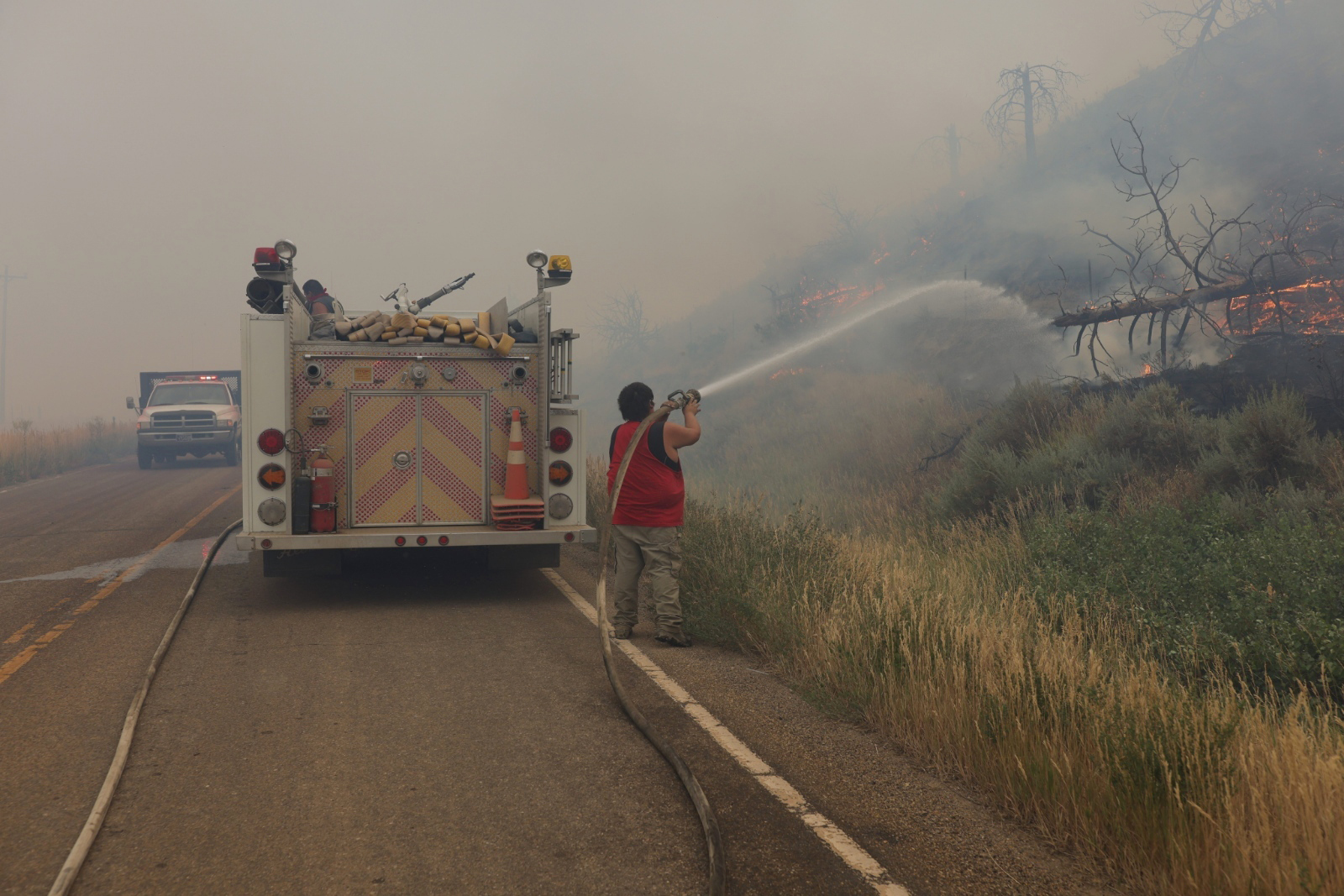
Some ranchers stayed behind to help fight it. Yet as flames charred mile after mile of rangeland and forest, they could do little to protect cattle pastures that are crucial to economic survival for families on the remote reservation… READ more.
—
Sign up here to get ICT’s newsletter
—
Free tuition this spring for some students at tribal college
TSAILE, Ariz. (AP) — A four-year tribal college located on the Navajo Nation is offering free tuition for the spring 2022 semester to all students who are enrolled full-time this fall and receive at least a 2.0 grade point average.
Classes begin Aug. 16 for the fall semester at Diné College, which is offering 361 online courses and 37 in-person courses.
The school also is offering a 50 percent tuition discount and a 50 percent residential discount for student housing for the fall semester.
The admission application fee, technology fee and student activity fees are all waived.
Diné College — which has six campuses and two microsites across Arizona, New Mexico and Utah — primarily serves Navajo students and offers 20 bachelor’s degrees, 16 associate degrees and six certificate programs.
Diné College was the first tribal college when it opened in 1968.
5 takeaways from the 2020 census data
The Census Bureau on Thursday issued its long-awaited portrait of how the U.S. has changed over the past decade, releasing a trove of demographic data that will be used to redraw political maps across an increasingly diverse country. The data will also shape how $1.5 trillion in federal spending is distributed each year.
(Related: Census data effort to reshape US House districts)
Here are five takeaways from the latest census figures:
Public health emergency orders on Navajo Nation for COVID-19
WINDOW ROCK, Ariz. (AP) – Navajo Nation officials say the tribe will return to “Orange Status” starting Monday due to a recent rise of COVID-19 cases.
On Thursday, the Navajo Department of Health issued three new public health emergency orders for businesses and schools while revising in-person gathering limits for certain events.
The tribe’s mask mandate remains in effect, but there is no daily curfew or lockdown.
The 50 percent maximum occupancy level remains in place for restaurants (including indoor dining, drive-thru, curbside and outdoor dining) plus tribal casinos, hotels, campgrounds and RV parks.
“The difference between this time last year and the uprise in cases we are seeing now is that we have a high percentage of our people vaccinated and our public health experts have provided us with the guidance to reduce the spread of the virus,” Navajo Nation President Jonathan Nez said.
Health officials reported no deaths and only a handful of cases for eight consecutive days from Aug. 1-8.
But on Monday, the Navajo Department of Health issued a health advisory notice for 19 communities due to uncontrolled spread of the coronavirus.
—
FOLLOW ICT ON SOCIAL MEDIA: FACEBOOK, TWITTER, INSTAGRAM, TIKTOK.
—
#ICYMI: COVID-19 variant is a ‘cocktail for disaster’
Rising infection rates are being linked to the delta variant, particularly from the unvaccinated. Tribes are following the trend.
The current data of hospitalizations, positive cases, and 50 percent of the U.S. population still being unvaccinated (some including children who are going to school) is extremely concerning, said Dean Seneca, a citizen of the Seneca Nation.
“This is a cocktail for disaster coming up this month. We cannot let our guard down,” he said. “People need to really continue to practice hand washing, safe social distancing and wearing a mask. And that includes both the vaccinated and unvaccinated… READ more.
From social media:
Other top stories:
- Infrastructure bill brings cheers, criticism from Indian Country:Sweeping bill and budget resolution now face passage in the House, includes debated climate resiliency.
- Despite tragedies, Cherokee woman continues to help: Resilient. That is the word used to describe Kim Holmes by the people who know her best.
- Alaska’s remote Aleutian Islands:The off-grid getaway is home to the Aleut people.
- Survivors of Guatemalan mudslide face death or emigration: ‘Those of us who had time to flee could only carry our children on our backs.’
- Watch: Congress’ trillion dollar investment in tribal nations: Coming up we have more on how the $1 trillion infrastructure bill could impact tribes. Plus we’ll hear the latest about Yukon fisheries in Alaska and the repatriation of one Aleut girl.
What we’re reading:
- Native American college students found strength in their heritage to get through the pandemic.
- Despite obstacles, Native Americans have the nation’s highest COVID-19 vaccination rate.
- Living Water: Three generations of Apsáalooke revive a river.
We want your tips, but we also want your feedback. What should we be covering that we’re not? What are we getting wrong? Please let us know. Email dwalker@indiancountrytoday.com.