Kadin Mills
ICT
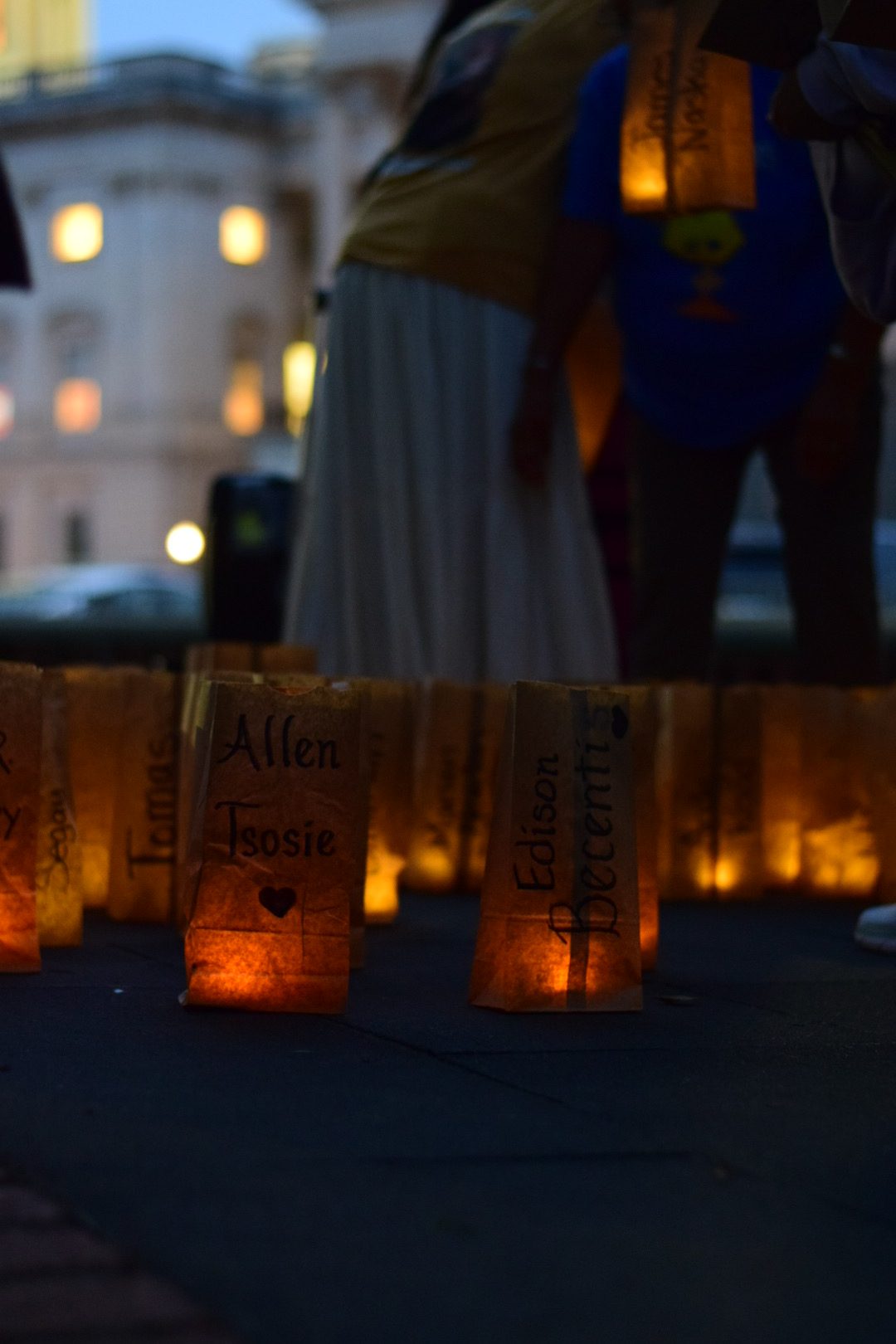
WASHINGTON — Hundreds of names echoed in the Senate Swamp on the northeast lawn outside the U.S. Capitol on Wednesday, Sept. 25 as citizens of several tribal nations held a vigil in honor of those who died due to exposure to radiation.
A group called the RECA Warriors — citizens of the Navajo and Hopi nations, as well as the Laguna, Jemez and Acoma Pueblos — made their way to Washington, D.C., to pressure the government to take action on the Radiation Exposure Compensation Act.
In June, the Radiation Exposure Compensation Act expired, ending financial compensation for those affected by the U.S. uranium industry in the Southwest. This includes thousands of Native Americans who worked in and around uranium mines on reservations like the Navajo Nation, which has over 500 former mining sites that remain abandoned or unremediated today.
In March 2024, the Senate passed a bipartisan bill introduced by Missouri Sen. Josh Hawley, Republican, and New Mexico Sen. Ben Ray Lujan, Democrat, that would reauthorize the original legislation. If passed by the House, the bill would also extend financial compensation to thousands of people who weren’t covered under the original legislation but were impacted by the U.S. uranium industry.
President Joe Biden has said he would sign the bill into law and the bill has bipartisan support in the House. Republican Rep. Tom Cole, Chickasaw, from Oklahoma told ICT he would urge Republican House Speaker Mike Johnson from Louisiana to hold a vote for the act. “I think those things ought to come to the floor and let the House work its will.” The representative added, “harm was done and appropriate compensation needs to be rendered,” hinting at support for the expanded bill.
“We have to stand up for what’s right in this country,” said Maggie Billiman, Diné. Her father, Howard Billiman Jr., was a Navajo Code Talker during World War II. He died of Stage 4 stomach cancer Jan. 1, 2001, due to exposure to toxic radiation.
“I want to die with dignity,” Billiman said. “If they pass this, honestly, that’s my honor to my dad.”
The U.S. House of Representatives was originally scheduled to vote on the reauthorization bill in June, but announced in late May it would not bring the legislation to the floor. According to the RECA Warriors, Speaker Johnson has held the bill hostage, delaying a vote over concerns for the cost of proposed expansions.
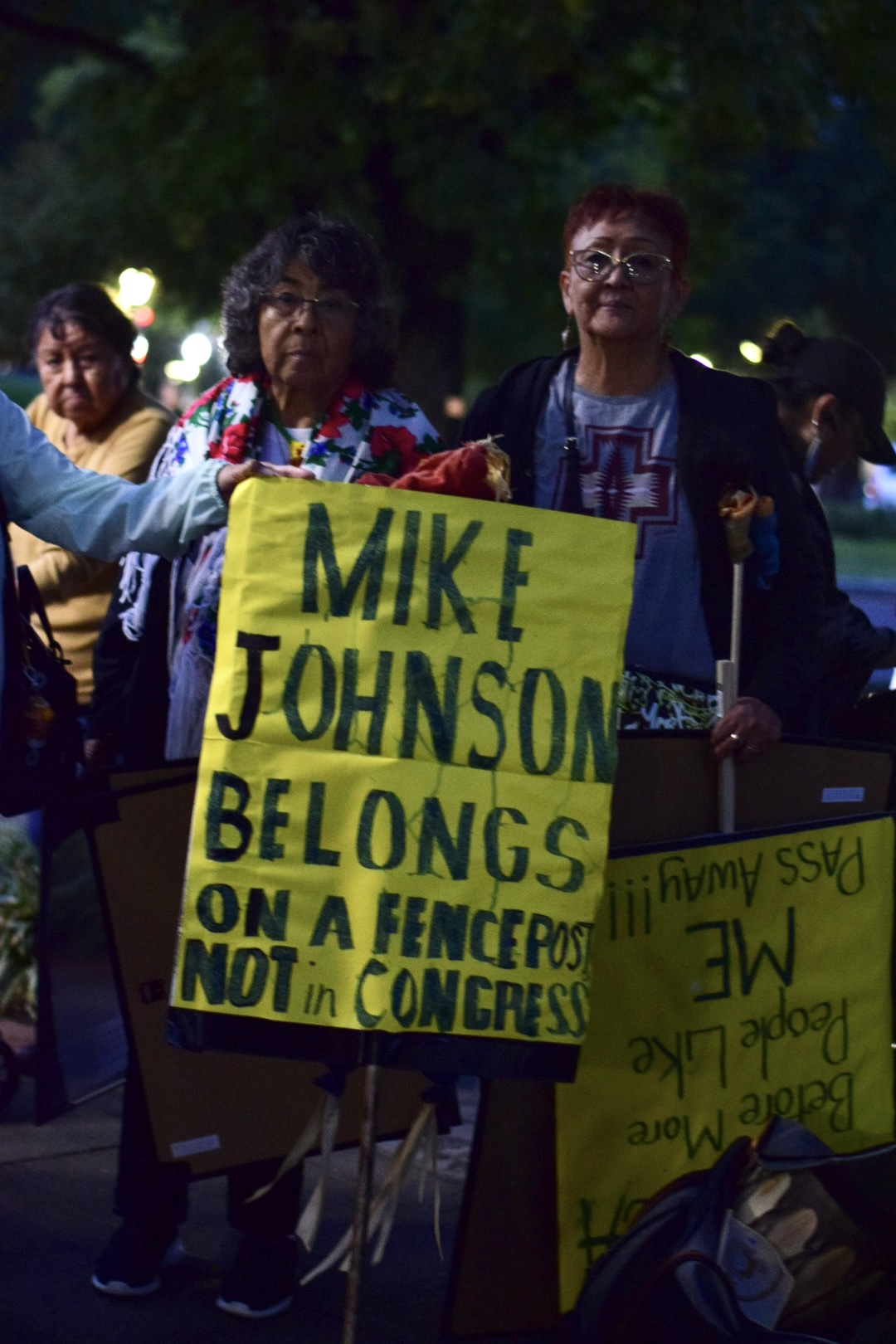
In response, about 50 Native people made the trip to Washington, D.C., from Albuquerque to urge Speaker Johnson to hold a vote to reauthorize and expand the Radiation Exposure Compensation Act. Advocates say the federal government must be held accountable, regardless of the financial burden.
The group delivered copies of their medical expenses to Speaker Johnson’s office on Sept. 25 to belabor this point. The expenses totaled more than $7 million with an average of over $400,000 per person, according to Kyle Ann Sebastian from the Union of Concerned Scientists.

Kathleen Tsosie, Navajo, says they want to show the House Speaker, “This is how much it costs us.” She has lobbied for continuation and expansion of the compensation program. She says the cost of the U.S. nuclear program has been borne by those who worked in and lived around the mines. Advocates like Tsosie argue it’s time the federal government took responsibility.
What is RECA?
Congress first passed the Radiation Exposure Compensation Act in 1990 to address the health concerns associated with exposure to radiation. It has been reauthorized several times but was not substantially amended. The bill provided financial compensation up to $100,000 for individuals who worked in uranium mines, mills, or transporting ore between 1942 and 1971. Those working onsite during atomic weapons tests were eligible for $75,000, and those living downwind of the Nevada Testing Site, or “downwinders,” in Arizona, Nevada and Utah, were eligible for up to $50,000.
From 1945 to 1962, the U.S. government conducted nearly 200 atmospheric nuclear weapons tests, which were largely carried out in the Southwest. Locations like the Trinity test site in New Mexico — the location of the first nuclear detonation in 1945 — were left out of original eligibility criteria for downwinders.
Individuals exposed to radiation in their homes by family members, spouses, or parents, working in the uranium industry were not eligible for their own benefits. However, some surviving family members were able to file claims on behalf of their eligible deceased relatives.
Tsosie says the current compensation model is insufficient to cover the medical bills incurred by many citizens. Last month, she completed chemotherapy for breast cancer for the second time. She told ICT her treatment for both bouts of cancer has cost her more than $390,000. “Having $100,000 for compensation,” she says, “is not even half to pay for our medical bills.”
In order to cash in, claimants must also have been diagnosed with a specific disease listed by Congress. These include several cancers and lung diseases, but advocates say there are many people who present with diseases not outlined in the bill.
Additionally, there are many people who worked in uranium mines after 1971 who have developed diseases due to radiation exposure but are ineligible for compensation. The legislation also excludes individuals who have developed compensable diseases due to exposure to environmental contamination.

The atomic age
Uranium was first mined in the United States in the late 1800s as a byproduct of mining vanadium, used to make steel alloys, and radium, which was used in medicine and glow-in-the-dark paints. Uranium had limited uses and was largely seen as waste.
Further research in the late 1930s uncovered the element’s application for weapons production, leading to the Manhattan Project and the development of the U.S. nuclear arsenal. According to the Breakthrough Institute, “about one-sixth of the total supply was domestic, collected from waste tailings in the Colorado Plateau region.” Tailings are the residual material leftover from a mining operation after valuable materials have been separated from ore.
Uranium mining continued throughout the 20th century. According to the Navajo Nation Washington Office, the U.S. extracted about 60 million tons of domestic uranium by the early ‘90s. “Half of that — 30 million tons — was extracted from the Navajo Nation,” said Justin Ahasteen, executive director of the Washington office. He is Hopi and an enrolled citizen of the Navajo Nation.
At the height of the industry, following privatization of the U.S. uranium industry in 1970s, there were over 500 mines on the Navajo Nation. Uranium production peaked in 1980. Today, a majority of these mines are left abandoned, posing a significant risk to people and the environment. Few mines were closed off, and those that were have seals that are deteriorating, according to Ahasteen.
“They wanted the uranium so bad to protect our country, so why can’t they protect us?” asks Jaye Francis, a citizen of the Pueblo of Laguna.
Fallout
Francis has lost several members of her family who worked in the uranium industry, including the mines. None of them were eligible for compensation. Today, she says Native American communities in the Southwest are struggling with the long-term effects of having worked with radioactive materials, radiation exposure from abandoned mines and radioactive runoff.
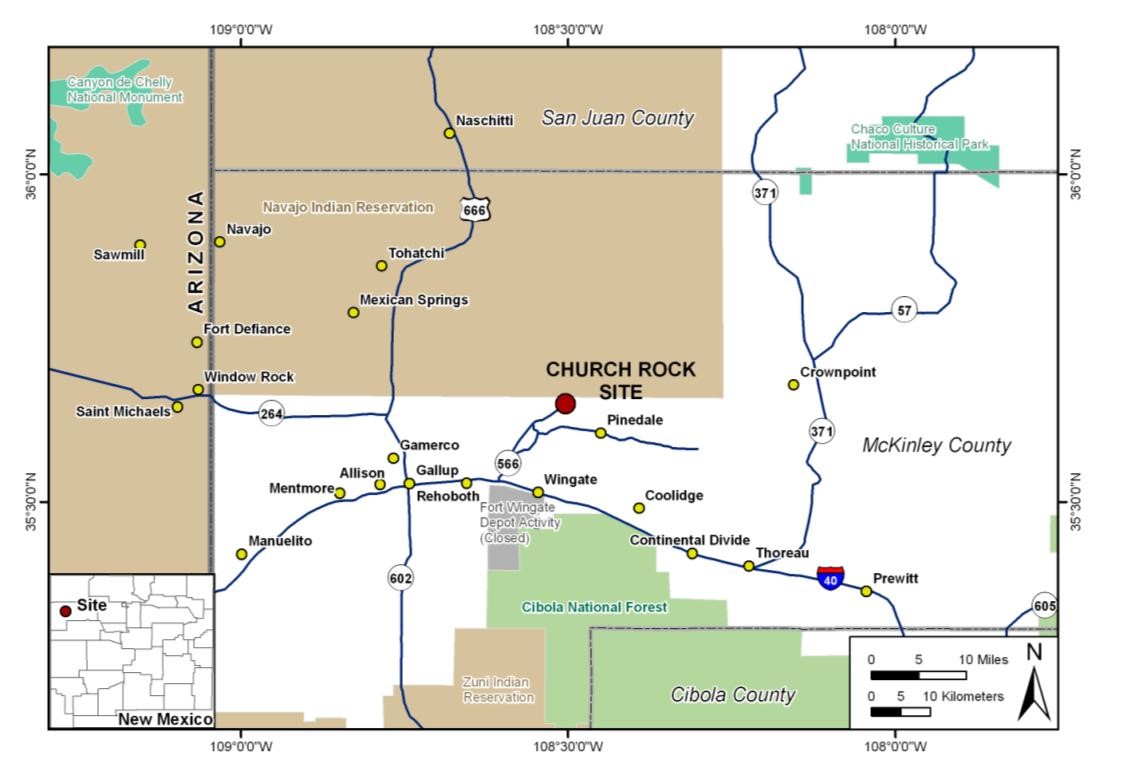
They have also suffered major environmental disasters such as the 1979 radioactive waste spill in Church Rock, New Mexico, which released over one thousand tons of solid radioactive material and nearly 100 million gallons of toxic wastewater. This waste entered the Puerco River and groundwater reserves as a part of the single largest release of radioactive material in U.S. history. Francis says unremediated disasters like these have ruined her people’s land and water, making it unsafe to drink and grow crops.
“We can’t even hunt the animals on our lands anymore,” she said. “Because they’re affected. They tell us not to eat them. We used to do rabbit hunts. We used to eat deer.”
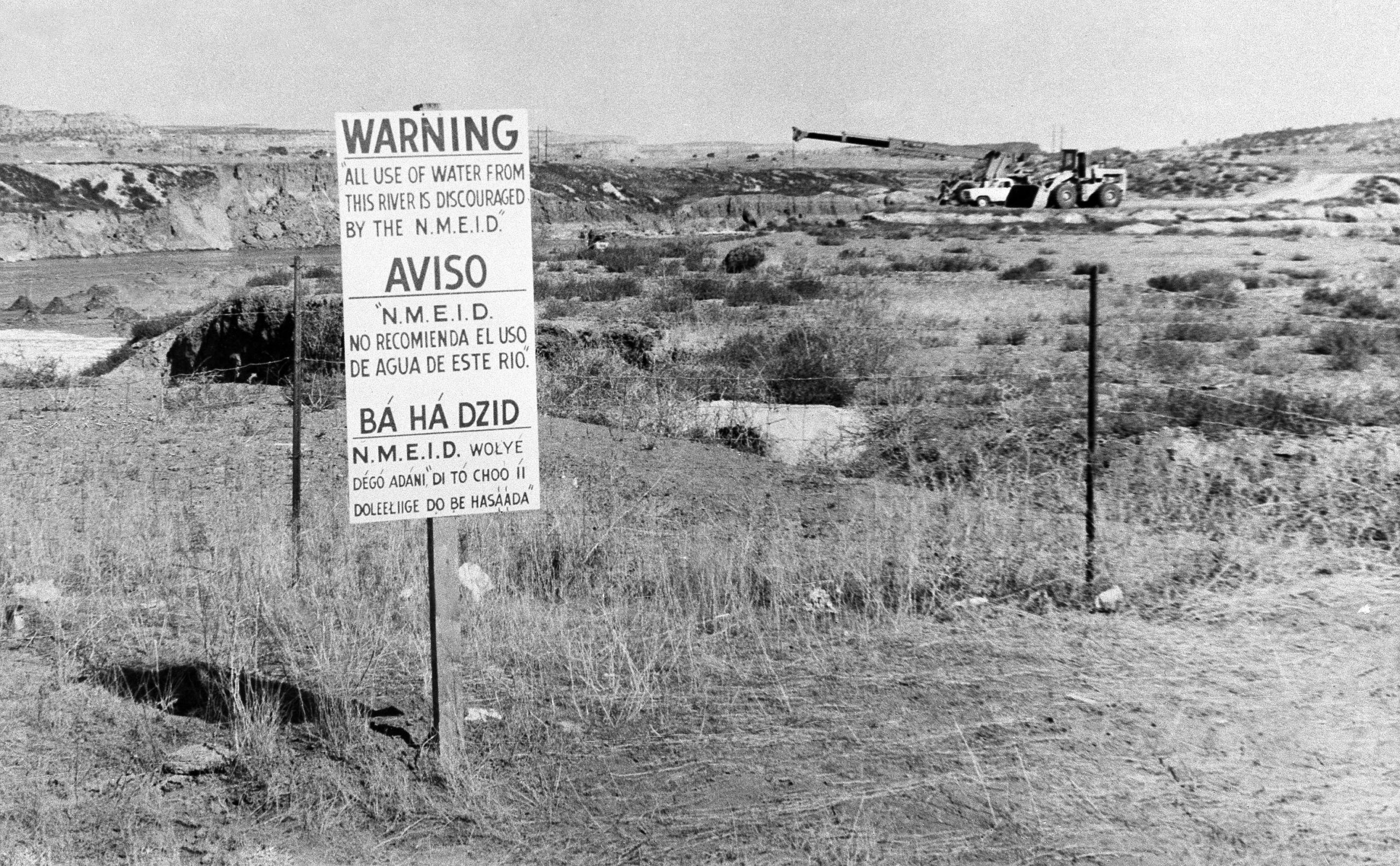
Today, she says the landscape has become a wasteland. “That area is just, it’s glowing. It basically glows in the dark. You go out there and you can smell it. You can feel it in your teeth — that’s how strong the uranium is.”
Health impacts caused by this radioactive pollution are not covered by the bill, and first-generation descendants of uranium workers are only eligible for compensation if their parents met the Radiation Exposure Compensation Act’s strict criteria.
“It really is heartbreaking because now we have young children getting leukemia, getting all kinds of different cancers, bone cancer,” Francis said. The rate of birth defects is also elevated on the Navajo Nation due to radiation exposure, but these are not covered by the bill.
“I was born in the ‘60s, I mean yeah people were already still working in the mines, but now (radiation exposure has) really spread,” she said. “Grandkids are having the effects now. That just boggles my mind that the government won’t take responsibility, and they need to!”
Reauthorization
More than $2.6 billion in benefits was awarded to more than 41,000 claimants, according to a 2024 report by the Congressional Research Service. The Radiation Exposure Compensation Act expired on June 7, 2024.
There have been multiple bills introduced to reauthorize the act. Only the bill introduced by Sens. Hawley and Lujan would expand the benefits. Congress estimated this reauthorization bill could cost between $50 to $60 billion, but advocates like Tsosie say they doubt this number. Negotiations with lawmakers are ongoing and Ahasteen says advocates are working to have the reauthorization act attached to legislation like the National Defense Authorization Act. Like Tsosie, Ahasteen is skeptical of the price tag.
“I don’t know where Congress is doing their math to suggest that it’s going to go anywhere north of $50 billion,” he said. “It expands the program and that’s what we’ve been needing — an opportunity for expansion in order to get these people compensated, or at least the opportunity to apply.”
Advocates say the reauthorization and expansion of the Radiation Exposure Compensation Act isn’t just about money — it’s about justice and accountability on the part of the federal government. “We are united as brothers and sisters, as cancer survivors. We voice for the people, the unborn and ourselves,” Tsosie said. “We’re just seeking justice and we’re praying and hoping Mike Johnson has some compassion.”

Correction: This story was corrected to show that direct descendants of claimants are not eligible for compensation.
ICT is owned by IndiJ Public Media, a nonprofit news organization. Will you support our work? All of our content is free. There are no subscriptions or costs. And we have hired more Native journalists in the past year than any news organization ─ and with your help we will continue to grow and create career paths for our people. Support ICT for as little as $10. Sign up for ICT’s free newsletter.