
Pauly Denetclaw
ICT
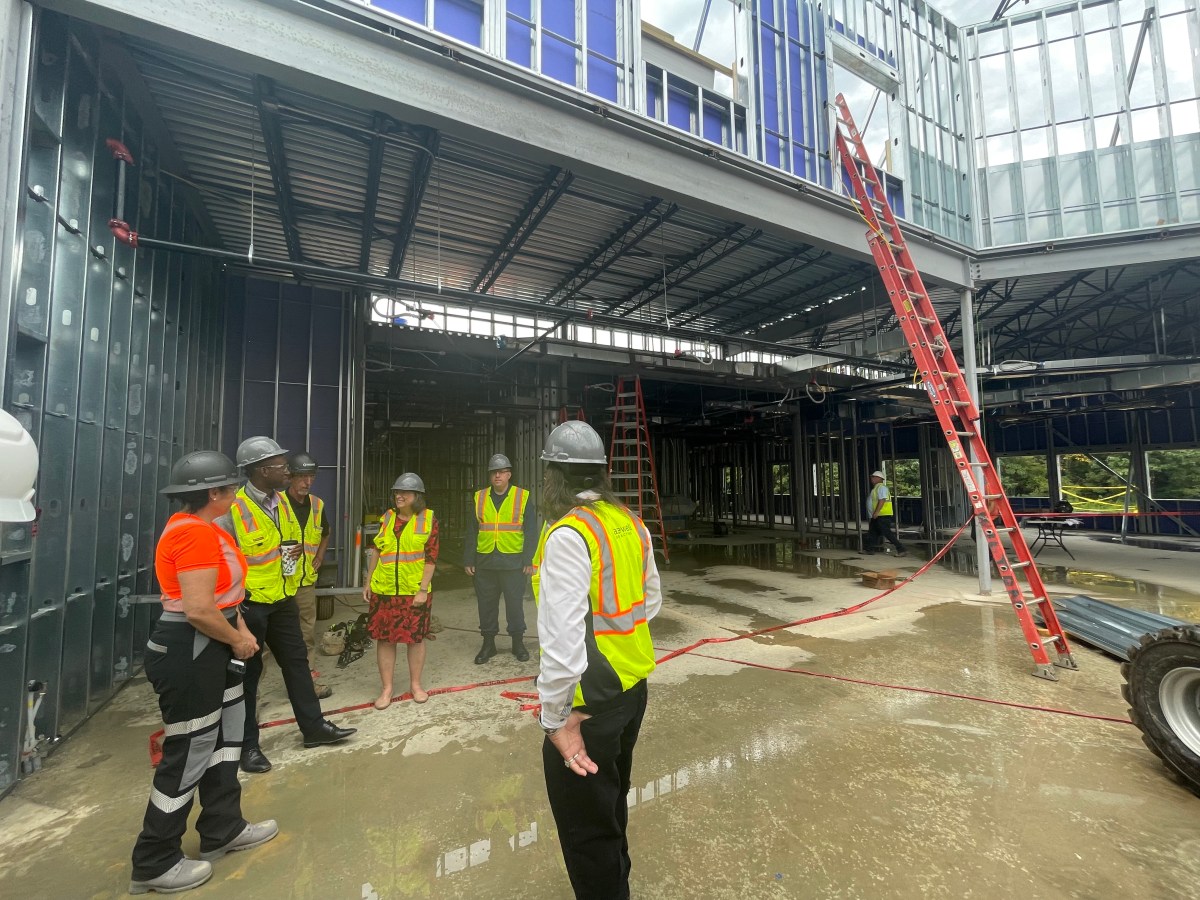
It was an overcast day, water still gleamed off the concrete slab from Wednesday night’s rain. Walking through the construction site of a new hospital in a neon yellow vest over her red and black midi-length work dress was U.S. Treasurer Chief Lynn Malerba. Her beige flats looked out of place against the backdrop of the exposed metal framing.
“Visiting tribal communities allows us to understand how they’re implementing the programs that we have and how our policies and the guidance that Treasury is implementing works on the ground,” Malerba, Mohegan Tribe, said. “You can’t do that in D.C. You have to go visit the communities that you are serving in order to understand how best to serve them.”
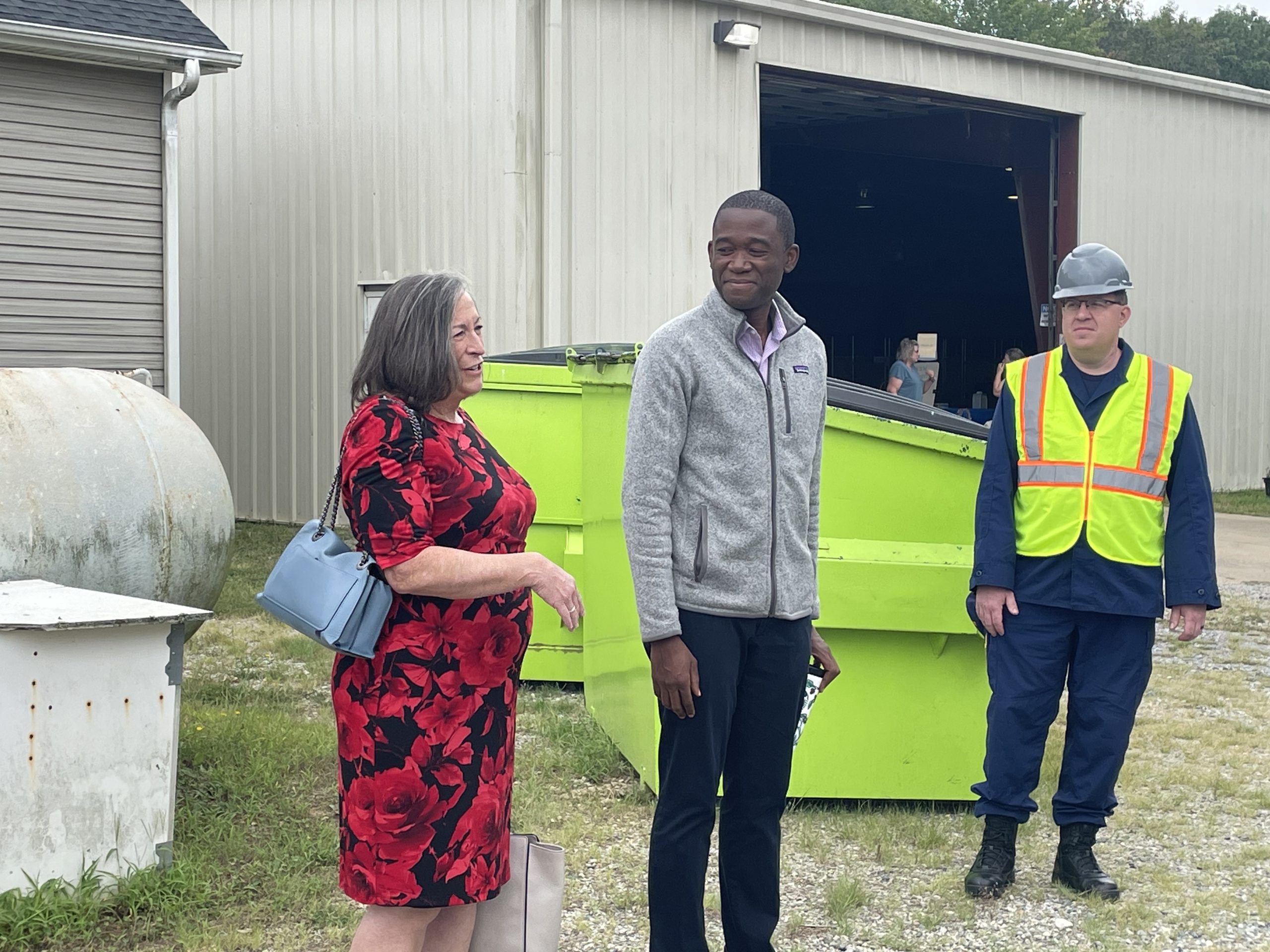
This visit marked the first time Malerba, in her capacity as the U.S. Treasurer, visited a Virginia tribal nation with Deputy Secretary of the Treasury, Wally Adeyemo. The official visit with Chickahominy Indian Tribe officials is part of the Treasury’s ongoing commitment to meet with tribal leaders to learn about their unique economic needs and challenges. The tribe is located in the eastern part of the state.
“They underscored over and over again that this kind of funding — the formula funding that we’ve used — the flexibilities that we’ve built in, is more user-friendly than grants and allows them to serve their tribe in a way that is culturally-specific, as well as meet their particular needs,” Malerba told ICT. “They identify what their needs are and then, they use the funding to work to meet those needs. That’s exactly how we should be working. That respects tribal sovereignty and it respects their ability to be self-determining in how they provide for their tribal citizens.”
This tour was also meant to highlight the funding that has poured into Indigenous nations under the Biden administration through the American Rescue Plan, Bipartisan Infrastructure bill and most recently, the Inflation Reduction Act. Some have described these historic investments as once in a lifetime. The Department of the Treasury is the office that oversees funding distribution to tribes through these acts.
“One of the things that I appreciated most in our conversations about how to deepen the nation-to-nation relationships between tribal leaders and the Treasury Department was they said, that they appreciated two things, one was the fact that Treasury for the first time in history had established a tribal office, which included tribal citizens,” Adeyemo told ICT. “But the second, was the flexibility that Treasury provided to them when it came to the ability to use the funds that came from the American Rescue Plan. And the thing that they asked us to continue doing was deepening the relationship and helping them think through how they can continue to build economic opportunity in their community.”
The Chickahominy Indian Tribe is home to what will become the newest Indian Health Service facilities in the area dubbed as the Mid-Atlantic region under IHS. East of the Mississippi River, there are only seven Indian Health Service facilities. At a two-hour drive, it will be the closest health care facility to Washington, D.C. where thousands of tribal citizens live and work.
Comparatively, the Navajo Nation alone has 12 health centers on their homelands. This number grows if facilities, clinics and health programs in the surrounding areas are included.
With around 100 employees already, the Chickahominy nation is poised to be one of the largest employers in New Kent County, Virginia. In rural counties, tribal nations are one of, if not, the biggest employers and drivers of economic development.
For example, the Alabama-Coushatta Tribe of Texas located in the Big Thicket of East Texas is the second largest employer in Polk County. The Alabama-Coushatta’s tribal gaming enterprise infuses more than $170 million into the local economy.
Tribes are sources of economic development in rural counties and as noted by Adeyemo, this economic opportunity helps the entire community.
The American Rescue Plan provided flexible funding that is easier for tribes to use. Grant funding is often cumbersome and rigid, oftentimes too rigid to be useful to tribal governments. Grants dictate exactly how the funding can be used and for what purposes. It cannot be used in any other way than the language stipulates.
“As a tribal leader, I know that when you have a grant, it’s very prescriptive in terms of what you can and cannot do with it, and that’s not really helpful because you may not have that specific need,” Malerba said.
She went on to give an example of this issue.
“If you operate a childcare center, or an early childhood development center, and you operate a Head Start program, you can’t share a playground. That doesn’t make any sense,” Malerba said. “Sometimes grants are very inefficient because you can’t combine funding sources to create a better program. And that’s why I think flexibility is more important because as we think about what tribal communities need, one tribal community may focus more on elder services, one may focus more on child care services or early childhood development. But it’s not up to the federal government to be that prescriptive with the tribe.”
“They should be able to determine for themselves, what are their priorities, and how they’re going to work to fulfill those priorities,” Malerba said.
The Treasury hopes to continue funding the Office of Tribal and Native Affairs which is at the heart of this work and to continue engaging with tribal leaders. As of earlier this year, the office had not yet secured permanent funding; without it the office would be unable to operate should a new administration come in and decide not to fund the office. It’s unclear whether or not this has changed.
Making the future of this work uncertain as President Joe Biden, who has made a strong commitment to tribal nations, is up for reelection next year and former President Donald J. Trump along with Ron DeSantis are looking to replace him. The Trump administration’s record in Indian Country speaks for itself, there was little tribal consultation and budgets for tribal-specific offices and programs were cut. As governor, Ron DeSantis signed a gaming compact with the Seminole Tribe of Florida for exclusive rights to sports betting in Florida.
Only time will tell how or if the gains made in the Treasury department will continue beyond this administration.

ICT is a nonprofit news organization. Will you support our work? All of our content is free. There are no subscriptions or costs. And we have hired more Native journalists in the past year than any news organization ─ and with your help we will continue to grow and create career paths for our people. Support ICT for as little as $10. Sign up for ICT’s free newsletter.

