
Sandra Hale Schulman
Special to ICT
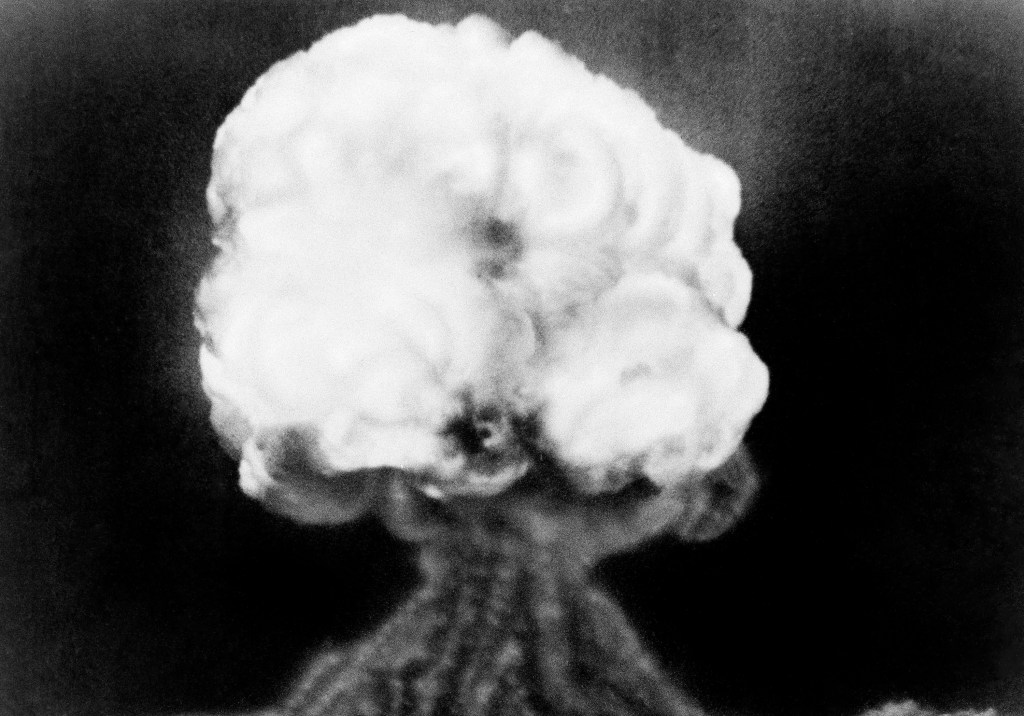
It’s been 80 years since the Trinity Test on July 16, 1945, a horrific event that ushered in the terror of the nuclear age and forever changed the lives of people living downwind of America’s nuclear program.
Considered the first nuclear explosion in the world, the test featured a plutonium implosion device that detonated about 200 miles south of Los Alamos, New Mexico, on the plains of the Alamogordo Bombing Range, known as the Jornada del Muerto. The code name for the test was “Trinity.”
The test unleashed the potential for nuclear weapons in war and set the stage for the U.S. to drop a nuclear bomb on Hiroshima, Japan, three weeks later on Aug. 6, 1945, to begin bringing an end to World War II.
It also blasted radiation across thousands of people living in the area who have struggled for generations with unusually high cancer rates and other illnesses.
On this somber 80th anniversary, survivors and advocates are speaking out to ensure the milestone is not forgotten. But the events scheduled this year come with unexpected good news from Washington, D.C.
In July, President Trump signed the comprehensive budget bill passed by Congress that includes a little-known but critical provision, the Radiation Exposure Compensation Act, which extends compensation and recognition to families harmed by U.S. nuclear testing and uranium mining, including those who worked in the uranium industry after 1971 but who had not been previously included.
It also expands the compensation act to new areas in states including Utah, Arizona, New Mexico, Idaho and Missouri,and raises compensation to $100,000 from either $50,000 or $75,000, depending on the disease. Many communities, however, are still left out, advocates say.
“For the first time ever, the people of New Mexico will be included, along with the post ‘71 uranium workers,” said cancer survivor Tina Cordova, co-founder of the Tularosa Basin Downwinders Consortium in New Mexico, whose community was directly affected by the Trinity Test. Cordova inspired the documentary film, “First We Bombed New Mexico.”
“This is a big first step,” Cordova told ICT from New Mexico. “We know we’re not done yet because they stripped out the healthcare coverage and they only gave us a two-year extension, which will not be adequate time for us to get everybody in New Mexico enrolled that should have an opportunity. Our work’s not over, but it’s a very significant first step. It’s an acknowledgement on the part of the government that they harmed us and that they essentially walked away 80 years ago.”
Recognizing the human cost
The 80th anniversary on Wednesday, July 16, will be filled with events.
“People are in a joyous mood because they view this as a significant victory,” Cordova said. “Two things are happening at the same time — we’re receiving this federal acknowledgement, but also our state government, through the work of Rep. Joanne Ferrary, who’s a state house member. They passed a memorial establishing a permanent marker at the entry to the Trinity Test site and forever more now, there will be a sign there that recognizes the human cost of detonating an atomic bomb as close as 12 miles to where people lived.”
The memorial will provide an enduring reminder for future generations, she said.

“My great-great-grandchildren will drive across the desert, and they’ll be able to stop and read the history of this,” she said. “There’s always been a marker there that acknowledges the science, the scientists, the industry, but nothing that ever paid tribute to the people that lost their lives as a result, including all the babies that died. We lost thousands of babies that summer, and no atonement for that ever.”
Cordova said the evening events will include another historic moment, with all three of the Catholic bishops from New Mexico in place before the annual candlelight vigil.
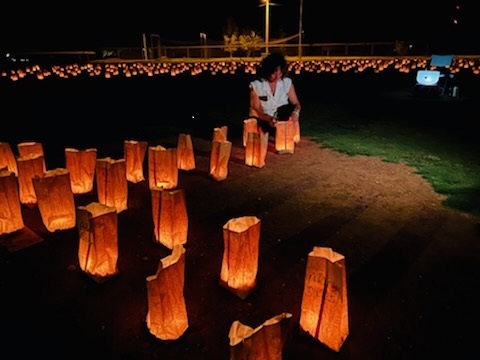
“We’re going to hold mass and then afterwards, we’re going to feed the public a good meal and then make our way over to our 16th Annual Candlelight Vigil, where we memorialize all that we’ve lost,” she said. “We call out the names of our deceased loved ones. Our list in a little town of about 3,000 is up to over 1,000 names and growing every year. That’s a third of the city. We light candles in luminatas and so many it lights up the entire park.
“It’s beautiful and solemn.”
The Trinity Site is now part of the White Sands Missile Range and is owned by the Department of Defense. That’s another issue.
“Part of the history of Trinity and the Manhattan Project is they took our lands from us too,” Cordova said. “They displaced thousands of people to take the land to establish Los Alamos and then White Sands Missile Range where they test. They treated us as the human collateral damage. That’s the hidden history of this.”
Continuing the fight
Cordova is hoping the bipartisan effort to get the extensions passed will help with future political efforts. Republican Sen. Josh Hawley of Missouri sponsored the provision, and joined with Democratic Sen. Ben Ray Luján to get it passed, even at a time when nuclear weapons are back in the news with the U.S. bombing of Iran’s facilities.
She said Missouri, particularly the St. Louis area, was a place where workers enriched uranium, and where people are now facing similar health problems.
“Hawley was passionate about this, and he was finally able to get his Republican colleagues to do the right thing,” she said. “This expansion doesn’t go far enough because it didn’t include Montana, it didn’t include the remainder of Arizona and Nevada. But again, it’s a good first step and we stay in the fight, especially with our sisters and brothers from those places who have essentially been left out.”
For Cordova, this is all intensely personal.
“We bear the legacy of Trinity in our bodies now and this is multi-generational,” Cordova said. “I’m the fourth generation in my family to have cancer since 1945. I have a 24-year-old niece in California who just graduated from college. She’s got cancer. I have two brothers, my youngest brother, who is her father, was diagnosed in January with kidney cancer. Someone dies and we bury them and someone else is diagnosed the next day.
“It’s a psychological, emotional and financial toll that we will never be able to measure on every level.”
