
Chandra Colvin
MPR News
Originally published on MPR News.
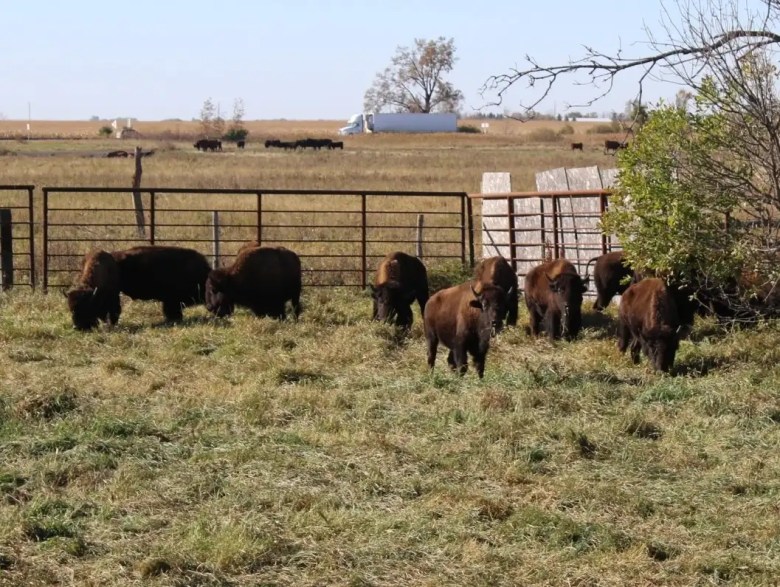
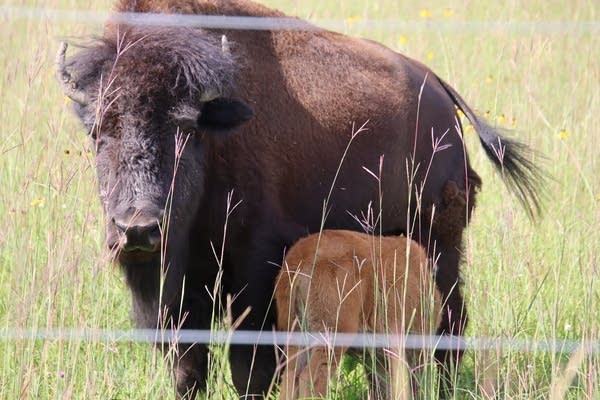
The White Earth Nation’s Bison Program recently expanded its herd with the arrival of 45 new bison, which includes yearlings, mature cows and two cow and calf pairs. In August, the program welcomed its first bison calf.
“Since that time, our other three breeding age cows were successful in also having a healthy newborn calf,” said bison foreman Jack Heisler.
With the newly added bison and those already in the program, he says the tribal nation has a total of 55 bison between a breeding herd near Naytahwaush and a harvest operation near Mahnomen. Both pasture locations are described as prairies.
Heisler says White Earth Nation received the bison through the InterTribal Buffalo Council, a partnership of over 80 tribes aiming to restore bison herds to tribal lands for cultural and spiritual enhancement and preservation.
“That’s where all our animals came from, except the calves that were born here,” Heisler said.
With the assistance of the InterTribal Buffalo Council, Heisler says they were able to receive surplus bison from two Minnesota state parks: Minneopa State Park near Mankato and Blue Mounds State Park south of Pipestone.
Sixteen of the new bison are allocated to the pasture near Mahnomen for harvest operations, which will begin again in the spring of next year.
“We want to be in a position to continue our program providing that good quality, healthy protein source for people,” Heisler said.
Food sovereignty and security are two goals of the Bison Program. Heisler says bison has already been provided to a school located on White Earth Nation’s reservation, the tribal nation’s elderly nutrition program and for special events such as ceremonies and powwows.
Nicole LaFrinier is the White Earth Food Sovereignty and Security coordinator. The tribe’s food sovereignty program works to increase access to seasonal produce and traditional foods. It also aims to grow White Earth Nation’s local food economy.
“We’re just trying to give people another healthy protein that they can use that’s for more of a traditional food,” LaFrinier said. “I think it has been taking some people to get used to it, as it does have a little bit different smell and taste versus cattle.”
She says over the summer, the InterTribal Buffalo Council held a traditional harvest at White Earth Nation. Members of the tribal community were invited to partake in harvesting a bison. LaFrinier says around 100 people came to participate.
“We’re real, super proud of that, that our people are really interested in how to traditionally break down these animals and how to use every part of them,” she said.
While food and consumption are often first to mind regarding the program, Heisler also points out comments on a social media post by White Earth Nation.
“There’s a cultural, spiritual aspect to what we’re doing here,” he said. “If you read some of the comments, there are people just commenting about how good it is to see them back on their traditional landscape, good to see them at White Earth.”
The post states, “These additions represent a continued commitment to bison restoration and herd health across our managed lands.” Comments under the post share their thoughts of reflection, and others share they are happy to see bison in the area.
“I think it gives everyone — I don’t know, “hope” is a good word — but it definitely makes people feel good to see them,” LaFrinier said.
Bison, or mashkode-bizhiki in the Ojibwe language, once roamed on Minnesota’s prairies in large numbers. By the 19th century, settlement and overhunting of the animal brought the population to a small number of captive bison. White Earth Nation is among other tribal nations in the state working towards conservation and revitalization efforts.
The program team plans to monitor the herd for health concerns and interactions between one another as they adjust over the winter. Heisler says precautionary checkups have begun and will continue again in the spring.

