
Amelia Schafer
ICT + Rapid City Journal
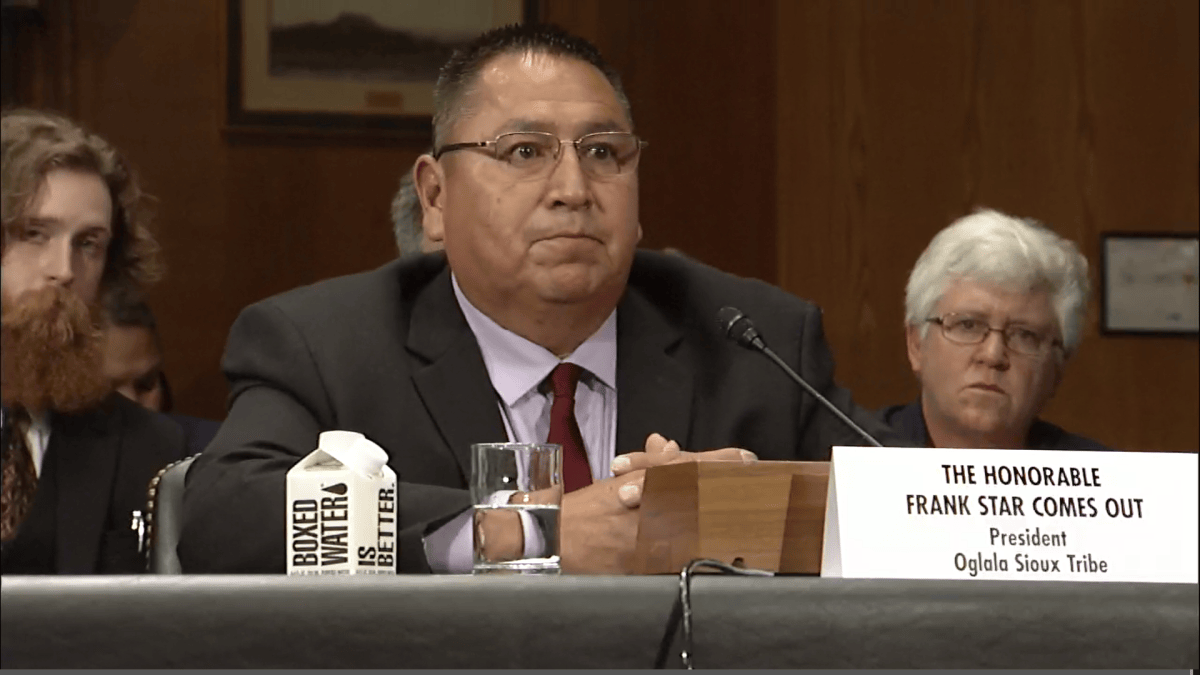
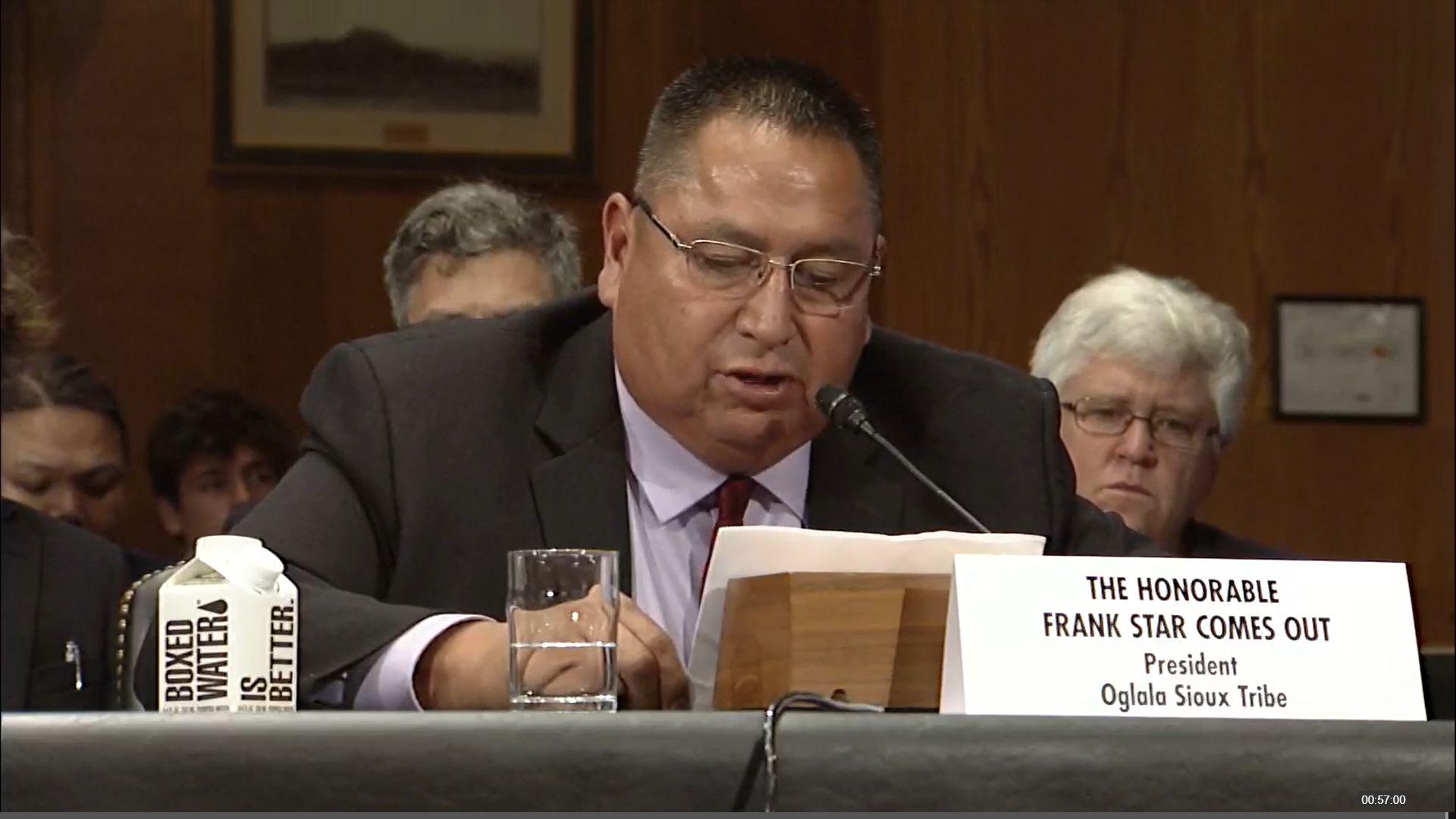
Oglala Sioux Tribe President Frank Star Comes Out and Cheyenne River Sioux Tribe Chairman Ryman LeBeau testified before the United States Senate Committee on Indian Affairs on July 19 in support of S. 2088, the Wounded Knee Memorial and Sacred Site Act.
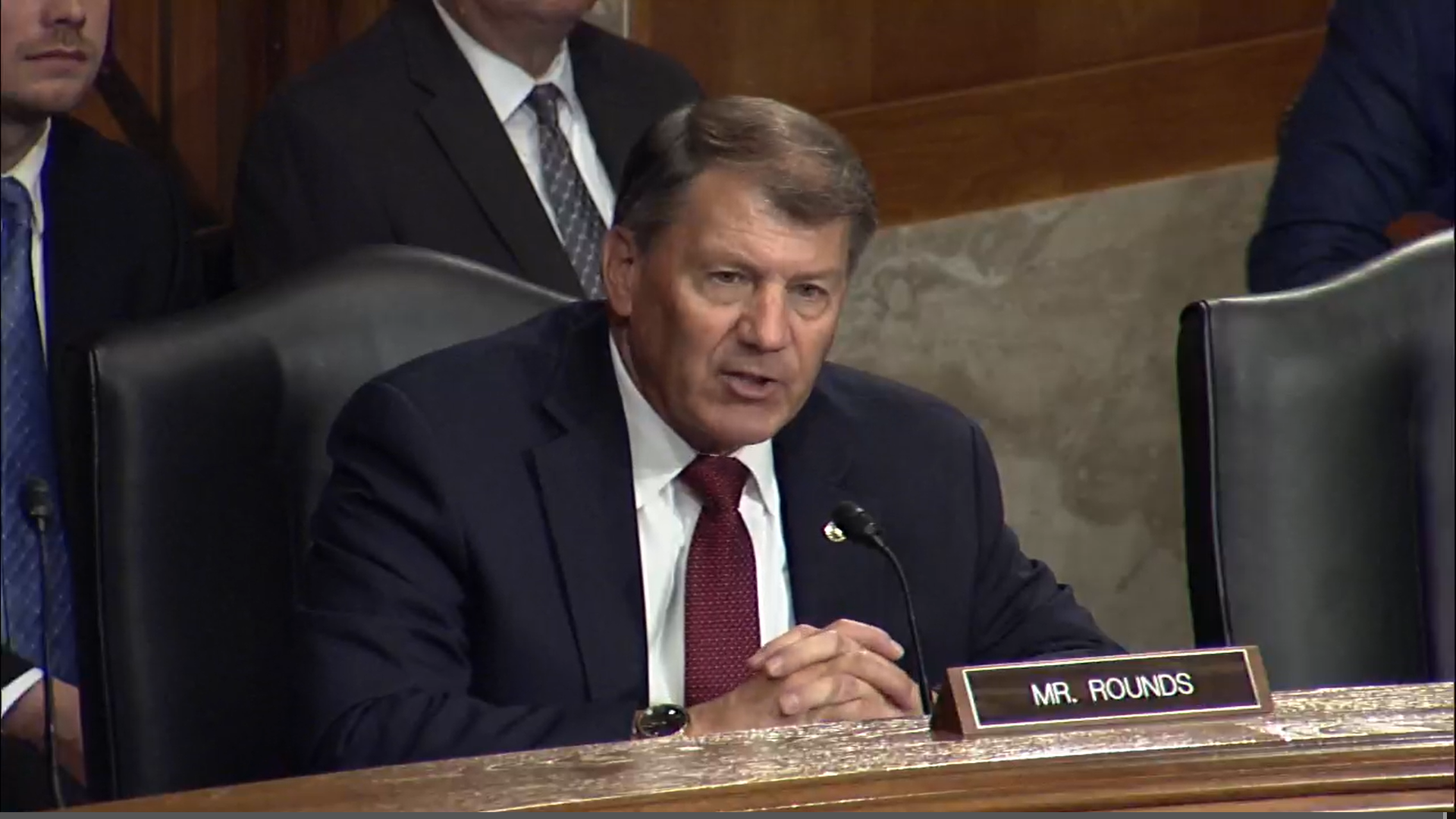
The Wounded Knee Memorial and Sacred Sites Act, sponsored by South Dakota Senator Mike Rounds, seeks to return 40 acres of land where most of the carnage at the Wounded Knee Massacre, previously owned by non-Native individuals, to be taken in restricted Indian fee title, with the names of the Oglala Sioux Tribe and Cheyenne River Sioux Tribe on the title.
Both tribes attempted to purchase the land in October 2022 from Jeanette Czywczynski for $500,000. The Czywczynki family had previously operated a trading post and museum on the property.
“These acres are part of the Wounded Knee Massacre site, and because we lost our relatives on these lands, they are sacred to us as Memorial and Sacred Site Land,” Chairman LeBeau said in his written testimony.
Many of the Wounded Knee victims were from the Mniconju band of Cheyenne River.
The tribes are asking that the land, which is part of the Pine Ridge Reservation, be placed in restricted fee status rather than trust so that it can be restored back to the original people in the name of the tribes, not in the name of the United States. Restricted fee status would also protect the land from commercial development and both state and federal taxation.
The 40 acres in question is referred to as “the killing fields,” according to Chairman LeBeau. The 40 acres includes the hill where cannons were fired by US soldiers, the ravine where victims fled and the land the old trading post sat on.
Both President Star Comes Out and Chairman LeBeau are descendants of Lakota people present at the Wounded Knee Massacre.
“This bill is of special importance to me, not only as a Native South Dakotan and a member of the Rosebud Sioux Tribe, but as a descendant of a survivor of the Wounded Knee Massacre, my great-great grandmother,” Wizipan Garriott, principal deputy assistant secretary-Indian Affairs said during the meeting.
On Dec. 29, 1890, the U.S. Army 7th Cavalry surrounded a group of Lakota as they camped near Wounded Knee Creek on the modern-day Pine Ridge Reservation. The calvary had been arresting several tribal members who were participating in the Ghost Dance movement and told the camp to lay down their weapons and that they would be moved to a new camp. According to National Geographic, the campers began a Ghost Dance which the soldiers took as a signal and began to fire upon the majority unarmed Lakotas, killing mostly women, children and babies.
“The Wounded Knee land will be used for sacred purposes and remembrance, including ceremonies and prayer, and the descendants of victims and survivors of the Wounded Knee Massacre will be consulted about the proper care and maintenance of the land as a memorial and sacred site and about the ceremonies and activities to be conducted on the land,” President Star Comes Out said in his testimony.
Earlier this year, South Dakota Representative Dusty Johnson partnered with both tribes to create H.R. 3371, which would aid both tribes in protecting the land associated with the Wounded Knee Massacre. The bill has since moved up to the commission on Indian Affairs after being referred to by the Senate, and became S. 2088.
“We urge Congress to quickly pass this bill and respectfully ask President Biden to sign it into law,” Chairman LeBeau said in his testimony.

This story is co-published by the Rapid City Journal and ICT, a news partnership that covers Indigenous communities in the South Dakota area.
ICT is a nonprofit news organization. Will you support our work? All of our content is free. There are no subscriptions or costs. And we have hired more Native journalists in the past year than any news organization ─ and with your help we will continue to grow and create career paths for our people. Support ICT for as little as $10. Sign up for ICT’s free newsletter.
