
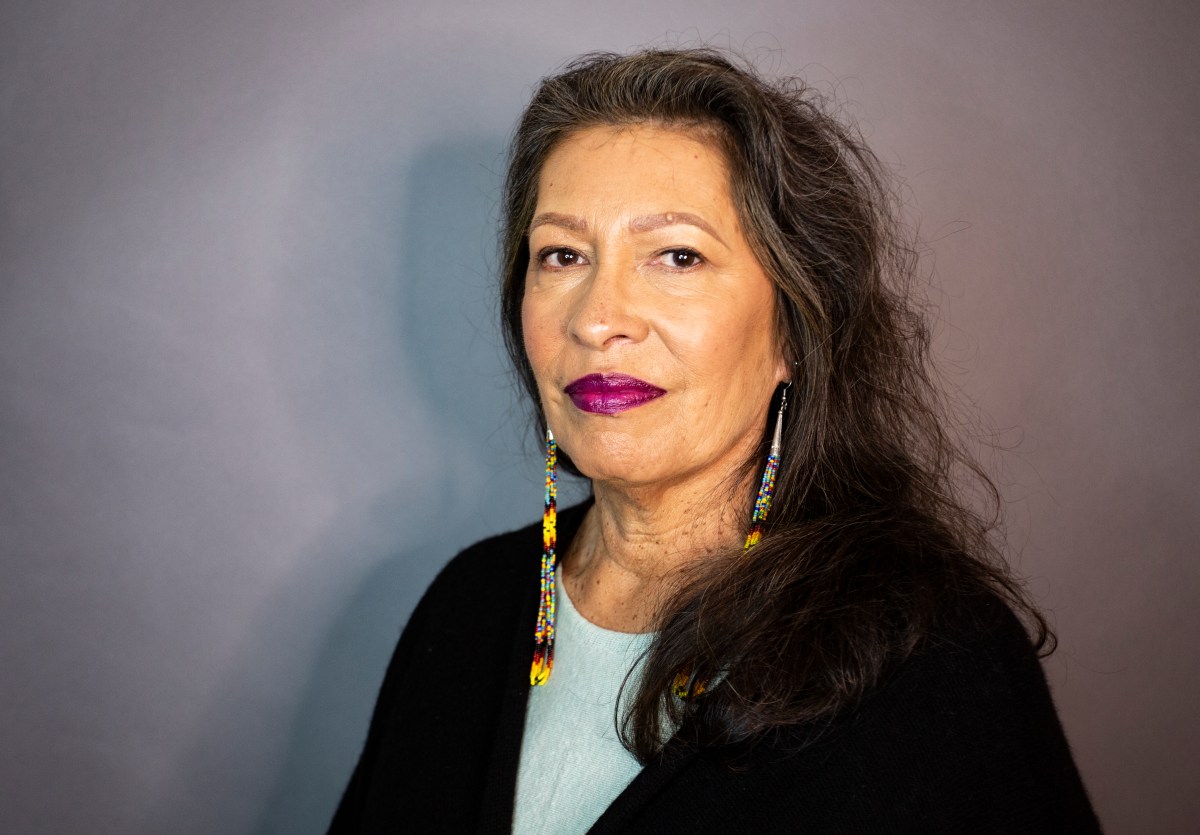
Judith LeBlanc
Executive Director of Native Organizers Alliance Action Fund
President Joe Biden did what many in Indian Country thought impossible. On behalf of the United States, Biden did what those who came before him did not, he said “sorry.” Sorry for the United States’ role in the harm caused by Indian boarding schools, sorry for the lives lost and the impact on our families, communities and cultures for generations.
Donald Trump? He doesn’t have it in him. He makes no apologies for January 6th, for his 64 felonies, for his use of racist stereotypes and anti-Indian agenda that predates even his time in office, when he was a casino developer. He openly declares his love of presidential power. And, many times during his campaign, he praised some of the world’s most brutal dictators. His own former chief of staff, General John F. Kelly warns that he would rule like a fascist dictator if given a second term. But beyond the mainstream headlines, Trump poses a very real threat to the historic gains we’ve made in Indian Country in the last four years.
When Trump took office in 2016, his first actions were to trample on tribal sovereignty by fast-tracking the Dakota Access and Keystone XL pipelines. Defying the wishes of several tribes, he slashed the size of the sacred Bears Ears National Monument by 85 percent. He worked to weaken the Clean Water Act, National Environmental Policy Act, and the Endangered Species Act — all critical to sacred sites protection. Trump’s party is the party of climate change denial, of resource extraction and development at any cost. Our way as Native peoples is to balance development with our sacred obligation to ensure our lands, waters, and resources are available for future generations.
As Native peoples, we cannot afford to go back. We must build on the progress we have made under the Biden-Harris administration.
Over the past four years, we have seen the results of our grassroots advocacy. The Biden-Harris administration restored and expanded the Bears Ears National Monument. Yielding to demands of tribal nations and Native communities, President Biden directed all federal agencies to strengthen their consultation processes with sovereign tribal nations. Perhaps most significantly, this helped shape the way the Department of Interior conducts business. As sovereign nations, tribes have the right to approve or deny projects affecting their ancestral homelands. But for centuries, the tribal consultation process for major developments like international pipelines and open pit copper mines have gone through, at best, a check-the-box approach to consultation. Representation is also important, and under Biden-Harris, we saw 80 Native appointments across all federal agencies, an all-time record number.
The Department of Interior under the Biden-Harris administration was made more effective through the president’s nomination of Deb Haaland, a member of Laguna Pueblo, for Secretary of the Interior. Indian Country came out in force to push for the nomination and confirmation of a Native. And now, for the first time in history, we have a Secretary of Interior who has a shared life experience. She understands our responsibility to protect and manage our sacred lands for future generations. We didn’t have to do the hard, emotional labor of educating the secretary on the harms done by boarding schools. While we have always advocated for the rights and well-being of our people, Secretary Haaland’s leadership has been the critical component we’ve been missing.
Representation matters if we’re going to build a multi-racial democracy. Under the Trump administration, we saw racists emboldened to act forcefully and openly.
On January 6, 2021, thousands stormed the U.S. Capitol. An historic and deadly attack on democracy, for which Trump still refuses to take any accountability. The undermining of the U.S. Constitution endangers our treaty rights. We cannot trust that a president who incites people to undermine the rule of law and the peaceful transfer of power, will be a faithful partner in tribal-federal relations, or that he will respect and uphold our Constitutional rights guaranteed by the treaties.
We are just decades removed from being denied the right to vote, segregation, boarding schools, forced relocation, and “no dogs or Indians allowed” signs on storefronts. While there is still much progress to be made, through persistent advocacy, we have made huge gains in sacred sites protection, representation in the highest offices, and stronger tribal consultation processes.
We organized a powerful Native vote in 2020 which made the difference at the ballot box and created greater access to policymakers. We have made progress. We can’t afford to be derailed by a second Trump presidency. There’s more work to be done, and with Kamala Harris and Tim Walz, we’re looking ahead to building the momentum of the past four years.
Judith LeBlanc is a citizen of the Caddo Nation and a national leader in Indigenous grassroots organizing. She is the executive director of Native Organizers Alliance Action Fund, board member of Movement Strategy Center, and chair of the board of NDN Collective. She currently serves on the Environmental Justice Working Group convened by U.S. Representatives Raúl Grijalva and Barbara Lee.

This opinion-editorial essay does not reflect the views of ICT; voices in our opinion section represent a variety of reader points of view. If you would like to contribute an essay to ICT, email opinion@ictnews.org.
More information about our guidelines: Submission guidelines.
