
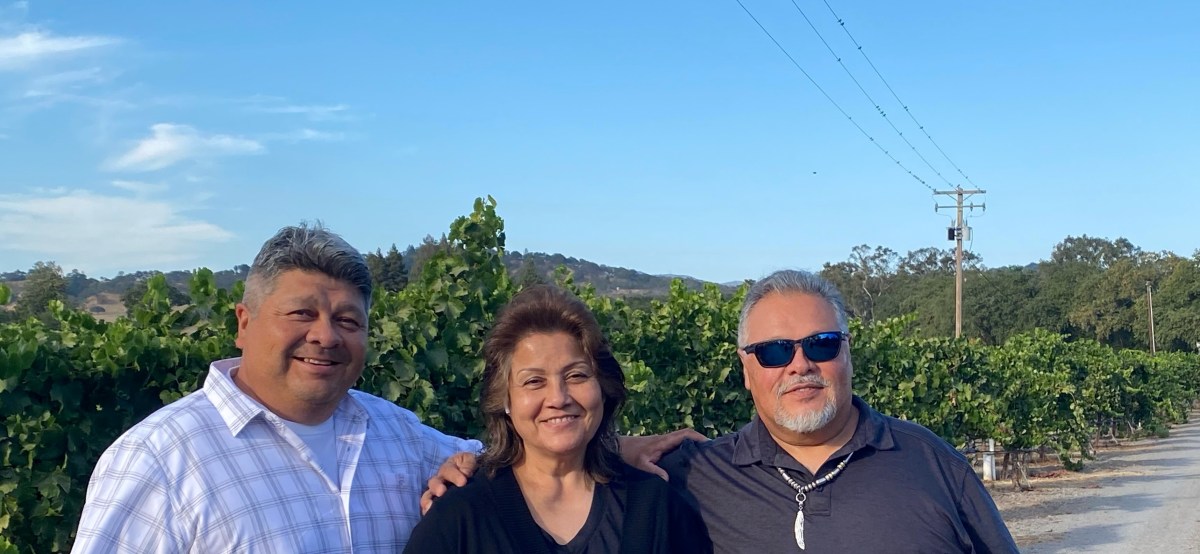
Darin Beltran, Dino Beltran, and Judy Fast Horse
Tribal Council of the Koi Nation of Northern California
As we begin 2024, our tribe, the Koi Nation of Northern California, remains landless.
We have been landless since 1956 when an act of Congress authorized the conveyance of our lands to the county at their request. We were then improperly treated by the federal government as if our very nation had also been terminated. Our fight to be properly recognized took over four decades, and in 2002, the Koi Nation was again included on the official list of federally recognized tribes published by the Department of Interior.
That was not the end of our fight, though – we also had to sue the United States to confirm our right to acquire lands for gaming purposes, as our restoration occurred after the Indian Gaming Regulatory Act and its associated trust land deadlines had passed into law.
Now, as we begin 2024, we are finally on the cusp of seeing lands being placed into trust for the benefit of the Koi Nation. We can see the light at the end of this long fight to regain what was wrongfully taken and to exercise the sovereign powers of a tribal nation once again on the trust lands and permanent land base of our people.
But as we’ve neared this long-awaited and hard-fought milestone, a new foe has replaced the federal government. A few tribes have forced the Koi to fight for what federal law dictates is our unequivocal right: access to the same opportunities for economic development they enjoy under the Indian Gaming Regulatory Act.
Their opposition to the Koi Nation’s efforts to place land into trust is fueled by a scarcity mindset that does not reflect the values we profess to uphold as relatives in Indian Country. This mindset has also driven these tribes’ misinformation campaign about our proposed project in Santa Rosa, California.
Do not be misled: the Koi Nation is not attempting to stretch the boundaries of existing federal regulations implementing the gaming regulatory act, nor are we seeking lands outside our ancestral homelands. To the contrary, recent Interior legal opinion and guidance confirm that our proposal aligns with longstanding precedent.
THE FACTS:
- Our Southeastern Pomo ancestors have been evident in Sonoma County’s Russian River Valley for over 2,500 years. For centuries, they traveled along a historical subsistence trail that runs directly through the site of our proposed project. Linguistic and archeological evidence irrefutably supports these facts.
- Beginning in 1918, our tribal government relocated to Santa Rosa and Sebastopol in Sonoma County from the parcel of Lake County land placed in trust by the federal government for us before deeming it uninhabitable and selling it to the county.
- Our opponents falsely claim that Sonoma County is far from the Koi’s “homelands.” We’ve demonstrated strong historical connections to the county and the project site – the regulatory standard that the Interior department relies upon to determine whether restored tribes can pursue gaming on their restored lands.
While announcing billion-dollar expansions, our opponents work to keep our tribe landless – playing the role of the colonizer and underscoring the failed policies of the termination era. Their inaccurate attempts to paint our complex history as an effort to circumvent Interior policies further perpetuate these injustices. We seek lands through the gaming regulatory act’s restored land exception – a provision in the legislation designed precisely to support landless tribes like ours – not to protect monopolies for tribal megacasinos.
On the merits, there is no debate whether we are within our legal rights under the gaming regulatory act to pursue a tribal gaming project in Sonoma County, California. Further, this was not a discretionary decision within the Interior – our eligibility to take land into trust for gaming purposes as a restored tribe is backed by a court decision.
In terms of the opposition from our neighboring tribe, it is perhaps most egregious that the historical and archaeological data in support of our project were reached by many of the same experts they relied upon to support their own efforts to develop their gaming facilities. Now that our opponent has an operational casino, they are asking the community and the decision-makers at the Interior to disregard the same experts they once asked the federal government to believe for their benefit.
Lateral oppression amongst tribal governments must end. The colonist’s way of thinking reflects something rotten happening within Indian Country. While fighting to maintain a monopoly by waging a misinformation campaign and urging members of Congress to interfere in the established federal regulatory process, our opponents are missing an opportunity. They could be taking advantage of this time and this effort to be a leading voice in support of land back for tribes and how we address yet another of the historical injustices that have kept the Koi Nation and so many other tribes from self-reliance and the economic success of Indian gaming.
Our call to action to Indian Country is simple: stop the in-fighting and let the healing begin. After centuries of mistreatment by the United States, the Koi Nation gaming project should be bringing tribes together, not tearing us apart.
The Koi Nation of Northern California’s Tribal Council is composed of Darin Beltran as Chair, Dino Beltran as Vice Chair, and Judy Fast Horse as Secretary.

This opinion-editorial essay does not reflect the views of ICT; voices in our opinion section represent a variety of reader points of view. If you would like to contribute an essay to ICT, email opinion@ictnews.org.
More information about our guidelines: Submission guidelines.

