
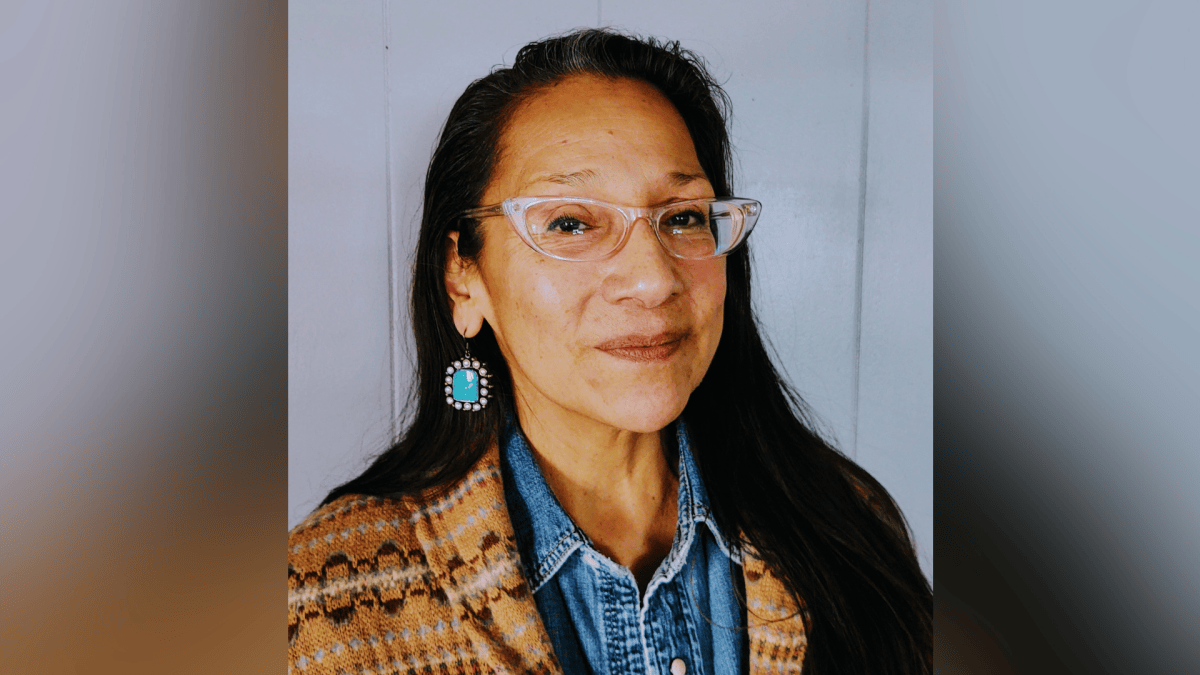
Leslie Logan
Seneca
On the day before Thanksgiving 14 years ago my partner had a doctor’s date with destiny. A biopsy on a bulging, golf ball-sized protrusion on his neck revealed the growth was cancerous. We felt a little less thankful that year.
After the holiday the news grew grimmer. An endoscopy revealed his esophageal cancer was advanced, metastatic, inoperable, and terminal. My partner, Brad Bonaparte, was given a 2 percent chance of surviving a year. The cancer progressed rapidly; he got seven months.
I’ve felt compelled to write about him and his loss because he was part of the legacy of Mohawk skywalkers — an Akwesasne ironworker who followed in his father’s footsteps to walk the iron erecting skyscrapers in New York City, Philadelphia, and Boston. An ironworker’s life, at least in our experience, was one of feast or famine. When he was working, life was good; when he wasn’t working, times were tough. There were often long stretches when there were no jobs to drag up and leave for and times were lean.
I’ve also felt compelled to write about him since his loss, his cancer, was linked to 9/11. After the Twin Towers fell in a terrorist attack on September 11, 2001, he was part of the around-the-clock 24/7 ironworking crews that cleared the mangled steel and debris — all that was left of 110 stories of the two buildings that comprised the World Trade Center.
When Brad came home just before Christmas that year, he was worn out and sick with a bone-shaking growl of a cough that disrupted his sleep — and would eventually, ultimately, irrevocably disrupt our lives.
After we lost him, eight years after he wrapped up his time on what he called “The Pile,” I initially felt compelled to write about what his loss meant to me and my kids because we were extensions of the 9/11 collateral damage. I shared his story, our story, not because we were special, but because we were part of the thousands who were directly impacted by 9/11 and experienced loss; we were part of a country that was dealt a devastating blow with lingering consequences.
My son was 11 years old and in the fifth grade and my daughter was 8 years old and in the second grade when they lost their father. September 11 remains a date that gives us pause; it is a date that we can’t help but acknowledge for what it has taken from us. This past September, my daughter, now 21, lamented in a choke of tears that she couldn’t remember her father; she could no longer hear his voice and her memories of him were vanishing. She was so little when we lost him. She had so little time with him.
At the 20th anniversary of 9/11 I wrote about how even 20 years later, the ironworkers were still barely a footnote to the tragedy. I wrote about how our family had received a few settlement “offers” over the years, none amounting to more than a modest middle-class annual salary; settlements I simply could not comprehend for they suggested a grossly discounted assessment and value of his life and the sacrifice he made.
He sacrificed; we sacrificed.
Over the years raising two kids on my own has not been easy. I was fortunate to own what I fondly refer to as our “dumpy double wide” on the Cattaraugus territory — old, molding, and falling apart, but it was ours. Just before he passed, we intended to build a house. To this day, the blueprint we had in mind is still pinned to the fridge by magnets.
I have a master’s degree, but over the years I have often found myself out of work and unable to land a well-paying job. I have few school pictures of the kids because I could never afford to buy the pricey portrait packages and they weren’t a necessity. There were years when we were embarrassingly eligible for free lunches as I was a low-income single Native mom. There were years when I qualified for HEAP: heating assistance. There were years when I leaned on my mom for help paying bills.
The difficulties of life without him weren’t solely financial. My son struggled, felt his father’s loss in the marrow, and contemplated suicide. There were times when I felt bewildered by the seemingly never-ending challenges of life and wondered: what is the point? There were times when we all needed counseling and psychological and emotional support.
Three years ago, we received a call suggesting a more significant settlement would come forth. After two years of stops and starts, I began to think I would never see a 9/11 award in my lifetime.
This year, the day before Thanksgiving 2023: we are finally in receipt of a 9/11 Victims Compensation Fund settlement award. We lost him in June 2010: 13 years, 5 months, and 7 days ago.
The settlement is huge, not so much in terms of the dollar value, although it is significant. It is huge because it is a cushion of economic relief I never thought would materialize. It is huge because even though I make what looks like decent money on paper as an associate director at an Ivy League institution, after I pay rent, my car payment, and my phone bill at the start of the month, I am buying groceries on my credit card and counting the days until the next paycheck. I have kept my house cold in winter. I can’t remember the last time I went “on vacation.” I have stressed about how I am going to afford firewood.
The settlement is huge because I can take care of the small, essential things without worrying about where the money will come from. It is huge because I can breathe a small sigh of economic relief. It is huge because I feel like he is looking out for us, providing for us nearly 14 years after his loss.
So this Thanksgiving, I feel Brad’s spirit is with us more than ever. This Thanksgiving I feel he has delivered us a cushion from the Spirit World; a key that has unchained us from relentless hardship. It is because of him, it is because of his loss, that we have received a 9/11 settlement.
It goes without saying that I would reject it all and 10 times the amount if I could just have him sit with us at the table with turkey. I would pay more than what we have been awarded if I could just hear his laugh again, be blessed by his dimpled smile, and see him walk in the door.
In the past 10 days I have slowly paid off bills, credit cards, and substantial loans. I will soon be debt free — although that will be short lived since we will put a chunk of money down on a modest house. For some reason, today his loss and yet his presence, these combined conflicting forces intensified, and I felt the gravity of the settlement in a pronounced way. In a crush of emotions, I felt sad, happy, wistful, grateful, exhilarated, sad, grateful, grateful, grateful. Grateful to him, for him, to have had him in our lives at all. Brad has given us a gift of hope for a less stressful financial situation. We won’t be building a McMansion and we won’t be surfing the globe or living a lavish life, but we’ll be alright.
This Thanksgiving, I am ever thankful for Brad, for his abundant spirit, and the sacrifice he made at Ground Zero.

Leslie Logan, Seneca, has been an occasional contributor to ICT for more than 10 years. She is the associate director of the American Indian and Indigenous Studies Program at Cornell University. She is a freelance writer, public relations consultant and grassroots community activist.
This opinion-editorial essay does not reflect the views of ICT; voices in our opinion section represent a variety of reader points of view. If you would like to contribute an essay to ICT, email opinion@ictnews.org.
More information about our guidelines: Submission guidelines.
