
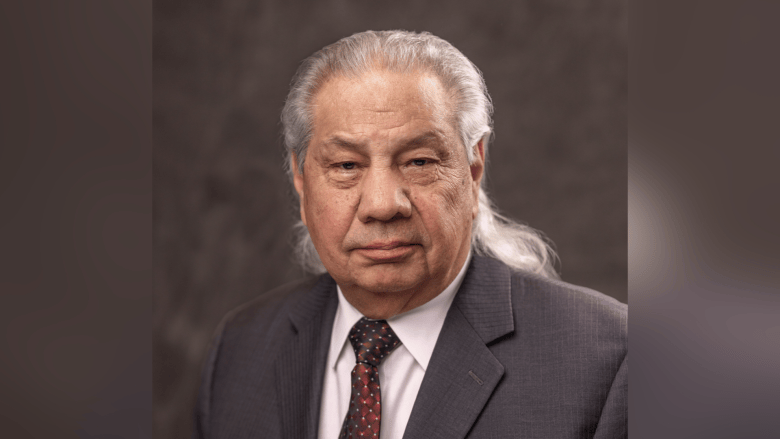
John Echohawk
Pawnee
Executive Director, Native American Rights Fund
Wednesday, August 6, is the 60th anniversary of the Voting Rights Act. This landmark civil rights legislation helps ensure equal access to voting guaranteed through the 14th and 15th amendments of the U.S. Constitution. Every eligible citizen of the United States has the right to vote and have their political will counted, free from racial discrimination.
This anniversary is not just a moment of commemoration but also an opportunity to recommit to foundational democratic principles, for every American. For too long and even today, full and fair access to the ballot box is being kept from Native Americans and Alaska Natives across this country.
My organization, the Native American Rights Fund, is the oldest and largest nonprofit providing specialized, high-impact legal assistance for tribal nations and Native people seeking to assert and protect their rights. For decades, we have fought hard to protect the voting rights of Native Americans across the United States. We have successfully vindicated the rights of Native Americans in states like Arizona, Alaska, North Dakota, Montana, South Dakota, and Nebraska. Often, we have relied on the Voting Rights Act.
Racial discrimination still exists, and the Voting Rights Act has proven to be an effective tool for individual Native voters to confidently stand up for their voting rights. The act is powerful and necessary legislation. Now, however, in a time when electoral margins are thin and political jockeying is intense, we see the Voting Rights Act itself under direct attack.
Right now, NARF is working on a case, Turtle Mountain v. Howe. In that case, the 8th Circuit Court of Appeals issued a radical decision that goes against 40 years of precedent. The court concluded that individual voters and tribal nations cannot bring claims under Section 2 of the Voting Rights Act or under a separate law called Section 1983. With this decision, the court cut off all options for everyday Americans, tribal nations, and organizations to directly challenge racial discrimination that impedes their fundamental right to vote. We, along with Campaign Legal Center and other co-counsel, are seeking United States Supreme Court review of this devastating opinion.
Turtle Mountain is one case in a line of cases designed to undermine the Voting Rights Act. Based on the wrongheaded notion that racial discrimination is no longer prevalent, we have seen the U.S. Supreme Court narrow the Voting Rights Act — whether by gutting preclearance in Shelby v. Holder or narrowing vote denial claims in Brnovich v. DNC. Turtle Mountain must go the other way. If it does not, then the Voting Rights Act will be a hollow shell, gutted and unable to deliver on its promise of protecting the right to vote from race-based attacks.
We must be able to continue to bring claims on behalf of Native people and tTribes, whether that is fighting a polling place put 50 miles from a reservation, or contesting a gerrymandered map that excludes Native populations, or challenging ID laws that exclude tribal IDs. We must have tools, like the Voting Rights Act, to beat back this inequity. The act has been an essential part of the fight for Native voting rights. And we are committed to that fight. We will fight to protect the Voting Rights Act and we will fight for every Native voter’s — every American’s — right to vote free from racial discrimination.
If you or your tribe have encountered restrictions on your opportunities to register, vote, and have your vote counted, the Native American Rights Fund is available to help. Contact us at vote@narf.org. Learn more at vote.narf.org.
John Echohawk, Pawnee, is the Executive Director of the Native American Rights Fund. He has been recognized as one of the 100 most influential lawyers in America by the National Law Journal and has received numerous service awards and other recognition for his leadership in the Indian Law field.

This opinion-editorial essay does not reflect the views of ICT; voices in our opinion section represent a variety of reader points of view. If you would like to contribute an essay to ICT, email opinion@ictnews.org and jourdan@ictnews.org.

