
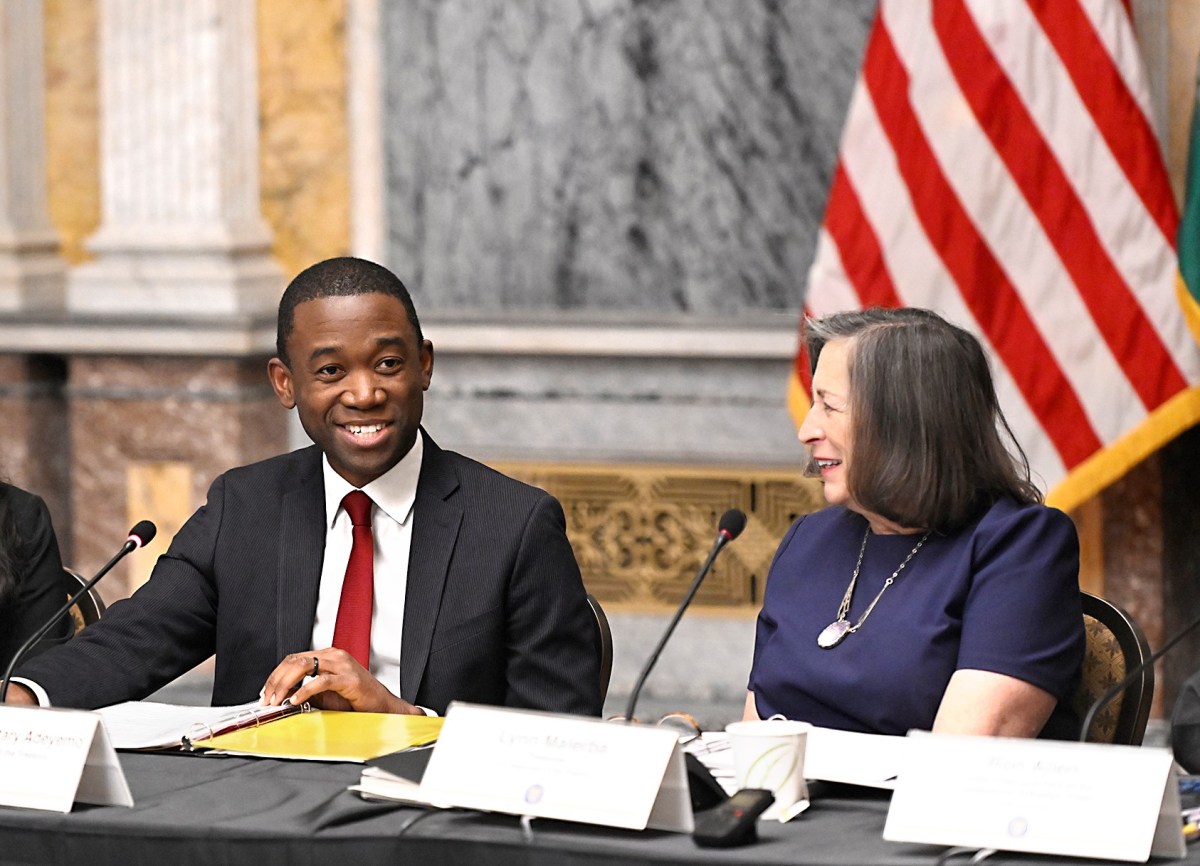
Wally Adeyemo
U.S Treasury
Last year, I visited the Chickahominy Indian Tribe in Virginia to seek their advice and hear their story. In the face of Virginia’s historic racial reclassification of American Indians and segregation codified by law, the Chickahominy continued to advocate for the rights of self determination, culminating in federal recognition almost a century after the passage of Virginia’s discriminatory Racial Integrity Act. But, while necessary and long overdue, this recognition did not in itself make up for decades and centuries of federal disinvestment.
We know that tribes all over the country – like the Chickahominy – also lack the access to investments that are critical to economic opportunity. That’s why when Secretary Janet Yellen and I took office, we focused on investing in tribal nations to expand economic opportunity. Part of that effort was making sure that we effectively delivered over $30 billion of pandemic recovery assistance to tribes. We are also focused on making sure that tribes could access the billions of dollars of clean energy tax credits in the Inflation Reduction Act to generate new clean power and lower energy costs for their citizens.
One frustration we heard from tribes is about the pace of tribal tax regulations and resulting lack of certainty that had long prevented them from fully benefiting from tax incentives.
Addressing this type of a challenge is exactly why the president and vice president supported the creation of the Treasury tribal office. Today for the first time in the history of our country the Treasury Department has an office that includes staff with expertise on tribal issues to expedite and improve our rules and regulations. We created Treasury’s first Office of Tribal and Native Affairs under the first Native American Treasurer of the United States, Chief Lynn Malerba.
This new office played a central role in working across the Department on the proposed rules we released today implementing the Tribal General Welfare Exclusion Act. In its administration of the tax law, the IRS has long recognized a general welfare exclusion. That exclusion generally allows individuals in certain circumstances to exclude payments they receive from government social benefit programs from their taxable income. There was a lack of clarity on whether and under what circumstances certain tribal benefits—such as health coverage, educational opportunities, elder care, and housing—qualified for the exclusion. That’s why Congress passed the Tribal General Welfare Exclusion Act to provide a general welfare exclusion specifically tailored for Tribes and their citizens.
Today, we released proposed rules for implementing the tribal general welfare exclusion—rules that reflect the value of the government-to-government dialogue we have prioritized. Under these proposed rules the IRS would give deference to tribal nations on a range of matters, such as determining whether an activity is cultural or ceremonial. The proposed rules incorporate feedback from tribes on setting standards that consider a variety of factors, such as a tribal nation’s culture, history, and geographic area, recognizing that a one-size-fits-all policy could be detrimental. Treasury’s hope is that once these rules are finalized, tribes will be able to provide benefits to their citizens with clarity around tax implications.
These proposed rules are just one example of the important work that our Office of Tribal and Native Affairs are doing in collaboration with the Treasury Tribal Advisory Committee. Our proposed rules recognize that each tribal nation is unique and that its needs differ. Regardless of whether one tribal nation provides mortgage assistance with gaming revenue or another provides educational stipends from royalties, our proposed rules center decision-making in the tribal nation, which knows best the needs of its communities.
For far too long, tribes have been left out and deprioritized in the implementation of our country’s tax code. The decade-long uncertainty around the general welfare exclusion for tribes has been illustrative of that fact. But the Biden-Harris Administration is committed to righting this wrong—to committing to the timely delivery of rules and regulations with tribal voices at the table.
Wally Adeyemo was sworn in as deputy secretary of the Treasury on March 26, 2021. As deputy secretary, Adeyemo serves as the Treasury Department’s number two official and chief operating officer. Adeyemo has taken a leading role in Treasury’s national security, economic inequality, and pandemic-related economic recovery work, while supporting the secretary in driving the department’s fundamental mission: promoting economic growth and ensuring the financial security of the United States.

This opinion-editorial essay does not reflect the views of ICT; voices in our opinion section represent a variety of reader points of view. If you would like to contribute an essay to ICT, email opinion@ictnews.org.
More information about our guidelines: Submission guidelines.
