
Mark Trahant
ICT
I loved being an editorial page editor – and I especially enjoyed the job during the endorsement season.
One of my jobs was to set the schedule. There were hundreds of candidate interviews to schedule, hour-long sessions where editorial board members would ask pointed questions to each of the candidates ranging from those running for president to a seat on the school board.
The editorial board (at some newspapers that board has been as few as three and as many as eight) debate how those candidates fit into our logical framework, the consistency of our voice, and the newspaper’s history. When I was editor of the Seattle P-I’s opinion pages the board decided nearly every editorial (the publisher had a veto). But it wasn’t always that way. The paper once directly delivered the editorial dictates of William Randolph Hearst.
ICT doesn’t endorse candidates. When we re-launched the electronic paper as a nonprofit more than six years ago we decided against having an institutional opinion (we publish op-eds and columns but there is no masthead voice).
That was not always the case. Indian Country Today’s founder, Tim Giago, did write endorsement editorials. One controversial one was his 2012 support for Kristi Noem for the U.S. House of Representatives from South Dakota (she is now governor.)
“It is Giago’s right to endorse whomever he pleases, and many columnists do just that. Most newspapers endorse candidates in their editorial pages, and again, that’s their right. So Giago is not out of line in endorsing Kristi Noem,” Charles Trimble wrote in a column. “But Giago is looked upon by many in the white communities as the spokesman for Indian Country – the voice of the Indian people. It’s an image he cultivates and presents in his writings. To blithely give her his endorsement may look to many people that she is held in high esteem by Indian people generally. Which isn’t necessarily the case, or most likely, isn’t the case at all.”
In the newsroom, reporters hate endorsements. It makes their jobs harder. They don’t like explaining to sources (or readers) that they had nothing to do with that. And the endorsement is separate from news coverage. It’s a hard sell.
The last Indian Country Today endorsement I could find picked Barack Obama in 2018 over John McCain. “Throughout this long campaign, Obama did not just talk about Indian issues; he talked with Native peoples and brought their messages to the national stage. Sen. John McCain made no appearances in Indian country during his campaign despite requests by several tribes. Obama’s successful outreach efforts that included visits with tribal councils and speeches on reservations rendered McCain practically invisible.” This editorial would have been when ICT was owned by the Oneida Indian Nation.
When I was editing the Navajo Times, I wrote most of the editorials and many of those were what we called “non-endorsement endorsements.” It was sharp commentary that did not include the word “endorsement” but clearly outlined why we thought some candidates were better than others. (One of the strongest was only really short. An entire page in black with the words “Four more years …” after Ronald Reagan’s re-election.)
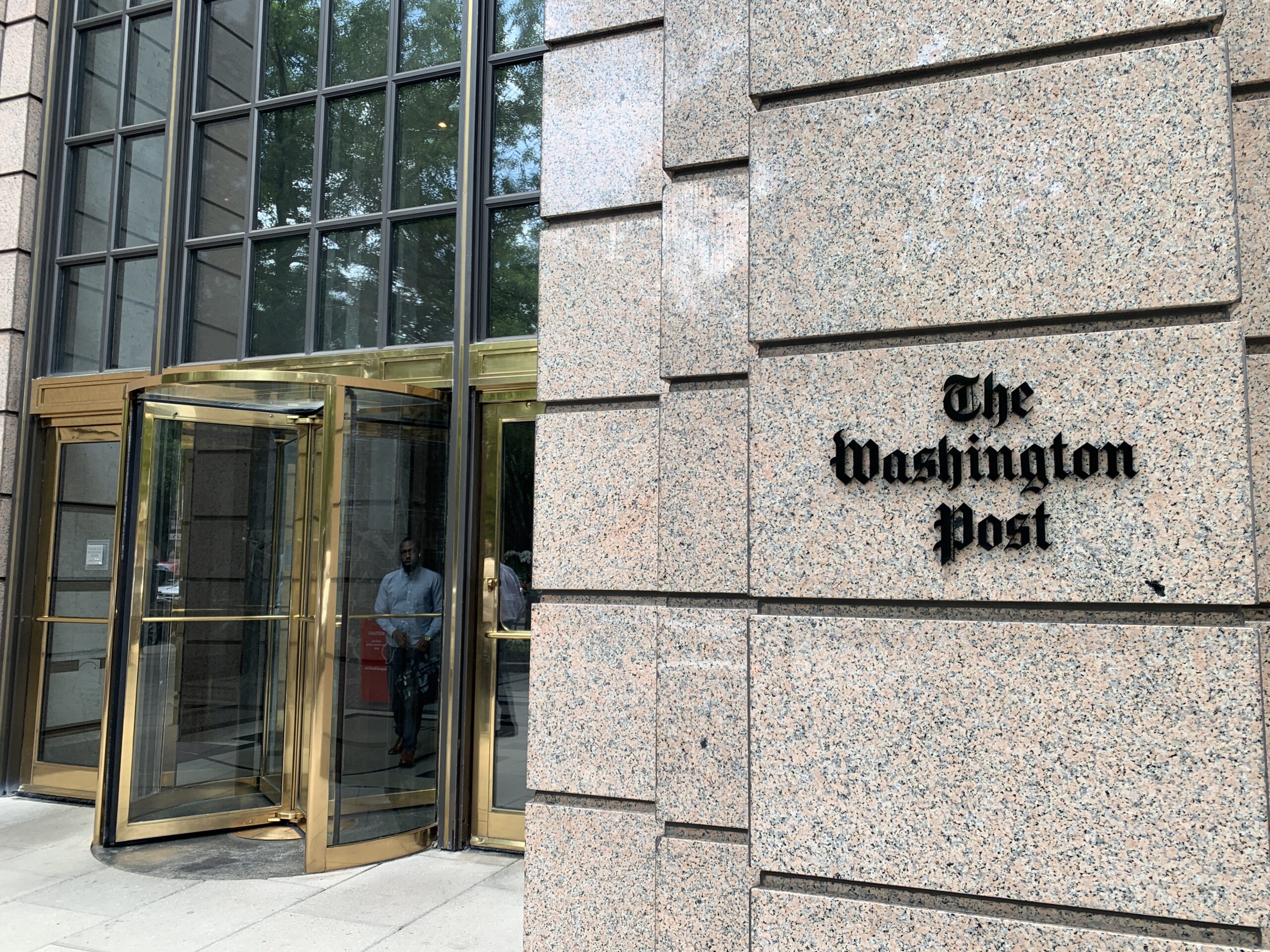
Then I took a dive. I wrote an editorial in 1982 endorsing Peterson Zah for reelection as Navajo Nation president. My logic was that Zah had kept his word about an independent press … and independent newspapers are free to endorse. I didn’t tell anyone except Monty Roessel, the managing editor, because I wanted reporters to be able to blame me. And they did. (Monty wrote me a note about how courageous it was – and I guess that was true since Zah lost that race, I was fired, and the newspaper closed for a time.) This is the scenario that Washington Post owner Jeff Bezos must fear, the potential retaliation from a Trump White House.
In Seattle, one of my favorite editorial endorsement meetings was with Howard Dean. It was already clear that he would not win the Democratic nomination. But he came anyway. And he came alone. He was freewheeling and thoughtful. This was a remarkable hour because so often presidential candidates either arrange phone interviews or visit the board room buffered by a full team of assistants and security agents.

So what do I think about the L.A. Times and Washington Post ditching their endorsements this year? Let’s not get romantic. Owners have always been players. Hearst once used a motto: “While others Talk, the Journal Acts.” Both Hearst and the Chicago Tribune’s Robert McCormack used their newspaper voices to promote America First. The Tribune made its policy clear every day with a flag on its banner: “The American Paper for Americans.”
I was lucky, when I was at the Seattle P-I the newspaper could make its own decisions. But a generation earlier those same opinions would’ve been proscribed by Hearst.
Newspaper business barons always looked out for their business interests, too. Eugene Pulliam, author of a regular column, “Windows on the Right,” nonetheless privately supported Lyndon B. Johnson over Arizona’s own Barry Goldwater. He could do deals with LBJ.
Over the years I have asked readers about editorial endorsements. Do they matter?
“Spend your words reporting facts,” one wrote back at the Seattle P-I. “The readership could benefit by some unscripted responses. Keep your opinions to yourself. I already know them.”
(Such fun: Keep your opinions out of the opinion pages?)
Another reader appreciated the breadth of our editorial endorsements. Helping readers sort through the ballot and the positions of candidates was of “considerable value.” That was the key. So many races – judges, school boards, even the legislator – where readers appreciated our commentary based on our values as a news organization.
That brings me back to the Washington Post and the L.A. Times. There is a lot of anger because the way the owners changed the rules so close to an election. The editorial boards had already done their work, preparing for what should be said. There is a sober deliberation that is part of that wonderful process.
And readers know that. One wrote me: “In a society where people spend little time engaging in political discourse, and often decide how to vote off of a campaign flier or television commercial, endorsements provide people with guidance and reassurance by letting them know which values are behind the endorsement.”
It’s those values that still matter.
It’s not my call. But for what it’s worth, I see the value of ICT endorsing again. There would have to be a process put in place (weighing candidates’ positions on issues important to tribal nations). It could be most valuable.


