
ICT is working to shape the future of journalism and stay connected with readers like you. A crucial part of that effort is understanding our audience. Share your perspective in a brief survey for a chance to win prizes.
Amelia Schafer
ICT + Rapid City Journal
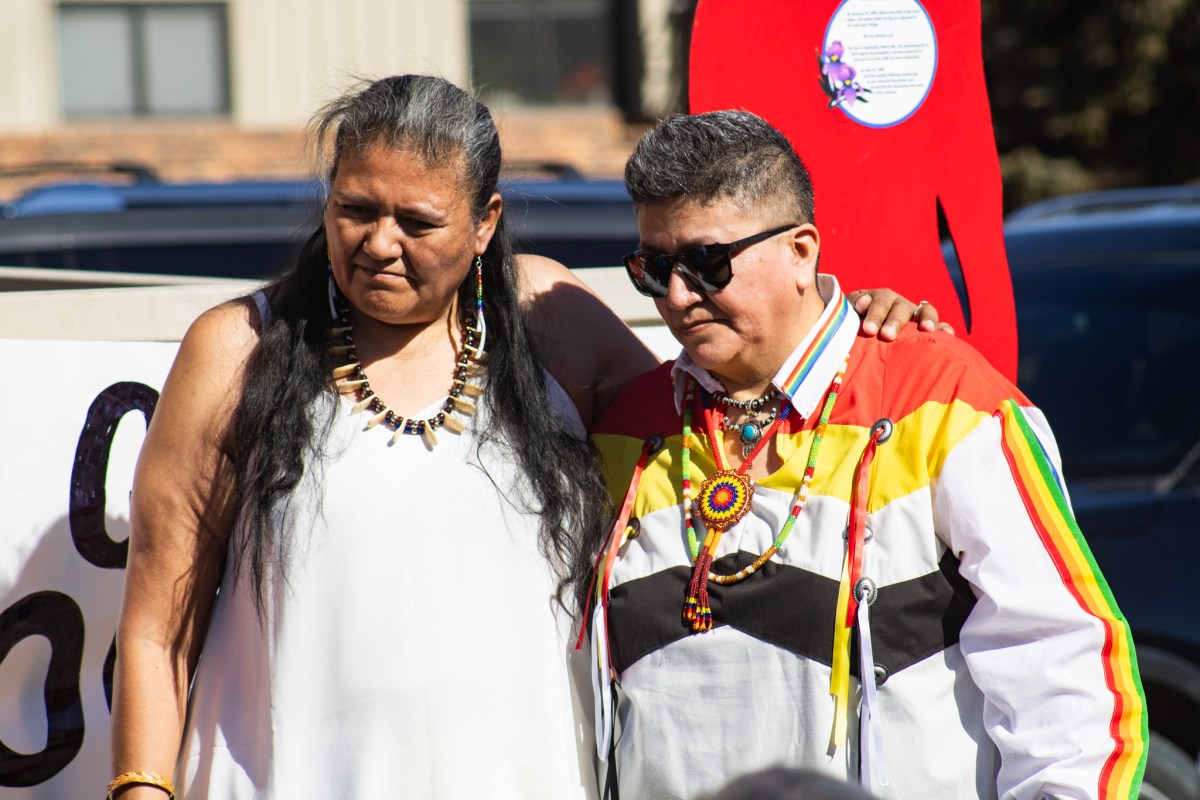
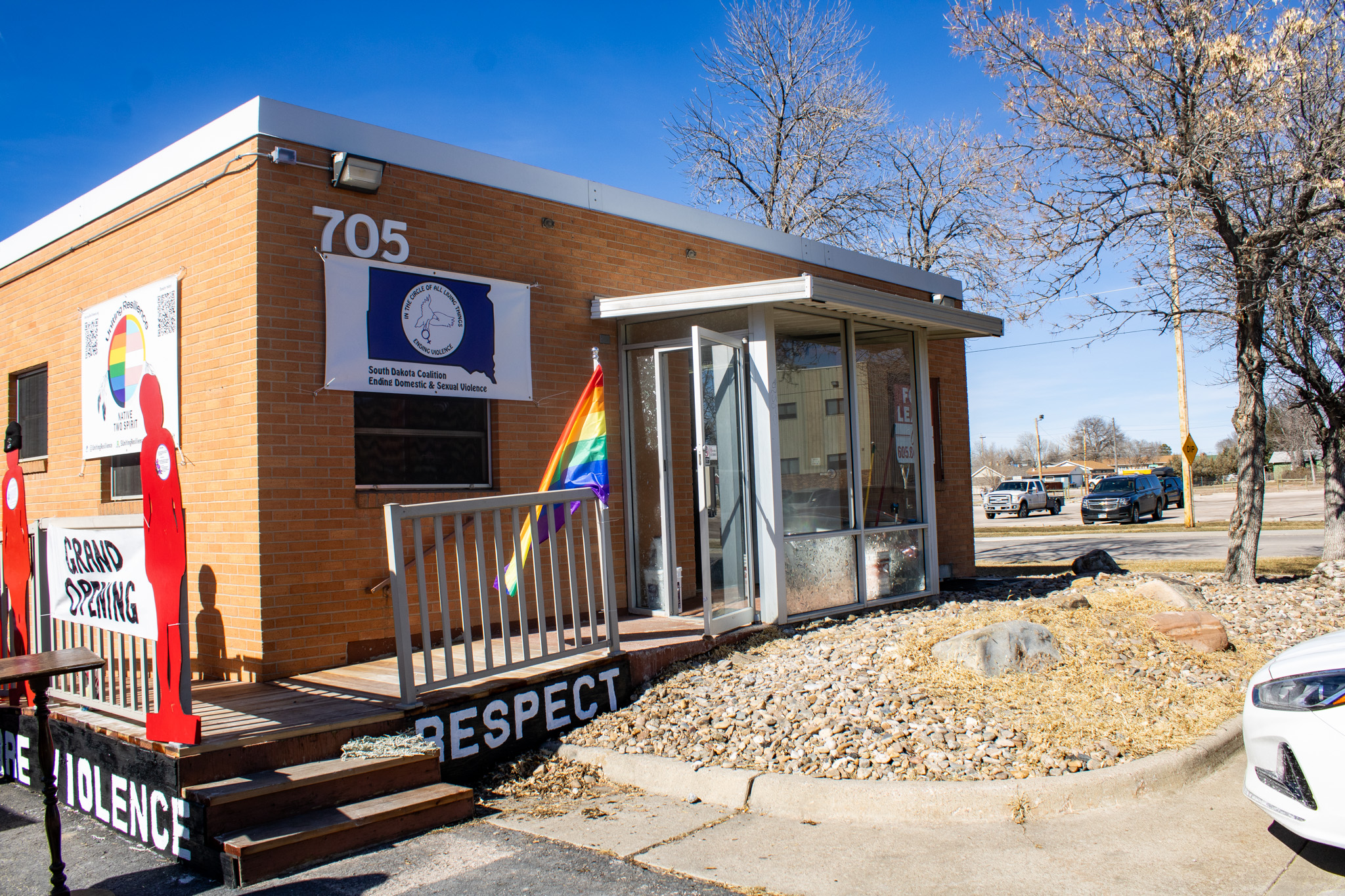
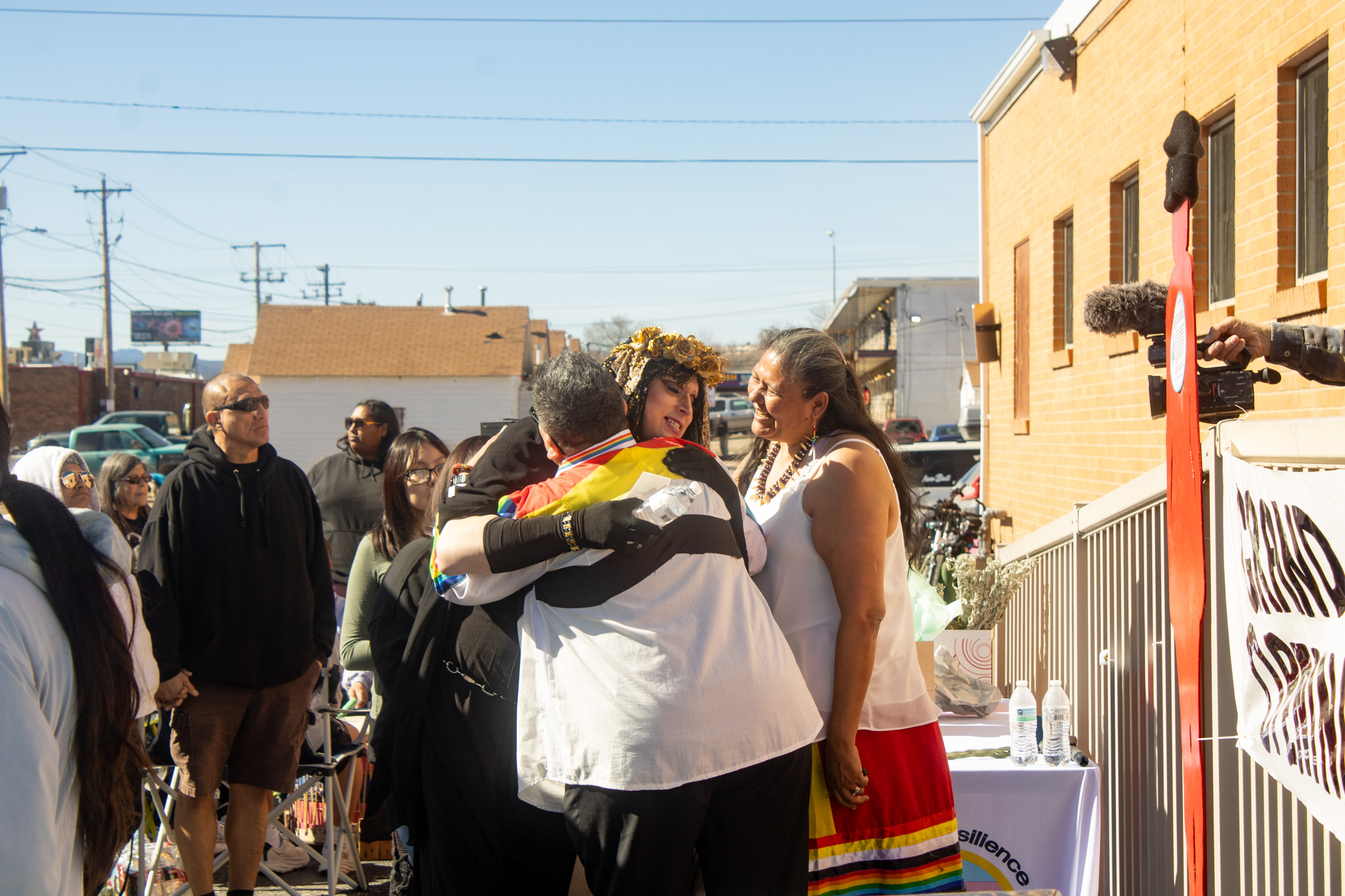
RAPID CITY, S.D. – Two women embraced each other on the north side of Rapid City surrounded by around 30 community members as they opened the city’s first Indigenous-led LGBTQIA+ center, Uniting Resilience, on Thursday, Feb. 29.
For 19 years, the Oglala Lakota lesbian couple has fought for the right to be together. The two have experienced discrimination, homophobia and barriers to expressing themselves, Monique “Muffie” Mosseau said. Now, they’re hoping to stop other Two-Spirit couples from facing these challenges.
“I met my wife in 2005. We were together for three months before the gay bashing started. Felipa was fired from her job and I had to leave mine,” Mousseau said. “There were no resources for us here in the Midwest.”
When same-sex marriage was legalized nationwide in 2015, the couple was still unable to be married on their reservation. Instead, the couple was married in the Black Hills. The barriers the couple faced didn’t stop after they were allowed to be married. They continued to face racism and homophobia, Mousseau said. These experiences led them to push for change.

In 2019, Mousseau and Felipa De Leon worked to pass the Same-Sex Marriage and Hate Crime Protection Act on the Pine Ridge Reservation, marking the Oglala Sioux Tribe as the first South Dakota tribe to allow same-sex marriage.
“That (homophobia) isn’t traditional. That’s a colonized way of thinking,” Mousseau said.
In fall 2023, the couple was able to attend the same-sex wedding of Mousseau’s cousin, Oglala Sioux Tribe Vice President Alicia Mousseau, and her wife on the reservation.
“When we got to the wedding, I just turned my car radio off and sat in silence for about five minutes. I started crying,” Mousseau said. “It was so surreal. We accomplished something that we wished somebody had done for us. The freedom was there for them to have because of Felipa and I.”
By opening the Uniting Resilience Center, the couple is hoping to continue to provide a safe space for LGBTQIA+ or Two-Spirit people around the Black Hills, regardless if they’re Native.
“This is the city’s first Two-Spirit safe space,” De Leon said. “Our big goal is just to support Two-Spirit people however we can.”
The term “Two-Spirit” refers to a person who identifies as possessing both a masculine and feminine spirit and is used by some Indigenous people to describe their sexual, gender and/or spiritual identity. Two-Spirit is an umbrella term for what in western culture may be referred to as the LGBTQIA community.
The new Uniting Resilience Center will provide space for well-briety groups, counseling, resume and job application crafting assistance, and a general safe space for the Two-Spirit community.
Uniting Resilience is also hoping to provide a space for understanding, Mousseau said. Mousseau invited anyone with different opinions to come, sit down, enjoy a cup of coffee and have a conversation.
“My wife and I welcome anyone, all legislators, to come in, have a cup of coffee and talk. We accept them and ask that they accept us,” Mousseau said. “We need to heal our differences. How many people need to die before we make a change?”
On Feb. 7, 2024, a 16-year-old transgender Choctaw student named Nex Benedict was beaten in the women’s restroom of Owasso High School in Oklahoma. The next day, they died. On Saturday, Feb. 28, Uniting Resilience held a vigil in memory of Benedict, but also to remember local Two-Spirit individuals.
“We’ve had our own Nex Benedicts here in South Dakota,” Mousseau said.
On Aug. 21, 2022, in Rapid City, a transgender Oglala Lakota woman, Acey Morrison, was shot by a man she met on a dating app. On Feb. 15, 2024, Gregory Landers was charged with first-degree manslaughter in connection to Morrison’s death.
On Jan. 7, 2017, a transgender Oglala Lakota woman, Jamie Wounded Arrow, was found stabbed to death in her Sioux Falls, S.D., apartment. Two days later, Joshua LeClaire was charged with her murder.
In both cases, the assailants claimed they killed the transgender women in self-defense.
Mousseau said Uniting Resilience worked to help connect Morrison’s family with resources following her murder.
“We are so grateful that charges have finally been filed. Justice should be happening,” Mousseau said. “We hope that we were able to help in some way with getting the family the justice they deserve.”
Mousseau’s own relative, an Oglala Lakota lesbian woman named Lana Young Bear, was murdered in 1987 in San Francisco. Young Bear’s death pushed Mousseau to continue fighting.
“I thought, ‘Do it for her,’” Mousseau said. “I’m gonna be somebody for everyone that’s like me.”
Uniting Resilience is sharing its new building at 705 E. Watertown St. in Rapid City with the South Dakota Coalition Ending Domestic Violence. Both groups are working to share resources and end violence toward both domestic violence victims and Two-Spirit individuals.
“This violence has gotten out of control. It’s not a reflection of who we were meant to be,” said Karen Artichoker, Oglala Lakota and Ho-Chunk and co-director of the South Dakota Coalition Ending Domestic Violence. “Violence is a big issue with our Two-Spirit people just like it is with heterosexual people.”
Artichoker spoke at the grand opening Feb. 28 about the work that needs to be done in both communities.

“The response and stance for everybody has not gotten better. I think for this population (LGBTQ+) there’s been even less of a response,” Artichoker said. “They’re (Mousseau and De Leon) doing one heck of a job. Those women are balls of fire. These are things the public needs to see.”

This story is co-published by the Rapid City Journal and ICT, a news partnership that covers Indigenous communities in the South Dakota area.
Our stories are worth telling. Our stories are worth sharing. Our stories are worth your support. Contribute $5 or $10 today to help ICT carry out its critical mission. Sign up for ICT’s free newsletter.

