
Editor's Note:
There is no confirmation on Val Hoyle's campaign taking funds from the American Israel Public Affairs Committee as Melissa Bird stated in the interview.
Jarrette Werk + Nika Bartoo-Smith
Underscore Native News, Report for America + ICT
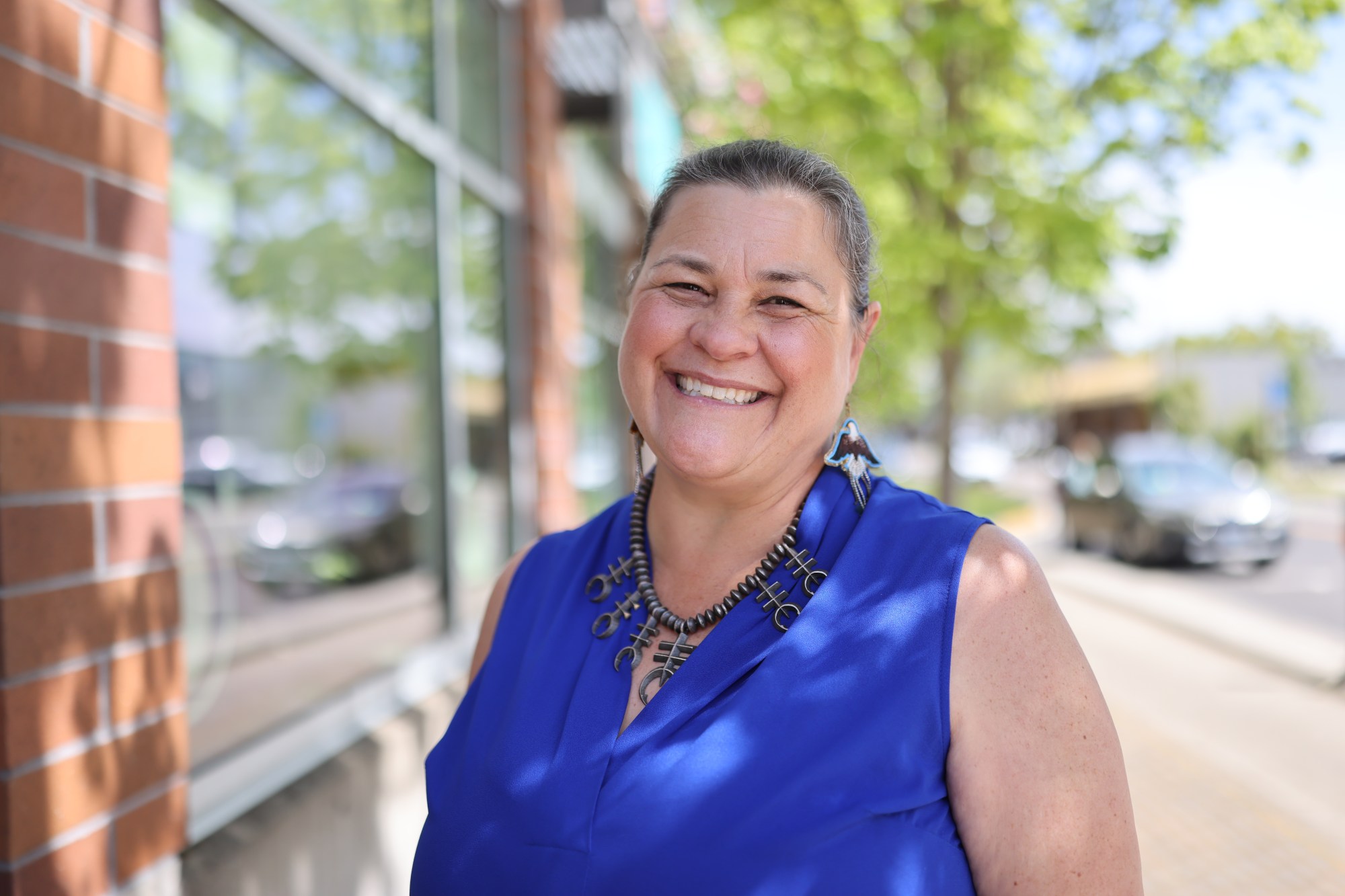
Melissa Bird launched her campaign for the 4th Congressional District to help bring progressive democratic politics to Oregon.
A descendant of the Shivwits Band of Paiutes, Bird earned her master’s degree and doctorate in social work. She wears many hats as a mother, a social worker, a small business owner, an adjunct professor, a lay preacher, an author and much more.
She’s based in Corvallis, Oregon, with her husband, a disabled veteran, where they’re raising their three children, ranging from 15 to 24 years old. In July 2025, she launched her campaign to be congresswoman.
For her, the decision to run for Congress came following a long career in the political and advocacy realm.
“We need warriors in Congress who are willing to enter that space and fight because this is the moment,” Bird told UNN + ICT. “This is the moment where we elect people who are actually going to stand up against what is happening in this administration and with this leadership on both sides of the aisle, frankly. And if people like me are able to get in there and disrupt it, we all thrive from that. We all benefit from that.”
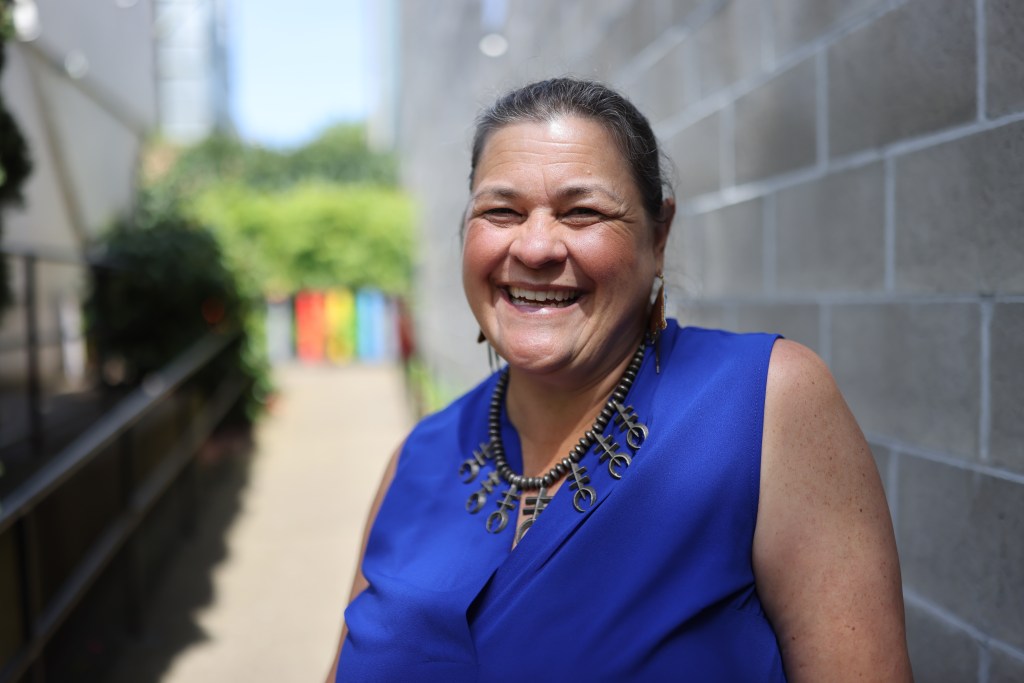
Eugene. (Jarrette Werk/Underscore Native News)
As a progressive Democrat, Bird is running in the Democratic party primary election, which will take place May 19. Some of her key issues include: the environment, gun safety, reproductive justice, 2SLGBTQIA+ equality, housing, tribal sovereignty and more.
This 4th District she’s running for spans across Benton County, Coos County, Curry County, Northern Douglas County, Lane County and Lincoln County.
Bird joined Underscore Native News + ICT via Zoom from her home in Oregon.
This interview has been edited for length and clarity.
Underscore Native News + ICT: Tell us about your platform and what sets it apart from the current incumbent, Val Hoyle, and your other opponent, Dan Bahlen.
Melissa Bird, Ph.D: I’ve been very people focused. That’s how I operate in the world, is very community focused. Both in my previous work doing policy advocacy and community organizing, but also in my personal life.
What we have noticed about the incumbent in particular is that the incumbent is taking AIPAC (American Israel Public Affairs Committee) money. They’re taking corporate money. I am not.
A lot of times, there have been moments where people have reached out to their congressional office and gotten no response, including our family. As I have watched things progress, especially over the last year and a half or so, most recently, the incumbent voted for the Fix our Forest Act, which opens up our forest to clear cutting and old growth logging and their reasoning for that is that they have to work with the timber industry. But small and mid-sized timber companies know that if we clear cut the forest, there won’t be any timber left, and they know it destroys the ecosystem. They know what happens. And so that is not something I’m in support of.
I’m in support of a timber industry that is actually regenerative and sustainable over time and actually protects the ecosystems of the land here in the Fourth Congressional District. So I think that’s one example.
We need advocates who are going to advocate for people who are experiencing housing insecurity, food insecurity. Who are being directly impacted by the Health Care lobby, that is making decisions to cut Medicaid and to take away resources from disabled people.
We need someone who is willing to stand on the floor of Congress and say, “This is not okay, and here’s why.”
People are tired of voting for something to vote against. People want something to vote for. And what I offer with my political background and also my advocacy background is something to vote for.
So we have been keeping a list of all of the issues that people are facing as we’ve traveled the district, and we are going to be creating proactive legislation to help address the needs of people in the 4th Congressional District, which isn’t happening right now.
I legislate very much from a place of asking what the community needs, figuring out what they need, and then trying to be as proactive as possible to make that happen for people and and so I think I offer a different form of leadership that is not top down, but really embraces community and connection and how we can lead from a space of understanding one another and what our needs are so that we can do what is the best for the 4th Congressional District as a whole.
UNN + ICT: Will you go over just a few specific policy areas that you plan to focus on if elected?
Bird: We launched the campaign on July 1. I have my issues page and the things that are really important to me. But what has really happened is that as the administration continues down this road of where it is headed, toward war, toward extraction, toward really, truthfully, decimating our economy and our planet and other parts of the world, my priorities, while most of them have stayed the same, some of my priorities have shifted based on what people are talking to me about what they need and what’s really important to them.
The consistent flow through of the issues that we have prioritized from a policy perspective is, how are we creating and funding the infrastructure to create housing opportunities for everybody, regardless of their income.
The second thing is how the Federal Poverty Level hasn’t been adjusted for inflation and the key word “cost of living,” since 1978 which means all of our programs that rely on the federal poverty level, the FPL.
All of those programs are based on a standard that I was four years old the last time we adjusted for both of those things. We haven’t adjusted for where we are in the year 2026, and moving forward.
When we first moved to Oregon, we were on food stamps, and we were offered $10 a month because we were $100 over the FPL. That’s not helpful. That’s not helping anybody, right?
That’s a huge priority for me, because that impacts disability, Medicaid, Medicare, education, food, housing — all of these things that we rely on when we talk about the social safety net.
There’s so many things that are so critically important, but I think we have got to have someone who is willing to stand up, particularly when it comes to the genocide that’s happening in the Middle East, and really fight against votes that are voting to arm Israel, and really talk about how what is happening internationally is genocidal and it is colonization. And if we don’t have people like me who are elected into office who are willing to stand up and say those things, then we’re just going to continue in this cycle of people taking money from AIPAC, people taking money from these huge corporations. And that is why our system is the way it is, because we keep electing people who benefit from the system.
UNN + ICT: Looking back at your political career, you began your advocacy work in Utah focused on Planned Parenthood and reproductive rights. How will you continue to do this work, especially under the current administration?
Bird: Even before I worked for Planned Parenthood, I actually was doing advocacy for homeless LGBTQ+ youth. The first bill I ever wrote was an emancipation of a minor bill that I wrote on my dining room table. I taught myself how a bill becomes a law and [is] passed into law.
From that experience, Planned Parenthood hired me to be their chief lobbyist. I learned a lot working for Planned Parenthood, particularly in Utah. As a woman, a Native member of the LGBTQ+ community, I was not really welcome in the Utah State Legislature. I faced a lot of hostility and backlash.
One of the things I realized is is to become effective in legislating, especially in advocacy, we have to create relationships with people that we don’t necessarily agree with, and that has always been the way I have led, because it’s the only way I was ever going to get anywhere in my career, particularly in the state of Utah. I think that’s what makes me such a unique person to be in this position, because I understand what it’s like to not be welcome in many spaces, particularly in polarized spaces. Particularly when it comes to government.
One of the things I learned working for Planned Parenthood in Utah is that elected officials just put their pants on one leg at a time. They’re just people. They are not perfect. They’re volunteering mostly for a job because they want to serve their communities. And so when I was working for Planned Parenthood, all of my bills were sponsored by pro life Republicans, because that’s how you win. And we did some incredible legislation about not just reproductive health, but also about fertility, about substance abuse treatment, and it was beautiful.
It was really a way for me to be able to call in people that didn’t necessarily agree with me on everything, but who could agree that we needed to create policies that would impact the health and livelihood of families and regular, everyday human beings.
UNN + ICT: Talk about your stance on policy we are seeing on a federal level when it comes to Two Spirit LGBTQ+ people, particularly access to gender affirming care. How will you address this?
Bird: As part of the LGBTQ+ community, the issues that affect all of us are really important to me. I think we do need someone who is willing to advocate not just for gender affirming care, but also as we are watching HIV and AIDS funding get slashed, as we are watching STI funding get slashed. The health and well being of the LGBTQ+ community is all encompassing.
It is to make sure that we have someone who is willing to speak up and speak out about these things and be proactive about them. So it’s not enough that we are constantly on the defensive.
That’s what I think we’re really noticing with the current incumbents, who are, traditional, everyday run of the mill Democrats. We don’t have enough people, progressive Democrats, truly progressive Democrats, who are tired of being on the defense and want to be on the offense.
The way I approach policy is to be thinking about all of the ways in which we’ve introduced legislation. Maybe it doesn’t go anywhere, but we should at least be trying to push forward proactive policies that benefit the LGBTQ+ community.
The very first thing I ever fought for was marriage. I came out in 1999 in Utah. [I’m] no stranger to the struggle. I think that having someone in Congress who actually knows what it’s like to be assaulted for who they are, to be put in situations of danger, and have to figure out how to navigate those things because of who they are — that is my lived experience.
So advocating for the trans community, advocating for the entire LGBTQIA+ community, and making sure that someone is there to actually not just fight against the bills that are damaging to our health and well being overall, but someone who’s actually willing to introduce things to start the debate.
The whole entire purpose of the US House of Representatives is to be the body of the people — the actual people — not the rich people, not the white people.
I mean, it did start out as the body of the white people, but so much has changed that we have to change with it. And that means it’s not the body of the straight white man, it is actually the body of the people as the United States is represented today.
The only way we are going to change that body is to vote for people like me who will actually represent this diversity of being in the world, of humanity. And I think that I do a really good job of representing this district in that.
UNN + ICT: The 4th Congressional District includes multiple tribal governments. What is your experience working with tribes on a legislative and political level and how do you plan to work with them if elected?
Bird: I don’t have much experience working with tribes. In my previous career, I did some work in Utah, with the tribes, because you can’t not. I have reached out to the tribes in this district, and haven’t heard back. And that’s understandable.
Right now, things are really complicated for tribal governments and what’s going on at the federal level, with all of the things that they are trying to do to attack our sovereignty as human beings and attack tribal sovereignty.
I have said this on my website, and I have said it before in public, I think that taking into account the tribes in all decisions is really critical and important.
We have to have someone who’s willing to put tribal sovereignty first, in representation.
I think we need people in office who understand the complexities of genocide and colonization. My family is a direct result of that, and as most of our families are, but I think bringing that lens into Congress is really important, particularly at this time. I very much look forward to working with the tribes that are in this district and seeing how we can be more proactive and not just reactive to what’s happening from the administrative level. And I look forward to working with all of them on figuring out what things are most important to them right now and how we can really work to protect tribal sovereignty, not just here in the 4th Congressional District, but throughout the country.
UNN + ICT: The 4th Congressional District is a mix of both rural and urban communities. In your experience living in this district, and then also as you’re running for office, what issues have you found to be really important to people in the district and what ideas do you have to address some of these?
Bird: One of the things that I found most fascinating when we started researching me running for Congress, we have not actually had congressional representation outside of Eugene and Springfield in this district for decades. And a lot of us, including Corvallis, end up feeling neglected because of that.
My commitment from the very beginning of this race was to travel the entire district to as many communities as we could. I have put 9,000 miles on my car going all the way up and down the coast. We have traveled this district, north, south, east, west, to be in as many places as we can and hear from as many voters as we can.
The very first thing I learned is that people are stunned that I, as a candidate, am willing to show up in those places, including in Eugene and Corvallis. They are stunned that I’m willing to make the phone call. When I was canvassing in Junction City, I was going out to all of the farms, and they were like, “What are you doing here?” And I’m like, “Well, you are in my district, and I’m running for Congress, and I think it’s really important that you know me face to face, and I hear about what issues are really important to you as farmers.”
What I am learning is that housing is the number one most critical issue throughout this entire district. It doesn’t matter if you’re in Brookings or Roseburg or Corvallis or Eugene or Lincoln City or Newport, the issues are all the same when it comes to health care and housing.
The other main thing I’m hearing a lot is about ICE. There are huge concerns that the incumbent is not fighting hard enough against ICE. What I have committed to is to abolish ICE.
And I say this often that what we are dealing with with ICE has been happening for 500 years. They’ve just put on a different uniform. ICE has been doing this to brown bodies since people came to this land and colonized this land. I am committed to making sure that we are protecting our immigrant brothers and sisters and families.
What we also know is that ICE is targeting Native Americans because they can’t tell the difference. We are watching these policies come out of the administration regarding birthright citizenship and tribal sovereignty. I don’t think it’s a mistake that ICE is also targeting Native American people.
And so as we are looking at issues of healthcare, housing and ICE, these are the things that are becoming top of mind for me, along with everything else. I’m not going to pretend that I have not been drinking out of a fire hose since July of 2025. All of these things are moving so fast toward us, and it’s been a lot, and also it’s been really remarkable to hear from people about what they want, because what it’s doing is giving us, as a campaign, ideas for how we can enact policy moving forward.
UNN + ICT: What policies would you want to see, both on a national and local level, when it comes to supporting advocacy and awareness surrounding Missing and Murdered Indigenous Relatives?
Bird: I think first and foremost having people in Congress who are actually acknowledging that our people are worth finding is really important. I think the continual dehumanization of Native people has led to a lack of willingness to actually go out and find us when we are missing.
Obviously, there are horribly deep and awful relationships between the federal government and tribal folks and folks in cities and communities and towns regarding Missing and Murdered Indigenous People. And so again, I think it starts with having someone who is willing to advocate for those things, along with the other people in Congress who are willing to really push for those things.
I think it starts from acknowledging us as a people of value. The reason people don’t want to look for us is because they don’t even see us. They don’t even see us as a body, let alone as parts of the community. And so I think having someone that just understands that that is critically important helps with where we move with policy. There are very few people who are willing to do this work.
I think what’s important at a state and a federal level is that we fill the policy gap of what’s needed to address the issue of Missing and Murdered Indigenous People. We know what that gap is, but we have to have someone who’s willing to introduce legislation about it.
And how do we address the distrust of this? Because I, as a congresswoman, can’t just go to the states and the tribes and to the people doing this work and be like, “here’s what we’re going to do.” That’s not how this works. I think we need someone in Congress who understands that it’s not how this works, that this is about building relationships. This is about listening to what people actually need and figuring out how to resource those needs without there being a bunch of strings attached.
And I think that’s the crux of the issue, is the federal government has a long standing history of completely, I don’t know any other way to describe this, screwing over Indigenous people of this land. It’s constant. It’s death. It’s genocide. It’s constant colonization. And so having someone who understands that and is willing to build the relationships so that we can have a continual conversation and get resources where they need to be.
I think that’s what gets missed in a lot of this policy, is all of these policies come from such a white framework, a colonized framework. What we have to do is approach Missing and Murdered Indigenous People in particular, from a decolonial framework, and figure out how we are resourcing people without the strings attached with the federal government.
It’s critical to the health and well being of all of us and it is deeply tied into human trafficking. But notice when we talk about human trafficking, we never talk about Missing and Murdered Indigenous People in that context. And wouldn’t it be lovely to have someone in Congress who’s willing to do that while we’re talking about the Epstein files? Could we have someone in Congress who’s also willing to talk about Missing and Murdered Indigenous People as a piece of that issue? Because it is. It’s intricately woven together. So that’s what I bring to the table. That’s what I offer is this woven community, multi-layered lens, not just as a social worker, but as a Native person.
UNN + ICT: With the rise of artificial intelligence and data centers, what are your stances on that issue?
Bird: Ban them all. I am terrified that we are not seeing a thorough vetting of what this is going to do to our planet.
I am appalled that we already have this expanse of data centers in the northern part of the state of Oregon. I am deeply concerned about our water if we allow data centers to continue to expand at this rate. They are lying about this closed loop system. It’s not a closed loop system. There is a place where the sludge has to go, the effluence off of these machines has to go somewhere, and it will go into our land, and it will go into our water supply. They are horrifyingly dangerous for our waters.
We’ve had an increase here in Oregon in the price of our power because of data centers. We are going to not have enough water for our people.
The money that people are being given at an elected official level to just look the other way while these data centers are expanding and exploding under the guise of job creation. They don’t create jobs. AI takes jobs away.
This must be how people felt when white people came here and just started cutting down the trees and just this death of the land. That is what is happening. And I am so mind blown that no one is standing up to stop this, in force, in mass. Because if there was ever an extractive, horrifying death to this planet, it is AI data centers.
I will do everything I can to fight them.
Also, just the mental health repercussions alone of what AI does to our young people’s minds, even adults. Are we really willing to create generations of people who don’t know how to write a sentence? What are we doing?
UNN + ICT: Talk to us about the plans that you have to continue to support tribal sovereignty here in Oregon.
Bird: I know that all of this starts with building relationships. I just really look forward to building relationships with the tribal nations, not just in the district, but throughout the state of Oregon.
Deciding to run for Congress was really complicated for me, and I just look forward to listening and hearing what needs to be done because I don’t know what I don’t know. And I approach working with the tribes with humility and with a deep curiosity about not just the history of what has been done in a bad way, but also what’s been done in a good way, and how can we keep moving forward in a good way, and what is needed, what level of advocacy is needed at the congressional level?
Tribes are all their own individual entities too, they’re not a monolith. And I think so often people approach tribal sovereignty as like, everybody has the same needs. And there’s so many assumptions about tribes and who they are. What I look forward to is getting to know the individual needs of the tribes and being the kind of representative that is willing to listen and hear what is needed in a good way.
I approach this whole thing with a lot of humility. I want to hear from people. I want to connect with people. That’s why I’m doing this, is to connect with people, whether they are individuals or groups or tribes or businesses. I’m doing this because I want to be able to represent the people. And I really approach tribal sovereignty from a space of “I don’t know now, so please teach me.”
It actually fills me with a lot of emotion that I’m even doing this. I’ve always wanted to run for office, but no one in a million years would have told me that I’d be here actually winning. I think I’m winning. So I just look forward to connecting with the tribes and learning more, because I’m not going to walk in here and be like, “Yeah, I know everything.” I think it’s about building relationships and reciprocity and knowing that the tribes that are listening to this or reading this, know that I enter this space very humbly.
UNN + ICT: Is there anything we didn’t ask you that you want to share?
Bird: I did not enter into this race lightly. I did not walk into this thinking “I’m just gonna run for Congress.” I prayed about it a lot. I talked to a lot of people. My dad committed suicide when I was six, and I feel him with me a lot through this process. His death is why I was never connected to my tribe.
And there’s just something really remarkable about being in this place. We need warriors in Congress who are willing to enter that space and fight because this is the moment. This is the moment where we elect people who are actually going to stand up against what is happening in this administration and with this leadership on both sides of the aisle, frankly. And if people like me are able to get in there and disrupt it, we all thrive from that. We all benefit from that.
Reelecting the people who are benefiting from the system, who are using the system to their advantage to become multi-millionaires, is not going to change the system. And I feel like electing people like me who are willing to say the quiet thing out loud is what’s going to change this. I look at what’s happening in our democracy, and I see where the light is getting in.
This democracy is built on genocide and slavery. It is not representative of all of us, and if we elect people like me in there, then if it does dissolve and it does crumble, then there will be someone standing there saying, “I think there’s a different way. What if we did this?” I don’t think about necessarily saving democracy, but what I think about is what an opportunity for a girl like me to be standing in that space and say, “what if we did democracy this way?” And that’s what I’m looking forward to doing as a representative.
This story is co-published by Underscore Native News and ICT, a news partnership that covers Indigenous communities in the Pacific Northwest.

