
Sandra Hale Schulman
Special to ICT
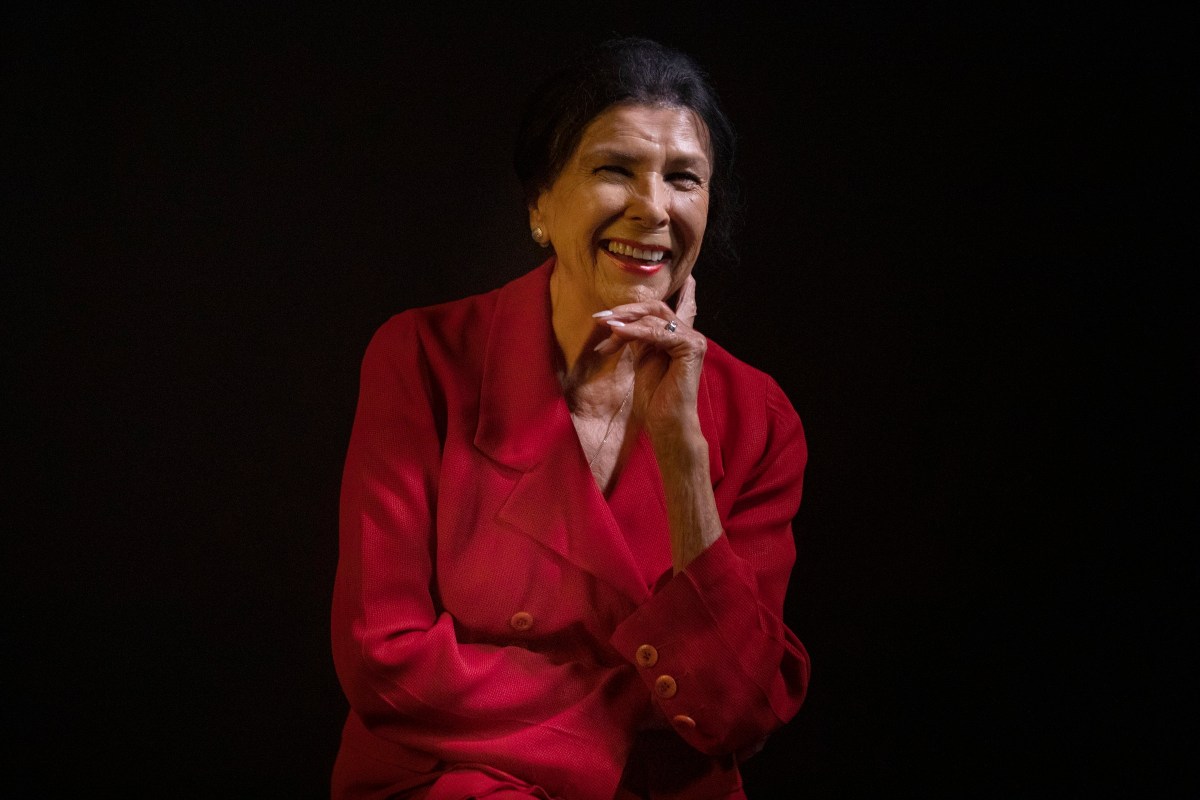
Abenaki filmmaker Alanis Obomsawin has been awarded the prestigious Edward MacDowell Medal for her six decades of work chronicling the lives of First Nations people in Canada and beyond.
Obomsawin is the first woman filmmaker and the first Indigenous person to receive the medal.
“I am very honored,” Obomsawin told ICT. “I don’t go around looking for things. I’ve been very involved in education, all the time that I’ve been making films, mainly for the reason to influence change.
“I’m always very concerned about the rights of our people and especially the welfare of children,” she said.
MacDowell was founded in 1907 to nurture the arts by composer Edward MacDowell and pianist Marian MacDowell, creating the nation’s first artist residency program. Author Louise Erdrich, Turtle Mountain Band of Chippewa Indians, is among the more than 15,000 recipients of the residencies handed out in the last 116 years.
The Edward MacDowell Award has been handed out annually since 1960 to an artist who has made outstanding contributions in his or her field. Previous medal winners include poet Robert Frost in 1962; Georgia O’Keeffe, 1972; and authors John Updike (1981) and Toni Morrison (2016).
SUPPORT INDIGENOUS JOURNALISM. CONTRIBUTE TODAY.
Bird Runningwater, a member of the medal selection panel and guide for the Sundance Institute’s investment in Indigenous filmmakers, said Obomsawin’s recognition is groundbreaking on several levels.
“As the Grand Dame of the Indigenous film world and the documentary field, Alanis Obomsawin’s exemplary 52-year body of work uplifting Indigenous stories and triumph inspired us with compelling and unequivocal enthusiasm to award her with the 2023 Edward MacDowell Medal,” Runningwater said in a statement.
“Even more special is that Alanis Obomsawin descends from the Abenaki People, and MacDowell’s residency program takes place in Wabanaki, the Dawnland, on the traditional homelands of the Western Abenaki. This marks the first time MacDowell honors someone from the Indigenous lands where the residency has historically taken place.”
Obomsawin, born in New Hampshire, has 56 films to her credit produced by the National Film Board of Canada, including landmark documentaries such as “Kanehsatake: 270 Years of Resistance,” a 1993 film that documented the 1990 Mohawk uprising in the villages of Kanehsatake and Oka, Quebec, and “Incident at Restigouche,” a 1984 film that took a behind-the-scenes look at Quebec police raids on a Mi’kmaq reserve.
Obomsawin’s 2019 production, “Jordan River Anderson, The Messenger,” completed a seven-film cycle devoted to the rights of Indigenous children and peoples. The project began in 2011 with her first interviews for “The People of the Kattawapiskak River.”
Focus on children
Obomsawin began her career as a singer, writer, and storyteller, but was invited to consult on Indigenous filmmaking by the National Film Board of Canada. She began making her own films in 1971 and her work was showcased in a 2008 retrospective at the Museum of Modern Art in New York.
‘When I started in the mid-60s, I didn’t know anything about films,” Obosawin told ICT. “It was because I did a campaign to build the swimming pool in my community because our children were not welcome next door where there was a white community pool. Somebody made a film about the campaign that I was doing for Canadian Broadcasting Corporation and it appeared on the front air time. The swimming pool was built in 1965, so the film must have been made around then. Some people saw the film and I was invited to come and speak to directors and producers. They gave me a contract to book one film. Then I started making my own stuff, in a studio here called Multimedia and everything they were doing there was for classrooms.”
She is particularly inspired by education and children’s issues.
“This was paradise for me,” she said. “I started doing things involving education and I’ve been doing it ever since. Editing was very difficult because I had to raise money and the film board would match what I raised. For many years, it was like that, so it was very difficult. But I’m so glad I stuck around and went through all that and managed to do a lot of things that really influence changes …We’re in a much better place now.”
One of the most powerful films she made was the documentary, “Richard Cardinal: Cry from a Diary of a Métis Child,” about a 17-year-old boy who died by his own hand, having spent most of his life in a string of abusive foster homes and shelters across Alberta, Canada.
Obomsawin weaves excerpts from Cardinal’s diary into a powerful tribute to his short life.

Released in 1984 — decades before Canada’s Truth and Reconciliation Commission uncovered the ugly history of the nation’s Indian Residential Schools system — the film exposed the systemic neglect and mistreatment of Indigenous children in Canada’s child welfare system.
“I was just talking about Richard Cardinal to a group of people recently,” Obosawin said. “I was in Vancouver and I talked to a lot of students. We discussed that film in particular because lot of the problems with suicide exist still. It’s not as bad as it used to be, but there’s still a lot of suicides among people.”
She decided to pursue the story after seeing a news item on television.
“I saw the last foster parents talking about the fact that they had taken Richard in and they didn’t know anything about Indigenous people at all,” she said. “I decided to go and see them. I wasn’t thinking of making a film. I just didn’t want them to regret the fact that they took him in.”
The foster family had been getting blame for the treatment of Cardinal, and Obomsawin wanted to present a more balanced story about the system as a whole neglecting foster children.
“I went there and found out more, and I got very involved in it,” she said. “I managed to go back and follow what was happening in the courtroom. They were printing articles in the papers every day. I stayed there all week to really listen to what was happening in the courtroom.”
The film won Best Documentary Award at the 1986 American Indian Film Festival and was screened at the Museum of Modern Art in 2008 as part of the Obomsawin retrospective.
A public event
The medal will be presented on July 23 at the 450-acre MacDowell property in Peterborough, New Hampshire.
The event, which is free and open to the public often draws more than 1,000 people to see the ceremony and visit more than two dozen working studios and speak with the artists.
Award-winning speaker and best-selling author Jesse Wente will introduce Obomsawin during the ceremony and speak to her impact on the documentary genre and her activism in support of Indigenous people.
Wente, who is board chair of Canada’s Council for the Arts and a former co-executive director of the Indigenous Screen Office, is an off-reserve member of the Serpent River First Nation. For more than two decades, he was a columnist for the Canadian Broadcasting Corp. program, “Metro Morning,” and has curated film programs that included Obomsawin’s works.

Our stories are worth telling. Our stories are worth sharing. Our stories are worth your support. Contribute $5 or $10 today to help ICT carry out its critical mission. Sign up for ICT’s free newsletter.
