
Deusdedit Ruhangariyo
Special to ICT
Around the world: A Yanomami crisis sparks action against illegal gold mining in the Amazon, Mexico’s Comcaac people are using an ancient grain to preserve seagrass meadows, drought is forcing herders to turn to fishing, an important Australian shelter for women and children gets new grants, and a Māori astronomy expert is in the running to be New Zealander of the Year.
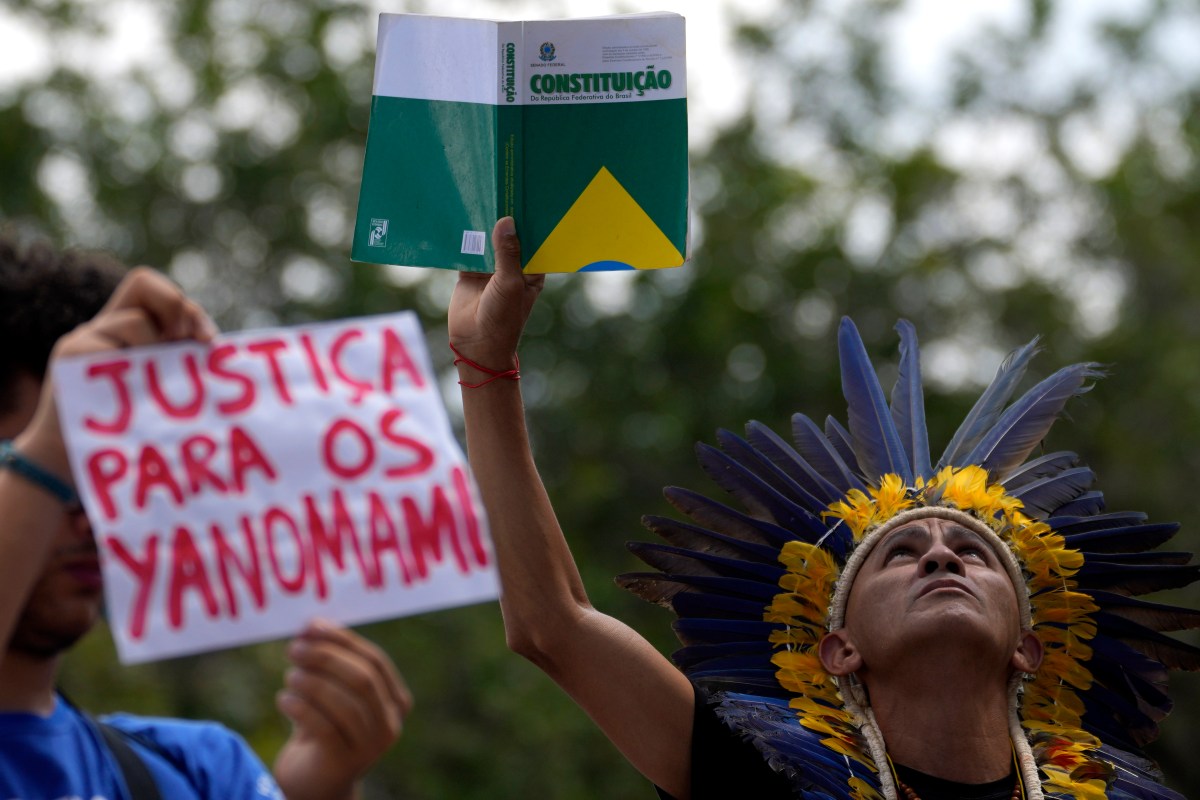
BRAZIL: Yanomami crisis brings action against illegal mining
Brazilian President Luiz Inácio Lula da Silva’s efforts to remove illegal gold mining from the Yanomami reservation is beginning to show positive results, Mongabay.com reported on Feb. 28.
Miners are leaving the area, police are monitoring human movement and confiscating mining equipment, and thousands of Indigenous people are receiving medical care and food donations, Mongabay.com reported.
SUPPORT INDIGENOUS JOURNALISM. CONTRIBUTE TODAY.
The changes come on the heels of a humanitarian crisis that sparked outrage in January, when images of sick and malnourished Yanomami people were released to the public. The images brought Lula and his team to the Roraima state, which includes the Yanomami reserve.
The crisis has also brought renewed efforts to revise Brazil’s gold-trading laws, which are considered to be weak and full of loopholes.
Attorney General Augusto Aras asked the Brazilian Supreme Court in early February to declare a section of a 2013 law unconstitutional due to its facilitation of illegal gold laundering. The law allows the trading of gold based on the principle of “good faith,” which exempts buyers from verifying the origin of the metal. The wording allows gold mined illegally in protected areas and Indigenous lands to be traded legally if the seller asserts they came from legal mining.
A report from the Federal University of Minas Gerais showed that 30 percent of Brazil’s gold production from January 2021 to June 2022 could be considered irregular, with a significant amount being laundered into the legal gold trade thanks to the “good faith” concept.
Experts are hopeful that the Supreme Court will declare the law unconstitutional, though there is no deadline for the decision.
“While many measures need to be taken to combat illegal gold in Brazil, ending the ‘good faith’ logic is a priority,” said Larissa Rodrigues, portfolio manager at the Instituto Escolhas, which advocates for sustainable economic development, according to Mongabay.com.
“This law discourages enforcement actions and protects companies that buy illegal gold,” Rodrigues said.
MEXICO: Ancient grain helps preserve seagrass meadows
The Indigenous Comcaac community in Mexico is cultivating an oceanic grain to promote the growth of eelgrass or seagrass meadows to preserve the fragile ecosystems of the Gulf of California, Mongabay.com reported on March 3.
The Comcaac people, also known as Seri, have been cultivating the aquatic plant they call xnois, known as Zostera marina or eelgrass, for generations. They harvest the plant’s seeds, which are rich in nutrients and help to maintain the meadows’ health.
The Comcaac hope that their traditional knowledge and practices will help to preserve the Gulf’s ecosystems, which are under threat from climate change and overfishing. They have a legend about a messenger from the great spirit who first informed their ancestors about the amazing grass, Mongabay.com reported.
“He (the messenger) told our ancestors that he spread xnois seeds all along the channel so that the grass would grow for the community’s use,” said René Montaño, a Comcaac linguist, according to Mongabay.com. “He gave us permission to collect it and take care of it.”
Comcaac warriors and fishers have recognized the nutritional value of xnois as a source of strength during long days at sea, and the various methods of preparing it have been passed down through generations.
Traditional knowledge had been largely disregarded, however, until a recent effort to bring it back to life.
KENYA: Drought turns herders to depleted fish supply
A severe drought that is putting millions of lives and livestock at risk in Kenya and the Horn of Africa is driving many herders to turn instead to fishing to sustain their families, Mongabay.com reported on Feb. 28.
The increasing demand for fish may be contributing to a reduction in the fish population in local lakes and waterways, according to environmentalists and others in the area, where fishers have noticed a reduction in the fish they have been catching in recent weeks, Mongabay.com reported.
“For the Turkana community, there is a saying that ‘the lake is our shamba,’ which loosely translates into ‘the lake is our farm,’” said John Malala, a scientist at the Kenya Marine and Fisheries Research Institute, based in Kalokol, about 37 miles from Kaito beach.
“As a coping mechanism, they turn to fishing to survive and to feed their families during droughts,” Malala said, according to Mongabay.com.
Environmental conditions have pushed even the most resilient herders to their limits. The Kenya government reported 2.5 million livestock deaths, and the number of people facing acute food insecurity has risen to 4.4 million, according to the 2022 Short Rains Assessment Report.
Meteorological agencies predict below-average rains may persist during East Africa’s most critical rainy period, from March to May 2023, although future weather patterns are uncertain.
AUSTRALIA: Dawn House shelter gets two grants
A shelter for women and children in Australia’s Northern Territory has been awarded a grant from Territories Families Housing and Communities to document its history, National Indigenous Times reported on March 03.
The shelter, named Dawn House, is a women-led service catering to women and their children in helping families recover from domestic violence.
The grant will allow Dawn House to document its extensive history and maintain detailed records of those who have utilized or contributed to the organization’s services for several decades.
Dawn House Executive Officer Susan Crane said the organization hopes that “many women will contact us with treasured memories and stories of new beginnings,” according to the National Indigenous Times.
“We know that for some women who have accessed our services and have moved on with their lives, that they may not want to remember their time with Dawn House and that’s understandable,” Crane said. “But we hope that many more will want to share their good memories, photos and mementos.”
During the last fiscal year, Indigenous women accounted for 70 percent of those housed at Dawn House, and 60 percent of residents were children under the age of 12.
Dawn House also obtained a grant to reconstruct its original buildings, which have been in use for nearly four decades.
NEW ZEALAND: Finalist for New Zealander of the Year
An expert in Māori astronomy has been named a finalist for the prestigious New Zealander of the Year award, Te Ao Māori News reported on March 3.
Professor Rangi Mātāmua, Tūhoe, author of the critically acclaimed book, “Matariki: The Star of the Year,” was appointed in 2022 as the chief advisor to the government on Matariki and mātauranga Māori.
He also chaired a Matariki advisory group that assisted in the creation of a new public holiday to celebrate the Māori New Year. His expertise and guidance were instrumental in identifying the date for the public holiday, developing community resources, and providing guidance on how best to celebrate the occasion.
Mātāmua is competing against other finalists, including Black Fern Ruby Tui, mental health advocate Sir John Kirwan and the Topp Twins. The winner will be announced on March 30 at an awards ceremony in Auckland.
My final thoughts
My final thoughts are in Kenya where, like most parts of the world, environmental conditions such as drought, extreme temperatures and unpredictable weather patterns have greatly impacted pastoralist communities, making it increasingly difficult for them to maintain their traditional way of life.
Even the most resilient pastoralists, who have adapted to challenging environments for centuries, are now facing unprecedented challenges. I therefore challenge all stakeholders to believe that climate change is real, and the earlier we get to work together for mitigation the better for our planet. A little delay will be too late.
Global Indigenous is a weekly news roundup published every Wednesday by ICT (formerly Indian Country Today) with some of the key stories about Indigenous peoples around the world.

Our stories are worth telling. Our stories are worth sharing. Our stories are worth your support. Contribute $5 or $10 today to help ICT carry out its critical mission. Sign up for ICT’s free newsletter.

