
Kalle Benallie
ICT
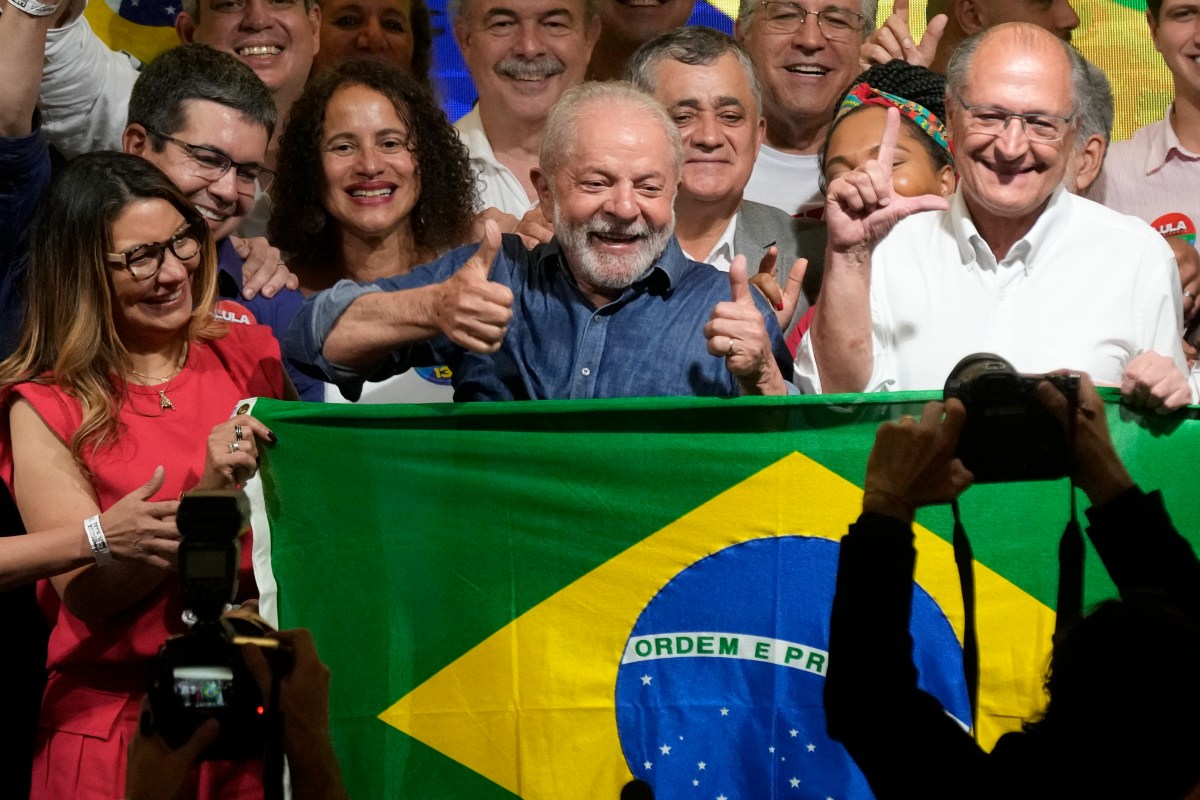
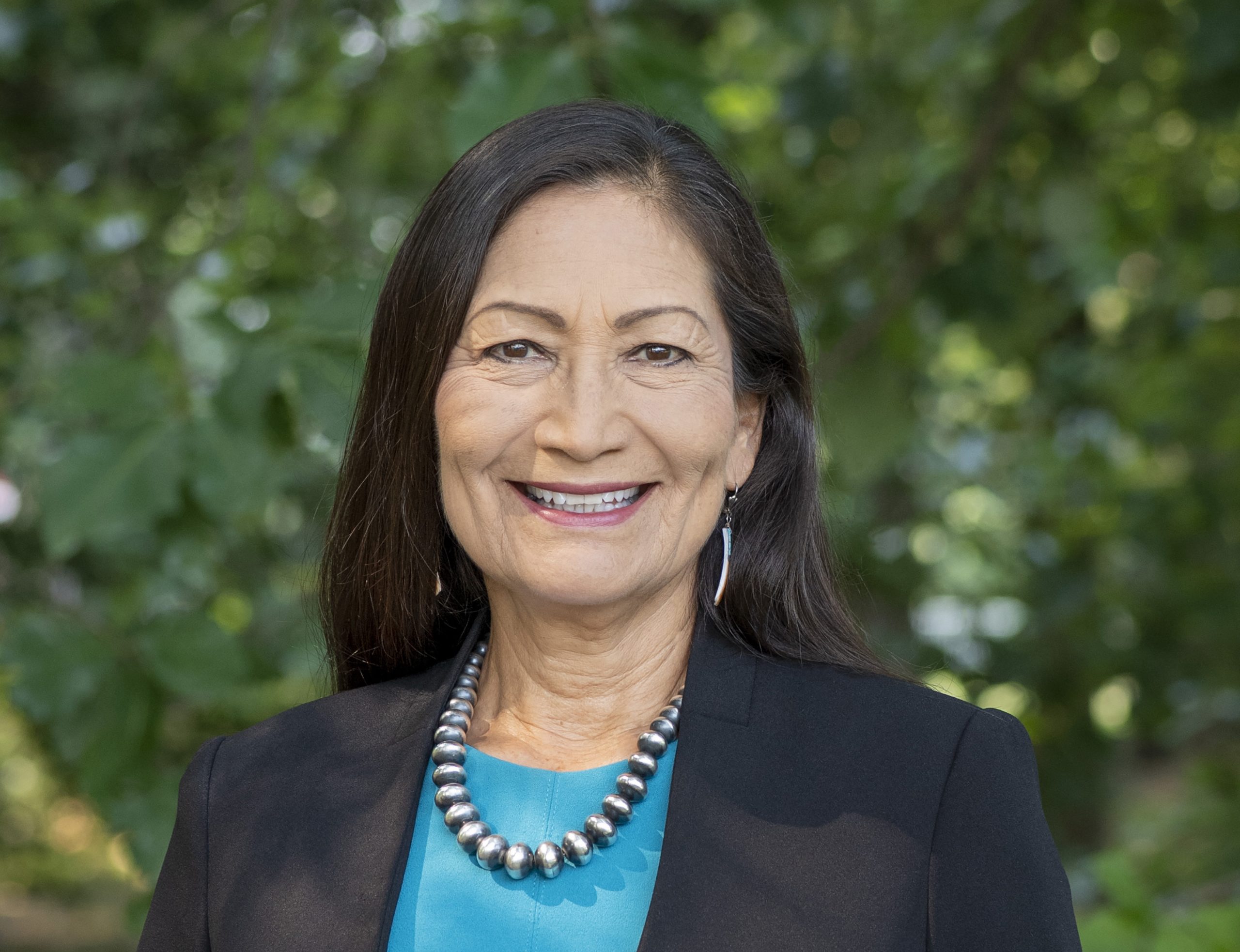
Interior Secretary Deb Haaland led the U.S. delegation on behalf of President Joe Biden on Saturday for the inauguration of Brazil’s newly elected president Luiz Inácio Lula da Silva.
His win in October, by two percentage points, has been celebrated by Indigenous communities and environmentalists.
“Our shared commitment to democracy, human rights, Indigenous peoples, equitable economic growth, environmental protection, and other core values makes us natural partners. The Biden-Harris administration intends to use every opportunity to broaden and deepen that partnership with President Lula’s government in the years to come,” Haaland, Laguna Pueblo, said in a statement.
In addition to attending the inauguration, Haaland met with Indigenous leaders and partners implementing U.S.-funded environmental programs in Brazil, according to the Interior.
Lula defeated incumbent Jair Bolsonaro who was an opponent of Indigenous rights and land with a record of racist statements.
Particularly, he made promises to develop the Amazon and defanged environmental law enforcement which led to a surge of illegal loggers, miners and land robbers into Indigenous territory in Brazil. According to local Indigenous organizations, some 20,000 illegal gold miners now operate illegally in Yanomami tribal territory alone.
Lula, who previously governed Brazil from 2003 to 2010, announced on Dec. 30 that Amazon activist Marina Silva will be the country’s next minister of environment. She previously held the position during most of Lula’s prior presidency.
The announcement is part of Lula’s presidential campaign to create an Indigenous cabinet department and it indicates the new administration will prioritize cracking down on illegal deforestation even if it means running afoul of powerful agribusiness interests.
Silva told the news network Globo TV shortly after the announcement that the name of the ministry she will lead will be changed to the Ministry of Environment and Climate Change.
She was inaugurated Wednesday live on the Ministry of the Environment YouTube channel.
Both attended the recent U.N. climate conference in Egypt, where Lula promised cheering crowds “zero deforestation” in the Amazon, the world’s largest rainforest and a key to fighting climate change, by 2030. “There will be no climate security if the Amazon isn’t protected,” he said.
He added that he would press rich countries to make good on promises to help developing nations adapt to climate change. And he pledged to work with other nations home to large tropical forests — the Congo and Indonesia — in what could be coordinated negotiating positions on forest management and biodiversity protection.
Lula also named Sonia Guajajara, an Indigenous woman, as Brazil’s first minister of Indigenous peoples. She was elected to Congress in October. Carlos Fávaro, a soybean producer, was also named as agriculture minister.
“This is more than a personal achievement,” Guajajara said. “It is a collective achievement of the Indigenous peoples, a historic moment of reparation in Brazil.” The creation of the ministry is “a confirmation of Lula’s commitment to us,” she said in a tweet.
Bolsonaro supporters have not accepted defeat easily and have been vocal about their dissatisfaction with Lula’s presidential win. On Dec. 12, dozens of people tried to invade a federal police building in Brasilia, and burned cars and buses in other areas of the city. Then on Christmas Eve, police arrested a 54-year-old man who admitted to making a bomb that was found on a fuel truck headed to Brasilia’s airport.
Bolsonaro condemned the bomb plot in a Dec. 30 farewell address on social media, hours before flying to the U.S.. His absence on inauguration day marks a break with tradition.
And some of Bolsonaro’s backers refuse to accept someone they view as a criminal returning to the highest office.
Lula and his Workers’ Party were assailed by a sprawling corruption investigation. Party officials were jailed, including Lula — whose convictions were later annulled on procedural grounds. The Supreme Court then ruled that the judge presiding over the case had colluded with prosecutors to secure a conviction.
Lula and his supporters have maintained he was railroaded. Others were willing to look past possible malfeasance as a means to unseat Bolsonaro and bring the nation back together.
One of them being Silva who fell out with Lula as he began catering to farmers during his second term and she resigned in 2008. She quit Lula’s Workers’ Party and became a fierce critic of him and his successor, Dilma Rousseff.
The split between Lula and Silva in his last administration came as the president was increasingly kowtowing to agribusiness, encouraged by voracious demand for soy from China. Tension within the administration grew when Mato Grosso state’s Gov. Blairo Maggi, one of the world’s largest soybean producers, and others lobbied against some of the anti-deforestation measures.
Silva is likely to face resistance from Congress, where the farm caucus next year will account for more than one-third of the Lower House and Senate.
Lula and Silva were also at odds over the mammoth Belo Monte Dam, a project that displaced some 40,000 people and dried up stretches of the Xingu River that Indigenous and other communities depended upon for fish. Silva opposed the project; Lula said it was necessary to meet the nation’s growing energy needs and hasn’t expressed any regret since, despite the plant’s impact and the fact it is generating far below installed capacity.
But, the Amazon Fund, the largest international effort to preserve the rainforest, which Silva helped design, may be rejuvenated after taking a hit in 2019 when Norway and Germany froze new cash transfers after Bolsonaro excluded state governments and civil society from decision-making. The Norwegian Embassy in Brazil praised “the clear signals” from Lula about addressing deforestation.
“We think the Amazon Fund can be opened quickly to support the government’s action plan once the Brazilian government reinstates the governing structure of the fund,” the embassy said in a statement to the AP.
“Our message to Brazil is one of hope and reconstruction,” Lula said in a speech in Congress’ Lower House after signing the document that formally instates him as president. “The great edifice of rights, sovereignty and development that this nation built has been systematically demolished in recent years. To re-erect this edifice, we are going to direct all our efforts.”

The Associated Press contributed to this report.
ICT is a nonprofit news organization. Will you support our work? All The Associated Press contributed to this report.of our content is free. There are no subscriptions or costs. And we have hired more Native journalists in the past year than any news organization ─ and with your help we will continue to grow and create career paths for our people. Support ICT for as little as $10. Sign up for ICT’s free newsletter.

