
Richard Arlin Walker
ICT
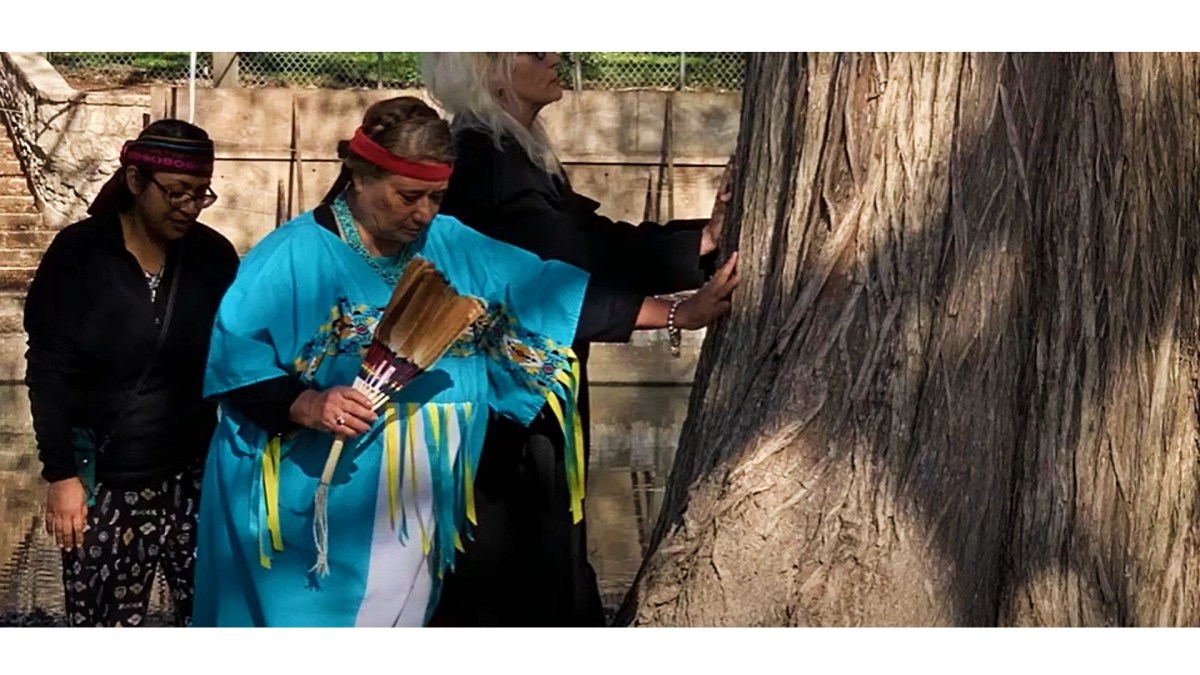
Two members of the Lipan Apache Native American Church will continue to seek federal court protection for trees and birds along the San Antonio River that they say are central to a belief system dating thousands of years.
The site, a bend in the river that resembles the shape of the constellation Eridanus, is located near the river’s headwaters – a spring called the Blue Hole, where church members believe life began.
The site is known as Yanaguana and is now located within the City of San Antonio’s Brackenridge Park. For three years, city workers have fired blanks and used other noisemakers to get the birds to disperse so they can remove riverfront trees they say are causing century-old retaining walls to fail. The city also claims guano from nesting birds – cormorants, egrets and herons – creates a public health hazard.
Plaintiffs Gary Perez and Matilde Torres say the disturbance of the birds and loss of trees would violate their freedom of worship. The two earlier won a decision from the Fifth U.S. Circuit Court of Appeals requiring the city to allow church members access to the riverbend where their religious ceremonies take place. The city had barred access to the site, saying it was unsafe. The Fifth Circuit also placed a temporary stay on the removal of trees.
In answer to a question from the Fifth Circuit court, however, the Texas Supreme Court ruled on June 13 that while the Texas Constitution forbids governmental limitations on religious services, it does not preclude the City of San Antonio from addressing what it sees as “undisputed public health and safety hazards” in the park – meaning that, in its opinion, bird deterrence and tree removal could proceed.
The City of San Antonio on June 19 asked the Fifth Circuit to allow the work to proceed.
“Most recently, the Court allowed the City to conduct [bird deterrence] activities beginning in January of this year, but only ‘until migratory cormorants arrive’,” the city’s lawyers wrote. “The City ceased its bird deterrence activities at the beginning of May after cormorants were observed in the Park. However, as of this filing, the City is not aware that any migratory birds have nested in the Project Area.”
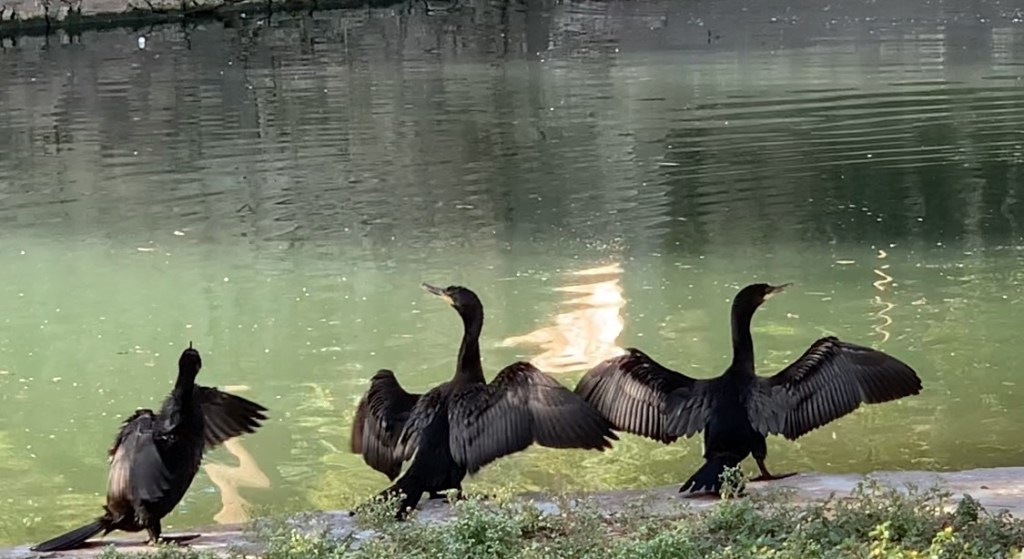
The federal Migratory Bird Treaty Act forbids interference with actively nesting migratory birds and their nests.
“Cormorants could nest and lay eggs in the Project Area at any moment, which would effectively bar the City from maintaining the Project Area until the cormorants depart with the first cold snap of fall, likely in October. But for now, the City would be able to resume bird deterrence in the Project Area as soon as the Court vacates the temporary administrative stay. Resuming bird deterrence activities would advance the compelling interest in protecting public health from excessive bird excrement.”
In addition, the city wrote that heavy rains on June 12 caused deadly flooding in San Antonio’s Beitel Creek area, adding that such significant weather events “also exacerbate existing damage to the riverbanks within the Project Area and the trees along the riverbanks in that area.”
In their response filed June 26, Perez and Torres wrote that the cormorants “have never posed a health risk and no guano has accumulated,” and that a delay until October for repair of the retaining walls “is hardly an interest of the highest order.” In addition, the Beitel Creek area is five miles from the sacred site on the San Antonio River, and “the city has presented no evidence that the storms damaged the walls in the project area.”
They added, “The City failed to explain why a flood in another part of the City justifies an immediate need to rip up religiously-necessary trees in Brackenridge Park. In any event, the current stay does not stop the City from taking [preventive] measures elsewhere along the San Antonio River and in Brackenridge Park to reduce the risk of flooding downstream.”
A troubled history
That the Blue Hole was a source of life was never in doubt.
In the beginning, according to Native American Church teachings, a spirit in the form of a cormorant appeared at the Blue Hole to water itself but was startled by a spirit in the form of a panther that lived there. Water dropped from the fleeing cormorant’s wings, giving life to the river valley.

Indigenous populations thrived there until the 1760s, when the Spanish explored the area and established missions. Decades of forced labor and displacement were followed by the arrival of Texas nationalists and Americans.
George Brackenridge, a banker and philanthropist, donated land for Brackenridge Park in 1899. Photographs from that time show water gushing as high as 20 feet from the spring, giving rise to the San Antonio River. The river picks up other springs as it flows southeast to the Guadalupe River and San Antonio Bay.
The gush was steadily reduced to a trickle as a growing population drew water from the aquifer. San Antonio’s population was 3,433 in 1850 and 53,321 when the park was established. Today, San Antonio is the seventh-largest city in the U.S. with a population of 1.5 million.
Brackenridge Park is home to the San Antonio Zoo, gardens, a natural history museum, sports fields, a golf course, and a theater. But it also features reminders of periods that were not kind to Native Americans – features the city wants to preserve: acequias, or irrigation canals, built by the Spanish; and century-old retaining walls at Lambert Beach, a public recreation area at the riverbend that was historically open only to Whites.
City voters in 2016 approved a bond that includes nearly $8 million for park improvements. The city contracted with a design team to develop a plan that includes repairing retaining walls, removing and replacing most of the trees, and deterring migratory birds — including cormorants — from nesting nearby.
One park advocate said in an earlier interview that if the retaining walls go, so be it – she’d like the riverbank to be returned to its natural state.
Looking ahead
Perez, meanwhile, believes the retaining walls can be repaired while keeping the spiritual ecology of the site intact and he proposed a plan on how to do so.
“We’re going to go back to the Fifth Circuit Court of Appeals, hopefully with some new discovery,” Perez told ICT. “The last battle we had with the city was to get some of the discovery that the city never produced. Now, another firm has joined us and we’ve got more hands on deck.”
Perez said he’s willing to take the case to the U.S. Supreme Court if necessary.
“I couldn’t walk back into that space for the last time thinking that I hadn’t done enough,” he said. “I owe it to our ancestors and their teachings.”
