
Editor’s Note: Federal officials approved the Dakota Access Pipeline to operate on May 19, three weeks after this story’s publication.
This story is part of ICT’s series on the 10th anniversary of the Standing Rock movement.
Amelia Schafer and Kevin Abourezk
ICT
CANNON BALL, North Dakota — Ten years after thousands of protesters flooded a small, rural area of North Dakota less than a mile north of the Standing Rock Reservation, the pipeline Indigenous people fought against continues to funnel between half a million and 750,000 gallons of crude oil per day across the nation and has plans to increase that amount to more than 1 million gallons a day.
The 1,176-mile pipeline sparked nearly a year of organized resistance near Cannon Ball where the pipeline crosses the Missouri River, the longest river in the United States, in the unceded 1851 and 1868 Treaties of Fort Laramie territory of the Oceti Sakowin (Lakota, Dakota and Nakota people). The crossing, less than a mile from the northern tip of the Standing Rock Sioux Tribe reservation, was unlike anything seen in modern history, tribal leaders said.

“I think it was an awakening in regards to protests that this country hasn’t seen since the Civil Rights Movement and the American Indian Movement in the 1970s,” said Janet Alkire, who served as chairwoman of the Standing Rock Sioux Tribe from 2021-2025. “It was such a unique time.”
Citizens of 250 federally recognized tribes across the United States came out in solidarity with Standing Rock, Alkire said. But it wasn’t just Indigenous people from the United States fighting. People came from across the world to stand together, including a group of Palestinian people from Gaza.
“Here we are in 2016 and we had 10,000 people come out to the middle of nowhere to protect and speak on behalf of the water,” Alkire said. “We understand at Standing Rock how important it was for people to feel this, to know that our voice matters and to speak up when there is some kind of injustice.”
In the end, protesters were forced to evacuate their camps in North Dakota, hundreds of organizers were arrested and eventually the uprising quieted, but it was never fully extinguished.
“We’re not gonna forget,” Alkire said.
Current status
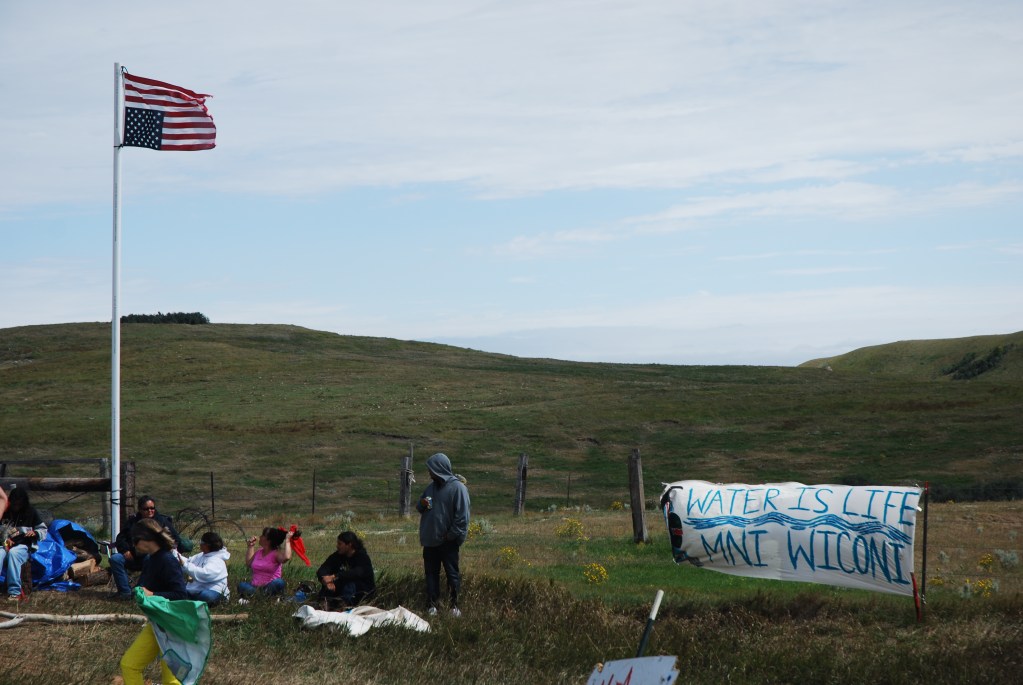
In 2026, the fight against the pipeline lives on through a handful of signs carried at protests across the nation, through the memories of those who gave months of their lives to the camps and the resistance, in an exhibit at the Smithsonian’s National American Indian Museum in Washington, D.C., and through the Standing Rock Sioux Tribe’s continued silent fight in and out of courtrooms.
Doug Crow Ghost, water resources director for the Standing Rock Sioux Tribe, said the tribe plans to continue to challenge Energy Transfer Partners (now Energy Transfer) and Army Corps to provide information to the tribe about the condition of the pipeline and about any leaks that occur.
“We’re still here and the pipeline is still moving and we don’t know if the oil has been leaking or not because we’re trying the best we can with my department, with our tribe, to sample the water but we can only sample so much because it’s really expensive,” he said.
He said it costs about $1,800 to analyze a single sample of hydrocarbons, the primary source of fuels.
“DAPL isn’t telling us anything,” Crow Ghost said. “The Army Corps definitely isn’t telling us anything about if there is a leak, if there is a break.”

The Army Corps of Engineers and Energy Transfer did not respond to ICT’s requests for comment by publication time.
What many don’t realize is that the tribe has spent a majority of the last decade fighting the pipeline, Alkire said. Even after the nation’s attention shifted away from the camps, the protesters and the movement, the tribe has quietly continued fighting against what leaders feel is a great danger to their only water supply.
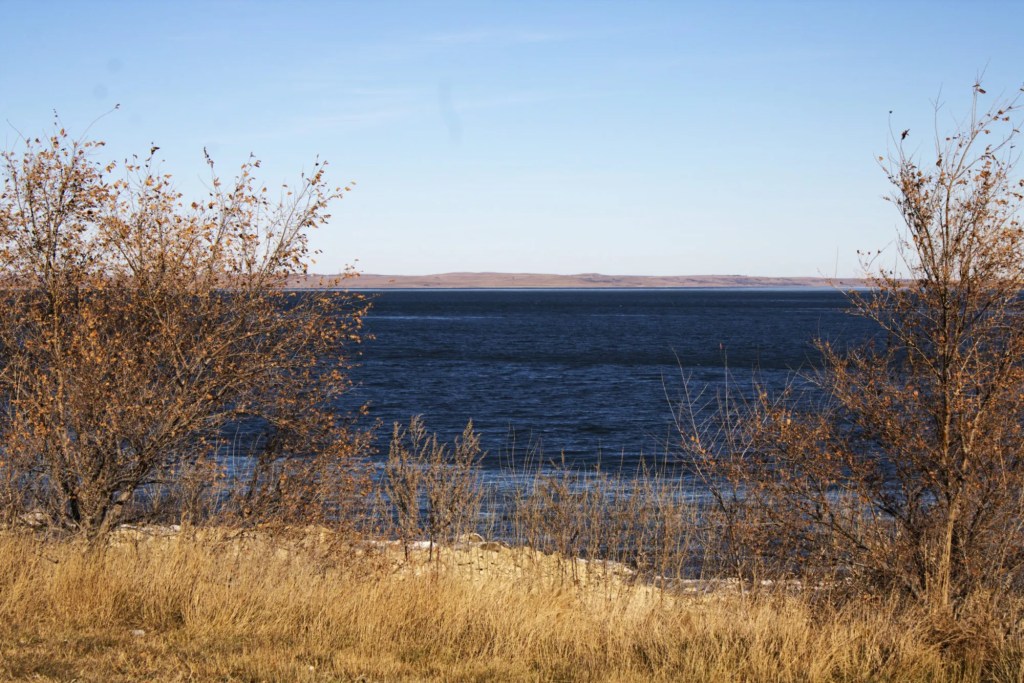
In December 2025, the federal government released a final environmental impact statement on the pipeline’s Lake Oahe crossing, and the Standing Rock Sioux Tribe formally rejected the impact statement in January 2026. Lake Oahe is part of the Missouri River, created as a result of the construction of the Oahe Dam between 1948 and 1963. The Missouri River itself spans from Three Forks, Montana to St. Louis, Missouri, where it merges with the Mississippi River.
The environmental impact statement included Energy Transfer plans to increase the amount of oil flowing through the Dakota Access Pipeline to more than 1 million gallons of oil per day, said Crow Ghost.
He said the tribe is being “out-resourced” by Energy Transfer in its legal fight to shut down the Dakota Access Pipeline. He questioned where support for the tribe’s fight against the pipeline and its efforts to mitigate the impacts of a potential oil leak has gone, and he wondered what happened to the tens of millions of dollars raised for the Standing Rock protesters.
“We are a small tribe with just thousands of dollars for legal, and we’re running out of resources,” Crow Ghost said.
Throughout the initial pipeline-permitting process and the draft and final environmental impact statements, the Army Corps of Engineers has failed to engage in meaningful government-to-government consultation with Standing Rock, the tribe said in a Jan. 26 letter to the Army Corps of Engineers.
How the standoff began
In early April 2016, after hearing news of a new crude oil pipeline planned to be built on unceded Oceti Sakowin treaty territory, a handful of members of the Standing Rock, Cheyenne River and Rosebud Sioux tribes formed a water protector camp near the pipeline’s construction site at Lake Oahe.
“The Standing Rock Nation, all these tribal nations are standing up to something that’s wrong,” said Dave Archambault Sr., Hunkpapa Lakota and whose son was the chairman of the Standing Rock Sioux Tribe in 2016.
The Army Corps of Engineers created Lake Oahe in an attempt to mitigate flood risks in the area. It’s the fourth-largest man-made reservoir in the United States and spans the Standing Rock Reservation in North and South Dakota and the Cheyenne River Reservation in South Dakota just south of Standing Rock.
Lake Oahe’s construction forcibly moved four Standing Rock communities, and it has continued to unearth tribal burial grounds, remains and cultural objects since the 1960s, said former Tribal Historic Preservation Officer Tim Mentz. The pipeline’s creation further threatened these burial grounds.
The lake is also the sole source of water for the roughly 12,000 residents of the Standing Rock Reservation, Alkire said. Further, the greater Missouri River ecosystem supplies drinking water to approximately 10 million Americans, according to the Izaak Walton League of America.
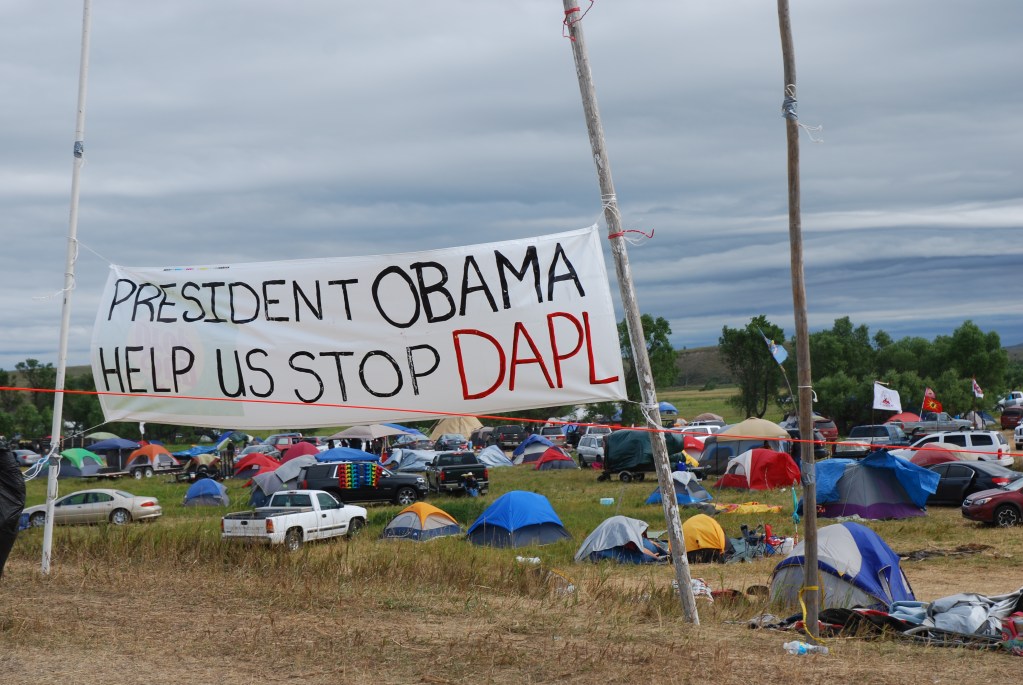
In 2016, with youth at the front, the camp slowly swelled, propelled quickly by the growing national movement that eventually garnered the hashtag #NoDAPL on social media.
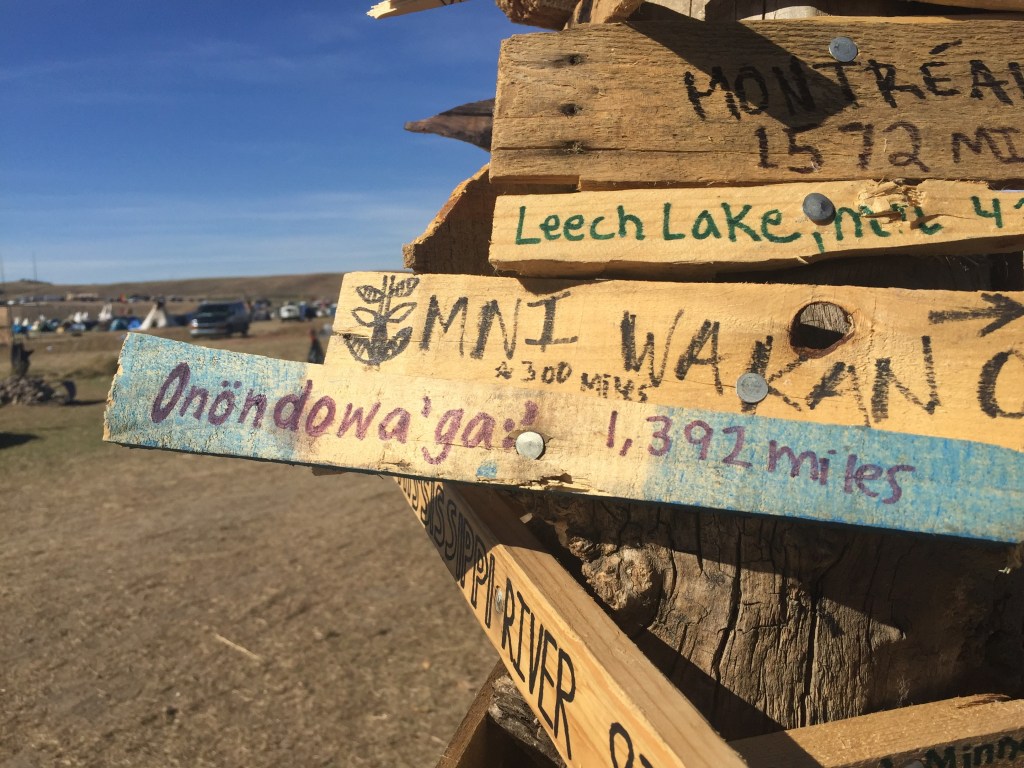
Eventually, thousands of people occupied camps in Cannon Ball.
What started as a group of Standing Rock, Cheyenne River and Rosebud Lakota people camping along Lake Oahe exploded into the largest Indigenous demonstration in decades.
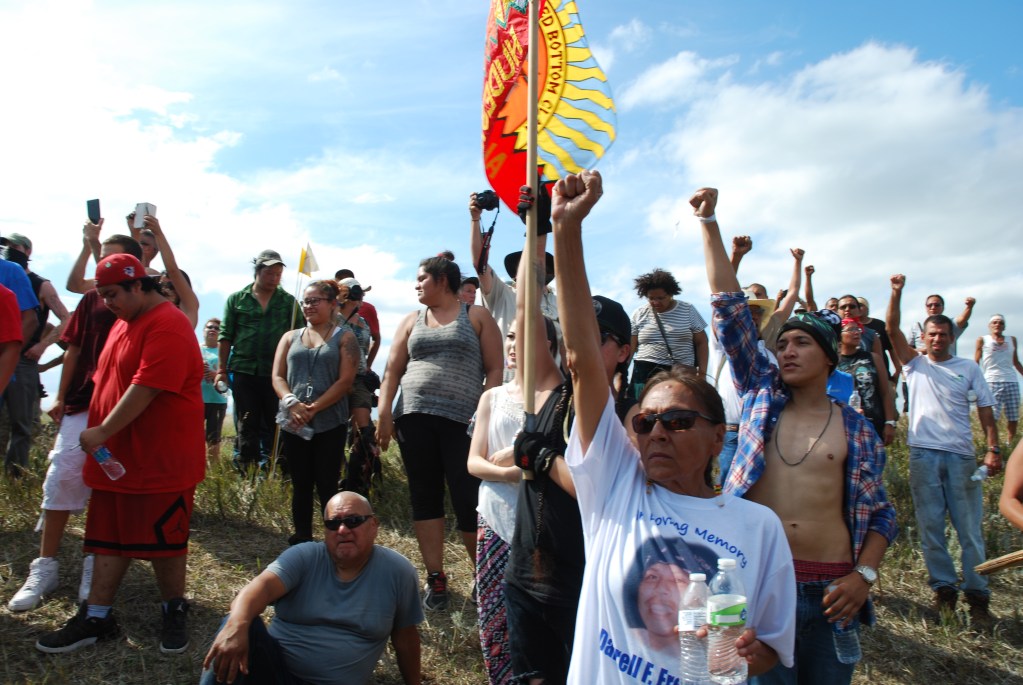
But as the protestors gathered, so did the resistance.
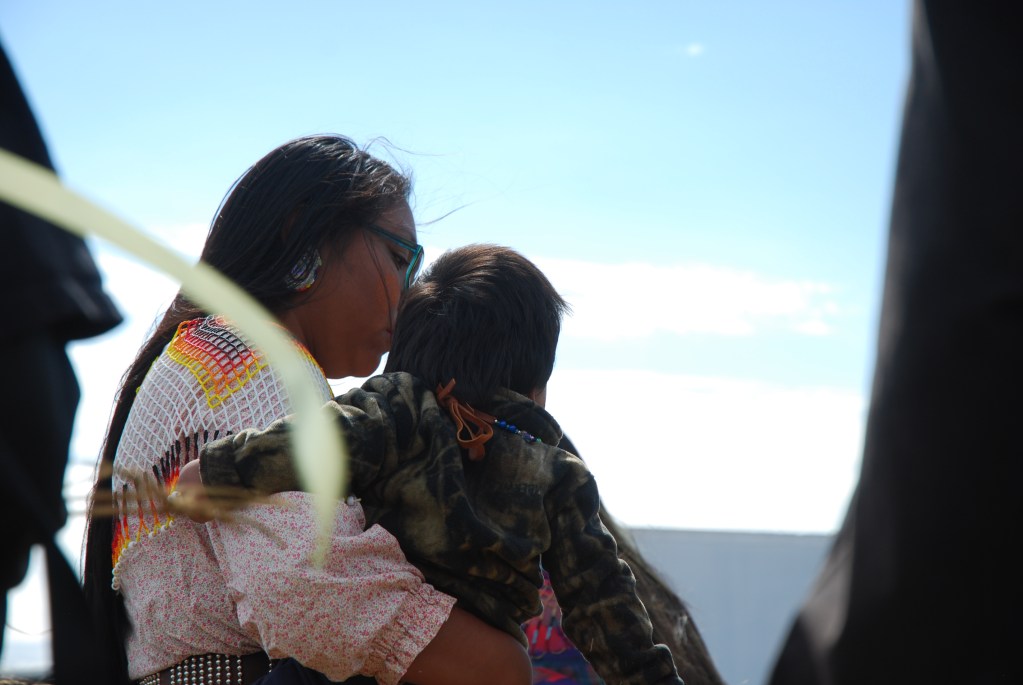
“It was a feeling of oneness, we were all there together,” said Betty Archambault, Oglala Lakota and the mother of then Standing Rock Chairman Dave Archambault Jr. “To me, it felt like how it must have been in the old days when people cared about each other. You wanted to help your neighbors… It was just such a good feeling.”
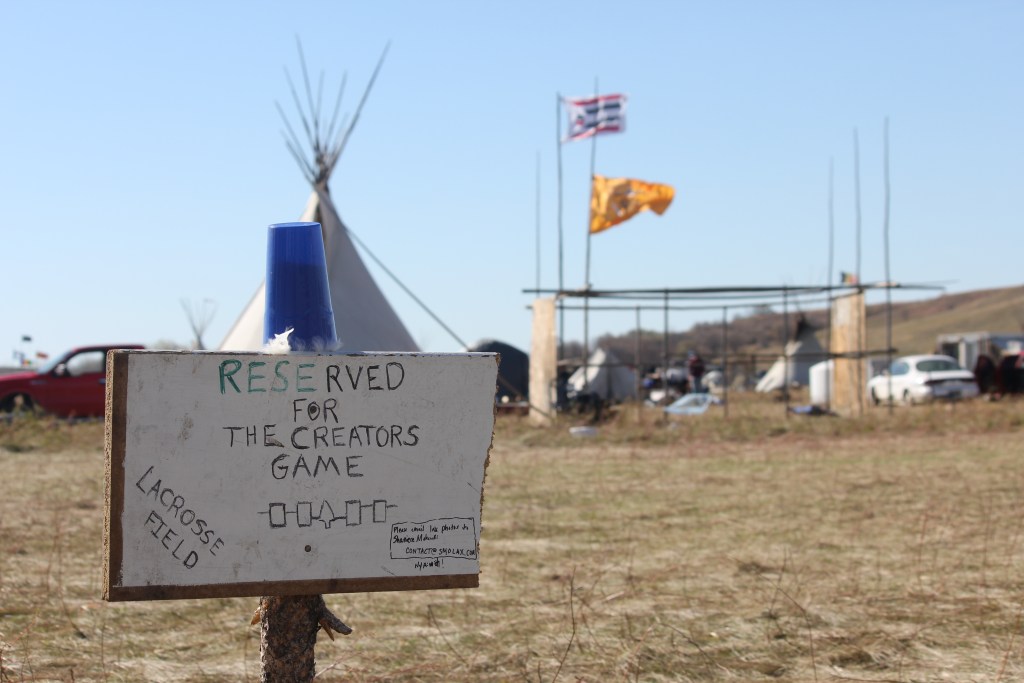
The camp gave a glimpse into the past into how good it must have been to be a community, she said. At night, she said she remembered hearing different Indigenous languages, different community members sharing stories together.
“I know there was a lot of hope that we could fight this,” she said. “I think that it woke up America, because that’s the first time I ever started going on Facebook because I wanted to know what was happening.”
What began as peaceful protests became violent in the fall of 2016, when local police and private security hired by Energy Transfer clashed with protesters.

Private security guards shot pepper spray at protesters and unleashed guard dogs. Local police used water cannons, tear gas, rubber bullets, and concussion grenades on protestors. Hundreds of protestors were arrested by local police, including celebrities in attendance like actress Shailene Woodley and Mark Ruffalo.
By February 2017, protestors were forced to leave the area.
By June 2017, half a million gallons of crude oil began to flow through the pipeline and have continued to flow ever since.
In many ways, the tribe has never stopped fighting. Now, rather than through an organized Indigenous uprising, the fight has shifted to court.
“I think the spirit is still alive, the spirit of Standing Rock,” Betty Archambault said. “I’d love to have that feeling again.”
A decade of legal battles
The Standing Rock Sioux Tribe first sued the Army Corps of Engineers in July 2016, claiming the pipeline threatens the tribe’s environmental and economic well-being.
The lawsuit hinged on two main points of contention: the potential violations of the Environmental Protection Agency’s Clean Water Act and Rivers and Harbors Act; and the potential for construction to threaten sacred historic sites, namely burial grounds.
“DAPL crosses hundreds if not thousands of federally regulated rivers, streams, and wetlands along its route,” the lawsuit reads. “Federal authorization under these statutes, in turn, triggers requirements under the National Historic Preservation Act, intended to protect sites of historic and cultural significance to Tribes like Standing Rock.”
Tribal officials raised concerns regarding the absence of an environmental impact statement in planning for the pipeline and said the Army Corps neglected to consider potential health impacts if the pipeline were to spill into the Missouri River.
In September 2016, the U.S. District Court for the District of Columbia ruled in favor of the Army Corps of Engineers and the pipeline, ruling that no environmental impact statement was necessary.
In December 2016, the Army Corps denied the easement required for the pipeline’s crossing under Lake Oahe, citing concerns over potential violations of treaty and tribal trust rights. Just a month later, newly inaugurated President Donald J. Trump reversed this order and the pipeline’s construction continued.
Despite this loss, the tribe has continued to take to the courts to fight against the pipeline. Eventually in 2020, the courts revoked the Lake Oahe easement issued in 2017. However, the pipeline was already constructed and in operation. Revoking the easement meant that the pipeline is now illegally operating on federal property, but that hasn’t stopped it from operating.
The tribe has continued to file numerous lawsuits to stop the pipeline since then, the most recent being on Oct. 14, 2024, when it sued the Army Corps of Engineers seeking an immediate shutdown of the pipeline.
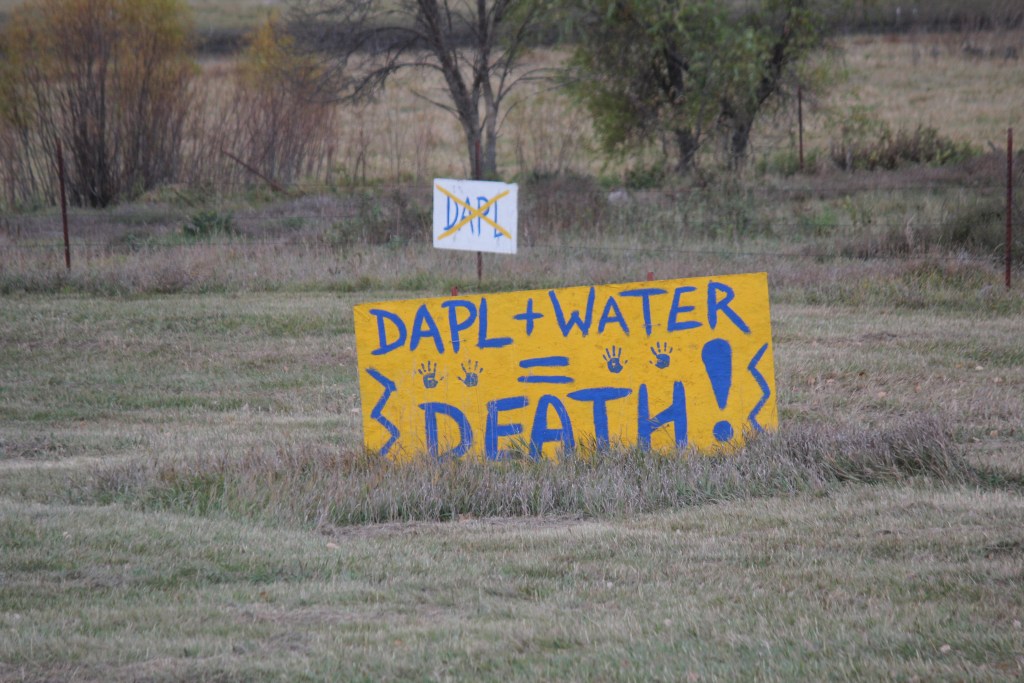
These legal battles aren’t exclusive to the tribe or the Army Corps. Most of the time state, federal and local judges side with Energy Transfer and the state of North Dakota rather than the tribe or environmental advocacy organizations.
On Feb. 27, a North Dakota judge finalized an order requiring nonprofit environmental organization Greenpeace to pay $345 million in damages to Energy Transfer regarding damages the company says were incurred by the Standing Rock pipeline protests. The judge sided with Energy Transfer’s lawsuit, which alleged that Greenpeace and other allies constructed a “propaganda machine” to disseminate disinformation about Energy Transfer, damaging the company’s reputation.
Both U.S. Greenpeace and Green Peace International have announced plans to request a new trial and, if denied, say they will appeal the judge’s decision.
Greenpeace maintains that Energy Transfer’s suit is a blatant attempt to silence free speech, erase Indigenous leadership of the Standing Rock movement, and punish solidarity with peaceful resistance to the Dakota Access Pipeline.
Greenpeace International will also seek damages from Energy Transfer via free-speech legislation in the Netherlands.

“The absurdity of this judgment can easily be illustrated,” said Marco Simons, interim general counsel at Greenpeace USA and Greenpeace Fund, in a Feb. 27 statement. “These Greenpeace organizations have been held responsible for supposedly delaying a pipeline that to this day does not have legal authority to operate, and which was actually delayed by the decisions of the US Army Corps of Engineers. The judgment includes tens of millions of dollars for signing a letter also signed by 500 other organizations, which echoed statements made in United Nations reports. If the courts still believe in justice, this result will not stand.”
Greenpeace was initially ordered to pay Energy Transfer more than $660 million in damages following a North Dakota jury trial in 2025.
Additionally, the state of North Dakota successfully sued the U.S. government to recover costs in damages occurring during the Standing Rock protests from April 2016 to February 2017. A federal judge ruled that nearly $28 million would be paid to the state in April 2025.
The remaining uncertainty
In the 10 years since the pipeline fight began, four different elected chair people have led the Standing Rock Sioux Tribe, each of whom fought against the pipeline while in that role. The fight has now been passed onto the newly inducted chairman, Steve Sitting Bear.
Alkire was elected by the tribal population in 2021, making her the first female chair of the Standing Rock Sioux Tribe since 1946 and first elected female to hold the position. She followed in the footsteps of Josephine Gates Kelly, who was appointed chairwoman in 1940. Gates Kelly was the first woman to serve as a tribal chair in United States history.
All four years of Alkire’s time as chair were surrounded by a constant, consistent battle against the pipeline. It wasn’t until halfway through her tenure that the tribe finally received the draft environmental impact statement from the government. The statement was supposed to outline what steps would be taken should the pipeline spill. But instead of a full-fledged plan, the tribe received pages upon pages of fully redacted information. Big black squares covering entire pages of critical emergency response data.
“We couldn’t see how they were going to address an emergency,” Alkire said. “We wanted to know about the timing and the shutoff valves. How is it going to work when there is a spill, and how is that system going to work in regards to addressing that spill? All of that we never got.”

If the pipeline were to rupture, Standing Rock is at the front line of the emergency response. The tribe is geographically the closest municipal entity to the pipeline, meaning tribal officials would be the first responders on the scene of a spill.
“With all tribal leaders, you’ve got to protect the water, you’ve got to protect the people,” Alkire said. “For Standing Rock, that was our number one fight. This was the big unknown. I’ll be honest … we still have a lot of unknowns. That [pipeline] dominated everything and every conversation.”
Then she found out that the pipeline had already spilled hazardous material into Lake Oahe right under protesters’ noses.
Through litigation and evidentiary findings presented during the numerous hearings regarding the pipeline, Alkire said the tribe stumbled upon a report detailing a spill during the pipeline’s construction in early 2017. The tribe obtained that report in 2024, Alkire said.
The report revealed roughly 1.4 million gallons of drilling fluid was released into Lake Oahe.
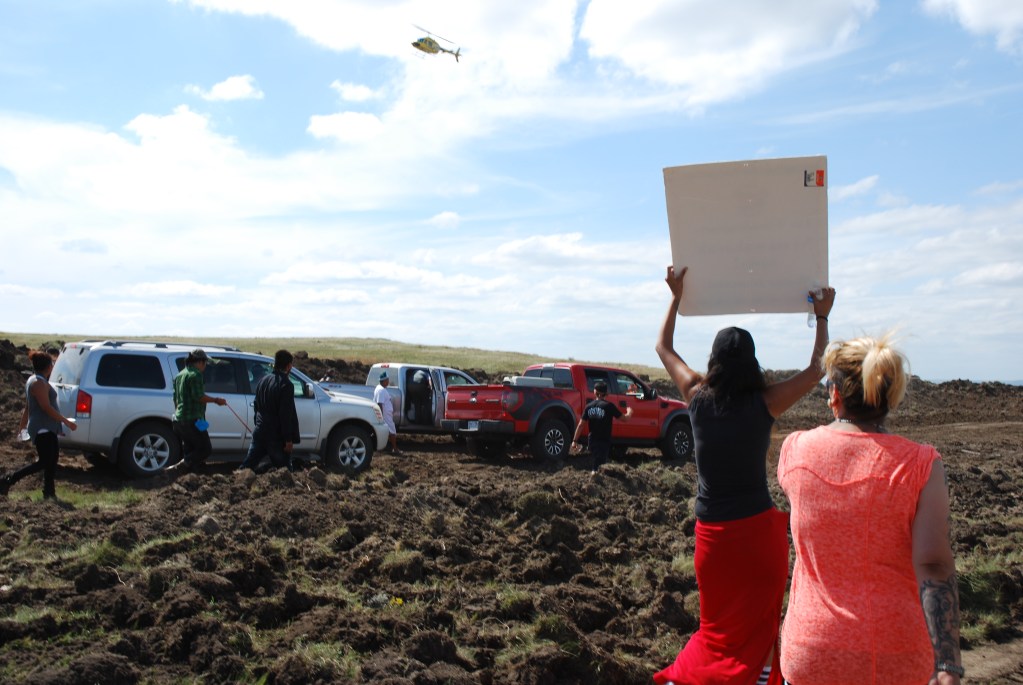
On Aug. 28, 2024, the tribe sent a letter to the Army Corps requesting information on the spill. The Army Corps has not responded to the tribe.
The information came from hidden driller logs held by Energy Transfer, the tribe said in a press release. The leak of drilling mud is something Energy Transfer was convicted of in 2022.
The Pennsylvania Attorney General’s Office charged Energy Transfer in 2021 with a violation of the Pennsylvania Clean Streams Act, citing reports that the company had spilled between 21,000 and 28,000 gallons of drilling mud into Marsh Creek Lake in Chester County, Pennsylvania.
The company was convicted of 23 criminal violations of Pennsylvania’s Clean Streams Act as a result of the spill.
Stewart Huntington contributed to this report.

