
This story was originally published by Wisconsin Examiner.
Erik Gunn
Wisconsin Examiner
Wisconsin filed three lawsuits on April 23 against online prediction market companies that the state Department of Justice accused of “working together to facilitate illegal sports betting throughout the state.”
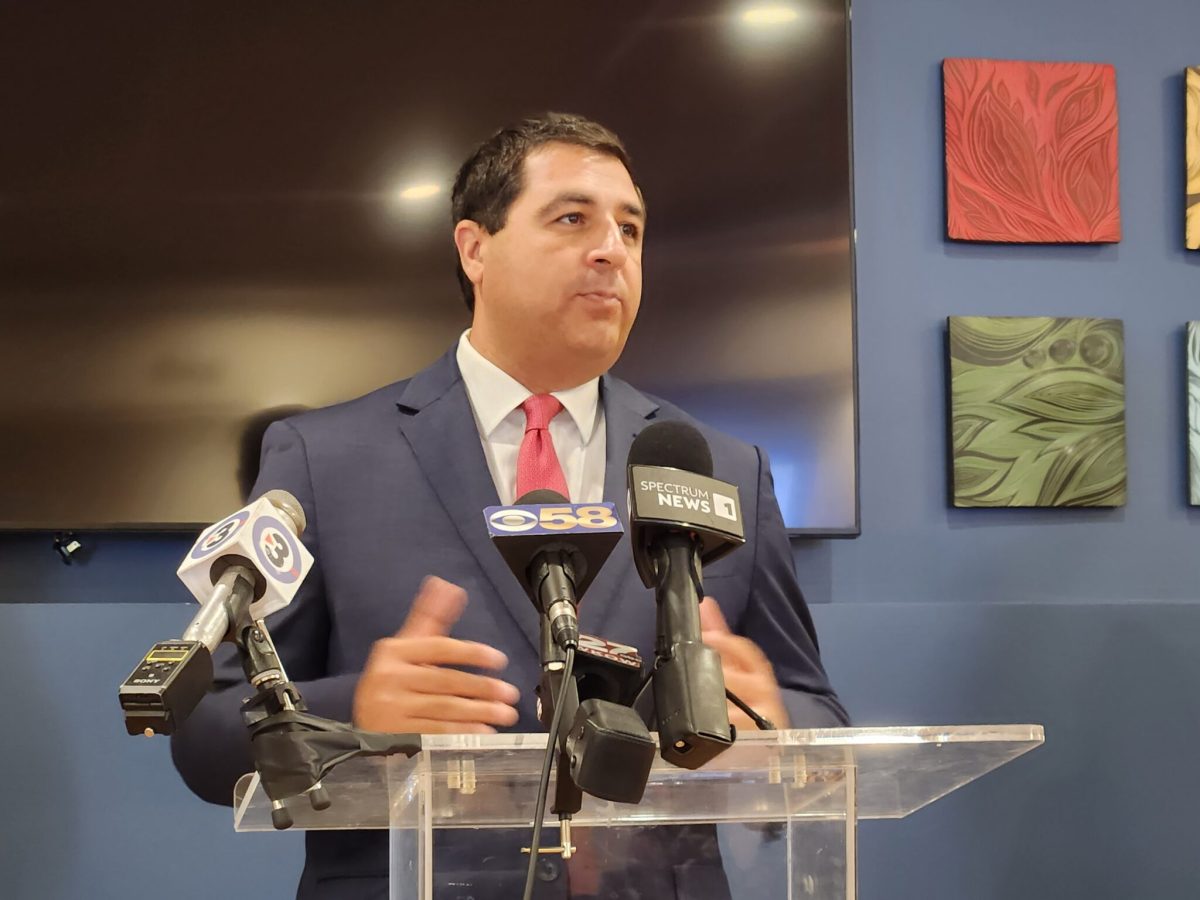
“Except in limited circumstances, sports betting and other forms of commercial gambling have long been illegal in the state of Wisconsin,” Attorney General Josh Kaul said during a news conference. “No company is above this law, no matter how creatively those companies try to disguise the activity that they’re engaged in.”
The lawsuits were filed as Wisconsin prepares to renegotiate 11 tribal gaming compacts to include online sports betting under a law Gov. Tony Evers signed earlier this month. The legislation legalized online sports betting on the condition that the required computer servers are housed on tribal land.
Sports betting has been legal in Wisconsin since 2021, but only in person at tribal casinos.
The state’s lawsuits target online prediction markets that allow users to put money on the outcome of everything from major world events to sports outcomes.
The emergence of prediction markets including Kalshi and Polymarket has prompted states across the country to enact legislation and file lawsuits, Stateline reported in March.
The online platforms have been estimated to generate more than $13 billion every month, with the bulk of those revenues coming from sports betting, Stateline reported.
Kaul said Wisconsin was filing its own lawsuit, but a handful of other states, including recently New York, have filed similar suits citing their own state regulations.
“These companies have chosen to flout Wisconsin law by thinly disguising the sports betting that they facilitate through what are called event contracts,” Kaul explained. “But our position in this case is that event contracts are no different than ordinary sports bets. The companies collect a fee, we allege, for every bet that’s made, leading them to earn significant revenue from Wisconsinites through violations of our state’s gambling regulations.”
The goal of the suits is to shut down the platforms in Wisconsin, Kaul said. The state isn’t currently seeking monetary damages, but he said that possibility hasn’t been ruled out should there be a legal basis to demand them and the facts to support such a demand.
He said the suit was filed in response to “a huge increase in this type of activity” in the last few years.
Each of the three lawsuits is filed in Dane County circuit court as a “complaint to abate public nuisance” and accuse the defendants of “facilitating illegal sports betting throughout the state.” They ask the court to find them in violation of state law and to issue an injunction against the companies for sports-related trading by Wisconsin users.
One suit names Kalshi Inc., along with four affiliates; Robinhood Markets and two affiliates; and two Coinbase companies. The second names three companies doing business as Polymarket or affiliates of Polymarket. The third suit names Foris Dax Markets and North American Derivatives Exchange Inc., doing business as Crypto.com.
In a statement received late on April 24, Coinbase Chief Legal Officer Paul Grewal pointed to a Third Circuit Court of Appeals ruling April 6 that states don’t have jurisdiction over prediction markets.
“Congress was clear — consumers deserve uniform, federal oversight over derivatives markets,” Grewal said. “As the Third Circuit held, state enforcement that seeks to prohibit prediction markets — like Wisconsin’s lawsuit [Thursday] against Coinbase and others — ‘is exactly the patchwork that Congress replaced wholecloth by creating the CFTC.’ Wisconsin should accept clear and consistent CFTC oversight of prediction markets — just as Congress intended.”
All of the businesses in the lawsuits list an identical street address in Wilmington, Delaware, except for the three Robinhood companies, which list an address in Dover, Delaware.
All three suits also include as defendants unnamed private individuals or entities that “facilitate” the platforms’ transactions.
The lawsuits focus on sports betting, although the platforms also host transactions involving other kinds of events and predictions. Kaul said the state alleges sports-related gambling is “a very large part” of the activity on Kalshi and other platforms.
The suits describe transactions on the platforms as “indistinguishable from an ordinary sports bet” as defined in Wisconsin law.
Crypto.com, for example, “relabels its sports bets as ‘event contracts,’ meaning contracts traded between buyers and sellers at agreed upon prices that mimic the odds of a sports-related outcome,” the lawsuit naming Crypto.com states. “Parties to these ‘event contracts’ wager money on whether a given sports-related outcome will occur, just as when people bet on that same outcome using traditional casino-style sportsbooks.”
On April 3, 2026, the suit states, “traders could buy contracts taking the position that the University of Michigan would win its Final Four matchup with the University of Arizona for around $0.54, which reflected a roughly 54 percent projected chance of Michigan winning. When Michigan won, event contract holders who bet on that team winning received $1 per contract and those who instead bet on Arizona winning received nothing.”
Kaul said there was “no direct relationship” between the lawsuits and the enactment of the new law allowing online sports betting. “What we are alleging is violations of Wisconsin law, and the allegations would be the same whether or not there had been the new legislation passed.”
This report was updated 4/27/2026 with a statement from Coinbase.
