
Nika Bartoo-Smith
Underscore Native News + ICT
Washington voters this November elected six Indigenous candidates to serve in the state Legislature. This includes returning state Sen. Claudia Kauffman, Nez Perce Tribe, and two reelected to the House – state Reps. Chris Stearns, Navajo Nation, and Debra Lekanoff, Tlingit and Aleut. Election results will be certified Dec. 3.
Chelsea Dimas, Nahua and Purépecha, Kim Harless, Òpata, Mexican American and European ancestry, and Renee Hernandez Greenfield, descendant of the Cochiti, San Ildefonso and Taos Pueblos and Chichimeca, were elected to the House for the first time.
“It’s really exciting to see not only Native Americans running for office, but winning office and bringing that perspective and that lived experience to the legislative process,” Kauffman said.
More Indigenous representation in Washington state mirrors a wave of growing Native representation across the country.
From historic firsts like the election of Deb Haaland, Laguna Pueblo, in New Mexico as the first Native American woman elected governor, to two Native American women elected to the U.S. Senate – Peggy Flanagan, White Earth Nation, in Minnesota and Mary Peltola, Yup’ik, in Alaska.
Nationwide, 75 Indigenous candidates were also elected to local seats in city, county and school board positions.
“It’s really exciting to see not only Native Americans running for office, but winning office and bringing that perspective and that lived experience to the legislative process.”
WAShington STATE Sen. Claudia Kauffman, Nez Perce Tribe
“I’ve spoken to little kids who look like me, adults who look like me, elders, tribal leaders and said: ‘run for office,’” Lekanoff said. She continued, “‘Do not let your voice go unheard. Do not give your pen to people who do not look like you, who do not sound like you, whose bloodlines do not come from here, and let them build laws that govern you, of where your ancestors come from and your children will come from. Be bold. Be a lawmaker. Run for office.’”
Underscore Native News + ICT spoke with all six Indigenous candidates who will be serving in the Washington Legislature come January about their reflections on the election and priorities for this term.
State Rep.-elect Chelsea Dimas: ‘Showing up in community’
Chelsea Dimas, a Democrat, describes herself as the first openly queer, Indigenous Latinx person to run for office in the city of Sunnyside. She first ran in 2024 for the state House in Washington’s 14th District. Though she did not win that first time around, Dimas was not deterred. In a rematch this November, she defeated the incumbent for the seat.
One of the moments that stands out most from this year’s campaign for Dimas was knocking on doors in Pasco.
“I knocked on the door of a Native elder and she was like ‘Oh my God! You look like me,’” Dimas, Nahua and Purépecha, remembers her saying. “And I just got chills because she hugged me and she was just like, ‘I know you’re gonna win. I know that this is gonna happen for you. I voted for you last time, and I just know that this time, it’s gonna happen.’ And she gave me her blessing. It was just so emotional.”
Dimas believes that her district, previously represented by a Republican, was ready for change.
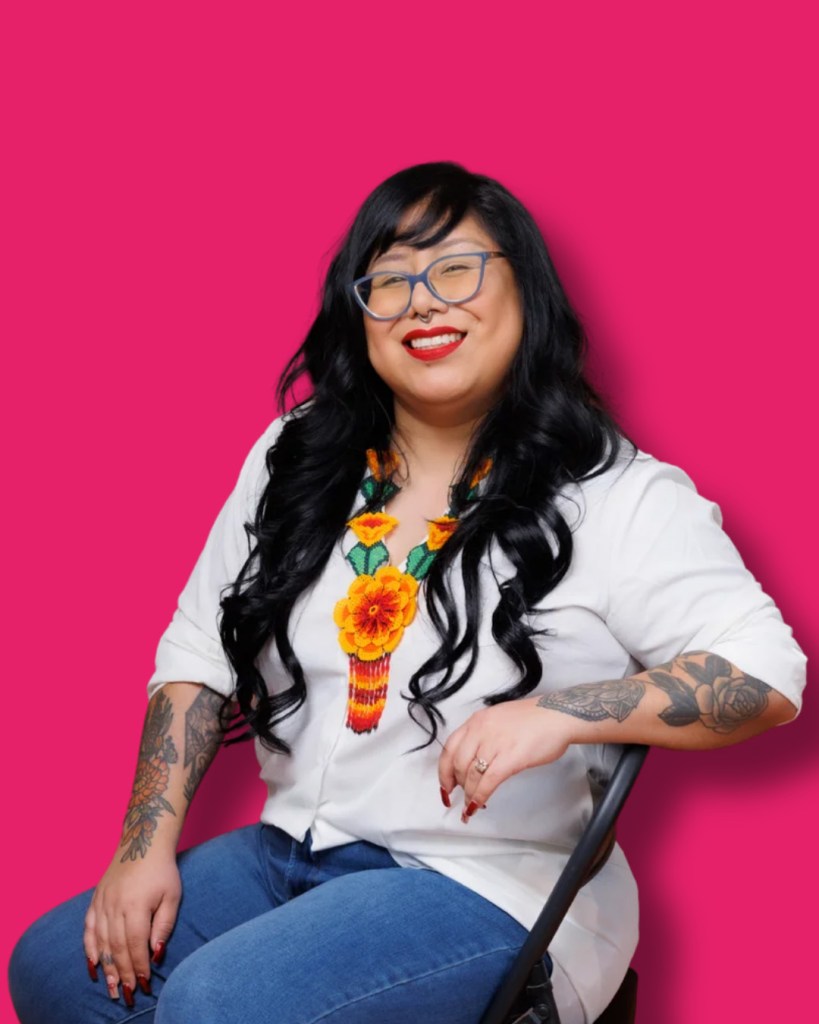
That call for change is what she ran on.
“My district is a hardworking district that has dealt with all kinds of things: workers’ exploitation, exploitation (of) our natural resources, and has been a heavily targeted area by the federal administration,” Dimas said, reflecting on her recent win. “And so, when folks saw that the incumbent did not speak out about the ICE activity, did not speak, did not vote for immigrant protections, it was game over there.”
She also said that there have been occasions when Native American community members have been wrongfully stopped by federal immigration officials in Washington, including within the 14th District.
“They’re going after families, people who have worked and invested their time in this economy, but just haven’t had a clear pathway to citizenship,” Dimas said, speaking about ICE interactions in her community. “I believe that whatever I can do in my legislative capacity to protect them is what I’m going to do.”
Key issues for Dimas include healthcare, fully funded education, universal childcare, workers rights, expanding affordable housing, and protecting immigrant families from immigration enforcement.
Another big concern in Dimas’ district is data centers, she said, especially for Yakama Nation.
Come January, Dimas said her first priority is to establish a district office so she can meet people in person and provide a space for them to voice their concerns.
“I tell everyone, keep messaging me. Keep reaching out. I’ll keep showing up in community. I’m going to be accessible,” Dimas said.
State Rep. Chris Stearns: ‘Get the tribes in the driver’s seat’
Starting his third term as state representative for the 47th District and reelected by the Democrats as House Speaker Pro Tem, Rep. Chris Stearns feels that the message is clear from voters: they want a government that cares about its people.
“[Democrats] have a super majority now [nationwide], which we haven’t had in like decades, and so I think it means No. 1, we’re doing something right, and number two, it means that people are just really unhappy with the direction that the entire country is taking under the current administration, and they want a course correction,” Stearns said.
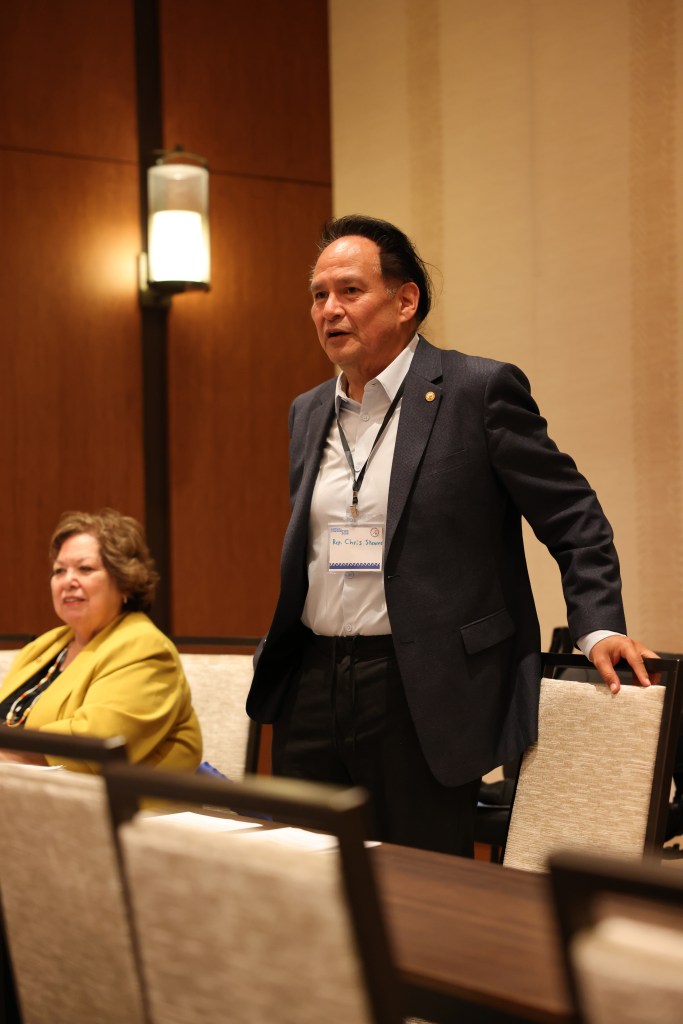
Stearns, Navajo Nation, is excited that this election cycle brought with it a wave of Indigenous candidates across Washington state and the country. When Stearns first took office in 2023, he and Rep. Debra Lekanoff were the only Native Americans in the state House. Now, there will be five Indigenous representatives.
Working with tribes is a major priority for Stearns. This term, he said he plans to once again bring forward a bill, modeled after the federal Religious Freedom Restoration Act of 1993, protecting religious freedom and sacred places for tribes.
He is also thinking about how to move beyond consultation.
“Consultation gets us to a point where ‘yeah okay now you have to talk to the tribe,’ but it’s well after everything’s been underway, and often the forces are already lined up against you,” Stearns said.
“I think consultation is great, but we’re past that now. So now we’re at ‘okay, what’s a better process?,” he continued. “That’s what I’m working on. Is there a way to get the tribes in the driver’s seat?”
This next term, Stearns is also focused on issues surrounding artificial intelligence, specifically planning to introduce a bill that would charge corporations with criminal penalties should their AI product result in grave harm to a human.
Stearns also plans to reintroduce a bill to create public funding for news media.
State Sen. Claudia Kauffman: ‘What the voters have chosen’
Claudia Kauffman was reelected to serve a second term as senator in the 47th District. The Democrat has held the seat since January 2023.
“I’m feeling really good, and that it really reflects what the voters have chosen,” Kauffman, Nez Perce Tribe, said. “My message resonated with them on the economy and on moving forward on public safety, bringing home great things for the district. These are all things that I have done for the past four years and will continue to do again in the next.”
Over the last four years, Kauffman said she has prioritized working with tribes, particularly as the only Native American in the state senate.
Recently, the proposed changes to rules implementing the Section 106 of the National Historic Preservation Act have been a big concern.
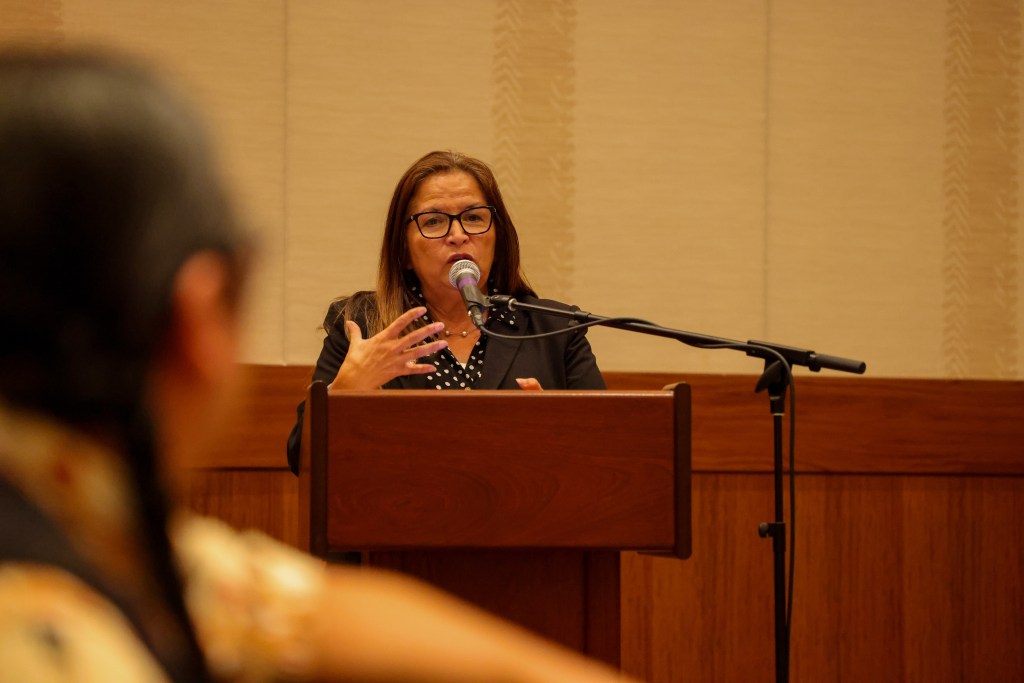
“For Indian Country, what I’ve been fighting for for the last couple of years is the protection of tribal cultural resources, especially when it comes to further development in our state,” Kauffman said. “Whether that be data centers or whether that be housing or any kind of development that is moving forward, we need to protect our tribal cultural resources.”
Kauffman said she has also ensured that Washington senators receive an Indian Law 101 training to understand the basics of tribal sovereignty. She said she also ensures that senate leaders meet regularly with tribal leaders throughout the legislative process and works to report back to tribes after the legislative session.
“These reports highlight the number of both policy bills that were passed, funding that has come in for tribes, dealing with climate change or construction or any of those other things,” Kauffman said. “It’s important that we share back with the tribes of all the bills that went through that impact them, because they had never done that before in the state Legislature.”
As chair of the business committee, Kauffman said one of her other top priorities is to make sure policies and resources are available to support small businesses.
State Rep. Debra Lekanoff: Diversity on the floor of the People’s House
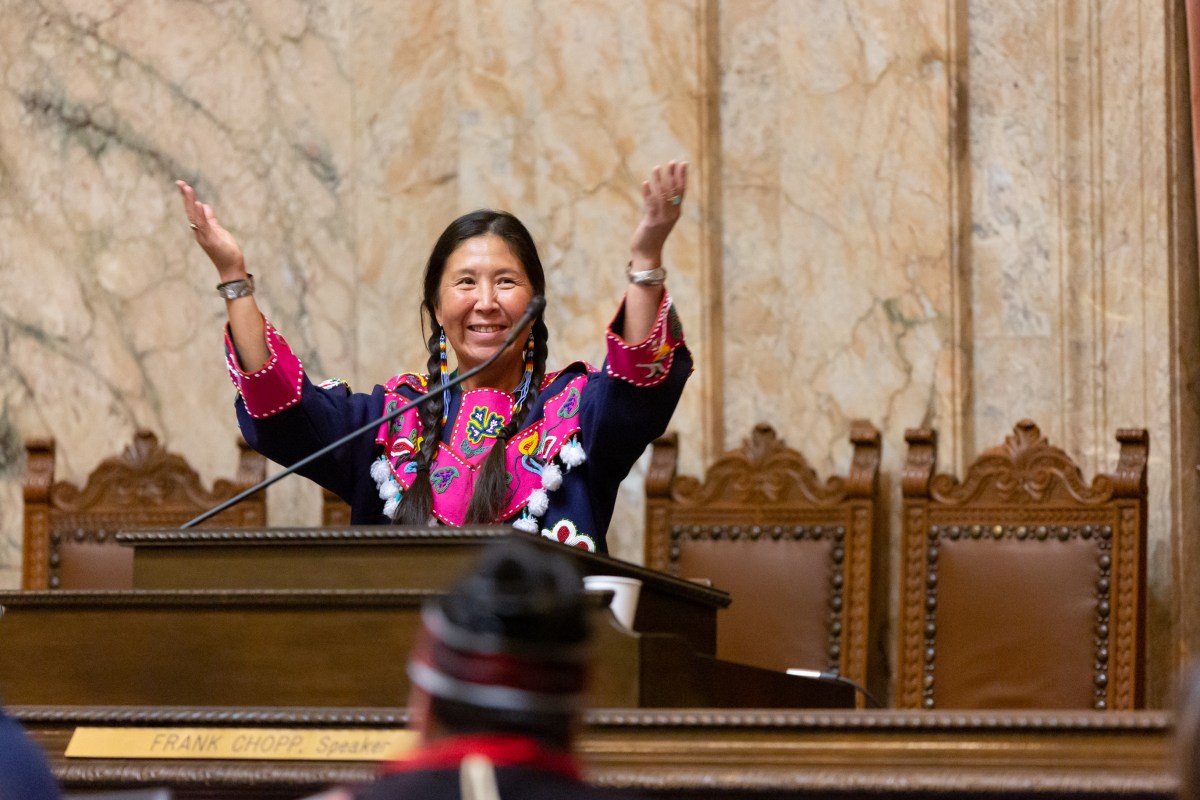
In 2019, Debra Lekanoff was sworn into the Washington State House of Representatives proudly wearing her regalia surrounded by the sounds of drum beats and over 100 Native people there to witness the moment.
“Coming into my fifth term as the senior Native American legislator in Washington state, how beautiful it is to look on the floor of the People’s House and see all the different dynamics of age group, dynamics in economy … their dynamics in gender, their dynamics in their careers and diversity. And also the beautiful different languages that are on the floor of the People’s House,” Lekanoff, Tilingit and Aleut, said, reflecting on those she is serving alongside.
“It is my interest to continue that work of how can we create strong consultation processes within governance policies across the board that recognizes tribal sovereignty, that recognizes that we are modern governments of Washington state and Washington tribes.”
Washington state Rep. Debra Lekanoff, Tlingit and Aleut
Lekanoff said her work has always prioritized working with tribes, coming from a career in governmental affairs for tribal governments.
“It’s an amazing opportunity for me to ensure that our tribal, local, state, and federal governing bodies work together for the best of all Washingtonians,” the Democrat said.
Pointing to the 1989 Centennial Accord, which provided a framework for government-to-government relationships in Washington, Lekanoff said that the state is a leader when it comes to consultation with Native nations.
“It is my interest to continue that work of how can we create strong consultation processes within governance policies across the board that recognizes tribal sovereignty, that recognizes that we are modern governments of Washington state and Washington tribes,” Lekanoff said, “and we can work better and stronger and more efficiently to have good economies, good jobs, a healthy environment, education for all, healthcare for all, housing for all.”
She said one of her biggest accomplishments as legislator was helping to create Washington’s Missing and Murdered Indigenous Women & People Task Force in 2021, along with the statewide Missing Indigenous Persons Alert System, the first in the nation.
Looking forward to her fifth term, she is thinking about the impact of data centers on water quality and quantity and how the work must be done through partnerships with tribes.
“How can I help address for Washington state our appropriate role in putting guardrails around the building of infrastructure for data centers and renewable energy projects around Washington State that gives us the jobs that we need for the next 40 years,” Lekanoff said.
State Rep.-elect Kim Harless: ‘A place for them too’
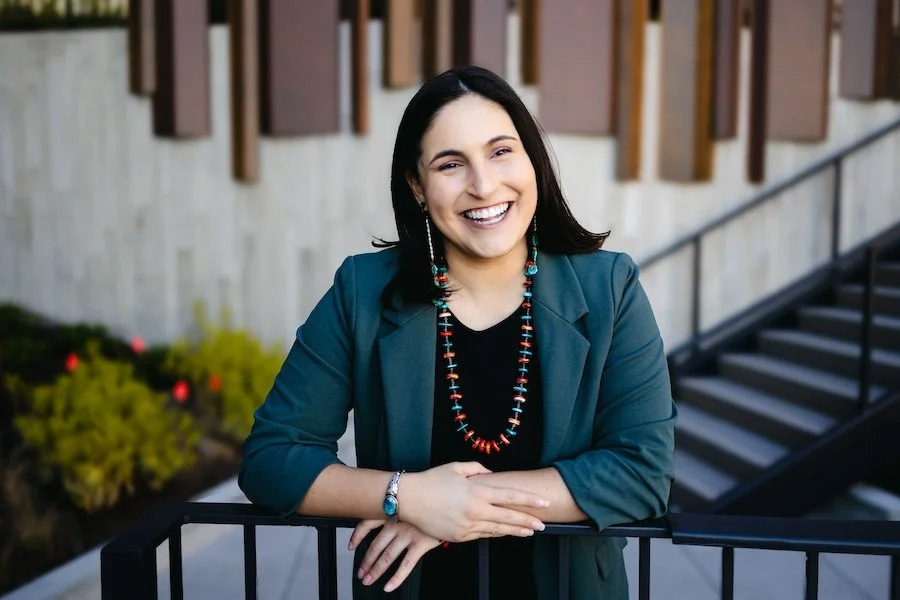
Born and raised in Vancouver, Washington, Kim Harless is currently in her second term on Vancouver City Council.
“From all that experience, I’ve been able to see where I would be able to do the work further statewide and really advocate for this community that has seen a lot of underinvestment from Olympia over the decades,” Harless said.
In November, she was elected to the state House in Washington’s 49th District.
As a Democrat, she has many priorities including healthcare, housing, addressing climate change, LGBTQIA+ rights, tribal sovereignty and immigrant rights.
Harless, Òpata, Mexican American and European ancestry, said she is committed to fighting for “better services” for community members in her district. For her, that means advocating for change like with the “millionaires tax” passed by Washington lawmakers last session.
Thinking about the budget, healthcare is top of mind for Harless, knowing that many people are not able to afford the healthcare that they need.
“Healthcare is a right, and so we need to fix that,” Harless said. “I know there’s a lot of folks working on universal healthcare, and I’ll definitely be a champion for that.”
For Harless, this election has been a chance to celebrate so many wins for Indigenous and other underrepresented communities across the country.
“By having more Indigenous leaders we will have even more of that to inspire youth and make sure that they feel like this is a place for them too – that government and participating civically is a place for them too,” Harless said.
“We can now make sure that policies, when they’re drafted and considered, they actually are including voices of Indigenous folks as well as tribes, and it’s not an afterthought,” she continued.
State Rep.-elect Renee Hernandez Greenfield: ‘We got to do a lot of things differently’
Elected for her first term serving as a state representative in Washington’s 26th District, Renee Hernandez Greenfield, a Democrat, brings with her years of experience working in early childhood education, tribal child welfare and family services.
She said her top priorities include improving the education system, fighting for climate justice, creating affordability, protecting reproductive rights and supporting tribal sovereignty.
As an Indigenous woman and a mother, many of these issues are personal for Hernandez Greenfield who is a descendant of the Cochiti, San Ildefonso and Taos Pueblos and has Chichimeca ancestry from Jalisco and Guanajuanto, Mexico.
Hernandez Greenfield attributes her desire to run for office to hearing from community members around her and, perhaps most importantly, the experiences of her son.
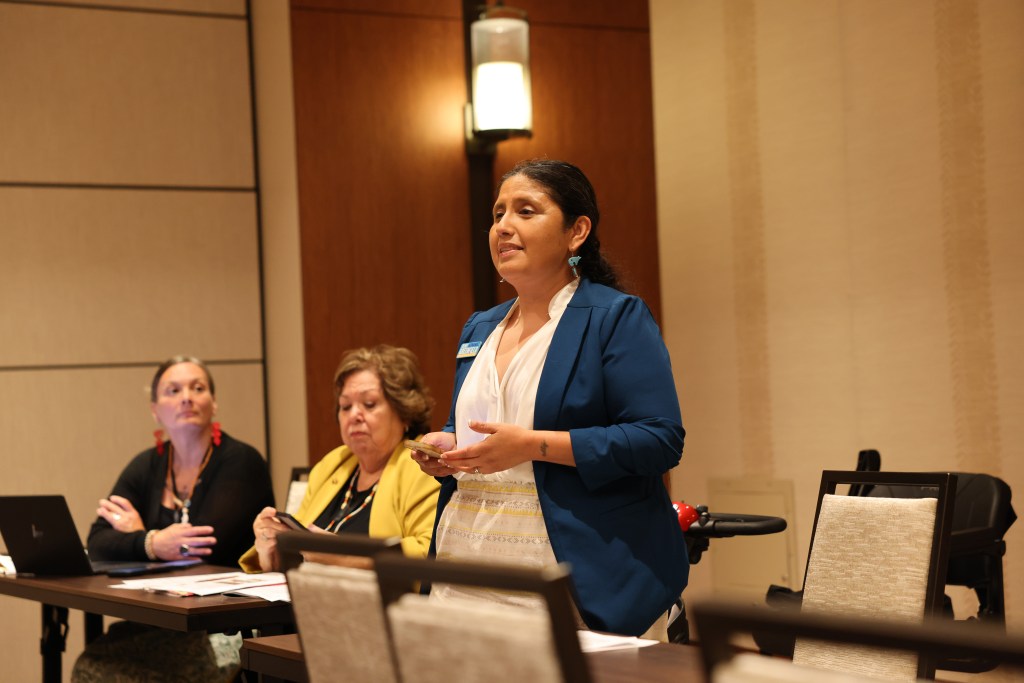
“He’s on the spectrum, and he’s been navigating disabilities services since he was quite young, and that includes medical healthcare access, and education, and so a lot of systems that don’t speak to each other,” Hernandez Greenfield said. “Navigating those as a parent, and then as a professional working with families, you’re like, ‘oh, we got to do a lot of things differently.’”
The 26th district encompasses parts of Kitsap County and Pierce County, from Bremerton down to Gig Harbor. The Suquamish Tribe and the Port Gamble S’Klallam Tribe both are also both within the district.
In her campaign, Hernandez Greenfield committed to the need for better tribal consultation. She said that’s something that must happen early and often.
“Tribal governments and tribal communities, they’re not stakeholders, they’re governments,” Hernandez Greenfield said. “By no means is my role meant to speak for tribal nations, it’s actually to ensure that we’re meaningfully engaging and using and bringing them in in the way that is aligned with government-to-government work.”
Lyric Aquino of Underscore Native News contributed to this report.
This story is co-published by Underscore Native News and ICT, a news partnership that covers Indigenous communities in the Pacific Northwest.