
Heather Dawn Thompson
When I think about what is different from Indigenous and western agricultural systems I think about monoculture and pesticides and fertilizers.
But I also think about religion.
Our religion, spirituality, and worldview shape how we navigate the world – and that includes food and agriculture.
MaLakota (I am Lakota) enrolled with Cheyenne River Sioux Tribe. In Lakota spirituality we believe in Mitakuye Oyasin (mee-tah-koo-yay oh-yah-seen): Roughly translated it means, “We are all related.” We say it after every prayer, before every meal, during every ceremony. It is at the heart of our “religion” or spirituality, and our worldview.
Mitakuye Oyasin. We are all related.
And not just we humans are related: all of us, the birds, the buffalo, the wind, the rocks, the bugs, the trees, the plants, the soil, the waters. We are all relatives, we are all related, we are all intertwined.
Notably, our prayer does not place humans at the center of nature but places them within and equal with nature.
What does this look like in food and agriculture?
If we view all plants and animals as relatives, then all our food comes from a relative, and we are obligated to move thoughtfully in how we grow, harvest, and prepare our foods. We are obliged to give gratitude to our relatives for providing us nourishment.
There is a widespread misconception that early America was abundant because it was untouched. This is incorrect. Indigenous people cultivated the lands, from concentrated food forests to use of fire for grass regeneration and steering the direction of game. But Indigenous “agriculture” was largely done in coordination with and complementary to nature – as relatives.
While none of us live perfectly in tune with the ideals of our religion or spirituality, these foundations impact how we view and navigate the world. And, they drive policy.
Most historians now readily reflect on how western Judeo-Christian ideals and worldviews underpinned the concept of “Manifest Destiny” and westward agricultural expansion. But is it equally clear that religion and worldview also impacts our current food and agriculture systems?
This question was driven home to me during Tribal protests over an oil pipeline’s impacts on the land and water near Tribal lands. The wife of a member of Congress supporting the project explained very matter of factly that the project should move forward because God gave humans “dominion over the earth.”
“…be fruitful, and multiply, and replenish the earth, and subdue it: and have dominion over the fish of the sea, and over the fowl of the air, and over every living thing that moveth upon the earth.” Genesis 1:28 (KJV)
This passage can be, and has been, interpreted in many ways. But for many historically “dominion” has meant humans are at the center of and in control of nature, and I propose that that worldview has influenced the development of modern agriculture.
I live in South Dakota. Most of my neighbors and relatives are engaged directly or indirectly in farming and ranching. They are some of the best and hardest working people in the country, and many are now having to work even harder. We have created a complex and expensive agricultural system for them to navigate – that was designed by trying to control nature through external, and increasingly expensive, inputs including pesticides, herbicides, chemical fertilizers, feed and modified seeds.
While I certainly cannot speak for all Indigenous spiritual beliefs, most of them place humans as one with nature, not in control of nature.
I propose we reconsider our underlying assumptions – rooted in religious and spiritual and faith-based worldviews – and how they impact our views and our policies on food and agriculture. In fact, many religious leaders and communities today are already rethinking the “dominion” passage from a perspective of service and protection, of stewardship of the land.
We should try to work with nature rather than try to control nature, partnering with plants and animals.
We can adopt companion planting such as the Three Sisters – historically one of the best known examples. In this practice, beans provide nitrogen (the fertilizer), squash provides cover deterring bugs and weeds (herbicide and pesticide), and corn provides the trellis for the beans.
Modern cover cropping can provide many of the same benefits – serving as a fertilizer and herbicide in particular.
We can minimize tilling. Historically one of the best examples is the extensive food forests of acorns, walnuts, pecans, chestnuts, and hazelnuts and the cultivated berry patches, sown directly into the ground without disturbing the surrounding soil.
Today no-till agriculture is being used with companion cropping to increase the quality of the soil and decrease flooding and water runoff.
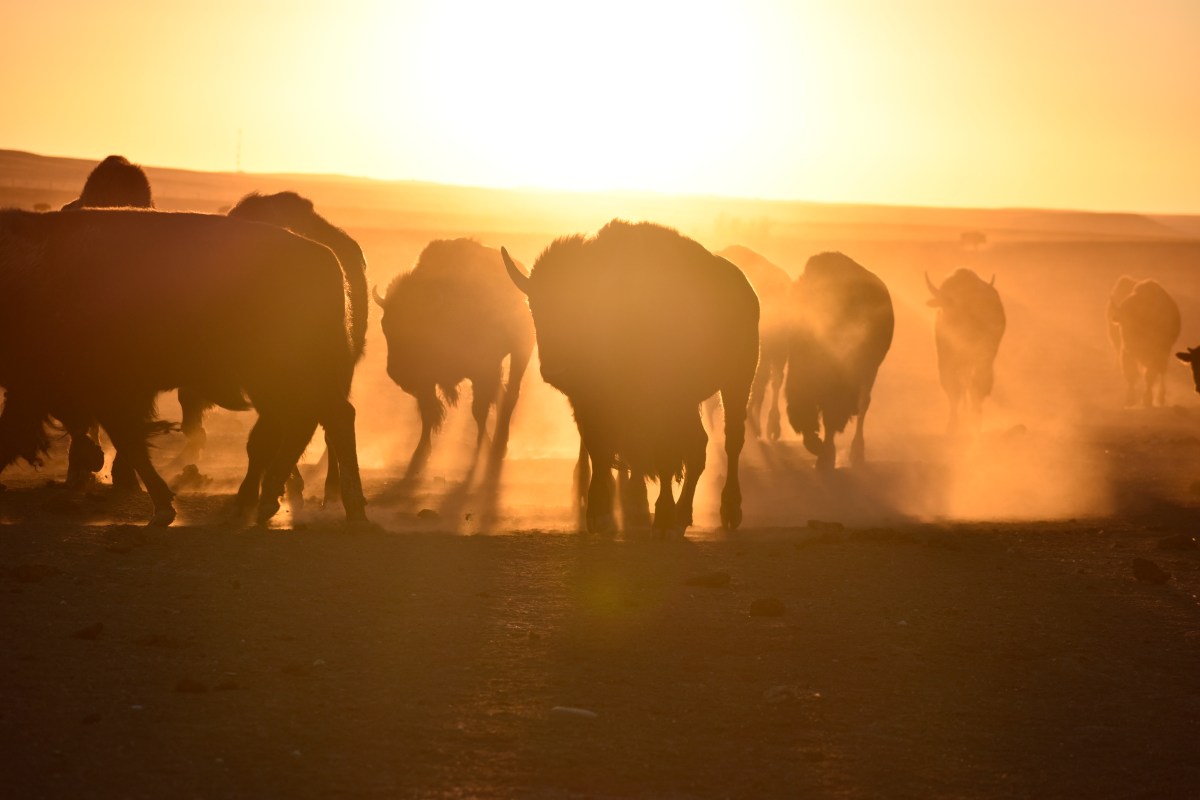
We can re-incorporate animals. Historically fire was used to navigate the direction of wild game grazing. Both fire and wildlife grazing improve the soil. Grasslands actually need grazers to be healthy. Today, regenerative rotational grazing and integration mimics bison and other wildlife grazing patterns and improves the grass, soil, and ecosystems.
This re-evaluation should also include us, the consumers.
I encourage each of us to pause and reflect on our core values and assumptions not only on how they might impact how we grow and process our foods, but how and where we buy them.
Plants and animals labeled with “regenerative agriculture,” for example, is one consumer tool. Buying plants and animals indigenous to your region is another. Indigenous plants and animals require fewer external inputs (pesticides, fertilizers, etc.) as they have adapted to the landscape. For example, tepary beans in the southwest are very high in protein, yet take very little watering after the first week. Bison meat has more protein and less fat than beef or chicken, and bison grazing patterns can double the biodiversity of the land.
Are humans the center? Do we control nature? Can we control nature?
What do we change when we stop asking how to control nature and begin asking how to work with nature?
Working better together with nature we will improve our land, our soil, and our food.
Not just for us but also for all our relatives.
Mitakuye Oyasin.
Heather Dawn Thompson (Cheyenne River Sioux), currently serves as Vice President for Native Nations Conservation and Food Systems at the World Wildlife Fund (WWF). The opinions in this essay are her own and do not reflect the positions of WWF. She has worked in the food sovereignty space most of her career and previously served as Director of Tribal Relations at the United States Department of Agriculture and Director of Government Affairs for the National Congress of American Indians. She has a J.D. from Harvard Law School.