
Kevin Abourezk
ICT
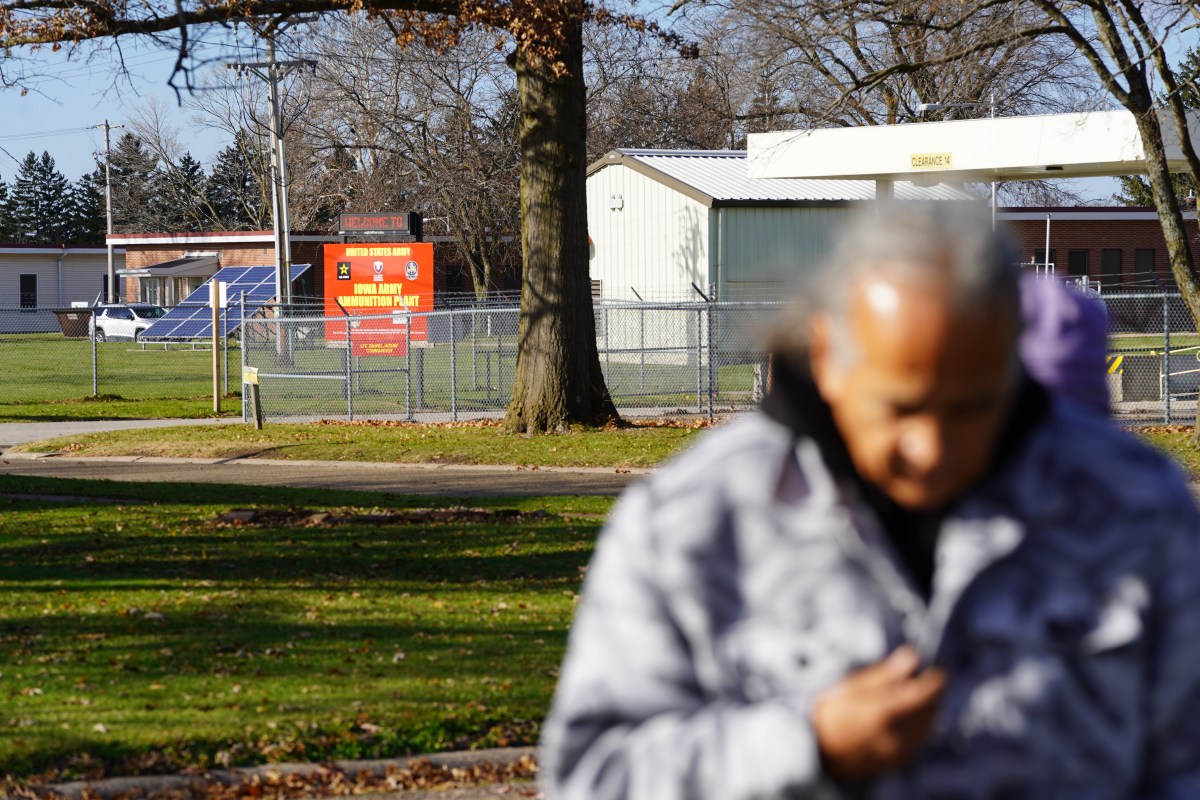
MIDDLETOWN, Iowa – Indigenous voices are rising against a U.S. Army plan to detonate bomb-making chemicals that could release a toxic plume downwind of the explosion site.
The plan for the controlled detonation of 68 barrels of degraded lead azide at an Army facility in Middletown, Iowa, has drawn health and environmental concerns – and lawsuits – is now scheduled on Wednesday after a three-judge panel of the 8th U.S. Circuit Court of Appeals approved the plan Monday, saying there were adequate safeguards to minimize dust dispersal.
The idea is not being welcomed in Indigenous communities.
“As stewards of the land, our responsibility to protect the earth, water, and all living things extends beyond our own borders, and we stand in deep concern for our neighbors and the lands in the path of this blast,” the Iowa-based Meskwaki Nation Tribal Council council said in a statement.
The tribe – whose headquarters is just 135 miles northwest of Middletown – said it was “disappointed in how the public and tribal communities were left unaware about the Iowa Army Ammunition Plant’s planned detonation until a few days before.”
On Sunday in Middletown, the Great Plains Action Society, an Indigenous-led social and environmental justice organization based in nearby Iowa City, hosted a ceremony which involved songs, prayers by a Cheyenne and Arikara elder, and presentations by group members.
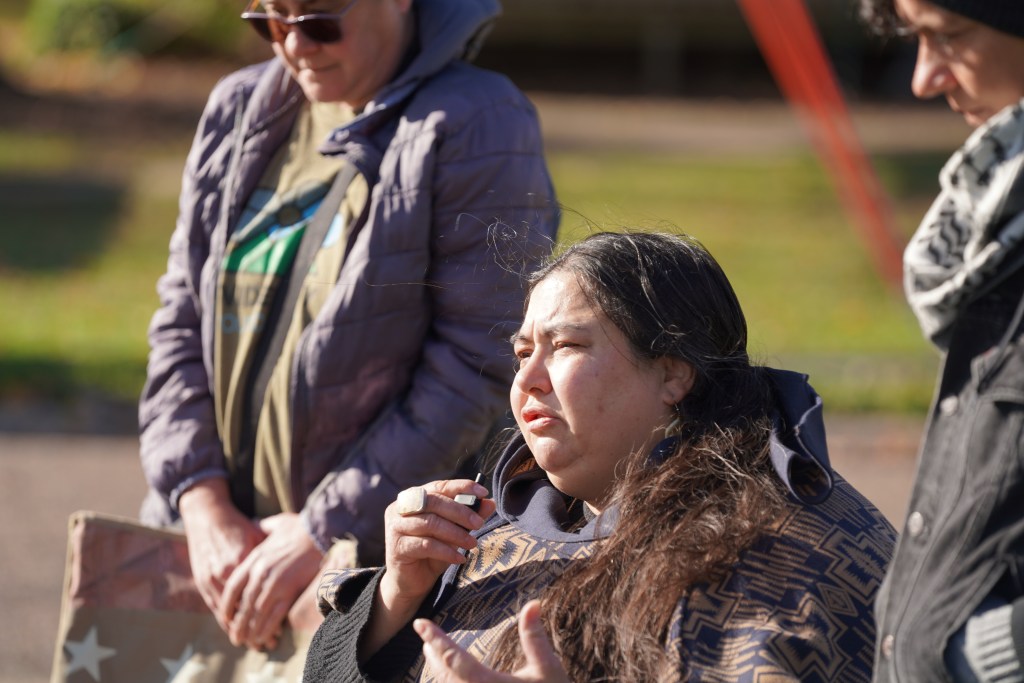
Sikowis Nobiss, Plains Cree/Saulteaux of the George Gordon First Nation in Saskatchewan and founder and executive director of the society, said the organization considered ways to try to stop the detonation from taking place but eventually decided that just visiting the site and praying were all it could do for now.
“This isn’t new to us,” she told the group as they began their prayer ceremony. “They’ve been dumping uranium on our reservations. They have been testing weapons on our reservations. They have been doing horrific things on our lands for a very long time, and we have a lot of sick people.”
“It feels very heartbreaking that the only thing that we can do, the only agency we have is to pray,” she said. “And I don’t want to say only because when it comes down to it, prayer is powerful.”
The appeals court approved the Army’s plan Monday, saying there were adequate safeguards to minimize dust dispersal. The ruling came after environmental groups sued to halt the detonation.
In court filings, the Army said high population areas and large bodies of water won’t be downwind from the blast.
The Army said the action, initially planned for last Friday, is needed to prevent a possible chain-reaction explosion of the dangerous material. The five-ton cache of degraded lead azide in Middletown is the nation’s entire stockpile of the chemical. In a legal filing late Monday, the Justice Department said the wind on Wednesday is expected to be east to west or southwest, and away from high population areas and large bodies of water. The forecast is for winds of 5 to 10 mph.
An emergency notification sent to cellphones of people in the area Tuesday morning said the detonation was planned for 9 a.m. Wednesday and some people within 5 miles southwest of the plant may be evacuated. The “imminent threat alert,” which listed FEMA as the contact agency, told those up to 20 miles away to remain indoors with windows closed “to avoid airborne lead dust, noise and vibration.”
On Sunday at the Great Plains Action Society’s prayer gathering, Egan Greenwalt, 21, Yankton Dakota and Absentee Shawnee, said the Army first had concerns about the toxic lead azide in the barrels at the Army plant in Middletown nearly 60 years ago but kept postponing plans to dispose of the chemicals until it became an emergency requiring a planned explosion.
“They’ve had concerns about this lead for so long,” he said. “They’ve done nothing about it. They didn’t have to. They were content to let this become a problem for the later generations. So they keep doing this with everything. They keep doing this to my generation, to the generations after me.”
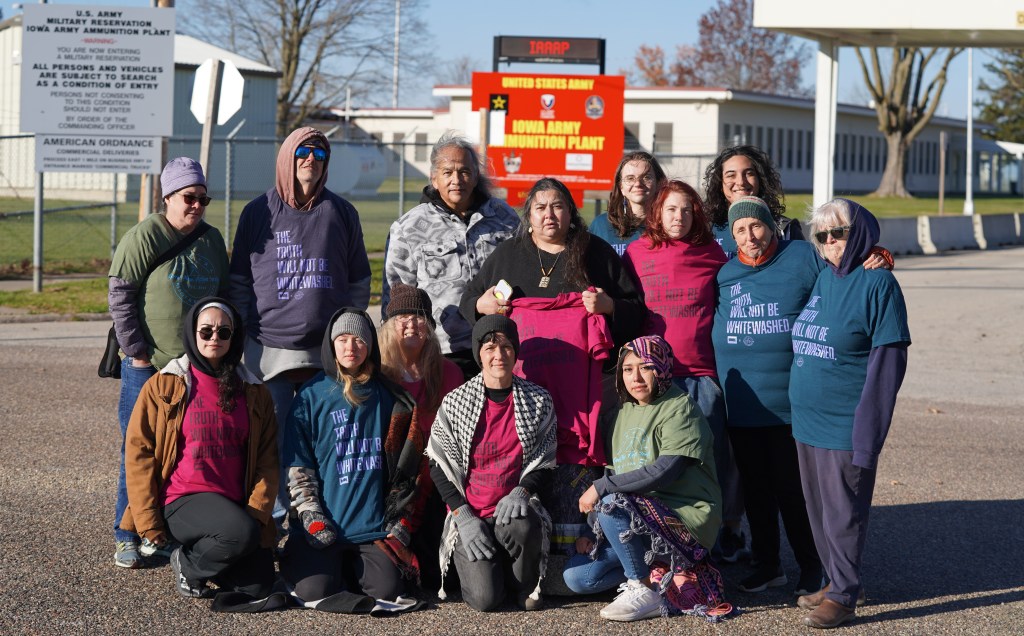
Nobiss said it’s important to consider the rights of nature – referring to a concept becoming prevalent in Indigenous environmental activism that refers to the need for legal rights for aspects of nature, including bodies of water and land and plants and animals in order to protect them from economic exploitation.
“If you look at this from a rights of nature perspective, you understand that we need to protect and take care of our brothers and sisters and our rivers and our brother buffalo and the fish and all these entities that deserve to be protected and to be living in a healthy world,” she said.
The new date will give the Army extra time to set up additional “blast barriers” around the bunkers where the lead azide will be detonated, and to apply ballistic gels and foams designed to reduce particulate matter from controlled explosions, according to a document filed in the appeals court.
The Army also will douse the materials with thousands of gallons of water during the detonation to help absorb the explosion and reduce lead dust, the filing said.
“This is a consensus decision,” acting Army Secretary Adam Telle posted on social media Monday night. “Every expert agency agrees, and both Iowa’s current and incoming Governors say the call belongs to the experts.”
The Meskwaki and other tribes disagreed.
“While the Meskwaki Settlement sits upstream along the Iowa River and is currently outside the projected fallout zone (pending air direction at the time of detonation), releasing a toxic lead dust plume that shifts unpredictably with the wind poses an outrageous threat to Middletown and its neighboring communities,” the tribe wrote in its statement.
The tribe urged federal officials to halt the planned detonation and seek a safer means of disposing of the chemicals and to allow non-governmental specialists the opportunity to advise on the detonation plan.
In Wisconsin, the Lac du Flambeau Tribal Council said that while the tribe isn’t likely to be impacted by the planned detonation, it remains committed to advocating for the land, animals and plants that will be affected.
“Here in Waaswaaganing (the traditional word for Lac du Flambeau), caring for the land and water is a responsibility we carry for our children and future generations,” the council said in its statement. “Our Tribal officials will continue to follow this situation, advocate for the protection of our people and natural resources, and share verified updates that affect our community. We stand with the Tribal Nations and communities that may be affected and call on federal agencies to consult directly with potentially affected Tribal Nations.”
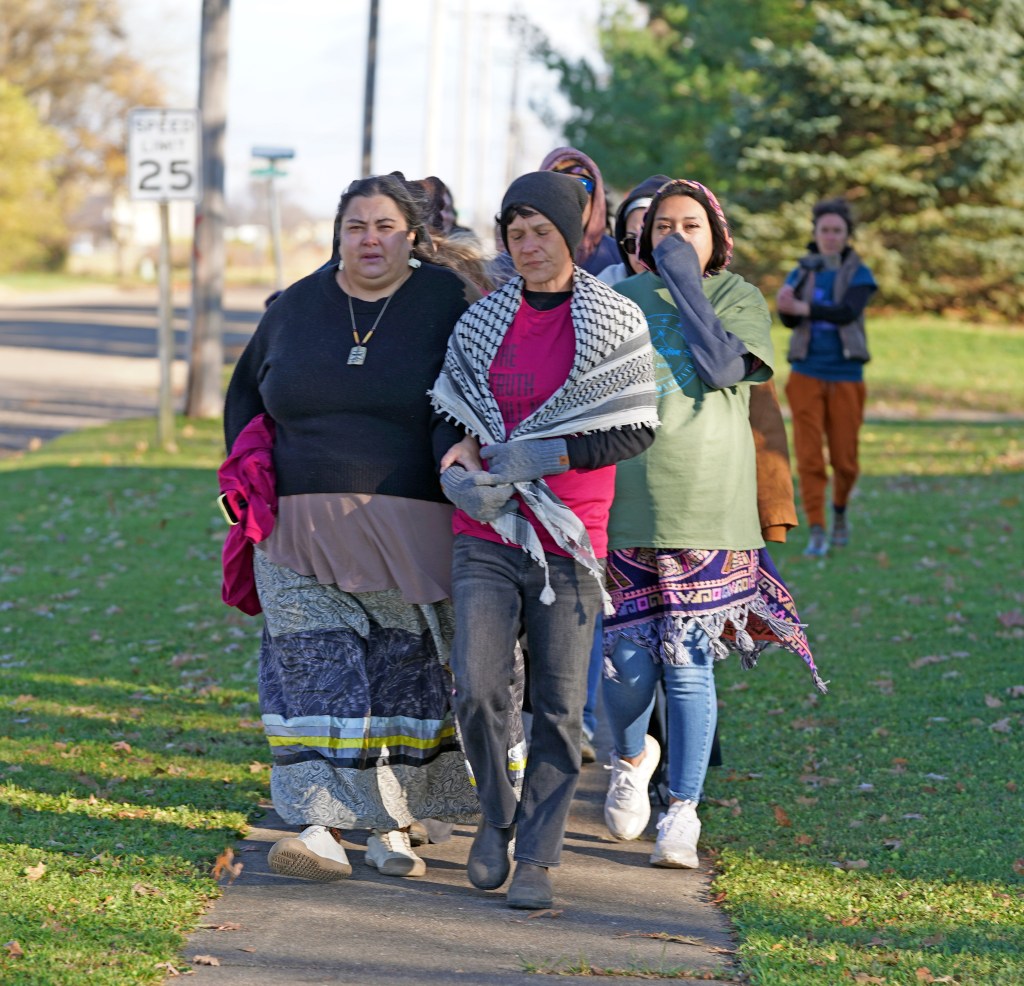
On Sunday, The Great Plains Action Society ended their ceremony by laying tobacco down on the land – a way of both praying for the land and asking for forgiveness for harming the land – and then walking almost to the gates of the Army ammunition plant to pray.
Afterward, a Middletown resident approached the group and asked if someone would be willing to adopt his puppy because he feared it would die of lead poisoning after the planned detonation and wanted to give it a good home.
The Associated Press contributed to this report.