Nika Bartoo-Smith and Carrie Johnson
ICT + Underscore Native News
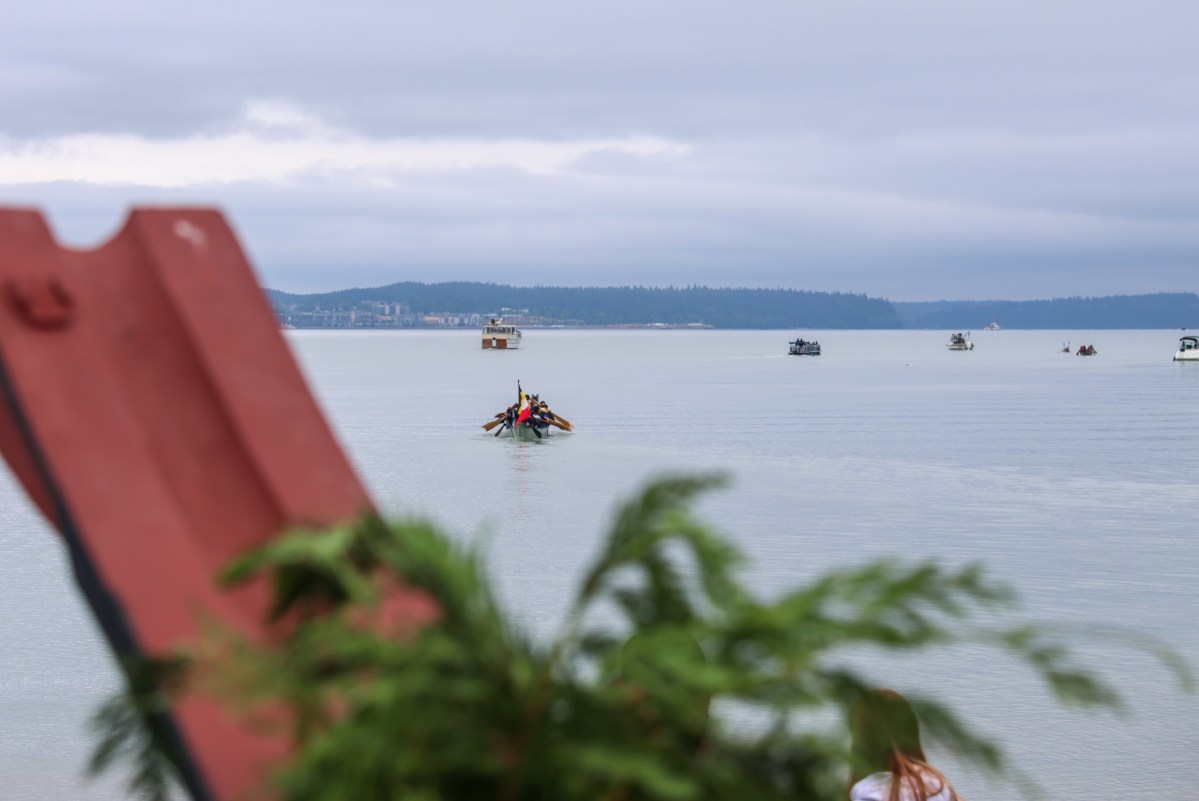
PORT TOWNSEND, Washington — Canoe families from across the Pacific Northwest banded together Tuesday evening to help move each other’s canoes back to camp, away from the water’s edge following the issuance of a tsunami warning across the Pacific Ocean coastline.
“It was a sight to see because it was all the canoe families coming together and just helping each other get their canoes off the beach and onto trailers,” said Lee Cameron, Muckleshoot, a paddler with the Muckleshoot canoe family. “It didn’t matter what canoe family you’re from, they needed help. You helped them.”
The tsunami warning came following one of the world’s strongest earthquakes, an 8.8-magnitude temblor that struck early Wednesday in Russia (late Tuesday in North and South Americas). The quake caused a tsunami in the northern Pacific region in Russia and Japan, and prompted warnings for coastal regions across Alaska, Hawai’i, Washington, Oregon, California, and down to South America.
Many Native nations along the coast issued tsunami warnings to their communities, advising stay out of the water and away from the shore.
Though many of these warnings had been canceled as of Wednesday, July 30, in the United States and British Columbia, some people were still on alert and families traveling for canoe journey were still figuring out what it meant for them.
Some Native nations, such as Lummi Nation and Nooksack Indian Tribe, issued communications to let their communities know that canoe families were safe in Port Townsend.
Many camped overnight Tuesday in Port Townsend in the Puget Sound. Some families went home for the night as others moved their camps to higher ground.
“This was our first tsunami [warning],” said Jennifer Fuentes, Indigenous to Mexico and Pima descent, who has been on canoe journey since 2011, this year with the Puyallup canoe family.
For Fuentes, what really stood out was how canoe families worked together to support each other in a time of lots of uncertainty.
“Last night it was just a scramble to make sure support boats were taken care of, to make sure canoes were taken care of,” she added.
Tsunami waves never reached the shores, but those on the ground noticed a dramatic shift in the weather as winds picked up throughout the night.
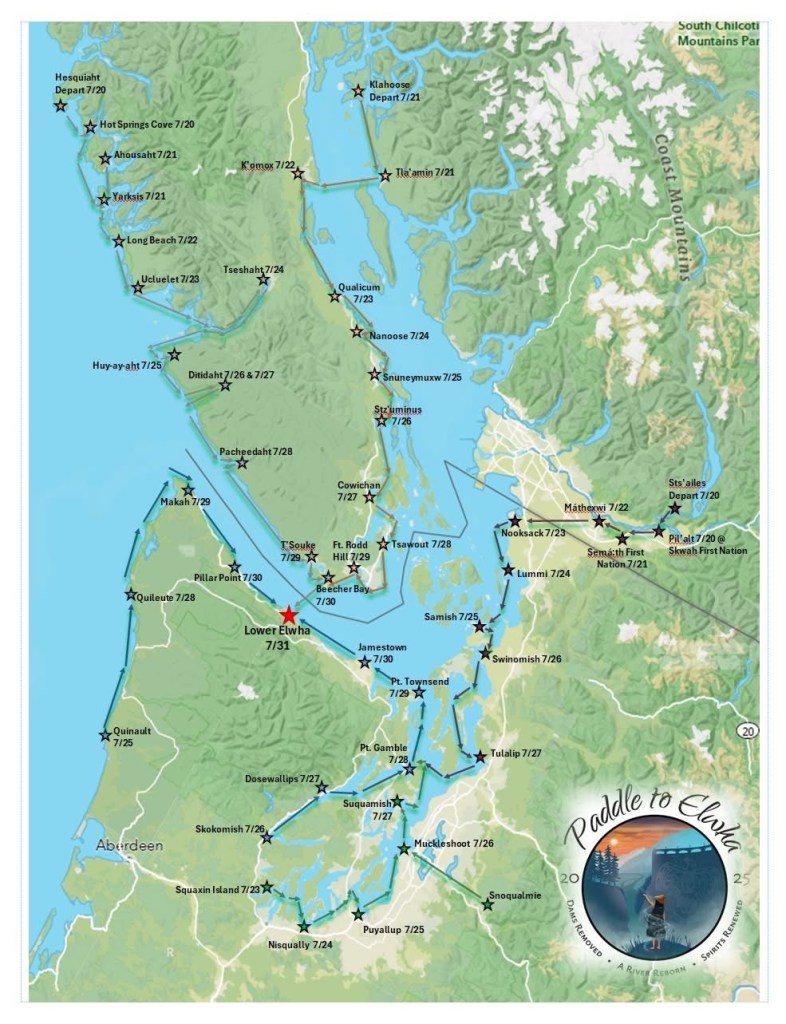
Though scheduled to paddle to Jamestown on Wednesday, July 30, the last stop before reaching Lower Elwha before five days of protocol, paddlers did not put their canoes into the water on Wednesday morning. Launches were halted again Thursday morning, July 31, because of bad weather, likely delaying the planned final arrival into Lower Elwha.
“I think one of the most beautiful things, though, is that there was a meteor shower last night,” Fuentes said.
As she sat outside under the stars with her 4-year-old granddaughter, knowing that the canoe families had worked together to keep everyone informed and out of harm’s way, her granddaughter pointed up to the sky full of shooting stars.
“That was such a little beautiful moment, just at the end of the day, kind of looking up and being just thankful for where we are and that we’re all safe,” Fuentes said.
This story is co-published by Underscore Native News and ICT, a news partnership that covers Indigenous communities in the Pacific Northwest.