
Richard Arlin Walker
Special to ICT
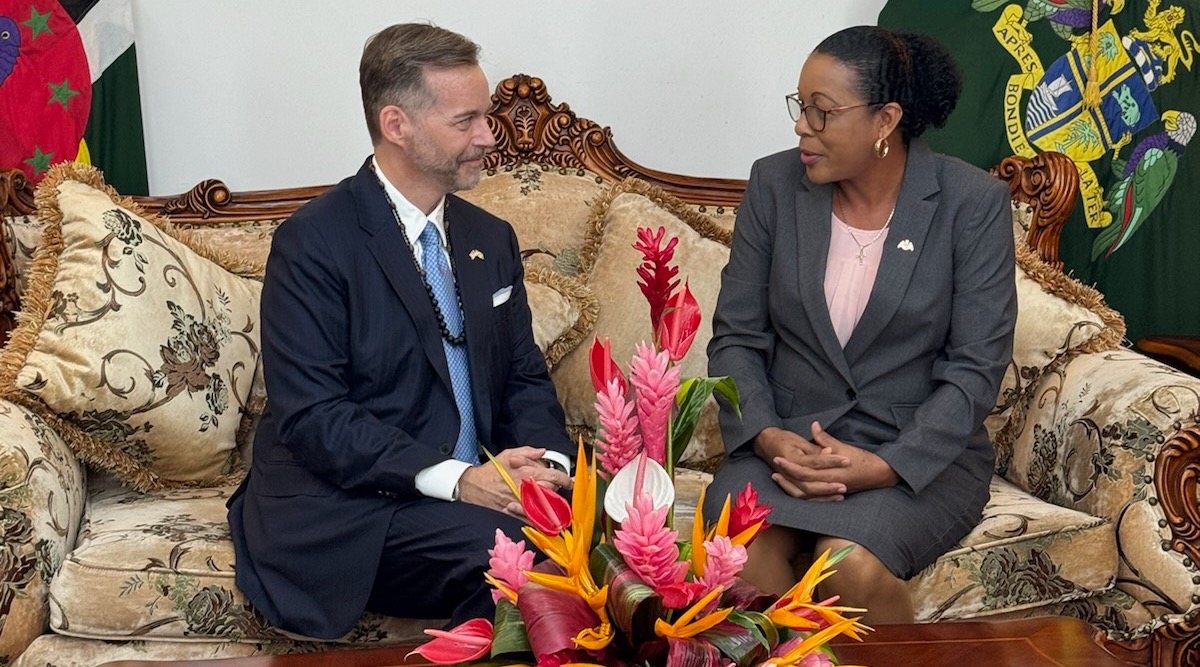
Roger Nyhus, a citizen of the Chinook Nation, has served as U.S. Ambassador to Barbados and the Eastern Caribbean since January. His length of service could depend on what happens in the 2024 presidential election – he’s a Democrat appointed by Democratic President Joe Biden.
Nevertheless, Nyhus may be remembered for the energy he brought to the job. In his first five months, he introduced a U.S. partnership to improve court system efficiency in Barbados; trained with the Barbados National Defense Force; accompanied U.S. Customs and Border Protection officers in an air search for drug traffickers; promoted U.S. business investment in the region; attended the World Cricket Cup; wrote a column for Barbados Today about how sports can foster “deeper cultural ties and stimulate economic growth through tourism and international collaboration”; and brought U.S. Interior Secretary Deb Haaland to Antigua for a gathering of island nations to discuss investments in climate change adaptation and sustainable development.
The gathering in Antigua was historic. It brought together the first Indigenous person to serve in a U.S. cabinet (Haaland, Laguna Pueblo), the first Indigenous president of Dominica (Sylvanie Burton, Kalinago), and the only Native American currently serving as a U.S. ambassador (Nyhus).
In a recent phone interview from Barbados, Nyhus talked with an ICT correspondent about his tenure so far and the importance of a strong relationship between the U.S. and Caribbean nations.
ICT: Your first order of business as ambassador was meeting the presidents of the seven island nations in which you represent the United States. Tell me about the challenges of accomplishing those meetings in such a relatively short time.
Nyhus: I traveled to seven countries between January 19 and February 26. That’s when I presented my credentials, because you can’t really do diplomatic work without having presented your credentials. I’ve since learned from my fellow diplomats that I did it in record time – a little over a month – which is great because I could then settle into the role and the issues. I’ve now traveled back to several countries to begin the real work.
I’m being really well received. I think my Indigenous heritage really resonates with them. They also appreciate the fact that I grew up in a very small fishing town on the Pacific Ocean. Westport, Washington, is not that different from many of the places that I represent now in the Eastern Caribbean.
ICT: The fact that you presented your credentials in such a quick manner to the leaders of the nations in your portfolio, did that say something to them about how seriously you take your responsibilities to them and the United States?
Nyhus: Absolutely. I think from the first engagement with each of these leaders, it’s been very clear to them that I’m not a typical diplomat. I come from the private sector, I’m hand-selected by the President, I’m not a career State Department employee. And so the way I engage is very direct, very solution oriented.
My job is to not only support U.S. priorities, but it’s to assist our partners. And it’s very much a dual responsibility, because sometimes those priorities are in conflict. And so I have to navigate that, but I make it very clear that I’m here not only to advance U.S. priorities, but to help these countries be successful.
ICT: One of the priorities you stated in your Senate confirmation hearing was to ensure the safety and security of Americans in the Eastern Caribbean, and work to deepen our security and law enforcement partnerships through the Caribbean Basin Security Initiative. What’s the status?
Nyhus: I refined my priorities by the time I got to this post: One, addressing climate change; two, enhancing regional security; and three, promoting economic prosperity. And I would say security has, in my first five months, been the focus of my efforts.
I have done more work in regional security – enhancing security, building partnerships, and promoting best practices and training – than the other priorities at this stage, and I think the reason is that this region of the world is highly vulnerable to unsavory actors, including transnational organized crime. A lot of the gun violence that may seem random is not. It’s all part of organized crime, and drug trafficking is at the core. Guns that are involved in a murder in one country are moved to another country in a kind of seamless way, because they have these networks. And so the U.S. is very committed to helping these countries improve their own security and how we work as a region.
We support a program called the Regional Security System, which is a really effective multi-country security system – everything from training to intelligence. And I’ve been able to fly with them. I’ve been on aircraft with our Customs and Border Patrol looking for drug traffickers. I’ve been up in Black Hawk helicopters during training exercises. I’ve trained with the Barbados Defense Force at a shooting range. And it was funny, because I think they all looked at me like, “He’s the ambassador – how is he going to do at a gun range?” And, you know, they forget that I grew up in rural America, so I was actually a pretty good shot.
Security is threefold: It’s guns, it’s narcotics and it’s human trafficking. All three are interrelated – if you see one, you often see the others. And it’s very challenging. The borders here are very porous, because most of these countries don’t have a military. They have a national police or some regional military support, but it’s very limited. And obviously, a lot of focus is on other parts of the world, so part of our job is to keep attention here and find ways we can support our partners.
I’ll give you one example. The SIDS conference – the Small Island Developing States – in May in Antigua. The government of Antigua and Barbuda asked for military and security presence at the conference. It’s a very high-profile conference with lots of heads of state in attendance. And we were able to secure a very large Coast Guard vessel to be in port at the same time as this conference. You know, that sends a message: We’re watching. We’re here. We’ve got our resources here to keep people safe.
ICT: What kind of military presence do we have in the Eastern Caribbean and do you see a necessity for us to have a larger presence as a partner to help keep the region secure?
Nyhus: We maintain a presence here through our partners, like the Regional Security System, and we have trainers here all the time. I have a senior military adviser based in Barbados who I lean on; and we also have a regional security officer who is focused on counterterrorism. It’s a fairly safe area. It’s certainly an area I would feel comfortable visiting as a tourist and having family and friends come visit, which I do, but I think there needs to be attention on how we can improve it for the future, because this is a region that’s very close to the U.S.
Americans are the No. 1 tourists in a number of these countries. So, our job is to make sure that Americans are safe, but also that our partners are safe.
ICT: As we work to enhance security and have a presence there, what kind of pushback or response do we get from other countries that may want to establish more of a presence in the Caribbean, like China, for example?
Nyhus: There is, I think, a warm welcome to the United States to provide support to secure the safety of these countries and their citizens. We don’t have any military bases here, but we have a military presence – you know, ships that are on various patrols or in transit to and from the Atlantic or other places. And I think what our partners look to us for is, how can we help them strengthen their own borders? How can we help them with the latest equipment and technology to not only keep their people safe but their fisheries? We see lots of illegal fishing in this region, and that has a very negative impact on these countries and on the local fishermen. These vessels are from other countries and they know they’re fishing illegally. And so, if we can shine a light on that, I think it helps everyone. I can’t speak to what our competitors think, but I think that it’s important for the U.S. to show our partners that we care about this region.
ICT: Regarding identifying new and expanded opportunities for American innovation and investment there, and supporting our U.S. business interests in the region – what’s happening in that area? Is that something that would help the U.S. as a partner in addressing the concerns you talked about, while expanding our presence as well?
Nyhus: I think the U.S. private sector is one of the most effective ways we can compete on the global stage, and especially in the Eastern Caribbean. Very few American companies today are operating in this region and there is tremendous opportunity. I think that there’s a misnomer that because these countries are small, there’s not a market. What I would say is, you have to look more regionally. I added up the populations of the seven countries in my portfolio, and I asked Chat GPT to tell me what is the closest population in the U.S. to the seven countries that I represent. And the irony is it’s my hometown, Seattle. What that tells me is, there’s a market for us and our goods and services here. Who wouldn’t want to do business in Seattle, right? I think the same is true for this region.
The tourism population is increasing. More and more Americans are visiting this region and love it. It’s a beautiful place with warm people, amazing food, a great tourism experience. I will dedicate my time here to making more of those connections for businesses wanting to explore this region. Because if it’s overlooked today, it shouldn’t be.
ICT: What are some of the larger U.S. businesses that are present in those countries?
Nyhus: I would say – again, I’m relatively new – but I would say they are related to the travel and tourism industry. It’s hotel brands, cruise brands. What I think is important for these countries is also to not only continue to grow and enhance their tourism offering, but there needs to be an opportunity to diversify their economies because this region is so vulnerable to catastrophic weather. One bad hurricane will just put their tourism sector out of business for a period of time, and that’s devastating. So, if we can help them find other industries that fit this region, that help them diversify their economies, I think that just that helps them become more climate resilient.
ICT: What have leaders from the region said about economic investment that they would like to see from U.S. companies?
Nyhus: Every leader I speak with tells me how interested they are in more American private-sector engagement. They want more American companies and businesses here, and not just in exporting goods. I’m talking about creating jobs on the ground. The Caribbean nations are a big market right on the doorstep of the United States. They’re very close friends of the United States. They have highly trained and highly educated people. Many of their relatives and friends live in the United States and many of them travel to the United States on a regular basis. Each country prides itself on its own identity and independence. Each is very different, and I have fallen in love with each one of these seven countries.
ICT: Are there any conflicting values between our countries?
Nyhus: The only one that comes up repeatedly is guns – that a lot of the guns that are trafficked in this region come from the United States and that is a source of a lot of concern, because there’s a very fluid gun-trafficking network. And it’s a response we invest in. We have forensics labs that we support in these countries and they can track guns that, even if they’ve rubbed off the serial number, we can track those guns. And they’re asking for our help.
ICT: How many people visit your seven countries a year? You said that combined, they have a population close to Seattle, but I’m sure that swells because of the cruise ships and other visits there.
Nyhus: I know it’s hundreds of thousands, but I don’t want to give you a wrong number. But nevertheless, there’s a lot of people here. And it’s only growing, which is great, but it kind of exacerbates the issue if you’re not doing these other things, like diversifying the economy and making sure that these countries are more climate resilient. We know more storms are coming. We know the storms are stronger, more severe, more frequent, and we need to make sure these countries are more resilient and able to recover quickly.
ICT: What are some things that you’ve seen that are evidence of a change in climate there, and what are some things that we can do to address those changes?
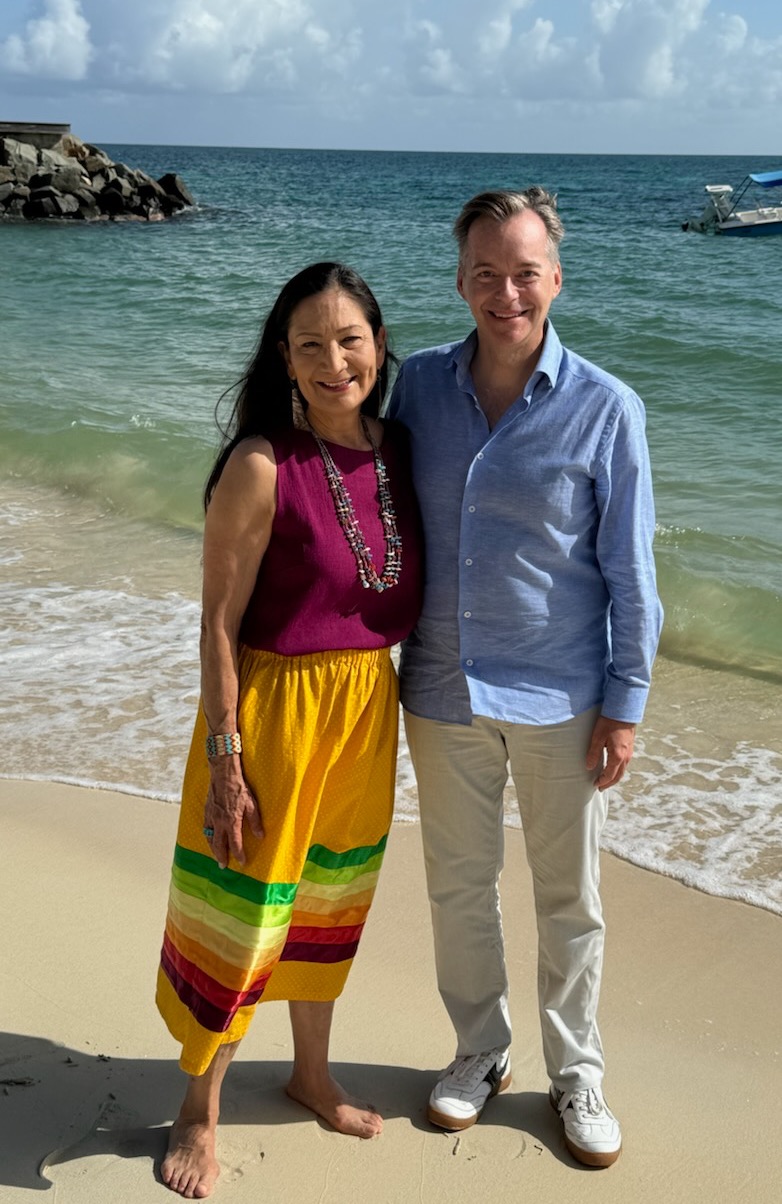
Nyhus: I think one of the most visible things is the SIDS Conference, which is a once-in-a-decade UN conference that attracts about 3,000 delegates from a large number of countries. The head of our delegation was Deb Haaland, the Secretary of the Interior. And I think that was intentional to have an Indigenous leader lead our delegation when we’re talking about all these really critical issues.
The goal is to help these small island developing states around the world strengthen their resilience, help them advance their sustainability and help them be successful and prosperous in a more resilient way. Developing countries and small countries are disadvantaged and they pay higher interest rates than the big countries, which really is not fair. So that’s being looked at and addressed.
Climate and oceans are really critical. In virtually every one of the countries I visited, they’ve had a massive Sargassum seaweed outbreak and it’s only continuing to grow and become a challenge. Sargassum seaweed floats in these big blooms, which then come to the shore, land on the beaches and make the beaches really unpleasant. As it decomposes, it has a really sharp odor. You can’t really compost it because it has heavy metals in it. It’s a real problem. And so we’ve had scientists come down to look at the issue and see how we can mitigate it.
Some of these small countries are literally drowning from sea level rise. Ocean temperatures are increasing and driving fish away. I’ve seen that here. Flying fish are culturally important to Barbados. It’s part of their national dishes. It’s on coinage and logos. Changing ocean temperatures and weather patterns are driving the fish to other countries and that’s a real issue.
The U.S. government has a program, “Partnership to Address Climate Change 2030” – it’s called PAC 2030 – and through that, we’re helping countries transition from fossil fuels to more sustainable energy. These are long-term investments in geothermal or solar or other methods – even some transitional energy, like natural gas and liquid natural gas. So there’s lots happening and it’s exciting to see it culminate in the SIDS Conference.
(Note: At the SIDS Conference, Haaland underscored “the United States government’s unwavering commitment to SIDS and to advancing their sustainable development for a resilient and prosperous future,” her office reported. Haaland discussed climate change adaptation and economic development with leaders from Antigua and Barbuda, Dominica, Palau, the Republic of the Marshall Islands, Saint Kitts and Nevis, and the UN Secretary General. In addition, the U.S. plans to open two new embassies in the Eastern Caribbean; will fund development assistance grants; and will invest in expanding multi-hazard early warning systems across the Caribbean.)
ICT: Land-use planning has changed in many U.S. waterfront communities that are adapting to climate changes. Is that something that Eastern Caribbean communities are doing now, such as requiring new construction to take place a certain distance from shorelines?
Nyhus: I see it more in building codes, like roof designs that are more storm resilient. These are tourist-dependent communities and you see hotels still being built right on the beach because, you know, that’s how they make their living. So I’ve not seen a lot of changes in land use, because the islands have relatively small geography. It may be happening, but I just am not aware of it.
ICT: As ambassador, do you interact with your counterparts in other countries? I know there are a lot of people from St. Vincent and the Grenadines that have relatives in Belize. Cuba is nearby and has long been a foreign policy challenge for the United States. Are there any issues that you’re confronting or working with our partners on that involve other countries and your counterparts there?
Nyhus: Absolutely. I and about a dozen other U.S. ambassadors formed this informal group that we call TIDE – the Innovative Diplomats for the Environment – and we do exactly what you just described. We get together, we talk on the phone, we talk through chat, we talk at conferences about lessons learned. These are ambassadors to other island nations, like the Maldives or Fiji, which are very similar to what I’m dealing with here in the Eastern Caribbean. And we share stories, best practices, brainstorm ideas, talk about how we can collaborate and seek certain support from the State Department or other government agencies. And that has really shown promise.
I invited my counterpart from the Maldives to the SIDS Conference. He was not planning to attend, and I said, “No, you have to come because the Maldives is the Pacific equivalent of the Eastern Caribbean, because they’re dealing with all the same issues.” So, I collaborate a lot with my U.S. counterparts, but I also collaborate with our allied ambassadors – ambassadors from the UK, Canada and EU are my core collaborators. We meet regularly to talk about how we can work together, how we can combine our resources or our expertise, and that has been a super part of my job. I’ve enjoyed the friendships, but also the real, true collaboration.
ICT: Give me some impressions of the Indigenous communities you’ve visited there, their relationships with their federal governments and some of the cultures you’ve been introduced to.
Nyhus: This will probably require another interview, because I had planned a trip to visit the Kalinago tribe in Dominica and meet the chief and we had to reschedule. So we have not had the opportunity to meet. And that’s probably the largest Indigenous population. President Burton of Dominica is Kalinago and it was a highlight to meet her. We had such a great conversation about the Kalinago and she was excited that I was going to meet them. There are only a handful of Native communities in these seven islands. I want to visit these communities and I absolutely have plans to visit the Kalinago in Dominica and hopefully other communities as well.
I often talk about my Indigenous background and I think people here are surprised because I have blond hair. My dad is Norwegian-American. My mom and grandma – very much Native American. I explain, “I may not look Native, but I am. And this is where I come from and this is what it means to me to be here,” and they’re all super interested in that and are very supportive. I think it makes them happy that President Biden placed me here – not only for my Indigenous background, but because of my private-sector background.
ICT: Do you foresee an Indigenous Caribbean leader visiting Westport, Washington, someday?
Nyhus: I can’t go into much detail, but I’m working on bringing some Caribbean leaders to the Northwest, hopefully in the fall or later this year. That will be amazing.

Our stories are worth telling. Our stories are worth sharing. Our stories are worth your support. Contribute $5 or $10 today to help ICT carry out its critical mission. Sign up for ICT’s free newsletter.

