
Miles Morrisseau
ICT
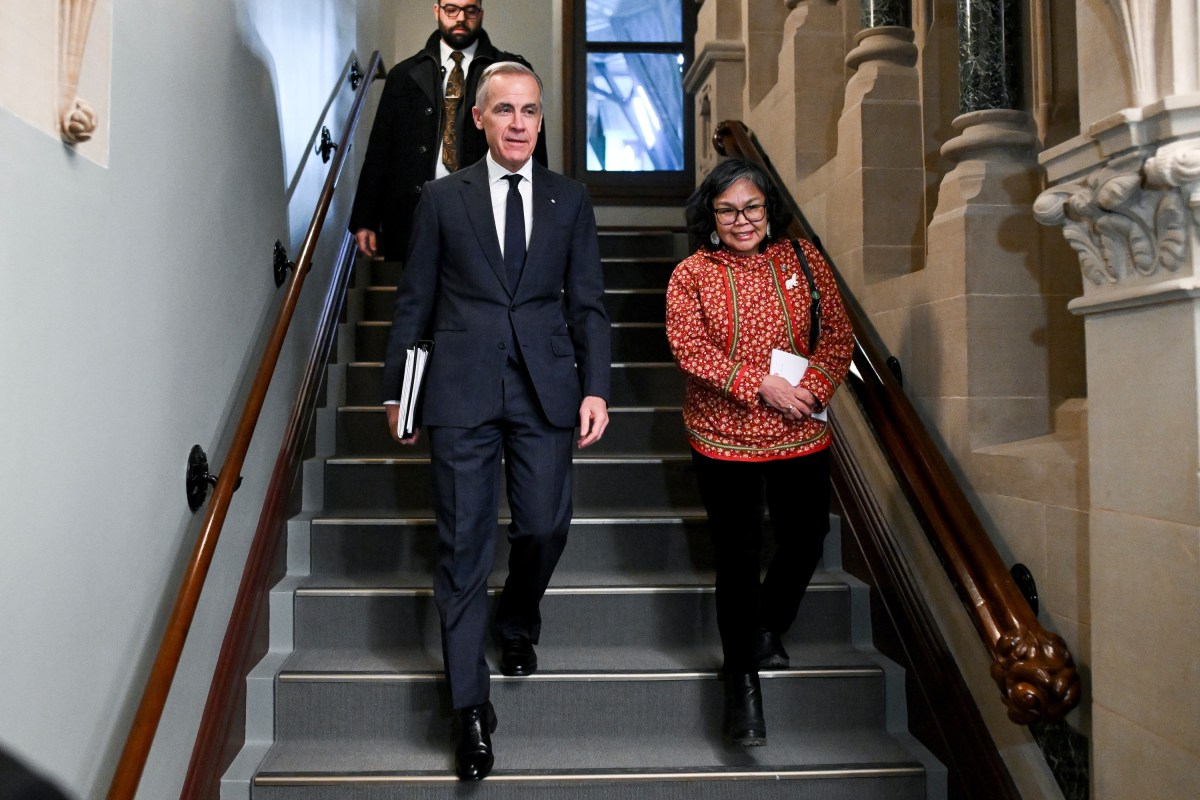
When Mark Carney was elected prime minister of Canada last year, the electorate gave him a minority government. He did not have carte blanche — he needed the support from a few members of the opposition to get legislation passed.
Less than a year later, Carney has achieved a majority government — and the political clout that goes with it — thanks to Members of Parliament crossing the floor to join with the Liberal Party. Among those was MP Lori Idlout, Inuk, who was elected as a member of the New Democratic Party but jumped over to the Liberals on March 11.
In his first act after securing the majority government, Carney suspended the national fuel tax in response to the Iran War and said he wants to focus on affordability, housing and accelerating major economic projects.
“Voters have placed their trust in our new government’s plan,” he said.
Assembly of First Nations Grand Chief Cindy Woodhouse Nepinak issued congratulations and a call to renew action on First Nations obligations.
“A majority government means Prime Minister Carney and his cabinet colleagues can now move with renewed momentum on First Nations priorities and the Crown’s legal obligations and commitments to our people,” Woodhouse Nepinak said.
“This includes introducing strong First Nations clean water legislation in Parliament that includes source water provisions,” she said. “Across all our priorities, First Nations are putting forward clear plans. We know what needs to be done. It’s time to take action and make investments that create prosperity for all.”
Carney’s government is the first in Canada’s history to switch from a minority to a majority between national elections.
Calls for action
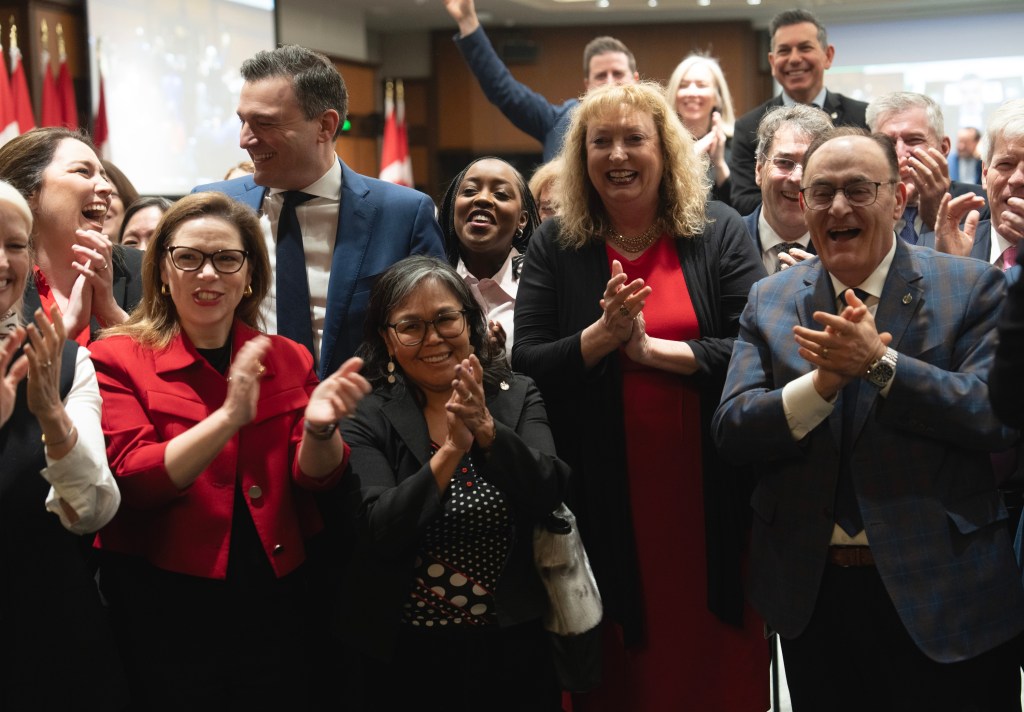
Carney needed to win three seats in Parliament to reach the 172 required to have a majority in the House of Commons after being elected with 169. Idlout and four other MPs from opposition parties joined up with the governing party, but three seats were vacated by the Liberals.
On Tuesday, April 14, three political races held across the country ended with the governing Liberals winning them all and securing the majority government.
On Dec. 2, at the Assembly of First Nations Special Chiefs Assembly, Carney agreed to hold a First Nations-First Ministers’ Meeting in 2026 and further committed that First Nations “will set the agenda.” Discussions on timing are being confirmed, with current planning for the First Nations-First Ministers’ Meeting to be held in the Fall.
Woodhouse Nepinak said that First Nations and all governments can now look to the upcoming First Nations-First Ministers’ Meeting as a pivotal moment for change and progress.
“Self-determination and reconciliation must be our shared framework for action,” she said. “We know this won’t happen at one meeting, but the First Ministers’ Meeting in the Fall of 2026 is a historic opportunity to come together as nations and build the foundation for a stronger Canada. First Nations will set an agenda that creates a pathway for ongoing and productive work together. In that spirit, I congratulate the new Members of Parliament and look forward to working with them and all parties.”
Anishinabek Nation Grand Council Chief Linda Debassige issued congratulations but also called for action on key issues.
“On behalf of the Anishinabek Nation, we extend our congratulations to Prime Minister Mark Carney and the Liberal Party of Canada on securing a majority government,” Debassige said.
“We also remind our government partners that much work still needs to be done,” Debassige said. “The path toward reconciliation remains ongoing, and we look forward to the continued efforts on land claim settlements, additions to reserve reform, infrastructure investments, closing the housing gaps, addressing the opioid crisis, supporting First Nation policing, ensuring safe drinking water and source water protection, and advancing education opportunities for our communities.”
Debassige also pressed Carney on moving quickly to pass Bill S-2, which would protect all First Nations from losing the right to pass on their Indian status.
“Under your leadership, we look forward to the passing of Bill S-2, An Act to Amend the Indian Act (New Registration Entitlements), with the amendments proposed by the Standing Senate Committee on Indigenous Peoples,” Debassige said. “These are all vital steps toward equitable justice and prosperity for our Nations.”
‘All our voices’
The majority was built around elected members of Parliament crossing the floor as opposition members to join the ruling Liberal Party. Idlout, who represents Nunavut, was elected as a New Democratic Party member and then joined the Liberals in March.
“Nunavut and the North are central to Canada’s future, and the rights and aspirations of Indigenous peoples must be at the heart of Canada’s democracy. I have devoted my life to this essential challenge,” Idlout said.
“I have been hearing clearly from Nunavummiut that this is a crucial moment for Nunavut and for all of Canada,” she said. “ With new threats against our sovereignty and pressures on the wellbeing of people throughout the North, we need a strong and ambitious government that makes decisions with Nunavut — not only about Nunavut. The success of that work needs all of our voices.”
With his majority in place, Carney no longer needs the support of opposition members to pass legislation, including approvals for the big projects that are central to his “Canada Strong” platform.
On the day of the elections Carney was making a deal with Manitoba Premier Wab Kinew to fas- track big projects in the province. The cooperation agreement would instate a “one project-one review” policy in approving large projects such as building up the Port of Churchill on the James Bay.
Kinew, Anishinaabe from the Onigaming First Nation, is the first First Nations provincial premier in Canada.
“Manitobans are excited about building up the Port of Churchill to create good jobs, chart new trade routes for Canadian goods, and finally make Manitoba a ‘have province,’” Kinew said. “Today marks an important step in our ongoing collaboration with the federal government to streamline regulatory processes and set the right conditions for private sector investment in our Arctic port as we continue to work with Indigenous nations, the Major Projects Office, and other stakeholders to advance the Churchill Plus project.”
The agreement was not welcomed by chiefs in Manitoba, charting the divisions that still exist between Carney and First Nations.
“First Nations have been clear and consistent: we must be at the table as governments, not consulted after decisions are made,” said Grand Chief Kyra Wilson. “Our Treaty relationship requires a tripartite, Treaty-centred approach. Anything less falls short of the constitutional and human rights standards that Canada has committed to uphold.”
This article includes material from The Associated Press.
