
Miles Morisseau, Kevin Abourezk and Amelia Schafer
ICT
From Ontario to British Columbia to Minnesota to Nebraska – and beyond – Indigenous peoples and allies marched Wednesday to honor the thousands of children sent to Indian boarding schools across North America.
Sept. 30 is known in Canada as Orange Shirt Day or the National Day for Truth and Reconciliation. A federal holiday created six years ago, the remembrance day was a recommendation of the government’s Truth and Reconciliation Commission. The commission spent seven years documenting the history of the Indian residential school system in Canada.
The Canadian government sponsored over 216 Indigenous-led events on Wednesday. A march and gathering was held in the nation’s capital in Ottawa where stories of survivors were shared – in a sea of orange shirts.
“I thank you, Creator, for the survivors and their strength. … Sept. 30 is a day of love,” said Claudette Commada, chancellor of the University of Ottawa and citizen of the Kititgan Zibi Anishinabeg Nation, at the national gathering in Ottawa. “May we all carry that love every day and wear this orange shirt in our hearts.”
The Canadian Government’s 2007 Indian Residential Schools Settlement Agreement recognized 139 Indian Residential Schools nationwide. The United States government first began formally evaluating its role in the boarding school era in the 2020s. A report from the Department of Interior released in May 2024 identified 417 federal Indian boarding schools.
As each year passes, community participation in the remembrance events continues to increase, helping mark this somber history and celebrate the resiliency of Indigenous survivors.
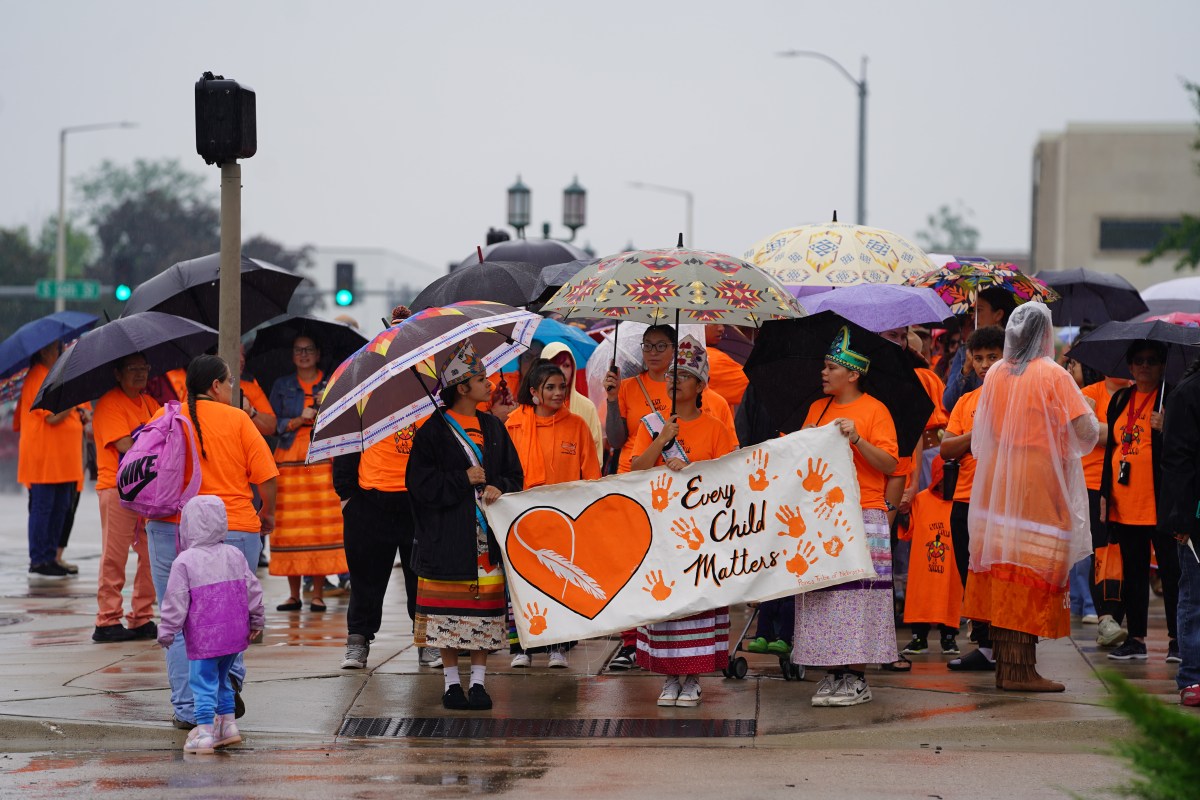
In Lincoln, Nebraska, nearly a hundred people took part in a walk around the state capitol, braving a light rain as they visited while walking. Some walked quietly, and several drummers sang prayer songs.
Joe Rousseau, Cheyenne River Lakota and coordinator for Indian Education for Lincoln Public Schools, said it was important for him to attend the walk as someone whose job is to educate Native children – and ensure they feel empowered as they seek to graduate from high school.
“This day reminds me that education was used as a weapon against us by the federal government,” he said. “Now it’s come full circle to where we work to provide spaces for our Indigenous students to celebrate and learn about their heritage and their culture.”
He expressed sadness related to the 80 children who died at the Indian Industrial School in Genoa, Nebraska, about an hour-and-a-half from Lincoln. He said the remains of only 40 of those 80 students were ever returned to their tribal nations for reburial.
The gravesites of the other 40 students have been lost, though there are efforts under way to find them.
He said an average class in Lincoln Public Schools is about 24 students.
“That’s over three classrooms full of children that perished at Genoa, and that’s unacceptable,” he said. “That’s a tragedy.”
Candace Schmidt, chairwoman of the Ponca Tribe of Nebraska, which hosted Wednesday’s walk in Lincoln, said it seemed appropriate that it rained during the walk.
“I think the rain today really signifies that the ancestors are with us, and they’re mourning with us,” she said. “The walk is important … so people are aware of the boarding school experience. Some children never made it home, and we’re searching for them.”
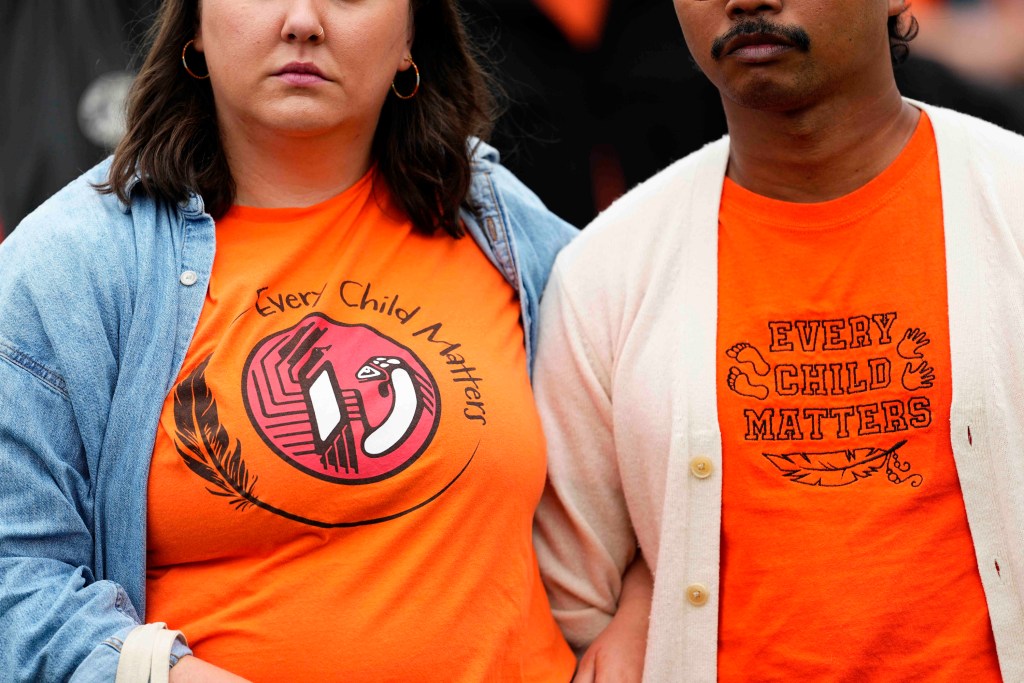
In Minneapolis, the National Native American Boarding School Healing Coalition held several events including a documentary screening and a candlelight vigil to honor Indian Boarding School survivors and the children who did not return home.
“Our 2026 National Day of Remembrance gathering was a powerful opportunity to come together in truth, remembrance and community,” Sherrie Catanach, the Coalition’s Director of Communications and Pueblo of Pojoaque told ICT. “The day was both beautiful and deeply impactful. Remembrance cannot be limited to one day or one week. We encourage our relatives and allies to carry this work forward by continuing to listen, learn, advocate and stand with boarding school survivors and their families throughout the year.”
Coalition Chief Executive Officer Nikki Santos, Coeur d’Alene Tribe, shared the sentiment.
“Remembrance is an important part of healing,” she said. “We honor the children and families who experienced the boarding school system, the survivors who have carried these stories forward, and the communities who continue the work of healing and reclaiming what was taken from them. September 30 reminds us that these histories are not distant. Their truth is part of this nation’s truth.”
The commemoration of the difficult – and not distant – history in Canada comes with a backlash: residential school denialism rhetoric.
That reality was something that was addressed at the national gathering in Ottawa.
“We must never allow residential school deniers to have a louder voice than us,” said host Earl Wood, Saddle Cree Nation. “Our voice holds the truth along with the millions of records of the distraction these institutions caused our people.”
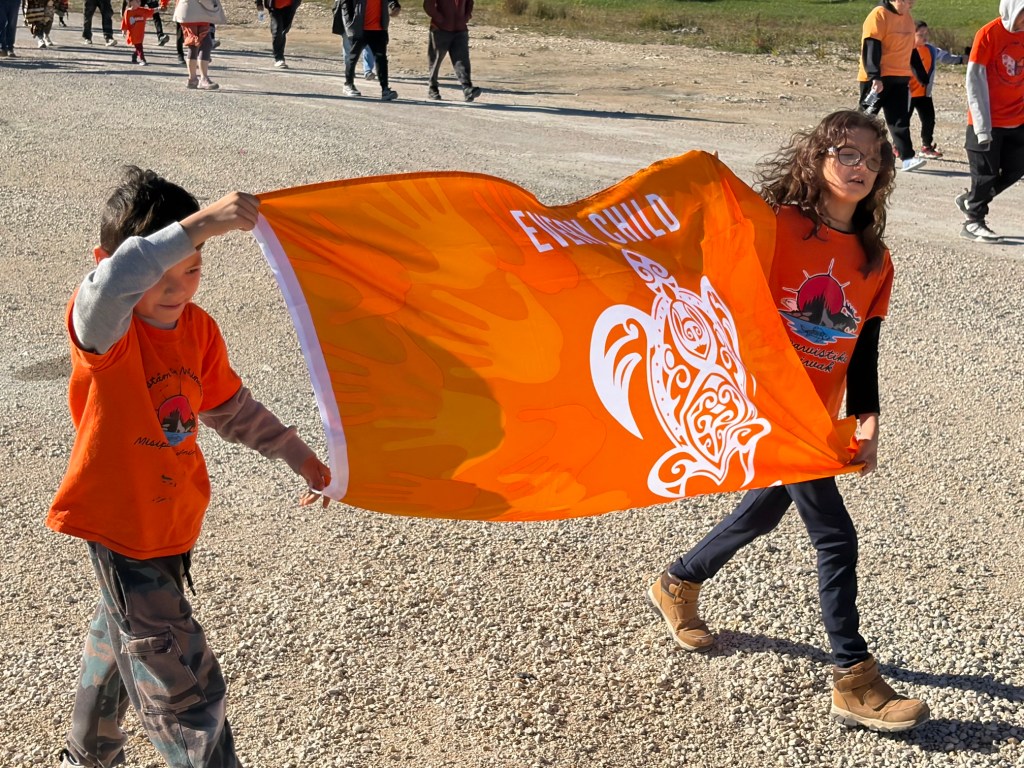
In Misipawistik Cree Nation in Manitoba a march was held beginning at the Culture Centre, where orange t-shirts were printed and a feast was served.
In addition to a powwow demonstration there was a giveaway of roses to surviving students and their descendants.
“The white roses represent gentleness and innocence, the yellow represents the friendships that they developed through their lives, the joy they brought to other people, the warm celebration of who they are as people,” said Elder Eric Cook. “My wife is a residential school survivor, others in this room are residential school survivors, this is what this vase of flowers represents.”
