Felix Clary
ICT + Tulsa World
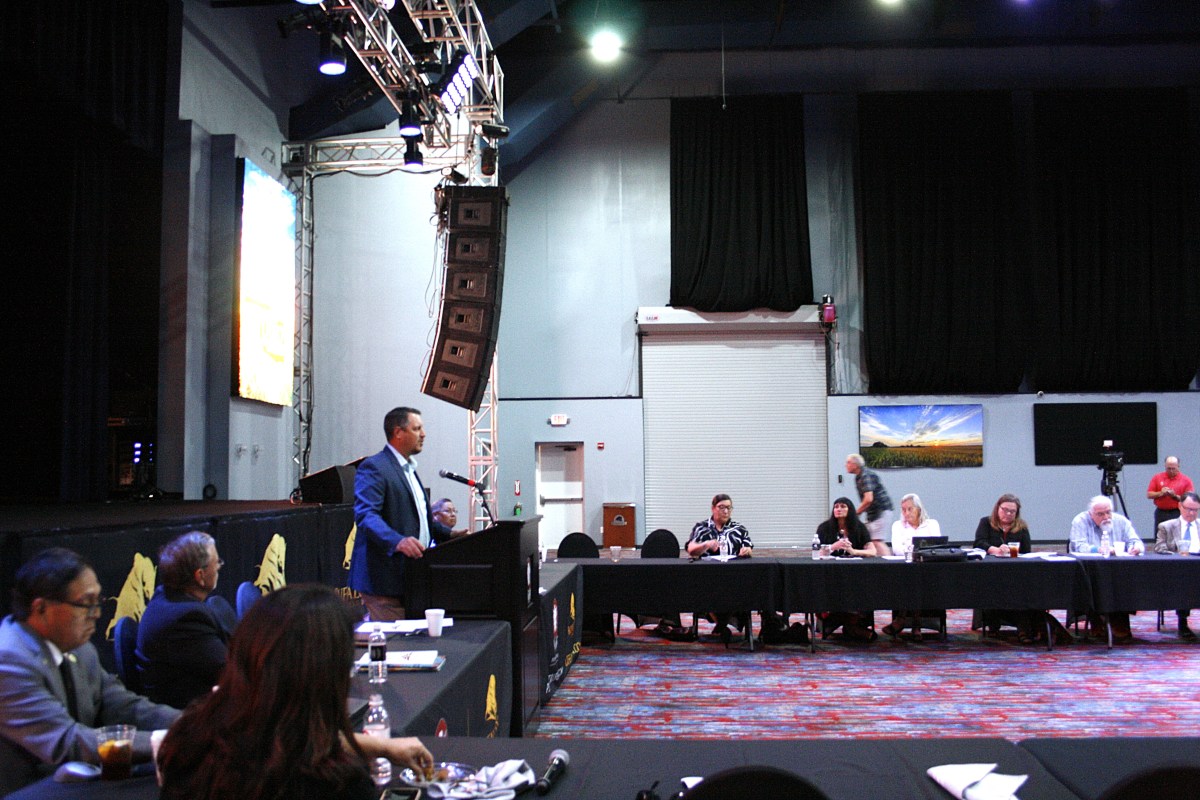
MIAMI, Okla. — Oklahoma Turnpike Authority Executive Director Joe Echelle stood before 31 tribal leaders on Tuesday to make his case for adding tribal members to the state’s PlatePay cashless toll system.
Gov. Kevin Stitt has previously said he would like all of the tribal tag compacts to work the same as the Choctaw and Chickasaw compacts, meaning no tribe would operate its own tag agency. Echelle presented a slightly different argument during a panel discussion before the United Indian Nations of Oklahoma, which promotes sovereignty, policy and advocacy on behalf of the state’s tribes.
After implementing the PlatePay system, through which cameras take pictures of license tags on toll roads and motorists without PikePasses are sent bills for their tolls, the OTA looked for the source of leakage in its revenue. It found that the main sources of lost revenue came from motorists without license plates, people with plates that are covered and people with tribal tags issued by nations other than the Choctaw and Chickasaw.
The Choctaw and Chickasaw vehicle tag compacts with the state require tribal members to get their tags from the state rather than from tribal tag agencies. This means the state’s PlatePay program has all the information needed to bill Choctaw and Chickasaw citizens who use the state’s toll roads without PikePasses.
Ownership records on vehicles tagged by other tribes are not available to the OTA.
Echelle told the tribes that the only information needed is names, billing addresses and plate numbers.
“We’re not looking for law enforcement data,” he said. “I’m not CLEET-certified. We just need routine government information that is already shared between states. That is all I ask the tribes to help with. We can provide PikePasses to the tribes, even through your tribal tag offices. You could provide the PikePass for your citizens, making you a service provider, and we would pay you to do that.”
Sharing tragic toll booth stories with the audience, Echelle said the PlatePay system is necessary because it is safer.
Before the PlatePay system was adopted, he said, an 80-year-old woman stopped at a toll booth to toss her coins into the bucket. She wasn’t tall enough to reach it from her car window, so she opened her door to lean out and pay her toll. Her foot slipped off the break and hit the gas pedal, and her car ran over her, Echelle said.
To pay for the implementation of the PlatePay system without raising tolls, Echelle expressed how important it is to receive toll payments from citizens of all Oklahoma tribal nations.
The United Indian Nations of Oklahoma held its quarterly meeting Tuesday at the Buffalo Run Casino and Hotel. Representatives from the National Congress of American Indians, UINO and 31 of the federally recognized tribes held panel discussions on the tribal plate pay debate. The audience of around 60 people had the opportunity to pose questions to each speaker.
Sandra Golden from the Muscogee Nation asked Echelle how the OTA has worked with the tribes, saying it failed to give the tribes any advance notice or consultation about PlatePay.
Echelle apologized for not being able to tell the tribes sooner: “We wanted to know earlier, but we weren’t ready to go live with providing how many tribal tags we were seeing until May of last year. Thirteen months ago, I didn’t have anything to come and talk to a tribal chief with. I didn’t have any data before last May. I reached out to the tribes within a couple of months of it being implemented.”
New Ottawa Chief Kalisha Burtrum asked Echelle how many reservations the toll roads intersect with and how much land they take up. Echelle said he didn’t know but that the agency tries to keep its footprint as narrow as possible so the turnpikes “don’t impact their neighbors.”
“As the Ottawa tribe, we help maintain county roads and maintain city roads. We utilize them on a daily basis. We don’t get charged on them, because they are on our land,” Burtrum said.

This story is co-published by the Tulsa World and ICT, a news partnership that covers Indigenous communities in the Oklahoma area.
Our stories are worth telling. Our stories are worth sharing. Our stories are worth your support. Contribute today to help ICT carry out its critical mission. Sign up for ICT’s free newsletter.