
Nika Bartoo-Smith
Underscore Native News+ ICT
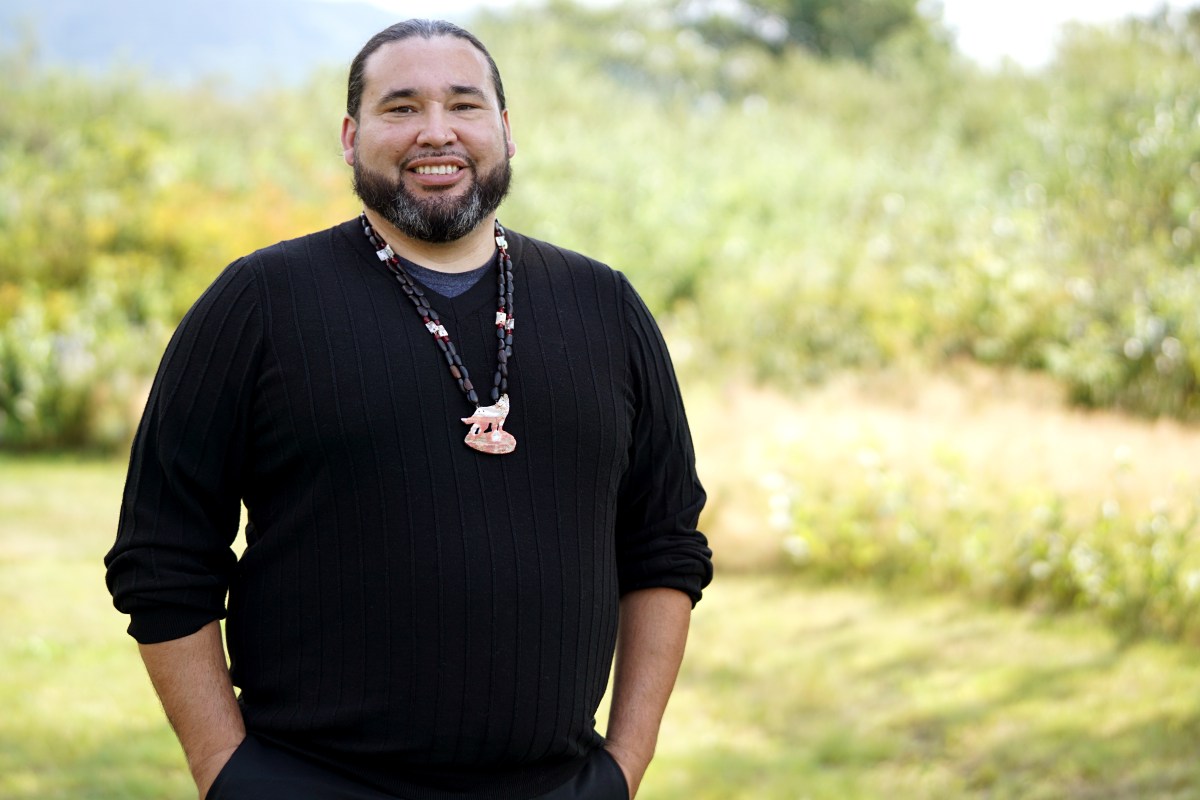
Patrick DePoe, a citizen of Makah Tribe, is hoping to be the only member of a Washington Tribe in the Washington State Legislature if he can secure the position as State Representative for the 24th legislative district this November, if he moves onto the general election after the August primary.
“The attempts to erase our culture, the attempts to genocide was a real thing and it was done from a government at the time,” DePoe said. “And so being the first people of this country, and being able to have a say on the impacts and the decisions and the direction that our government goes, I think is of the utmost importance.”
DePoe currently is the executive director of the Association of Washington Tribes. He previously served as the director of tribal affairs for the Washington State Department of Natural Resources. He also served on Makah Tribal Council, most recently as vice-chairman. He has also worked as a commercial fisherman and spent two decades working as a first responder, skippering a boat to clean up oil spills and doing land management for wildfire prevention.
The 24th Legislative District spans across Clallam, Jefferson and Grays Harbor county, in the upper northwest region of Washington. It is home to seven federally recognized Native nations: the Makah, Quieleute, Hoh, Quinalt, Lower Elwha, Jamestown S’Klallam and Port Gamble.
DePoe joined Underscore Native News + ICT via Zoom from his home in Neah Bay, Washington.
This interview has been edited for length and clarity.
Underscore Native News + ICT: Tell me about your platform and what issues are important to you.
Patrick DePoe: The Olympic Peninsula is beautiful with an abundance of natural resources, especially in our marine industry. Natural Resources is definitely a big priority of mine, especially looking at the cuts and attacks coming from this federal administration.
[Another point] of my platform has been education. I’m very proud to say that in the last seven, eight years, we’ve had close to 100 percent graduation rate for about five or six of those years coming out of Neah Bay here, which is amazing. Even during COVID, we had 100 percent graduation rate. I see some kids from our Native schools going to Ivy League schools and getting that beautiful education and bringing it home. I’m very passionate about education out in our district, and also understanding about the different unique disparities that we have out here. And, when we have budget shortfalls, it’s harder for us to make up those budget shortfalls here on the Olympic Peninsula than it is in an urban area that has different funding streams that they could backfill with. And so having some creative ways to look at funding, I definitely want to dive into that.
The other thing that I’m really passionate about is healthcare, especially with my time working at the University of Washington Medical Center, I really have a love for our folks that are in the patient care. I mean, you really have to love the work, right?
We have the Olympic Medical Center out here, which is about an hour and a half from Neah Bay, that’s our major emergency room. Sometimes we have to worry about potential closures or lack of services being funded for that Medical Center. And if that does close down, or the emergency room is full, or they don’t have those services, we have to go four or five hours just to get to Seattle for those same services. And so being able to dive into that medical. Support our workers, support our staff that’s really keeping things running.
These are all things that I want to dive right into. We also have, I believe, the most tribes in our district in any other district in Washington. So we have Quinault, Hoh, Quileute, Makah, Lower Elwha, Jamestown S’Klallam, Port Gamble, all within my district, the 24th legislative district. And really, a lot of us are saying the same thing. We all want better health care. We want better education. We all want to see our natural resources be there for our future generations, and being able to bring all those voices together for the tribes, the counties, the cities out here, there’s just so much power behind that. And so it’s exciting that the work has led me to this. I feel that I have that ability to bring results back to our district.
UNN + ICT: Clearly, the environment is a really big focus of yours. If you’re elected, are there specific policies that you might work on to address climate change?
DePoe: We’re always dealing with climate change [and] we always have to adapt and change for the future.
I grew up a tribal fisherman. I’m still a tribal fisherman. I’ve actually seen sometimes during the summer where we’re trolling king salmon, and the scales are rubbed off because they’re trying to go so deep just to find the cooler water. And then forest fires is another big one and the pollution that that ends up bringing, the carbon, the CO2, the actual loss thereof. It never used to be such a big issue on our side of the mountains, but now we’re looking at that and dealing with that tenfold. It’s something that we need to be proactive about. We can’t wait for the problem to just get bigger and bigger and bigger. And so there’s other areas in that that I would like to dive into and explore.
UNN + ICT: Are housing and healthcare a need in your district and how are you planning to address these things?
DePoe: Not just housing, but affordable housing.
And now we’re looking at hikes in Medicare and Medicaid and it’s not just affecting people’s ability to put a roof over their head. It’s affecting their ability to put groceries on their table. It’s honestly starting to affect people’s ability to go to college.
So it’s finding ways that we can make school easier to access, higher education easier to access, finding ways that we can support our workers in our hospitals.
The other thing that I saw is we have a Planned Parenthood in Port Angeles that offers some services that Olympic Medical Center might not offer.
Unfortunately, they closed down because they [lost] funding from the federal government.
Washington state, our legislature, our governor, they’ve been able to backfill quite a bit of that funding to keep a lot of those places open. Unfortunately, Port Angeles wasn’t one of them, and so that alone is going to cause more stress on folks that were using those services, because now they’re gonna have to drive that much longer just to find them and the ability to even afford them. And now on top of that, you’re stacking gas, you’re stacking food, you’re stacking everything else that comes with travel. It’s not just down the road that you’re talking about. You’re talking about a three or four hour drive one way turns into a 10 hour back and forth or longer. It could be an entire afternoon or whole day taken away from you.
I believe that I’m uniquely situated, and that I understand all of this stuff, not just from an outside perspective, but from actually doing the work. I’ve been on the front lines. I’ve been literally boots on the ground. We’re talking natural resources. I’ve helped put out fires, I’ve helped clean up oil spills. Talking about our medical issues, I’ve worked in a medical center for over a decade, on the administrative side and on the patient care side of things. And we’re talking about education, I’ve worked and seen some of the issues and how those impacts affect our children.
UNN + ICT: Talk about your stance on policy we are seeing on a federal level when it comes to Two Spirit LGBTQ+ people, particularly access to gender affirming care. How will you address this?
DePoe: I want to be an advocate, and I want to be able to find progressive funding streams to help support some of these closures that we’re seeing.
[When] I talk about gender affirming care [I think about] Planned Parenthood. I don’t know of another Planned Parenthood in proximity to the one that just closed, close enough for anybody from my community to travel to. And so with that closure, folks are out of luck, or are they gonna have to take an entire day off of work, or something similar, just to be able to find that. And so I want to be able to work with organizations and work with that community, to be able to see what can I do to be an advocate? What can I do to support? And I say work with folks, because I’ve noticed too many times that people just assume they know what’s best and for me, from my background and my understanding, I hate it when somebody thinks that they know what’s best for an Indian, or know what’s best for reservation, and they’ve never been here.
I don’t want to overstep or misspeak. I want to be there and to be able to support. I don’t want to speak for, I want to speak with. I want to be there to help push, rather than to say, ‘this is what we need to be doing right now.’ And I believe a lot of those conversations are going to continue to happen during this campaign, and then once elected if everything goes as planned.
UNN + ICT: What is your stance on ICE and the need for immigration reform?
DePoe: I mean, it’s crazy, because my wife and I were talking about traveling and a question that we never thought in my life that I would have to ask, ‘is it safe?’ I’m a big dude with brown skin, with long hair, I braid my hair down and I’ve heard of folks showing their Indian tribal card, and they’re saying, ‘well, that’s fake.’
It’s kidnapping at this point, it’s abduction. I mean, if you’re gonna just snatch somebody up despite them showing everything that they’re supposed to show. And so I am worried. We’re supposed to be seeing, potentially, an uptick in ICE during FIFA. We’re gonna be having that happen around June out here, what that’s gonna look like? I don’t know, but I do know that some tribes in our area are getting ready with crisis lines.
I don’t think we should have to do that. I don’t think that it should be a requirement. But once again, these crazy attacks that we’re seeing from this administration, we have to be proactive in how we set up our defenses, and being able to address some of these issues in our state legislature.
UNN + ICT: On a legislative and political level, how do you plan to continue to work with the tribes in your district and continue to support tribal sovereignty in Washington?
DePoe: Well, I love our tribal legislators that are in there right now. We have Representative Chris Stearns. We have representative Debra Lekanoff. We have Senator Claudia Kauffman.
[It’s important] to have a legislator in there right now that actually comes from tribal government, the benefit of understanding what tribes deal with and how they look for consultation, for example, what they look for in that true government to government relationship, and that understands the overlap and impacts that legislation has on our tribal communities. The state has huge impacts, it’s not just at the federal level.
When I was young, tribes, a lot of them, were focused on the federal side of things. Now there’s a lot of impacts coming from the state as well, and being able to speak to that from not just understanding about dealing with it firsthand, from a work perspective, a professional perspective, having the relationship with the tribal leaders. I have relationships with all of our tribal leaders here in Washington and especially our chairs and being able to just pick up a phone and have those direct conversations.
[Tribes] have their own process that you need to follow in order to speak with their government and the impacts on the natural resources, the healthcare, the education, and areas that we can support each other.
Tribes of Washington are one of the top 10 employers in Washington. We bring in, I want to say anywhere from $4 to $7 billion to our Washington state economy in one way or another. Our enterprises are huge. If it wasn’t for protections of tribes, there wouldn’t be any salmon in Washington State. They would have gone to extinction by now.
In my position as executive director of the Association of Washington Tribes, that’s my full time job, [supporting tribal sovereignty]. That’s literally what I’m doing in my professional capacity. But in the legislature, it’s that outreach, it’s that engagement. It’s early and often, that’s what true consultation means on bills that have that overlap and that impact on tribal nations.
If we’re talking about health care, education and natural resources, there’s so much power and strength when the counties and the cities and the tribes are saying the same thing at the state legislature. That just hits on another level.
Where I’m at in the 24th legislative district, it’s a rural community. It’s a rural area, and rural areas sometimes are the afterthought. We don’t have a dense population and so being able to really elevate issues that we see on a day to day basis.
UNN + ICT: What are some of the issues that you have found to be really important to people specifically in your district.?
DePoe: My three top issues: it’s natural resources, it’s our healthcare, it’s our education.
But there’s also infrastructure issues that come along with that. There’s also housing costs that come along with that. And there’s also how do we create jobs here in the peninsula? How do we work with our unions to build those apprenticeships? So folks that aren’t looking to go to a four year college have a direct path to start working in a profession.
And I mean, like I said earlier, it’s all connected in one way or another. If we have to pay six something at the gas pump, and then we’re having to pay extra when we go to a doctor appointment, you’re not going to see the same ability to actually buy a house. And then if you have to pay extra on even building a house itself because of tariffs or other things related to it then you’re not going to be able to even afford that. And then if you can’t go to college because you have to start a job, then you’re not going to have that extra income that’s going to be needed to pay for the extra price hikes that you’ve seen everywhere.
I believe this is all connected, and there’s a lot of support for this. I’ve received early legislative support in my campaign. There’s folks that are eager to jump in and start working with me on these issues.
It really comes back to keeping our medical center not just open, but services available. It’s about our natural resources and being able to sustain the people that work off the land and then the future generations, for those folks to be able to use those resources in the future. So that our salmon and our rivers and our streams aren’t just completely barren. [So that] our kids are going to school and actually have a place, an ability to go on to higher ed, if they so choose. And if they don’t choose, they have a different pathway into a trade that they can get an apprenticeship and start. And being able to do things like lunches and breakfasts at school. Sometimes that’s a place where they might only get those things, and being able to support those, and finding ways to be creative with revenue streams that are coming in through our general fund here in Washington State.
There’s a lot of different avenues here, and being able to jump in there and start exploring these, I’m eager.
UNN + ICT: What policies would you want to see, both on a national and local level, when it comes to supporting advocacy and awareness surrounding Missing and Murdered Indigenous Relatives?
DePoe: I was working with our attorney general’s office who has been housing the MMIWP Task Force. And honestly, in my work with the Association of Washington tribes, I’ve already been reaching out, and wanted to make sure that I understand when our next meeting is, and what are we discussing, and what does the agenda look like, and make sure that it’s driven from our tribal leaders and not from the outside.
[Rep. Debra Lekanoff] is the person that I would work with on this. She’d be my senior representative, and so I would definitely look to support her efforts. I could say that we have that task force here in Washington State, we have an attorney general that is supportive of it and we just have to continue to make sure that it’s driven by the tribes, it’s driven by the people that are impacted and, once again, not driven by people from the outside thinking that they know what’s best.
