
NikaBartoo-Smith
Underscore News + ICT
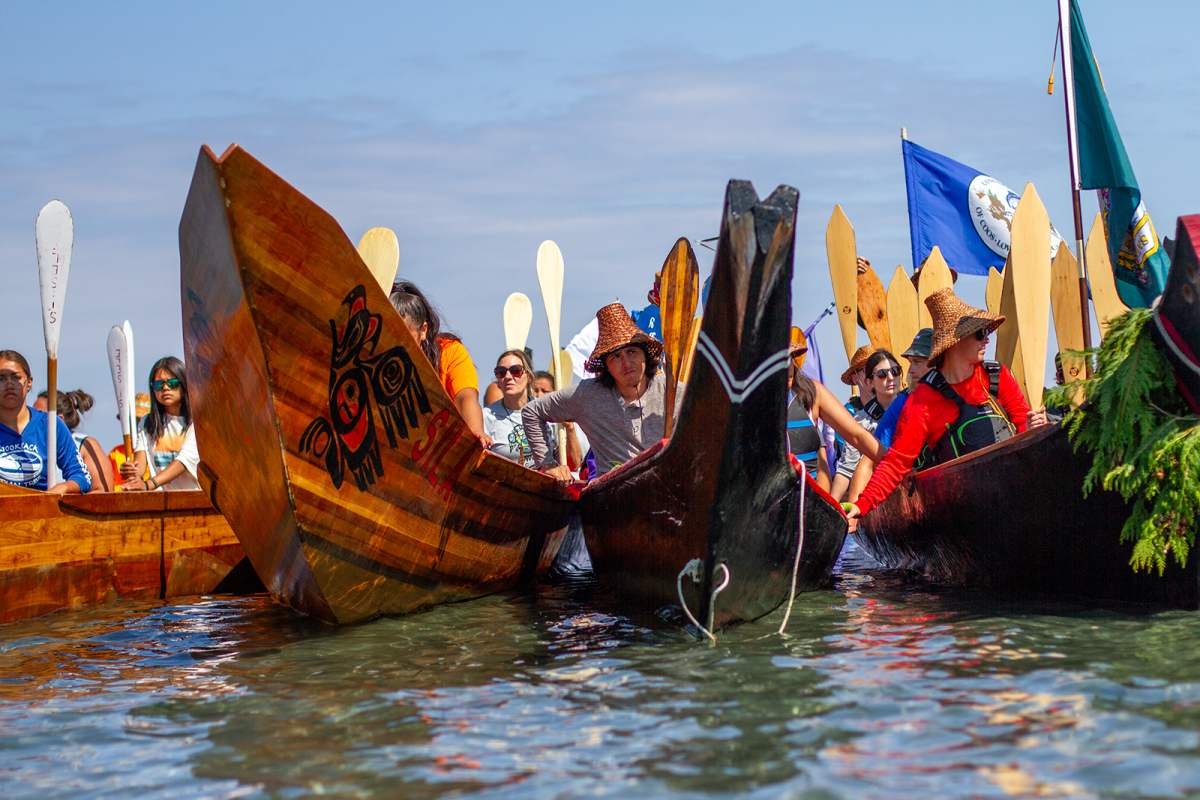
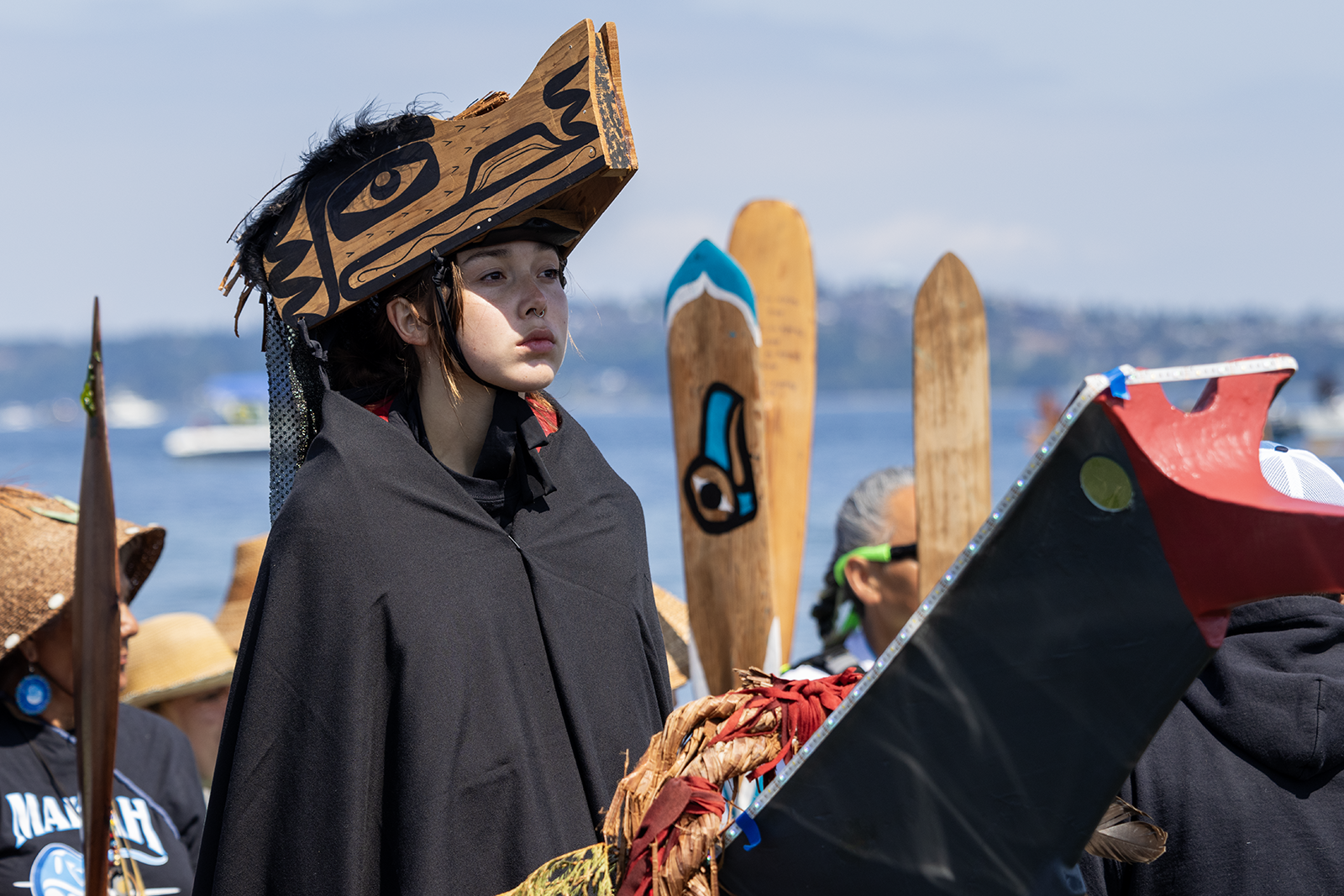
Early risers set up chairs and blankets along the shore at Alki Beach in Seattle Sunday morning, preparing for the arrival of hundreds of canoes from all across the Salish Sea and beyond.
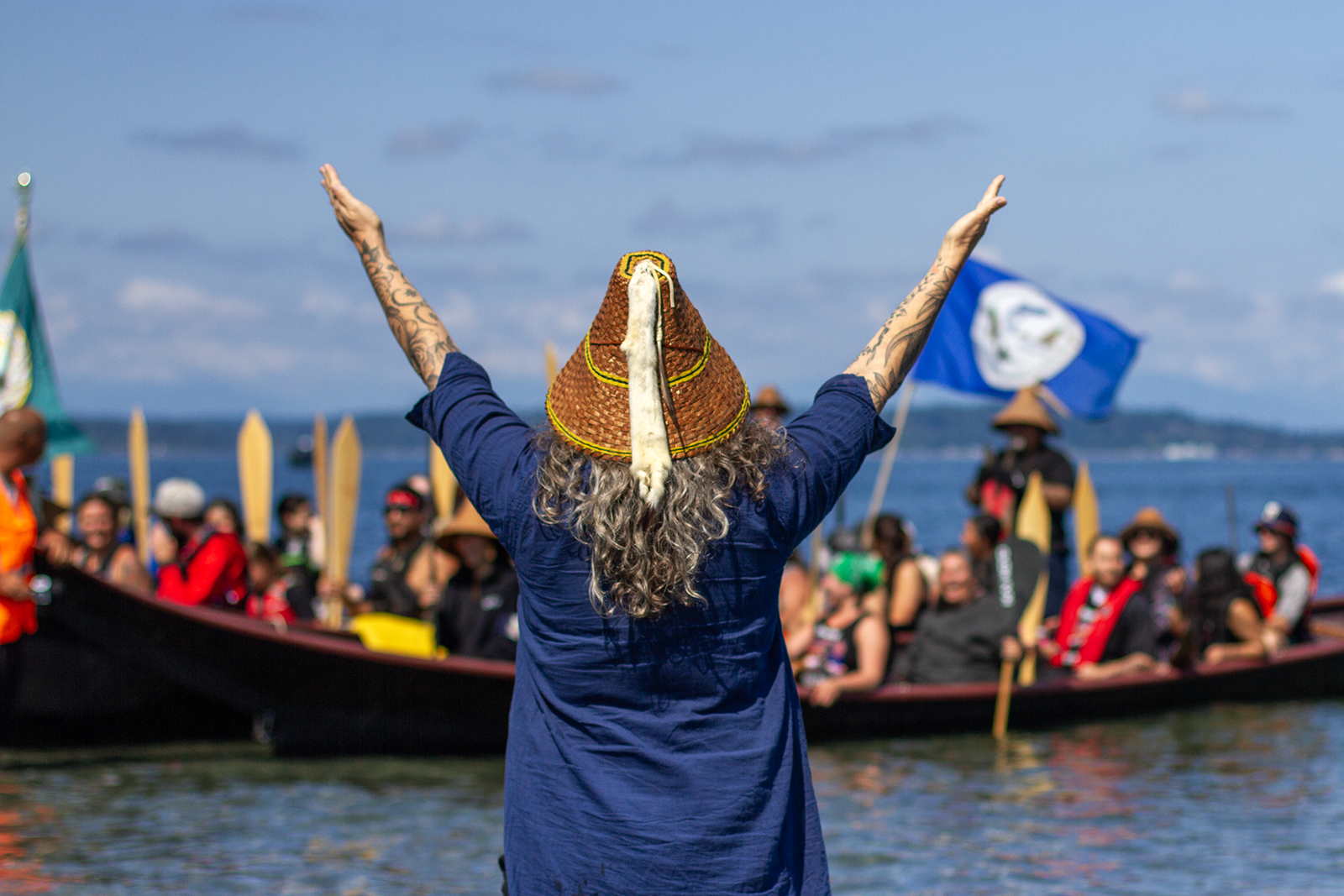
One by one, each canoe family took turns asking for permission to land from this year’s host, the Muckleshoot Indian Tribe.
“Traditionally, you have to ask permission to come ashore into another nation’s territory,” said Jolene Lozier, Muckleshoot and Yakama. “When you see the canoes coming in, you’re gonna see them raise their paddles up three times. And that means, ‘I come in peace.’”
Representatives aboard each canoe introduced themselves – first in their Native language and then in English. Some parts of each request were unique. Others were often repeated.

One phrase was included in nearly every representative’s request: “We are hungry, we are tired, please give us permission to land.”
Canoe families from across the Salish Sea, and even across the world traveled to Muckleshoot, including families from New Zealand, Japan, Hawai’i and Alaska.
After each request, a Muckleshoot representative responded, again with a combination of their own unique greeting and one said every time.
“You have permission to come ashore,” was a repeated phrase followed by cheers from the crowd and the roar of paddles pounding on the base of the canoe.


After carrying each canoe onto the beach, paddlers visited with friends and family. Already exhausted from a long journey, canoe families will participate in protocol at the Muckleshoot Community Center beginning at 9 a.m. on Monday and continuing 24 hours a day for a week.
Starting with those who paddled the farthest, each canoe family will introduce themselves, sharing their traditional songs and dance.
“It’s kind of like a more traditional version of a powwow,” Lozier said.
Follow along with the Underscore News team from July 30 to Aug. 2 as we cover the event. You can find updates on Instagram, Twitter, TikTok and Facebook.

This story is co-published by Underscore.news and ICT, a news partnership that covers Indigenous communities in the Pacific Northwest. Funding is provided in part by Meyer Memorial Trust.
ICT is a nonprofit news organization. Will you support our work? All of our content is free. There are no subscriptions or costs. And we have hired more Native journalists in the past year than any news organization ─ and with your help we will continue to grow and create career paths for our people. Support ICT for as little as $10. Sign up for ICT’s free newsletter.

