Greetings, relatives.
A lot of news out there. Thanks for stopping by ICT’s digital platform.
Each day we do our best to gather the latest news for you.
Okay, here’s what you need to know today:
Laughter may be the best medicine, and it’s also a great teacher.
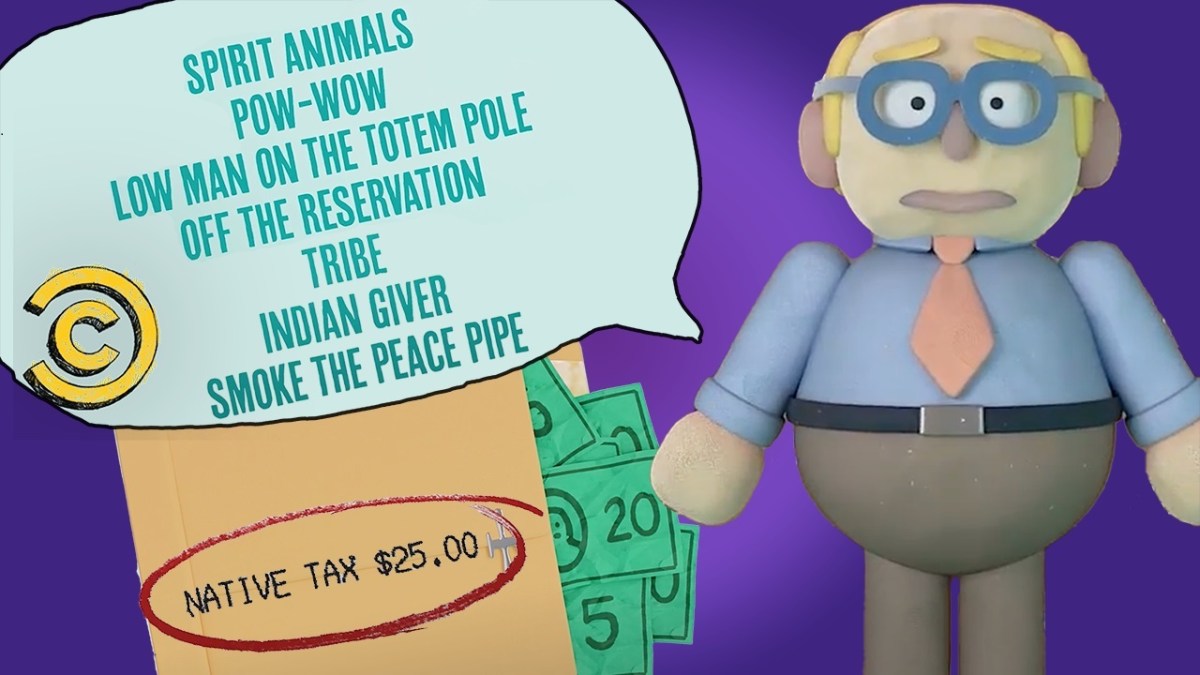
That’s the message behind “Gone Native,” a series of animated, digital shorts by comedy illustrator Joey Clift, Cowlitz, that leverage comedy as an entry point to education about Native people.
The series addresses “weird stuff Native American and Indigenous people deal with way too often,” according to the series website.
The current five-show deal, done in partnership with Comedy Central, includes shorts about spirit animals, Native identity, sports mascots, burial grounds and the lack of education about Native people in schools. READ MORE. — Sandra Hale Schulman, Special to ICT
SUPPORT INDIGENOUS JOURNALISM. CONTRIBUTE TODAY.
Shannon Smith has been an attorney handling Indian Child Welfare Act cases for decades, fighting for the rights of Indigenous children, their families and tribes.
But last week, the longtime executive director of the Minneapolis-based ICWA Law Center received court news unparalleled in her career. Against all apparent odds — including a powerhouse legal team backing the plaintiffs and the most conservative U.S. Supreme Court in almost a century — the justices beat back constitutional challenges to the Indian Child Welfare Act. The 7-2 ruling fully upheld the 45-year law designed to keep Native children who can’t remain in their homes close to kin and tribal communities.
Smith wasn’t in a courtroom when the opinion came down. She was at her daughter’s college orientation, experiencing an entirely different set of high-stakes emotions. As a result, the full impact didn’t fully hit her until she finished reading the majority opinion, Smith said in an interview with The Imprint. READ MORE. — The Imprint
This won’t be an easy conversation: Can tribal nations love mining? Or at least accept mining as a necessary step in the creation of a clean economy? And can governments and international mining companies figure out how to respect and work fairly with Indigenous communities?
The conversation is weighted by history. The mining industry, and governments, have to sell the idea that, this time it’s different. This time the industry will respect cultural and religious sites. This time the industry will clean up its own mess. This time it will reward tribal communities as owners instead of serving up resources as colonies.
Why would anyone believe that? Why should a tribe expect this time to be different?
“The question is how likely is it that we can hit a reset button, especially with the Indigenous populations because the history is not good,” said former North Dakota Sen. Heidi Heitkamp. READ MORE. — Mark Trahant, ICT
Just 45 miles from the Fort McDermitt Indian Reservation where Daranda Hinkey and her family corral horses and cows, a centerpiece of President Joe Biden’s clean energy plan is taking shape: construction of one of the largest lithium mines in the world.
As heavy trucks dig up the earth in this remote, windswept region of Nevada to extract the silvery-white metal used in electric-vehicle batteries, the $2.2 billion project is fueling a backlash. “No Lithium. No mine!″ proclaims a large hand-painted sign in Hinkey’s front yard.
The Biden administration says the project will help mitigate climate change by speeding the shift away from fossil fuels. But Hinkey and other opponents say it is not worth the costs to the local environment and people. READ MORE. — Associated Press
Sign up here to get ICT’s newsletter
Finding safe spaces for Indigenous women. Hip-hop culture helps steer a young Cree man from gang life and into a decades-long art career. And, a business program is empowering Native women.
Watch:
As Indigenous peoples in Canada celebrated National Indigenous Solidarity Day on June 21, the Canadian government announced controversial plans to adopt the United Nations Declaration on the Rights of Indigenous Peoples.
Although the proposal drew support from some First Nations leaders, others questioned whether the move would be used to replace the sweeping Indian Act of 1876, which largely covers how Canada interacts with Indigenous nations on such issues as land, healthcare, education and its system of reserves.
Indigenous voices in the Canadian capital of Ottawa largely hailed the announcement, but chiefs in western Canada denounced the plan and called for a day of action on Canada’s birthday on July 1.
Minor Chief Regena Crowchild of theTsuut’ina Nation said a gathering is planned in Edmonton at a monument to Treaty Six. READ MORE. — Miles Morrisseau, ICT
- Tangled jurisdiction: Understaffed police department blamed for high crime rate on Wind River Indian Reservation.
- Tribes say court challenge was never just about foster kids: The 7-2 ruling released this month hardly touched on the children, who were supposed to be placed with Native foster families under the law.
- EPA proposes mercury limits from iron ore processing: Agency is accepting public comments through June 29 on proposed regulations that supporters say would help protect the environment.
- Maine House advances proposal to let federal laws apply to tribes: The bill stops short of full sovereignty sought by the tribes.
- Curfews saddled hundreds with citations, netted no money for Navajo police: An investigation into the aftermath of the Navajo Nation public safety COVID-19 measures by the Howard Center for Investigative Journalism found multiple breakdowns in their implementation.
- Google grabs Inuk artist’s drawings for daily Doodle.
- Clarence Thomas Wants to Demolish Indian Law.
- Warroad’s Jayson Shaugabay heads class of area NHL Draft prospects.
We want your tips, but we also want your feedback. What should we be covering that we’re not? What are we getting wrong? Please let us know. dalton@ictnews.org.