In soaring heat, polluted air and blowing dust, members of the International Indigenous Youth Council took a stand against continued hydraulic fracking in northwestern New Mexico. Over three days (June 24-26), the inter-tribal environmental justice nonprofit formed by Native American youth during the resistance to the Dakota Access Pipeline at Standing Rock, ran a relay course of 80 miles through the arid, hilly terrain of Turtle Island’s largest methane hot spot.
Navajo youth joined the International Indigenous Youth Council including a 10-year-old girl who, after a roadside offering of cornmeal and prayers, ran like the sleekest, surest arrow unleashed from the sturdiest bow, as spectators blinked back tears at the moving sight.
“We’re running and praying for the health of the earth, to keep her safe,” said Lauren Howland, 22, (San Carlos Apache and Diné), the event’s lead organizer. “We pray for the people who aren’t yet here, who haven’t yet touched the earth. We especially pray for them.”
[text_ad]
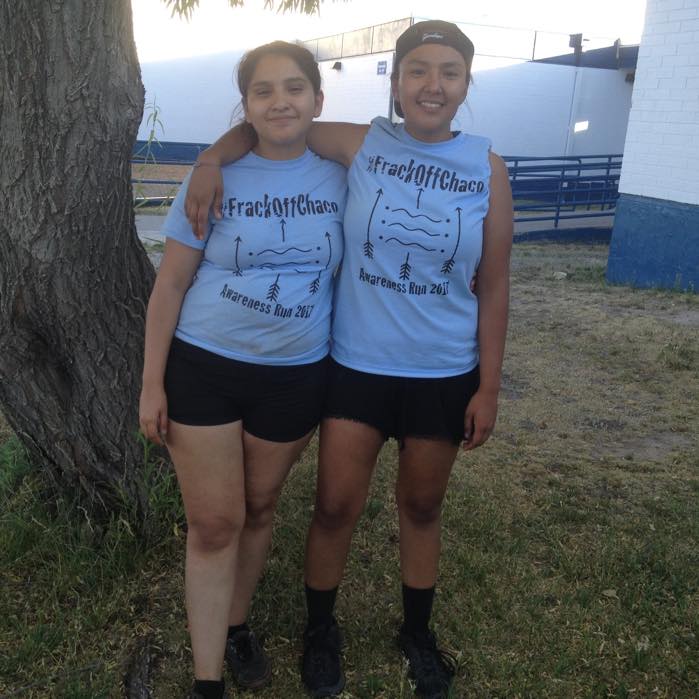
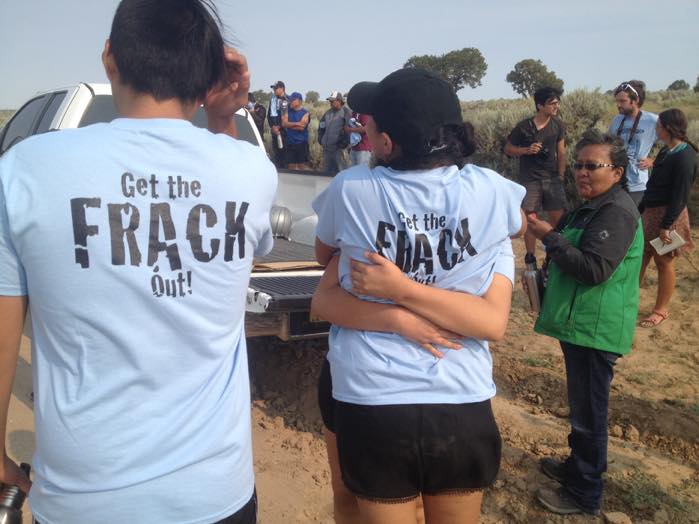
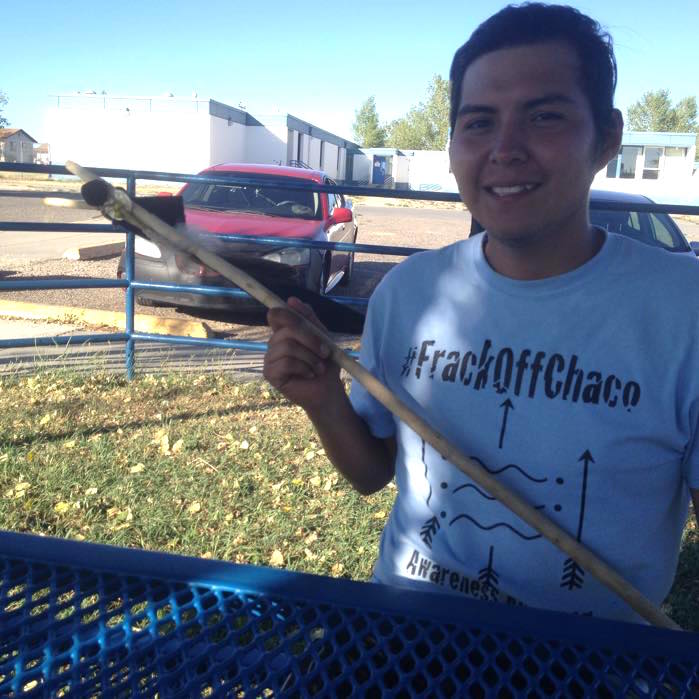
Wearing sky blue “Get the Frack Out” shirts and carrying a staff fitted with a medicine tie, abalone shell and eagle feathers, the runners, accompanied by a caravan of vehicles brimming with containers of ice water, medical supplies, camping gear, and well wishers, traveled from Counselor, New Mexico to the Farmington Field office of the Bureau of Land Management. Once there, they delivered a letter to BLM District Manager Victoria Barr. The letter, which was copied to New Mexico’s U.S. Congressional delegation, leaders of the Navajo Nation and the All Pueblo Council of Governors, urges Barr to “put the needs of all people and communities above corporate profits.”
Signed by organizations representing 774,062 members, the International Indigenous Youth Council letter makes four key demands: an immediate moratorium on extraction in the San Juan Basin, an area that has already seen more than 91 percent of available mineral resources leased for oil and gas development; the retirement of existing, non-producing oil and gas leases as well as expired and inactive wells; a new Environmental Impact Statement; and a study of “alternative economic development opportunities that do not endanger the land or lives of the people.”
“I was really nervous about the run,” said Lauren’s twin brother Alex Howland. “This is one of the bigger actions we’ve done in northern New Mexico, and I was concerned how the pro-oil people would take it, that there’d be criticism and judgment.”

His anxiety was not completely misplaced. On day one a motorist who preferred to remain unnamed told ICMN that he made his living in the oil industry, and then disparaged the youths’ efforts.
“Like everybody else, these kids rely on oil every single day; what they’re doing is crazy,” he said before speeding off, leaving a whirl of dust in his wake.
“We’ve heard that kind of thing before,” Lauren responded. “Yeah, I have to use oil and gas because nobody gave me an alternative, something else to power my car with. What I was presented with was just this, this primitive energy source.”
After camping overnight for two nights and running 35 miles each of the previous days, the runners were warmly received by BLM staff when they arrived at their Farmington offices on June 26.
“The BLM appreciates these young people’s interest in their public lands,” BLM District Manager Victoria Barr told ICMN. “We encourage everyone to stay involved in issues that are important to them.”

Because of recently announced personnel shakeups within the Department of Interior, including the reassignment of the director of New Mexico’s BLM office to the U.S. Fish and Wildlife Service, staff further encouraged them to continue to take the issues up with their federal elected officials.
For the International Indigenous Youth Council, whose members camped in Oceti Sakowin for six months, some of whom were brutalized on the front lines, suffering broken bones from billy clubs and collapsed lungs from chemical spray, these kinds of tactics are neither a surprise nor a discouragement.
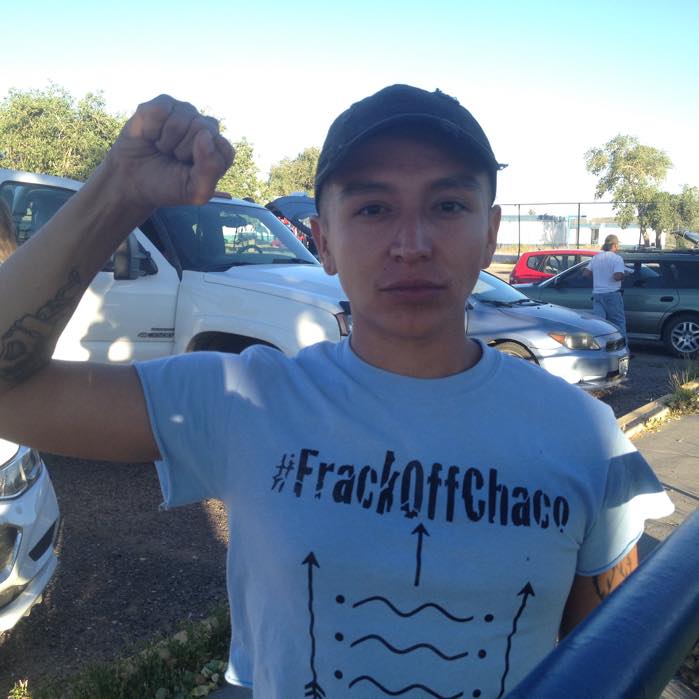
“Like today, every time I thought I was going to quit I would pray with the staff, asking the Creator to give me strength to continue my run,” said Alex. “Colonization didn’t happen overnight, and ending it won’t either.”
Youth Council co-founder Kamron Condon, 20, of the Cheyenne River Sioux Tribe, hopes the fact that he traveled almost 900 miles from Red Scaffold, South Dakota will help inspire local people to hold onto their courage.
“Back home, the way my people are, it would be a big eye-opener for us to have someone from the outside come and help us in our struggles,” Condon said. “I’m hoping that will happen here, that the people will ask ‘Why are they standing up for us, when we could be standing up for ourselves?’”