
Miles Morrisseau
ICT
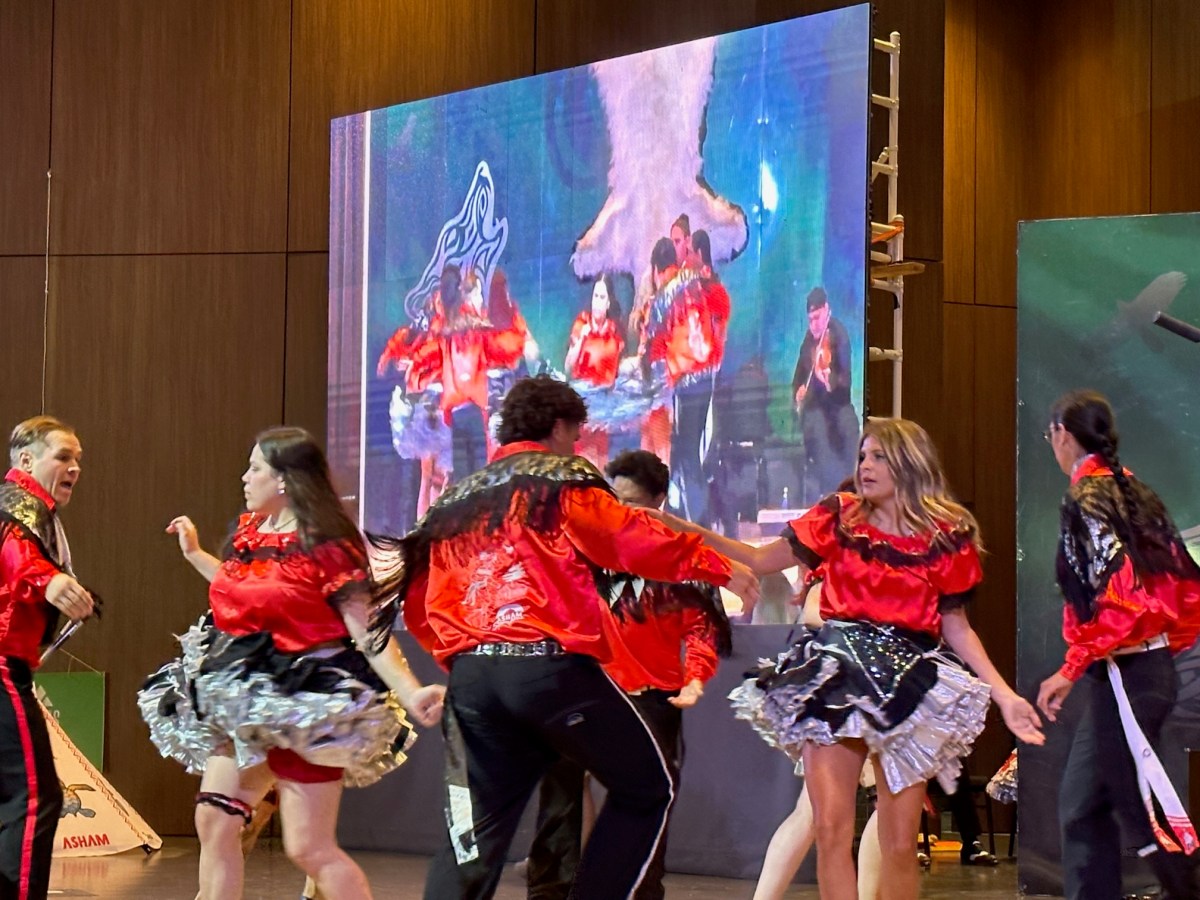
WINNIPEG, Manitoba — When the Asham Stompers hit the stage at Métis Pavillion, they lifted up the Métis Nation with energy, pride and a heck of a good time.
The performance at the Folklorama Festival on Aug. 6 was just the latest for the dance troupe, whose Métis and First Nations members have been jigging and dancing across the province of Manitoba and around the world for more than two decades.
“We do 100 shows a year, for 25 years,” Arnold Asham, Métis Nation, the founder of the Asham Stompers and owner of Asham Curling Supplies, told ICT after the sold-out performance.
“We’ve been to Mexico twice. We’ve been to China, we’ve been to Northwest Territories. We’ve been to Cape Breton Island. We’ve been to the Vancouver Olympics,” he said. “So we danced to Sweden, Switzerland, Scotland, Germany, and all the rest of the world. It’s amazing. It’s just wonderful.”
Folklorama is the largest and longest-running multicultural festival of its kind in Canada and perhaps the world. The two week-long festival, which this year runs from Aug. 3-16, features pavilions spread all across the city of Winnipeg where ethnic and cultural groups representing nations from around the globe share their culture, stories, food, music and dance. The festival transports visitors around the world without ever leaving the city.
Each pavilion operates for a week in order to fit in as many different nations and ethnic communities as possible. Week one featured 20 pavilions, including African and Caribbean nations, Chinese, Portugal, and Italian and Celtic pavilions, in addition to the Métis Pavilion.
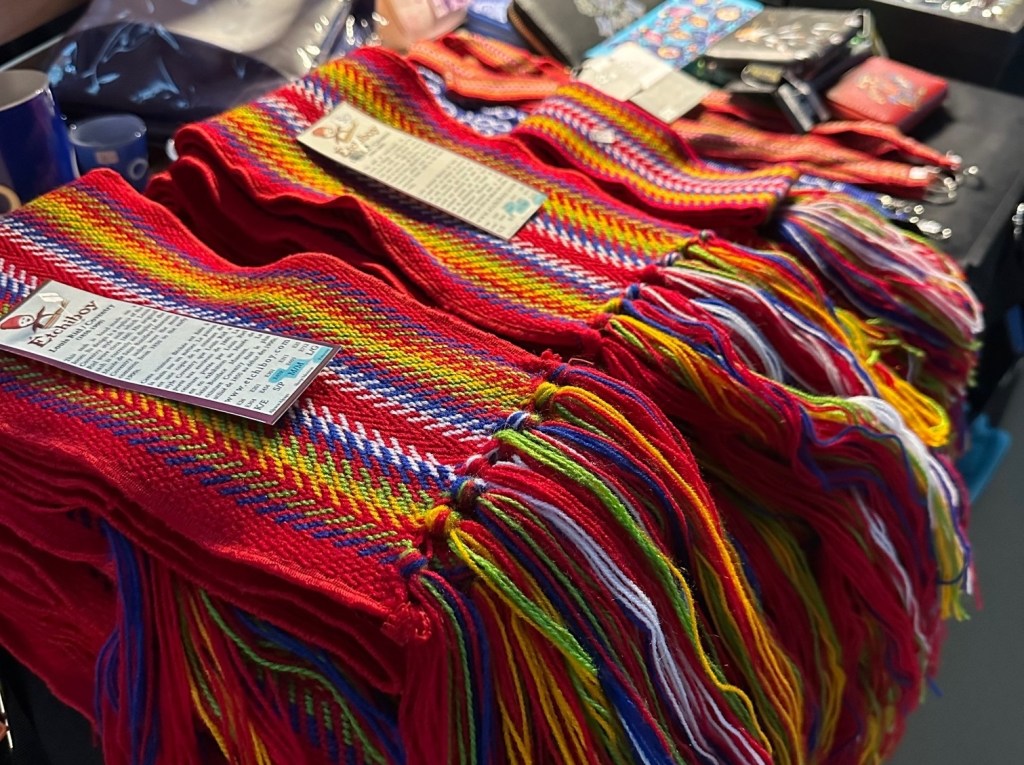
Traditional Métis food offerings this year included pickerel chowder, wild rice, berries and cream and bannock. Cultural displays on Métis history included information about their role as founding members of Canada who negotiated with the newly formed country to bring the province of Manitoba into the confederation.
Artistic and crafts were also on display, with some available for purchase. Furs and tanned moose and deer hides representing the Métis role in the fur trade were also showcased.
Asham said the troupe’s mission is to help recapture and preserve the history of the Métis people through dancing of the Red River Jig, which goes back to the early 1800s, when the jig was created at the Métis settlement on the Red River.
“Our jig was developed along the Red and Assiniboine rivers, the … center point rivers in the early 1800s to attract the fur traders into the colony,” he said. “And our fur traders used to go whipping down the river with their dogs laden with furs and they wouldn’t stop at the Métis colony.”
Asham says the high energy and celebratory dance was a way to attract fur traders to stop in at the emerging Métis colony to participate in trade and perhaps become part of this growing nation.
“Métis people developed this dance, went down to the river and did the dance,” Asham said. “Fur traders stopped for a few minutes, stopped for a few hours, then an overnight, a weekend, eventually turned into a 10-day festival that lasted for over 100 years.”

Troupe member Ryan Richard, Sandy Bay Ojibway First Nation, has been performing at Folklorama since he was a child.
“I’ve been dancing here for the Folklorama for as long as I remember, probably like for 30 years, 32 years now. So I’m 44 now,” Richard told ICT soon after the evening’s first performance. “Dancing here just means a lot to me, because it’s just a part of who I am. It’s kind of where I formed the Master of the Jig and where I have built my confidence.”
Richard has created his own performance character, the Master of the Jig, who flies around in a cape, on the stage and into the audience kicking up his heels and doing cartwheels. He says that in addition to entertaining audiences, the dance helps to lift his own spirit.
“That’s why I’m a free spirit and that’s why I am a two-spirited person as well,” he said. “It gives me so much energy, and it helps me bring life into me and to myself, because I struggle a lot with depression and grief and other things. So dancing helps a lot. It heals the spirit.”
Felicia Morrisseau, from the Métis community of Crane River, has been dancing with the Stompers for more than 20 years and has been jigging for most of her life.
“I’ve been dancing since childhood, since I was about four years old,” Morrisseau told ICT. “It’s really important. It’s a huge part of the culture, the Métis culture, both Métis and First Nation culture. I learned at an early age just by watching a lot of the community members, the elders, square dancing, jigging, and so that’s really where I picked it up just watching them.”
She says performing in front of a big, appreciative audience during Folklorama can really get your feet moving.
“It’s so much energy, it’s exciting,” she said. “And when the crowd really appreciates your dancing, you just feed off the energy, and it just gives you that extra boost.”
Due to the impact Manitoba’s wildfire situation is having on its community, organizers of the First Nations Pavilion made the difficult decision to withdraw from the 2025 Folklorama Festival this year, said Buffy Handel, executive director of Neemu-Egwah Inc., the First Nations Pavilion’s sponsoring organization.
“We deeply value our longstanding relationship with Folklorama and the opportunity it provides to share Indigenous culture with the world,” Handel said. “One of the first treaties amongst the original tribes prior to colonization was made with this in mind: ‘We all drink from the same cup.’ We, as Manitobans, must remember to care for one another in our own special way. Each of us holds the capacity to contribute to healing, safety, and well-being.”
Asham has been sharing stories of the Métis Nation, the history of the music, the dance and the Red River jig. He began that journey 25 years ago and, today, at the age of 75, he not only encourages young dancers but anyone who wants to dance to give it a try.
“All you 50-year-olds out there, if you’ve got a passion, I tell you, ‘Live it,’” Asham said. “Because in the last 25 years, my heart and soul has been into the dance, and I’ve dedicated my life to recapturing and preserving the history of the Red River Jig.”

