
Grace Benally
Special to ICT
In 2024, “Pinky the Rezmobile” brought free Indigenous books and community joy across the Navajo and Hopi reservations.
This year, the NDN Girls Book Club is fundraising for a new, permanent bookmobile that could take that same idea to exponentially more communities across Indian Country.
For Kinsale Drake, the founder and director of NDN Girls Book Club, the work is deeply personal.
“I feel like I’ve loved books since before I can remember,” Drake said. “In stories about me as a kid, I always had a book or I was trying to memorize a book, even if I couldn’t read.”
NDN Girls Book Club is a 501(c)(3) nonprofit literary organization run by Native women and educators. The nonprofit hosted free youth workshops and author talks, supported Indigenous booksellers, and distributed free Native books at events the team attended.
Since its launch in 2023, the organization has distributed more than 25,000 books by Indigenous authors. In 2024, the organization grew exponentially, traveling across the Navajo and Hopi Nations to distribute 10,000 free Native books.
Drake shared that Native authors have given her a sense of how they can mirror accurate, real Indigenous life.
“The first book I ever read by a Native author that I can remember reading, besides Navajo baby books, was Louise Erdrich,” Drake said. “Her book, ‘The Round House,’ I read it in high school, and it just opened up this whole world for me in terms of what books and stories about Native peoples are complicated and accurate.”
As Drake got older, she looked for more books by Native authors. However, representation in publishing remains limited. Data from the Cooperative Children’s Book Center shows that in 2024, only 2.8 percent of children’s and young adult books received were by Indigenous authors or illustrators.
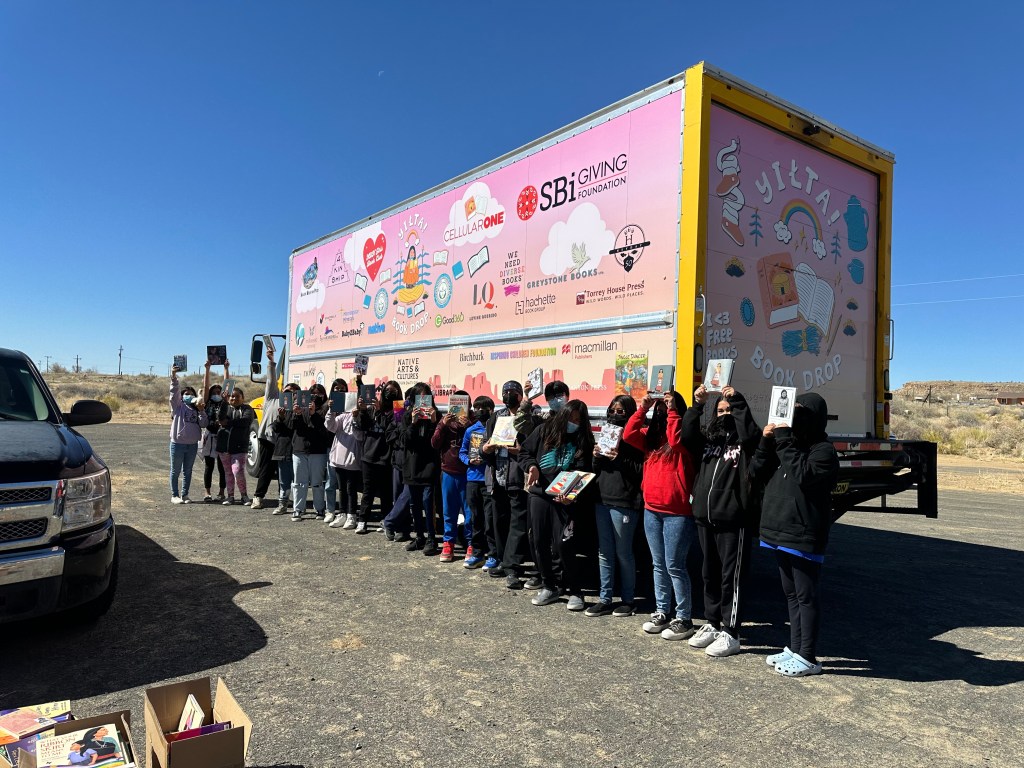
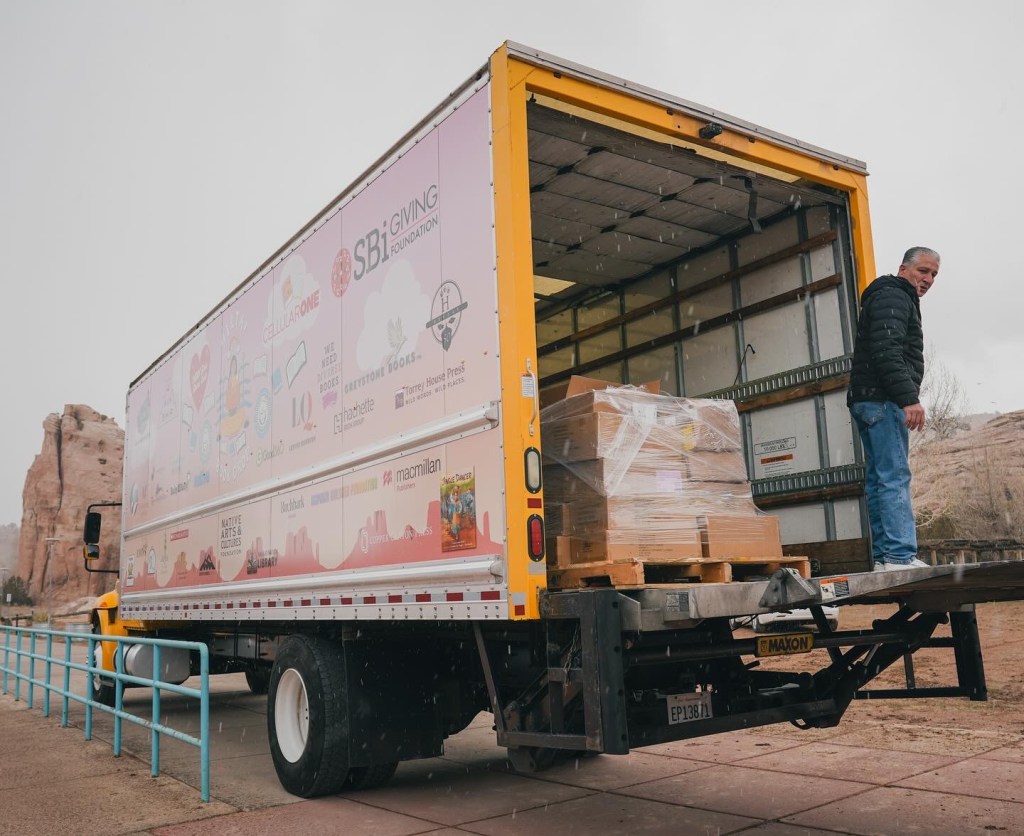
With many tribal lands being considered “book deserts” and the small number of Native authors, “Pinky the Rezmobile” made an impact. “Pinky” was a temporary donation that would help with the 10-day journey across the Navajo and Hopi reservations.
“We just thought of it as a group with our partners on that trip, ‘What is something that would just bring pure joy when they saw us coming into the chapter house or coming into a school parking lot?’” Drake said. “And putting ourselves in the shoes of ourselves as little kids again, we were like, ‘What about a giant pink truck with a girl reading on it and our language on it?’”
Community donations helped make “Pinky” possible, along with the thousands of books donated by publishers, including Hachette and Levine Querido.
“A lot of the places we’re trying to reach are classified as so-called book deserts,” Drake said. “This way [with Pinky], we’re recognizable. It’s as efficient as it can be getting these loads of books to different communities, towns, or reservations.”
According to the American Consortium for Equity in Education, 45 percent of children in the United States live in neighborhoods without public libraries, bookstores, or in homes without books.
So why not bring the books to the communities?
Having traveled across 403 miles in five days, “Pinky” left an impression in its short run.
“One memory that stuck with us was that it got a nickname from the community and online,” Drake shared. “It was something that whole communities were naming and having an affection for.”
Drake noted that Native literature faces challenges outside of what the book club is doing.
With increasing censorship, books such as “Fry Bread” by Kevin Noble Maillard, “Firekeeper’s Daughter” by Angeline Boulley, “A Snake Falls to Earth” by Darcie Little Badger, and “An Indigenous Peoples’ History of the United States” by Roxanne Dunbar-Ortiz have been challenged or banned in schools.
“A giant pink truck sends a message,” Drake said. “And I think hope is a dangerous thing in times like these because it gets people rallied.”
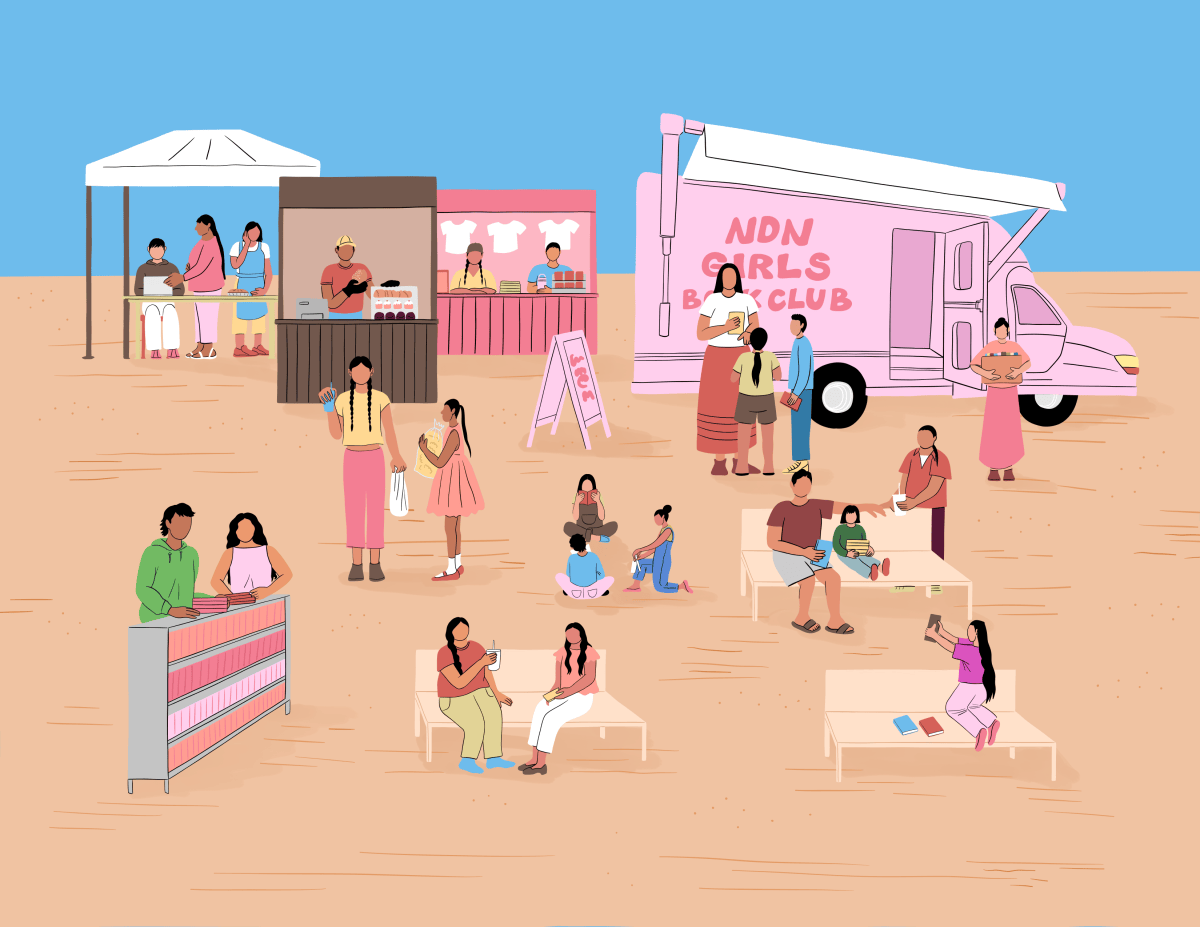
The next bookmobile, backed by a fundraising campaign aiming to raise $85,000, will help NDN Girls Book Club expand into even more communities, including an upcoming trip to Oklahoma in May. The new bookmobile will also feature illustrated scenes created by Indigenous artists.
Each donation to the bookmobile will be matched by anonymous donors to the Book Club, according to the book club’s website.
Supporters are encouraged to donate through the club’s social media challenges, starting with an Ice Bucket Challenge and ending with ear piercings, motivating their audience to help fund the new bookmobile.
Lily Painter, the book club’s community coordinator, agrees that the bookmobile will bring people together, and the fundraiser demonstrates the demand for more resources like it.
“The fundraising goal we have set is more than just crowdfunding, so we can get the bookmobile; it’s also a display of how much demand people have for accessible and good representation in literature,” Painter said. “In a way, we all get to be a part of making the bookmobile a reality, and I think that is absolutely beautiful.”
After Pinky the Rezmobile’s run in 2024, NDN Girls Book Club is now working toward delivering even more Native stories to the communities that need them.
And the book club’s advice for readers?
“Please keep reading books,” Drake said. “Get off your phone, and read a book!”
NDN Girls Book Club upcoming events
The NDN Girls Book Club’s next Book Fest will be in Oklahoma with a kickoff on May 18 in Oklahoma City at Culture Hub, 12-5 p.m. The team will travel from Oklahoma City to Tahlequah, Okmulgee, Durant, Ada, and the Kiowa-Comanche-Apache Reservation.
On May 23, the book club will also be hosting a Book Fest Powwow on the Kiowa Tribal Dance Grounds in Carnegie, Oklahoma. There will be vendors, free books, and contests with prizes and activities from 2-10 p.m.
To be part of the book club, sign up for the newsletter on their website. You may also sign up for care packages or donate books to them.

