Help ICT make strides in 2024. Our goal is to raise $150,000 by the end of the year with generous contributions from funding partners and collaborators like you. We’re thankful for your support, and we’re thriving because of it. DONATE TODAY!
Joaqlin Estus
ICT
ANCHORAGE, Alaska — The National Oceanic and Atmospheric Administration’s (NOAA) 2023 Report Card on the Arctic shows the region is heating up as much as four times faster than any other region of the world, and is reaching the highest ever recorded temperatures.
“The overriding message from this year’s report card is that the time for action is now,” said NOAA Administrator Rick Spinrad, Ph.D., in a prepared statement. “NOAA and our federal partners have ramped up our support and collaboration with state, tribal and local communities to help build climate resilience. At the same time, we as a nation and global community must dramatically reduce greenhouse gas emissions that are driving these changes.”
The statement said, ”New records show that human-caused warming of air, ocean, and land is affecting people, ecosystems, and communities across the Arctic.”
“Climate change is not something that’s coming down the pipe somewhere in the future. It is happening now. It’s been happening for decades. And whether you’re talking about fish or people or birds, there are real impacts that we need to deal with right now,” said Rick Thoman, a Alaska climate specialist with the International Arctic Research Center at the University of Alaska Fairbanks, and lead editor for the report, at a press conference Tuesday.
The report was released as the United Nations climate talks are taking place in Dubai.
Thorma said, “when you hear about what’s going on at (the UN Climate Change Conference), there may be reason to be optimistic, but the reality is we need action on the ground right now. Not to necessarily turn around climate change immediately, but to deal with the fact that we’re going to be challenged by it now and for decades to come. So we need action now at local scales.”
The annual Arctic Report Card features the work of 82 authors from 13 countries. It shows that August 2023 sea surface temperatures were 9 to 13 degrees Fahrenheit (5-7 degrees Celsius) warmer than the 1991-2020 August mean values in the Barents, Kara, Laptev and Beaufort seas, “and the highest point of Greenland’s ice sheet experienced melting for only the fifth time in its 34 year record. Overall, it was the Arctic’s sixth warmest year on record.”
This year’s sea ice extent minimum was the sixth lowest in the past 15 years and the 17th lowest have all taken place in the past 17 years.
Impact on salmon
One chapter focuses on impacts to salmon, which is vital to Alaska Native people. “During 2021 and 2022, sockeye salmon, a staple of commercial fishing, reached record high abundance in Alaska’s Bristol Bay, while Chinook and chum salmon, fished by Indigenous communities in the Yukon and Kuskokwim rivers, fell to record low abundance,” read a summary. Both commercial and subsistence fisheries on the Yukon and Kuskokwim rivers have been closed or severely limited in recent years in an attempt to bolster the declining salmon populations.
Daniel Schindler from the University of Washington points to habitat for juvenile salmon as the cause for both the record highs and lows.
“In the case of sockeye, they rely on big lakes for their nursery habitats. And over the last 50 years, we’ve documented earlier ice breakup, warmer summer temperatures and actually increased plankton production. And it’s that plankton that feeds the juvenile salmon. They’re growing faster… and that’s turning into higher survival rates in the ocean,” Schindler said at a press conference.
“In the case of chum and Chinook salmon, they’re more river-dependent species. Chum in particular basically wash right into the ocean, and the ocean simply hasn’t been a productive place for them.” He said there are various explanations for the downturn in Chinook populations but “the mystery about Chinook salmon remains a mystery…the reality is there’s a whole bunch of different things that appear to be affecting chinook salmon and there’s not a really coherent message for what’s causing the declines, but it’s a reality,” Schindler said.
The report also highlights an Alaska project that involves subsistence hunters and gatherers in Arctic communities as observers.
Donna Hauser is a research professor at the International Arctic Research Center, the University of Alaska Fairbanks, and principal investigator for the Alaska Arctic Observatory and Knowledge Hub (A-OK). She’s co-author of the Arctic report chapter, “Nunaaqqit Savaqatigivlugich: Working With Communities to Observe the Arctic.”
She said the observers take a more holistic approach to noting conditions than scientists looking in their specific disciplines. In addition to observations about climate change impacts, the Indigenous observers describe impacts of those changes on Arctic peoples.
“Generally speaking, the observers have noted sea ice loss, warmer air and ocean temperatures, changing wind patterns, increased intensity and frequency of coastal storms, which contribute to flooding and erosion. And they describe those changes as well as the impacts, the local impacts to community infrastructure, traditional activities and access and availability of marine mammals or subsistence resources.”
Indigenous knowledge she said is interwoven in the observations, “so you get a little bit more, get a more holistic story of what’s happening in terms of environmental change in the Arctic.”
Seasonal hunting changes
Roberta Tuurraq Glenn-Borade is A-OK’s project coordinator and community liaison, and co-author of the Arctic report chapter Nunaaqqit Savaqatigivlugich: Working With Communities to Observe the Arctic.
“Through the work that we do, we’ve been able to work with the A-OK communities to hold some of these co-production type workshops,” Glenn-Borade said at a press conference. “And we always get a strong response, especially when they know that we at A-OK, we’re working to elevate their perspectives, not just within Alaska, but within the United States, at the state and federal level, especially in connecting with agencies. And so there’s a strong desire to be heard.”
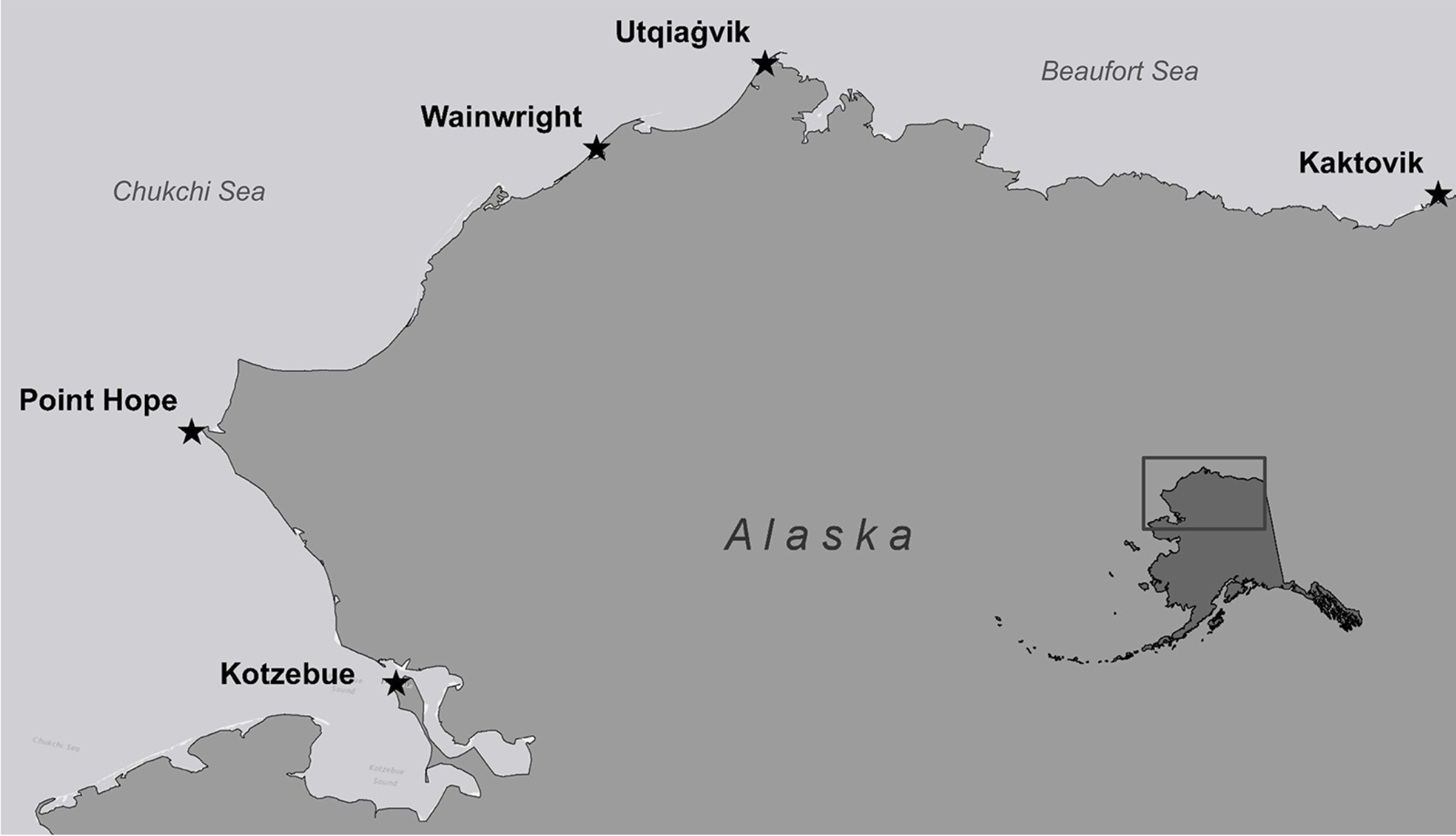
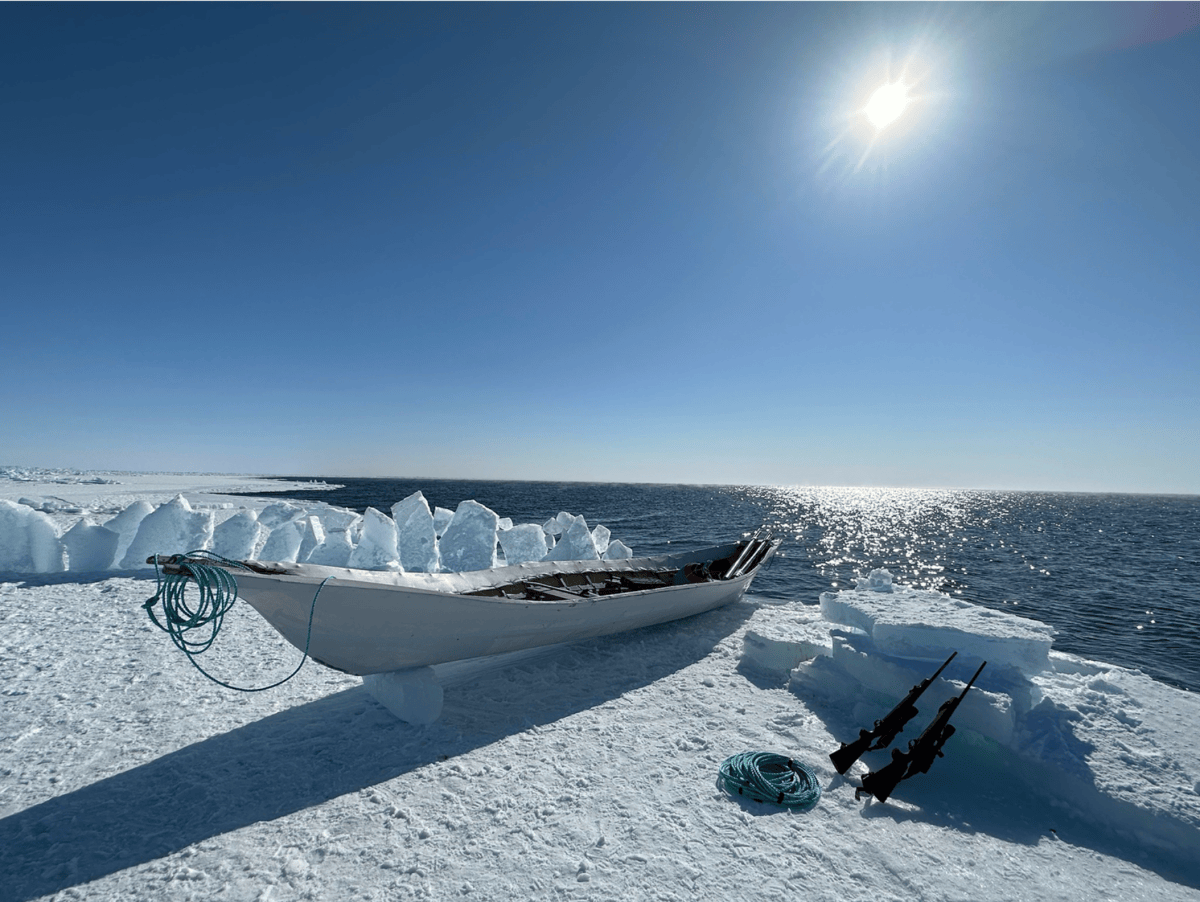
She told ICT climate change is causing changes to the seasonal hunting calendar as well as the way people hunt. “Definitely. So straight from Billy Adams, (Inupiaq, of Utqiagvik), he says that they think, they plan for going out earlier, for preparing for rough waters, for preparing for dangerous conditions. And they go out with an understanding that things are unstable, things are unpredictable, and they use generations of Indigenous knowledge to navigate those conditions every single day. And so yes, there are challenges and that just requires more teaching, especially for the young hunters to be able to understand, okay, where are the dangerous conditions? How do we avoid them, and how do we navigate them to still be able to go out and catch animals?”
She said people at the workshops have also made it clear that “they don’t want to be described as victims of climate change, as victims of their environment. We don’t subscribe to that, this idea that our Alaska Native people or Indigenous people in the Arctic are going to die out as a result of climate change.
“And so one of the messages that people might be surprised to hear is this message of hope and positivity and strength and resilience, which is so embedded within Inupiaq culture. It’s what I grew up in. And so as an adult coming into the world and understanding how other people think about Indigenous people in the Arctic, this narrative of, oh, we need to save the Indigenous people. That’s not something that sits right with me. It’s not something that sits right with our people. And so the story, that part of the story that I want to share for this NOAA Arctic report card is that story of strength and resilience of our people,” Glenn-Borade said.
Another project, in Finland, is restoring peatlands that were damaged by industrial extraction through the draining of marshes to harvest peat and timber.
Finnish scientists, local communities and the Sami people have been collaborating to use their knowledge, all their different streams of knowledge, to restore the peatlands. “And what’s important about it is not just has it improved life for the people right there, but it also stores carbon dioxide in the ground, which would otherwise be in the air if it was burned or harvested. So it’s a very positive climate solution,” Thoman said.
“They’re restoring these areas to be healthy wetlands and forests that can sustain people and wildlife, and they’re seeing fish and birds come back. So these are very helpful to the local communities,” he said.
Thoman said, “I think the value of what’s been happening in Finland is that it represents a regionally relevant solution, both restoring an environment that has been through industrial activity severely damaged, and it’s being done in a culturally informed way. So I think that combination can be repeated elsewhere. Obviously the solutions and the specific problems will look different, but I was particularly happy with this essay because it allowed us to highlight a specific European response in the Arctic to this regionally specific problem.”
The Arctic Report Card also includes “Vital Signs” for 2023 as shown below.
- The average surface air temperature in the Arctic this past year was the sixth warmest since 1900 at 20 degrees Fahrenheit (-7 C). The summer Arctic average temperature was the warmest on record at 43 F (6.4 C). Data shows that since 1940, annual average temperatures have risen .45 F (.25 C) per decade and average summer temperatures have risen .31 F (.17 C) per decade.
- Sea ice extent continues to decline, with the 17 lowest Arctic sea ice extents on record occurring during the last 17 years. This year’s sea ice extent was the sixth lowest in the satellite record which began in 1979, with older, thicker, multi-year ice far less than in the 1980s.
- Mean sea surface temperatures in August 2023 were 9 to 13 degrees Fahrenheit (5-7 degrees Celsius) warmer than the 1991-2020 August mean values in the Barents, Kara, Laptev and Beaufort seas. Unusually cool August temperatures were observed in Baffin Bay, Greenland Sea and parts of the Chukchi Sea. August mean sea surface temperatures show warming trends for the period from 1982 to 2023 in areas of the Arctic Ocean that are ice free in August, with mean sea surface temperature increases of nearly a degree Fahrenheit (.5 Celsius) per decade.
- Arctic Ocean regions, except for the Canadian Archipelago, Chukchi and Beaufort seas, continue to show increased ocean phytoplankton blooms, or primary productivity, with the largest percent increases in Eurasian Arctic and Barents Sea.
- North American snow cover set a record low in May 2023, while snow accumulation during the 2022-2023 winter was above average across both North America and Eurasia.
- Heavy precipitation events broke existing records at various locations across the Arctic, with some variation such as a dry summer in northern Canada, contributing to record wildfires. Pan-Arctic precipitation was the sixth highest on record, continuing the trend toward a wetter Arctic.
- Tundra greenness across the Arctic was the third highest in the 24-year satellite record, a slight increase over 2022. The Arctic continues a trend of increased shrubs, willows and alders where once there was tundra.
- The Greenland Ice Sheet continued to lose mass despite above average winter snow accumulation. Summit Station, the highest point on the ice sheet, reached a temperature of 32.7 degrees Fahrenheit on June 26, experiencing melting for only the fifth time in the 34-year record.

Correction: This story has been updated with the correct spelling of Roberta Tuurraq Glenn-Borade and the correct identification of Daniel Schindler. It has also been updated on sea ice and temperature clarifications.
Like this story? Support our work with a $5 or $10 contribution today. Contribute to the nonprofit ICT. Sign up for ICT’s free newsletter.