
ICT is working to shape the future of journalism and stay connected with readers like you. A crucial part of that effort is understanding our audience. Share your perspective in a brief survey for a chance to win prizes.
Amelia Schafer
ICT + Rapid City Journal
SISSETON, S.D. – In the early days of 2020, sinkpe tawote (bitter root) plants began popping up all over the reservation — a small unassuming plant with thick green leaves, but one with strong cultural significance. Its roots contained a medicine that had been used for generations as a cure to fevers, aches and pains for people across the plains.
Throughout 2020, Charlotte “Charle” Alamanza, a citizen of the Sisseton Wahpeton Oyate and organizer for the Unkožupi (We Plant) Project, delivered traditional medicines like sinkpe tawote to community members across the reservation. She collected names and delivered remedies to people who hadn’t been exposed to these plants in years.
When the Dakota were moved from their homelands in Minnesota, they were also removed from plants they’d relied upon for generations. Post-relocation, the shift to a commodity food diet based on processed foods and carbohydrates undermined physical and spiritual health. Now, groups like the Unkožupi Project work to bring back traditional plant foods and medicines.
“My grandma, my Kunsi, always said that the enemy of our people is the can opener,” said Dustina Gill, a citizen of the Sisseton Wahpeton Oyate and a part of the seed collective. “These traditions weren’t lost, they were just waiting for us to discover them again.”
Since 2019, a group of four Sisseton Wahpeton Dakota women have been working together toward their independent food sovereignty initiative, the Unkožupi Project.
Alamanza, along with her daughter Erica Fischer, her cousin Ella Robertson and friend Dustina Gill, formed a group to bring a community garden, seed exchange and other traditional plant knowledge back to their community.
“A lot of our conversations gravitated around gardening, planting, discussing our gathering places, so we thought why not work together on something,” Gill said. “Being women, mothers and grandmas we have that sense of responsibility to do something.”
The first year, the women watched YouTube videos on how to organize a seed exchange and run a community garden. For the first three years, the project was run in partnership with Nis’to Incorporated, a local nonprofit youth program run by Gill. Around year four, the Roberts County Conservation District and the Natural Resources Conservation Service began to help out.
“We’re blessed to have our reservation where it is,” said Robertson, who was previously the chairwoman of the Sisseton Wahpeton Oyate and currently teaches at the Sisseton Wahpeton College. “We’re so close to Minnesota, many of our traditional foods grow here and we can have wild rice restoration projects.”
After 2020, community members began to show more of an interest in traditional plant medicine and food sovereignty initiatives. Initially, community members would come asking for Alamanza, but after a while they stuck around out of interest.
“Our first seed exchange no one came, now we have waiting lists,” Gill said.
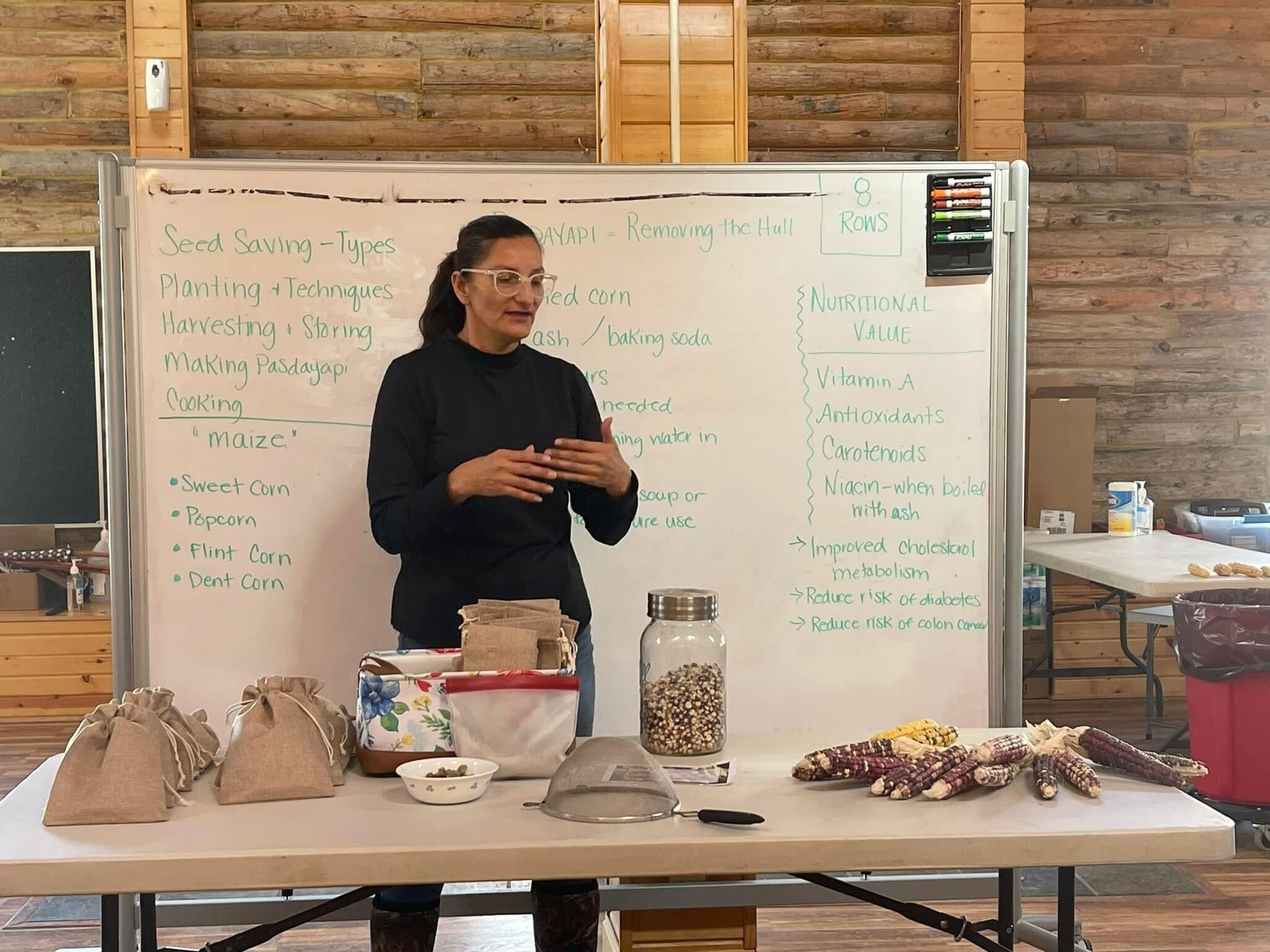
The group began hosting different workshops on the Lake Traverse Reservation, including a buffalo kill and meat processing workshop, honey-making, bundle carriers, solar watering, wind tunnel building and more. Each year, the Unkožupi Project partners with South Dakota State University and Utah State for a maple syrup tapping workshop.
The seeds given out during seed exchange programs are a mixture of seeds from locally harvested plants, heirloom seeds – some brought with Dakota families when they were moved to the reservation. In her home, Gill has several stocks of corn with seeds that are 18 generations old.
“I think COVID taught a lot of us to reconnect to what we have here,” Alamanza said. “In our backyards, we were growing medicine that can take care of us. COVID brought that to reality for a lot of people.”
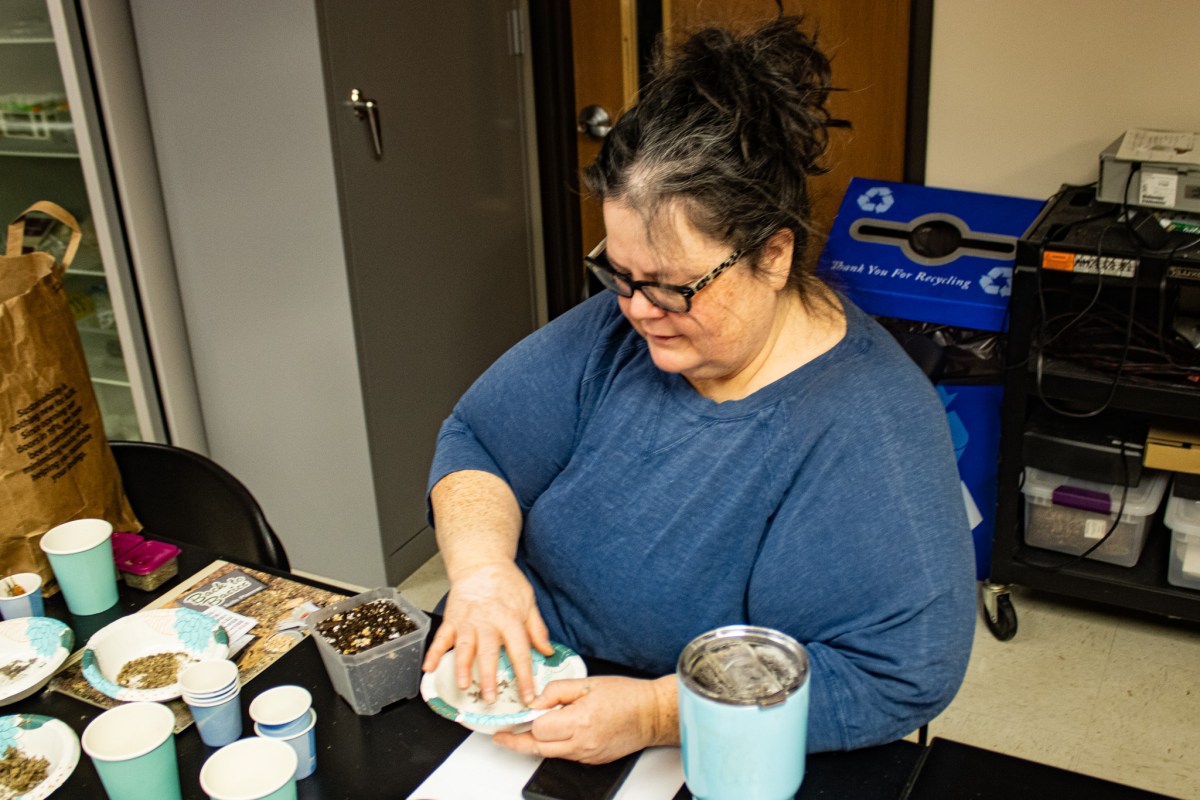
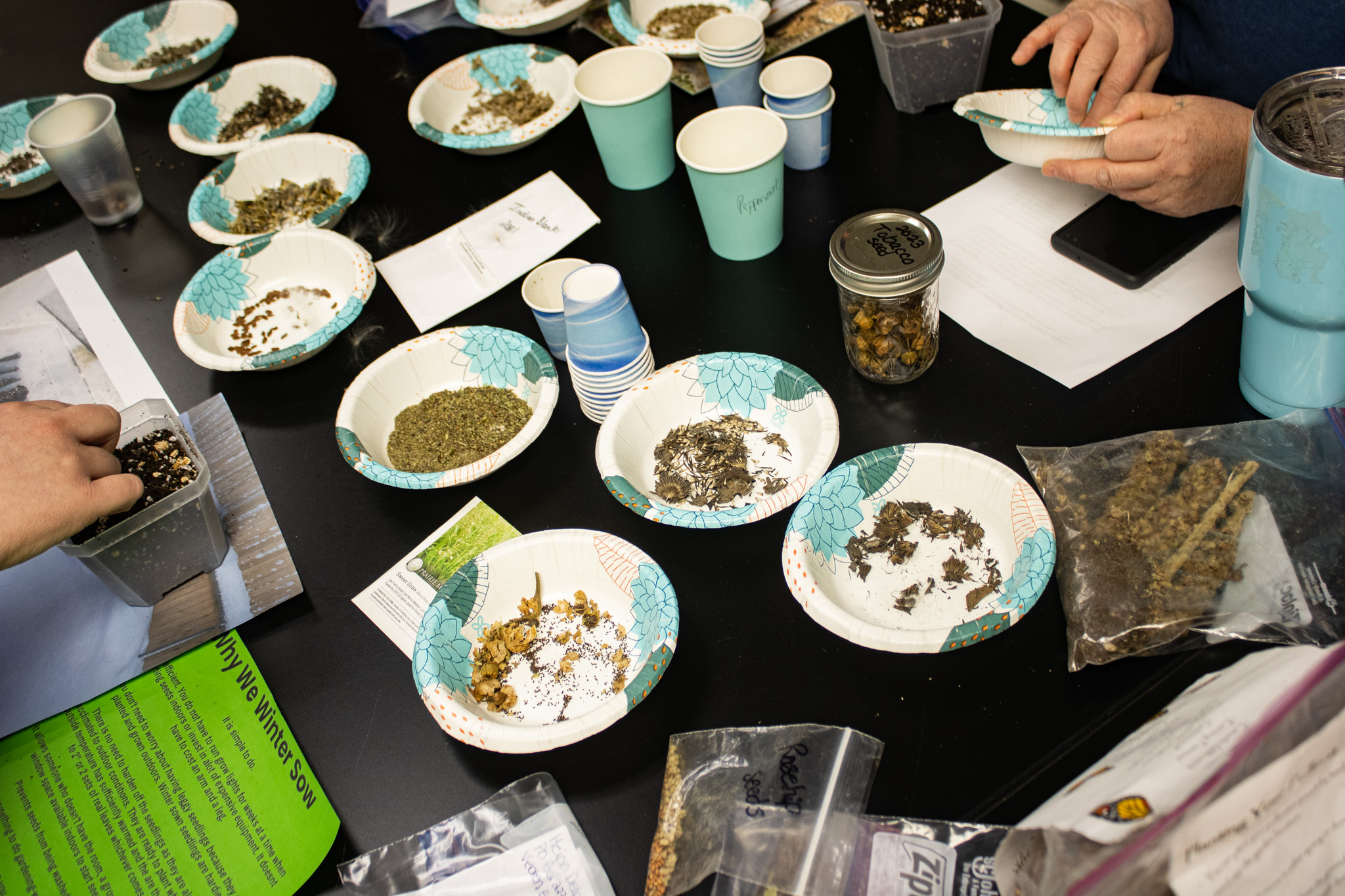
On January 26, the group hosted a seed exchange at the Sisseton Wahpeton College in Agency Village, where Fischer works as the extension outreach coordinator. Alamanza sat with an array of seeds before her. Carefully, she picked several sage seeds out and placed them gently in a small pot of dirt. Community members of all ages gathered to learn how to sow plants during the winter.
All of the Unkožupi Project workshops are free, the only rule is that adult participants must bring a child – something that’s very important to the group.
“We realize that not all families have the grandmas we had. That’s a big part of why we do this. We try to bring it so everybody can have what we had,” Gill said. “We want to encourage intergenerational learning.”

Gill, who is the CEO and founder of the local nonprofit youth program Nis’to Incorporated, uses her program to get kids involved with the Unkožupi Project. The loss of cultural knowledge associated with the move from Minnesota to South Dakota combined with Intergenerational trauma from the Tekakwitha Orphanage and Boarding School led many families to not speak their language or discuss traditions. Gill said she feels healing needs to start with the children.
“I always thought of myself as not being Dakota and I wanted to be so bad. In our family we thought of ourselves as being colonized,” said Robertson. “But I realized that growing up we discovered and played around all these different medicines, so many of these things … I grew up doing were practiced within our culture. We didn’t lose these traditions, they were just waiting for us.”
Using Fischer’s resources at the college, Gill’s experience working with youth, Alamanza’s plant knowledge and Robertson’s academic background, the group is able to create an educational space for community members to come listen and learn free of judgment.
“As adults, I think we can get so sidetracked and often feel embarrassed that we don’t know things,” Robertson said. “But I feel that these things are meant for us to find, we were born with that innate curiosity. We don’t always know the uses, but we can identify the plants.”
Most recently, through Nis’to Incorporated, the group was able to purchase a 30-acre plot of land where they are planning on creating a large community garden and different spaces for traditional learning.
“Hopefully these things stick. There’s a resurgence of people who want to know these traditions and we have this sense of responsibility to teach them,” Gill said.

This story is co-published by the Rapid City Journal and ICT, a news partnership that covers Indigenous communities in the South Dakota area.
Our stories are worth telling. Our stories are worth sharing. Our stories are worth your support. Contribute $5 or $10 today to help ICT carry out its critical mission. Sign up for ICT’s free newsletter.

