
Richard Arlin Walker
Special to Indian Country Today
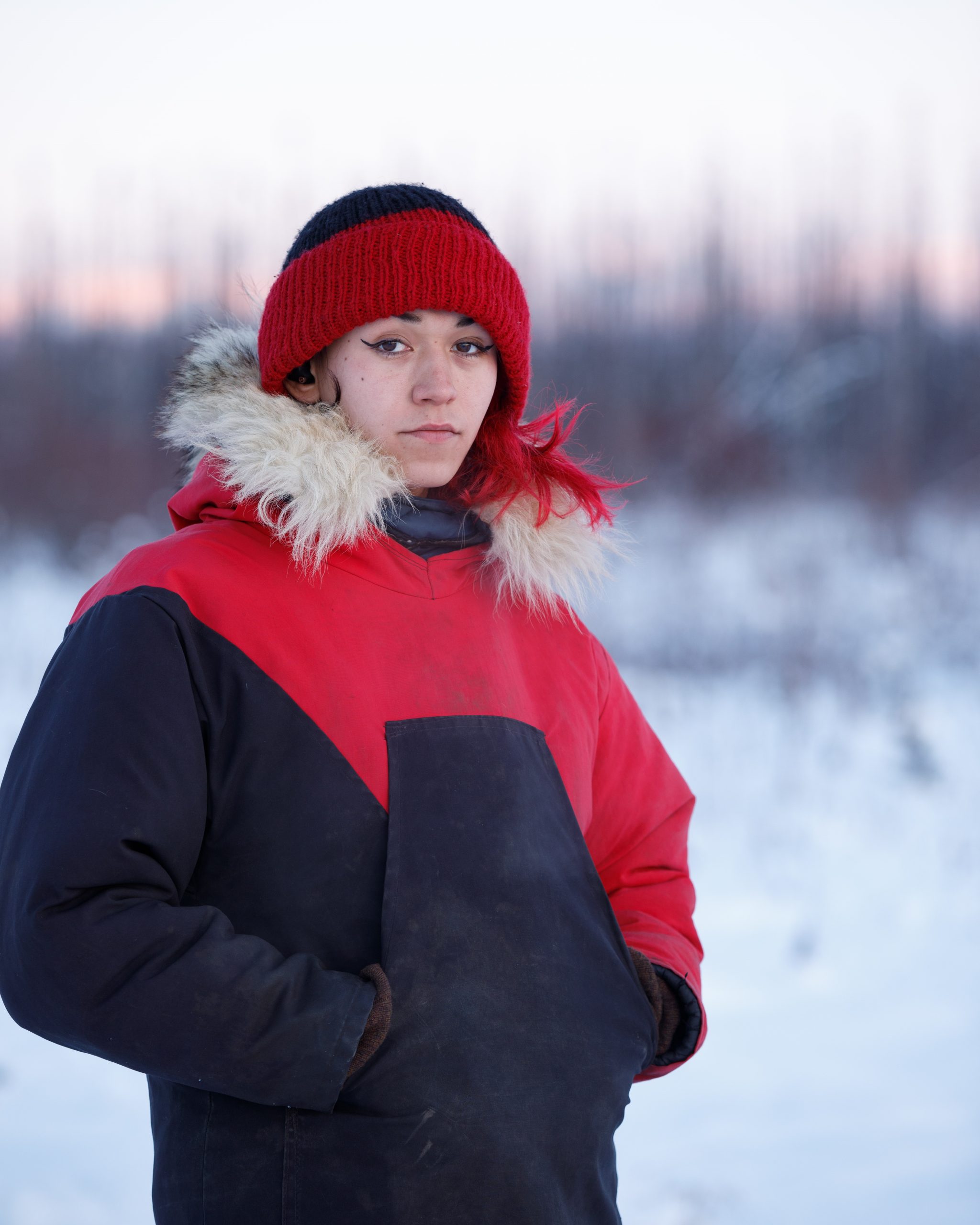
Inupiaq musher Apayauq Reitan made history Saturday, March 19, as the first transgender woman to complete the 1,000-mile Iditarod Trail Sled Dog Race, coaching her team of young dogs through a storm in the final stretch that knocked six teams out of the event.
Reitan had seven dogs in harness when she arrived at Nome just before midnight at 11:39:13 p.m. Alaska time. She is only the second transgender person to complete the race; Will Troshynski completed the race in 2021.
Reitan’s time was 13 days, 8 hours, 39 minutes and 13 seconds.
“It’s nice to be here, and for so many people to have shown up, it’s nice to see,” Reitan said of the late-night crowd that applauded her arrival.
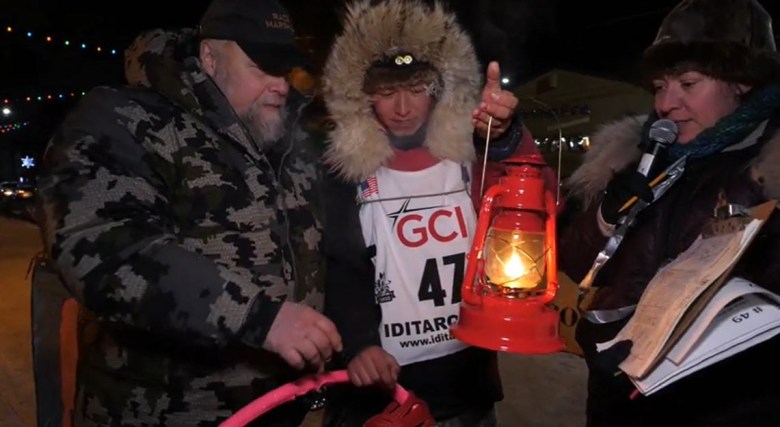
As the last musher to reach the finish line, Reitan received the “Committed through the Last Mile” Red Lantern Award and $1,000, and had the honor of extinguishing the so-called widow’s lamp on the burled arch in Nome.
“The symbol of the widow’s lamp dates back to when roadhouses were used in Alaska and extinguishing the lamp is a signal that no other mushers are out on the trail,” the Iditarod Trail Committee reported.
Related stories:
— Iditarod has a new champion
— Mushers face hurdles on road to Iditarod 2022
— Inupiaq musher set to make history in Iditarod
— Native mushers finish in 2021 Iditarod top 10
Completing the race was no small feat. Of 49 mushers that left the starting line in Willow, Alaska, on March 6 (the ceremonial start took place the prior day in Anchorage), 37 finished the race. The race takes mushers and dogs over nearly 1,000 miles of flatland tundra, treacherous inclines, blizzard-prone summit passes, steep gorge descents and frigid river overflow.
But the stretch between White Mountain (mile 898) and Nome can be especially challenging. It’s along the Bering Sea coast and is open to all forces of nature; it was here in 2014 that four-time champion Jeff King, well on his way to a fifth championship, was forced to scratch when he and his team lost the trail in a blizzard and couldn’t find their way back.
This year, six teams scratched after leaving White Mountain and were assisted by rescue personnel.
SUPPORT INDIGENOUS JOURNALISM. CONTRIBUTE TODAY.
Reitan delayed her departure from White Mountain by almost 12 hours and proceeded patiently and carefully, as she had the entire race. Only three teams took longer than hers to get from Safety to Nome.
“There was a part where it was blowing pretty hard from the side and we were moving [forward] at a 45-degree angle,” Reitan told the finish line announcer.
She was one of four Alaska Native mushers to compete in the 2022 race. Richie Diehl, Peter Kaiser and Ryan Redington, all experienced mushers, finished in the top 10.
Reitan’s Iditarod finish added to an historic week for trans athletes. Two days earlier, University of Pennsylvania swimmer Lia Thomas won the 500-yard freestyle March 17 at the NCAA Women’s Swimming Championships – the first trans female swimmer to win an NCAA title. But at the same time, many state legislatures are considering bills that would ban trans athletes from competing in women’s sports.
Reitan, 24, who has been mushing since she was 4 years old, told Indian Country Today before the race that she hoped to inspire other transgender people.
“Part of why I’m entering the race again is because I want trans people to be able to see themselves, to see that you can be any kind of person you want to be,” she said. “No matter what your interests are, you can transition and keep doing the things that you want to do. You don’t have to change your whole, entire life if you don’t want to.”
A seasoned athlete
Reitan, the daughter of a Norwegian father and an Alaska Native mother, is a dual citizen of the United States and Norway and splits her time between the two countries. Her father, Ketil Reitan, is a veteran musher who competed in seven Iditarods between 1991 and 2018, finishing 10th in 1992.
The younger Reitan is a seasoned athlete. In 2017, she finished ninth in the Two Rivers 200 and 14th in the Copper Basin 300. In 2019, she placed 14th in the 1,000-mile Yukon Quest and was named that race’s Rookie of the Year.
She placed 28th in the 2019 Iditarod, becoming just the third musher to compete as a rookie in the Yukon Quest and Iditarod in the same year. At that point, however, she had not made her gender identity public, she said.
“I was non-binary, but in the closet publicly,” Reitan said of the 2019 season, referring to the term for gender identities that are neither male nor female. “So I knew I wasn’t male, and I wasn’t, but people perceived me as male.”
Her return to the race this year was cheered by those who know her.
“It’s been such an immense joy to see Apayauq come into her own and feel really grounded in her identity — and also to see her back in mushing this year, where she’s clearly so full of life and connection to the dogs,” Troshynski told Indian Country Today. “She is a really good musher and has a true talent for the competitive part of the sport. In my opinion, I think she’s going to be a force to be reckoned with.”
Eyes on the prize
The Iditarod crowned a new winner this year, with Brent Sass claiming the $50,000 prize by edging past five-time champion Dallas Seavey to cross the finish line at 5:40 a.m. Alaska time on March 15. Seavey crossed the line about an hour later, thwarted for now in his effort to claim a record sixth win.
It was the sixth Iditarod for Sass, a native Minnesotan who now lives in Eureka, Alaska. In his previous Iditarods, he earned Rookie of the Year in 2012 and placed fourth in 2020 and third in 2021. He won the 1,000-mile Yukon Quest in 2015, 2019 and 2020.
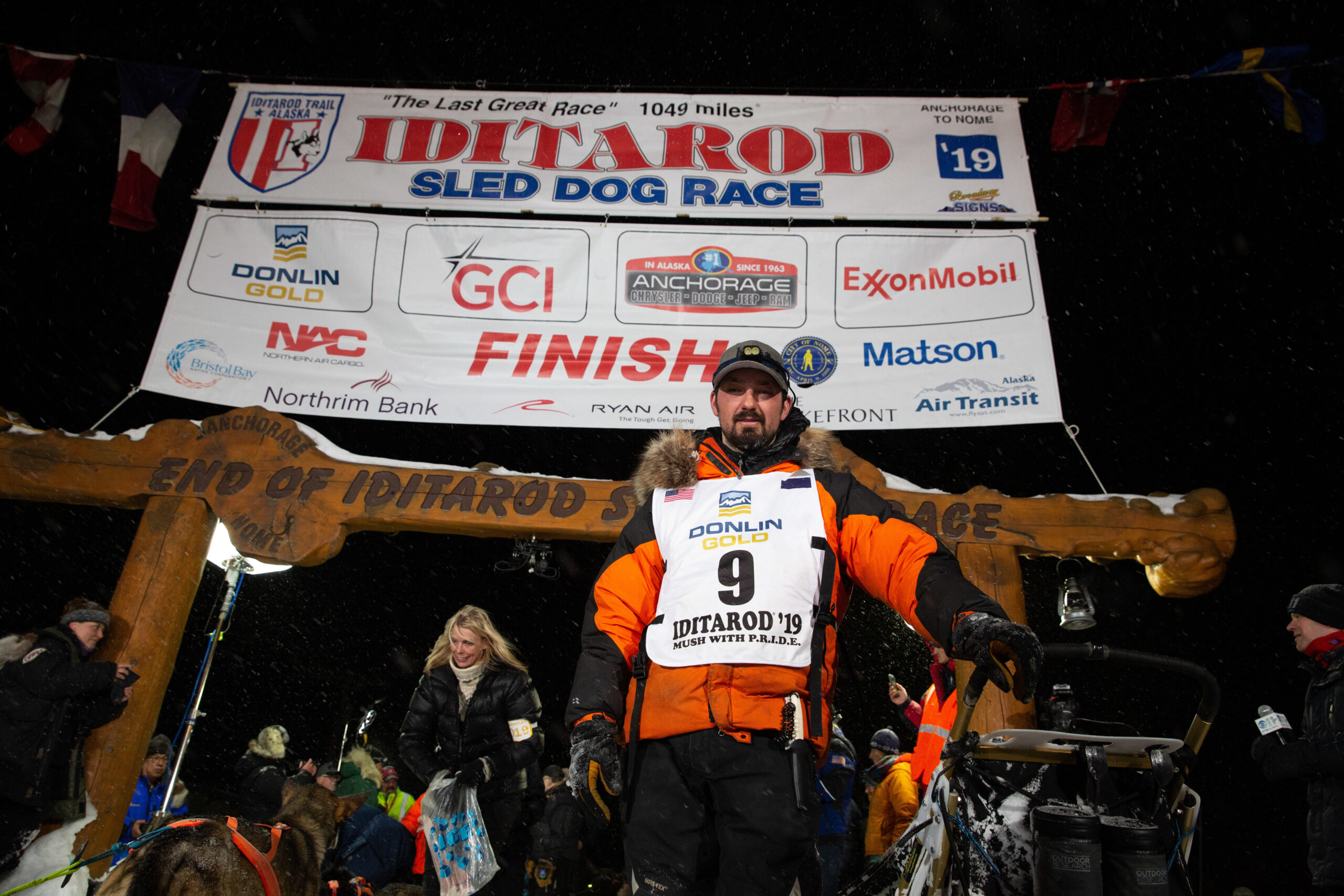
The other Indigenous mushers made a run for the win.
Kaiser, Yup’ik, came in fifth, crossing the finish line at 9:45:15 p.m. Alaska time March 15. He was the race champion in 2019 and this is his seventh top 10 finish in 12 Iditarods. He is also a six-time winner of the Kuskokwim 300, a highly-regarded, mid-distance race.
Diehl, Dena’ina Athabascan, was in the top 10 the entirety of the race. He and his team came in sixth, crossing the finish line at 10:02:13 p.m. It is Diehl’s third top 10 finish in eight Iditarods; he finished ninth in 2021 and sixth in 2018. He’s also a winner of the Kuskokwim 300.
Redington, Inupiaq, came in ninth, he and his team crossing the finish line at 12:26:38 a.m. on March 16. It is his third consecutive top 10 finish; he placed seventh in 2021 and eighth in 2020. He is also a two-time winner of the Kobuk 440 in Kotzebue, Alaska, and the John Beargrease Marathon in Grand Portage, Minnesota.
At the finish line, Redington – grandson of Iditarod race founder Joe Redington Sr. and one of six Iditarod veterans in his family – paid homage to Alaska Native mushers who came before him. Dogs and mushing have been part of Alaska Native culture for centuries, yet only five Alaska Natives have won the Iditarod: Carl Huntington, 1974; Emmitt Peters, 1975; Jerry Riley, 1976; John Baker, 2011; and Kaiser.
“I think my grandpa would be very proud of the race and the mushers,” he said. “I’m proud to be a Redington, proud to be in the race, and proud to be here in Nome.”

Our stories are worth telling. Our stories are worth sharing. Our stories are worth your support. Contribute $5 or $10 today to help Indian Country Today carry out its critical mission. Sign up for ICT’s free newsletter.

