
Nora Mabie
Missoulian
In December, legislative aide Drew Zinecker publicly questioned whether Native Americans living on reservations in Montana should be able to participate in state elections.
Rep. Ed Butcher, Repulican, in August remarked that lawmakers representing reservation communities always vote for welfare.
And last month, a draft resolution incorrectly labeled Native American reservations as “systems” and classified them as “race-based” when federal Indian law has long interpreted the status of tribal members as a political classification, not a racial one.
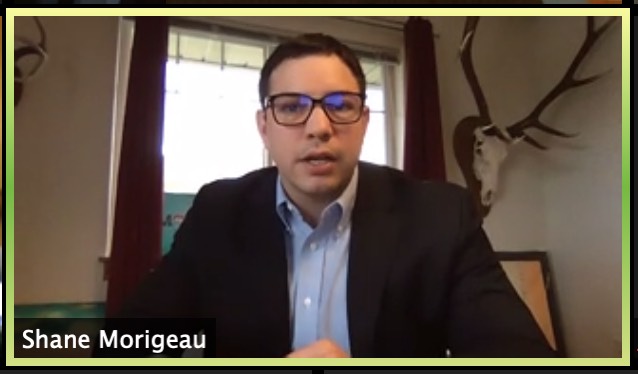
These are some of the examples Sen. Shane Morigeau alluded to when introducing a bill that would enhance lawmakers’ understanding of state-tribal relations.
Morigeau, a citizen of the Confederated Salish and Kootenai Tribes, said Senate Bill 233 does two things.
First, it requires the Legislative Services Division to make information and training on Indian law, federal Indian policy, legal rights of tribal members and the social, economic and cultural concerns to tribes “readily available to all legislators.” Per the bill, that information and training must include up-to-date handbooks, notifications of training opportunities, links to Indian Education for All resources and any other resources deemed valuable.
While education on tribal communities is available to lawmakers, Morigeau said the program is inconsistent and not prioritized. He said this year, the educational training, which was supposed to cover Indian law, tribal history and state-tribal relationships, among other complex topics, lasted only 10 minutes.
Second, Senate Bill 233 aims to enhance this training by requiring the state Director of Indian Affairs to collaborate with the Legislative Services Division to ensure that lawmakers are aware of the training and invited to participate.
In his address to the Senate Legislative Administration Committee Tuesday morning, Morigeau explained, “There’s just so much intersection and overlap with Montana tribes and work we do in this body.”
Though tribes are sovereign nations, state laws affect everyone in Montana — including tribal members. A bill moving through the Legislature would provide resources for communities experiencing high rates of missing persons cases, for example, and a bill draft would establish hunting seasons on fee land within the Flathead Reservation.
“What (SB 233) would do is it would ensure that our trainings aren’t overlooked,” Morigeau said. “Because I do think they are critical to this body to be able to have that background and be informed in the decision-making that we do.”
Jade Bahr, on behalf of the Montana Budget and Policy Center, spoke in support of the bill. She served as a state representative in 2019 and said “the lack of basic understanding (among lawmakers) could be offensive and heartbreaking sometimes.”
While Bahr is no longer a legislator, this session, Sen. Susan Webber, D-Browning, was asked by lawmakers to define trust and fee land, to describe the role of a tribal chief and about whether Native children still faced rampant abuse in boarding schools.
Bahr closed in saying, “If we can work to curb these misunderstandings, we should.”
Keegan Medrano, policy director for the ACLU Montana, echoed other bill supporters, saying education is critical to informed decision-making.
“It can be difficult when legislators are unable to recount or identify that Montana has 12 tribal nations, eight federally recognized tribes, seven reservations, let alone foundational concepts that inform the sovereign-to-sovereign relationship,” he said. “There’s taxation, there’s usufructuary rights, there’s resource development, there’s diminishment and disestablishment. To some, these may be random terms, but to me, they are my life. They guide tribal nations and tribal peoples.”
Medrano added that if the bill passed, lawmakers could “work toward solutions, rather than definitions and explanations” of certain concepts affecting Native people.
No one spoke in opposition to the bill, and the committee did not take executive action on it.
Sen. John Esp, R-Big Timber, and vice chair of the committee, said that lawmakers do receive this kind of training, and Morigeau countered that 10 minutes is inadequate to cover the topics at hand. Esp then said he would talk to Morigeau later to offer potential amendments.